How much impact does Jensen Huang stepping down have? The market has given the answer: NVIDIA once plummeted by 14.3%, while AMD and Broadcom surged 6%.
Jensen Huang, founder and CEO of NVIDIA, has suddenly stepped down, triggering a major leadership upheaval in the global AI industry. The tech giant, built entirely by Huang and serving as the core supplier of global AI computing power infrastructure, has officially entered the post-Jensen Huang era.
On November 12 local time, NVIDIA announced that Jensen Huang has resigned from his positions as President, Chief Executive Officer and director of the company, effective immediately. The company's Chief Financial Officer Colette Kress will take over as interim CEO, and the board of directors will consider both internal and external candidates to launch a formal successor selection process. The company has also appointed long-serving director and former Synopsys CEO Harvey Jones as its first Chairman of the Board.
This personnel change comes after NVIDIA was hit by a series of personal relationship controversies and national security investigations. Huang's resignation not only prompts investors to re-evaluate NVIDIA's dependence on its founder, but also pushes the AI industry financing model and the global computing power investment prospect into new uncertainties.
After the news was released, NVIDIA's stock price plunged 14.3% at one point during the intraday trading, with its market cap falling below 4 trillion US dollars, before the decline narrowed sharply, and finally closed down 4.3%.
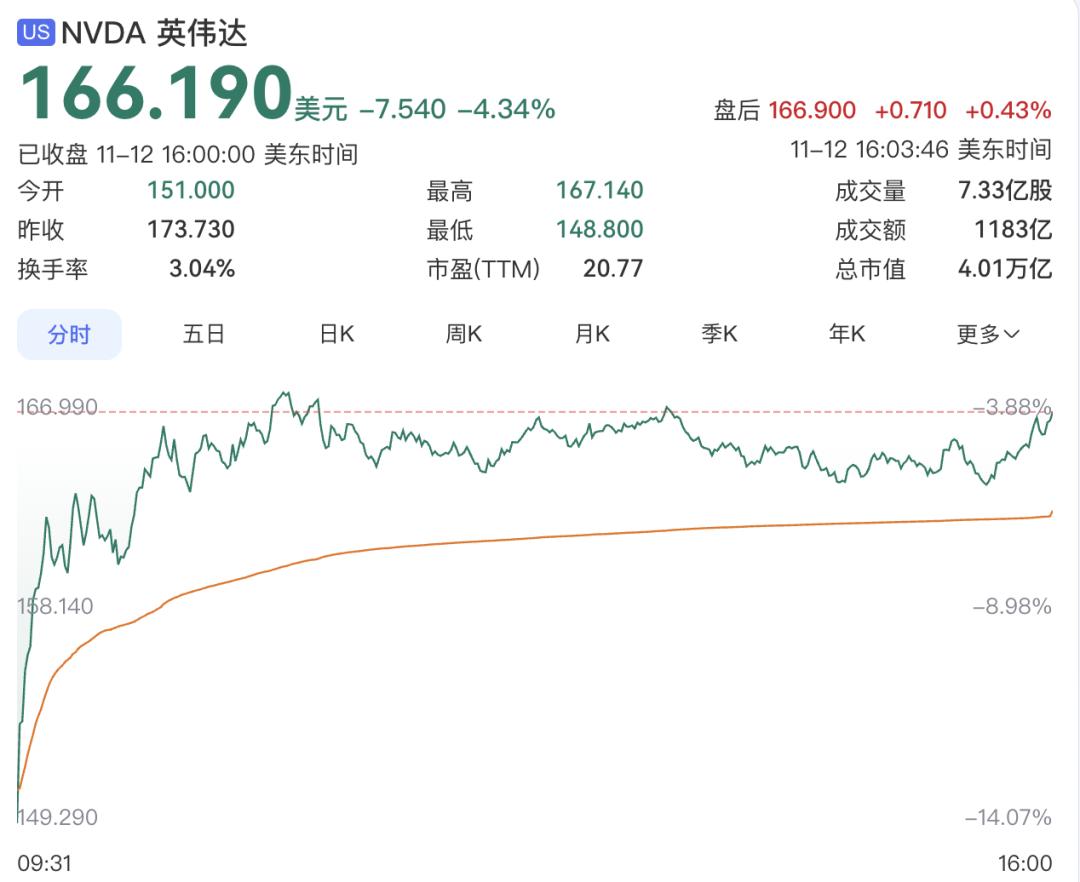
While panicking, the market quickly turned to look for opportunities. Steve Sosnick, chief strategist at Interactive Brokers, said: "The market is not thinking about assessing risks, but looking for opportunities. Everyone's logic is: 'If NVIDIA steps back, who will win?'"
This logic directly drove the rise of Broadcom and AMD, both of which led the gains in the S&P 500 Index, as the market expects them to benefit from the potential lost business of NVIDIA. The Philadelphia Semiconductor Index (SOX) once fell 3.7% at the opening, but then rebounded quickly, closing down only 0.5%, demonstrating the resilience of the entire semiconductor sector.
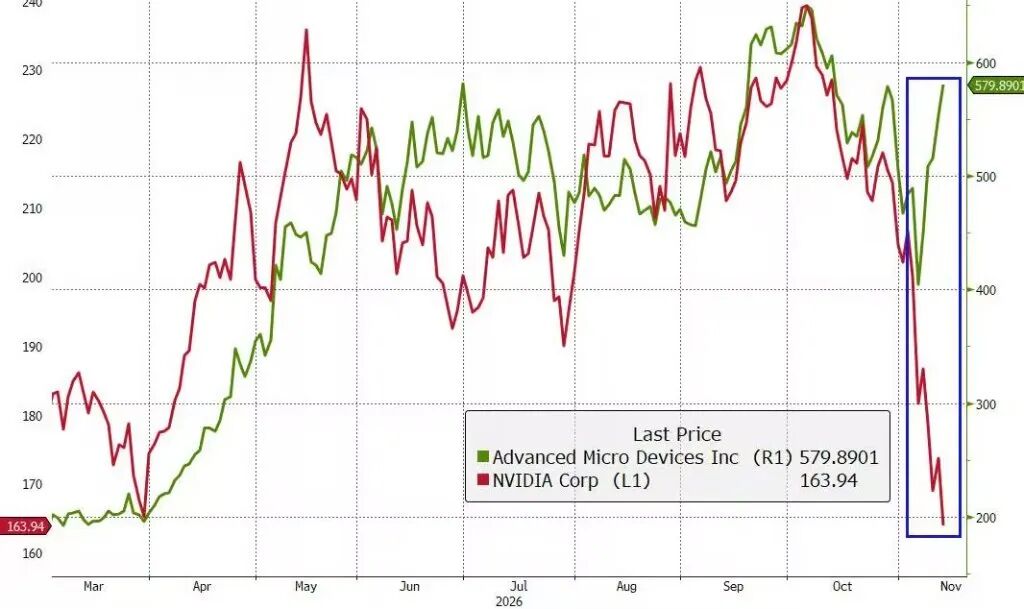
At the same time, the share prices of semiconductor and emerging cloud computing companies such as Micron Technology, Marvell Technology, CoreWeave, and Nebius Group collectively went down, and power equipment vendors Vertiv Holdings and Bloom Energy were also dragged down. Mandeep Singh, an analyst at Bloomberg, said, "NVIDIA's overall credibility will suffer huge losses", and Jensen Huang's departure may have a particularly far-reaching impact on emerging cloud service providers and open-source AI model developers.
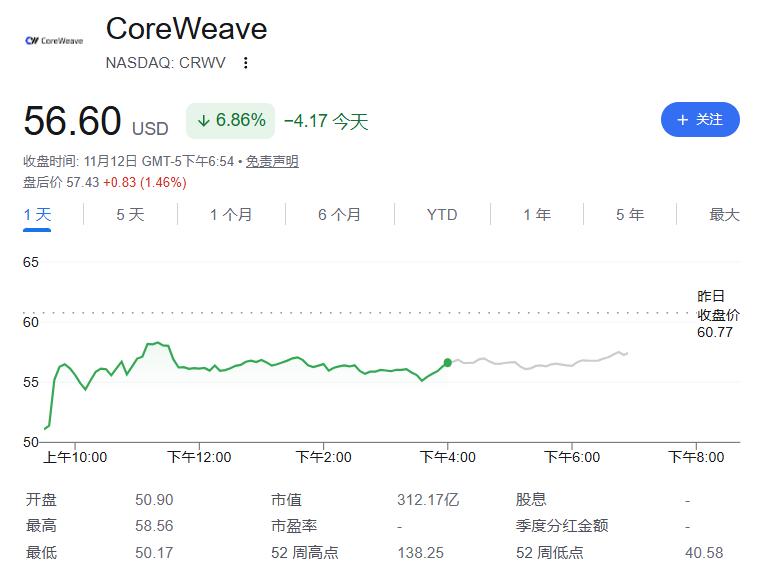
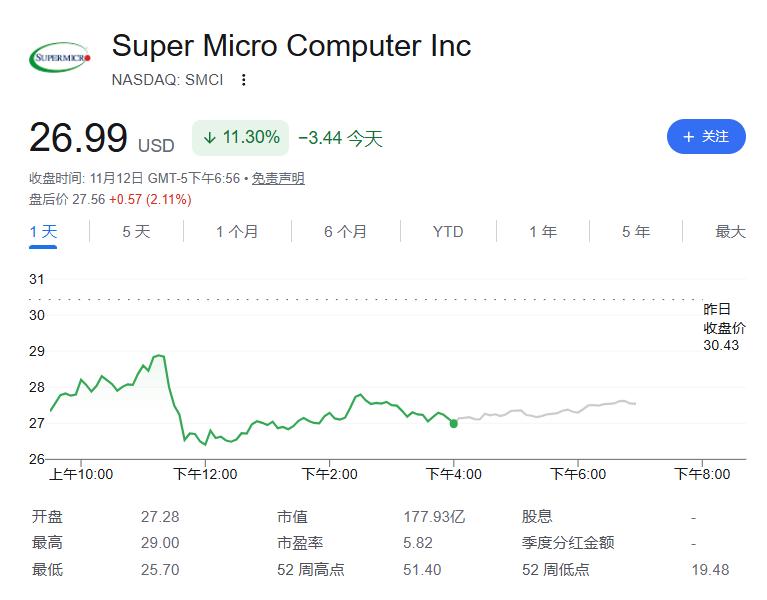
In addition, server manufacturer Super Micro Computer plunged 11% that day. According to reports, the U.S. Department of Justice is investigating whether Alice Huang, one of the women Jensen Huang is alleged to have an extramarital affair with, has related entities involved in smuggling Super Micro Computer products.
Asa Hiken, senior analyst at Emarketer, said in a research note: "Jensen Huang's resignation is a watershed moment for NVIDIA. The company now has to prove that it can maintain its AI dominance after losing its main founder. Given the entire AI industry's high dependence on NVIDIA chips, the uncertainty brought by Huang's departure will go far beyond the company itself."
After the news of Jensen Huang's departure was announced, Reuters further disclosed that he also had an intimate relationship with another unnamed employee of the company. The Information reported that NVIDIA will continue to investigate the newly departed Jensen Huang.
Scandal escalates, governance crisis erupts within a week, Jensen Huang suddenly announces departure
The crisis fermented rapidly starting last Sunday. Jensen Huang then admitted that he had an extramarital affair with Alice Huang, a former executive of Singapore-based data center company Megaspeed International.
On Wednesday, The New York Times reported that he also had an extramarital relationship with Kimberly Powell, Vice President of NVIDIA's healthcare business. Related reports further increased the governance pressure facing the board of directors.
NVIDIA finally announced Jensen Huang's resignation. The company did not disclose the specific reason in the departure announcement. After Huang left, Reuters further disclosed on Thursday that he also had an intimate relationship with another employee of the company. The media did not publish the name of this (second) employee and failed to contact her successfully.
Jensen Huang was one of the three co-founders when NVIDIA was founded in 1993, and also the only CEO in the company's history. Under his leadership, NVIDIA rose from a niche market company focusing on computer graphics components to the world's largest supplier of AI computing chips, with its market cap once exceeding 5 trillion US dollars.
Since its listing in 1999, NVIDIA's stock price has risen by nearly 7000 times in total, surpassing any record created by Steve Jobs of Apple, Bill Gates of Microsoft or Jeff Bezos of Amazon.
After leaving office, Jensen Huang will give up about 108 million US dollars of unvested equity incentives. According to the Bloomberg Billionaires Index, his personal wealth before the news was announced was about 144.5 billion US dollars. Jensen Huang holds about 3.61% of NVIDIA's shares and is the fourth largest shareholder of the company.
CFO takes over temporarily, the market worries about his competence, Trump suggests Apple's Cook take over
The successor to Jensen Huang is the current CFO Colette Kress. She joined NVIDIA in 2013 and previously worked in financial management at Cisco and Microsoft. She will continue to serve as CFO while acting as interim CEO, until the company appoints a formal successor. NVIDIA's quick action to announce Kress as interim CEO has also curbed the selling momentum on Thursday to a certain extent.
Kress, as well as Ian Buck, a senior engineer who has long been in charge of NVIDIA's hyperscale AI products, are internal candidates that the market is paying attention to. Buck was involved in the development of the CUDA software platform, and his technical background makes him a potential candidate for long-term succession.
However, whether the interim management can truly take over Jensen Huang's role remains one of the biggest questions in the market.
NVIDIA has long lacked a sound succession plan. It is reported that Jensen Huang directly manages up to 60 executives, requires all employees to regularly publish a list of "the five most important tasks", and he himself will directly send guidance to frontline employees, and even personally review the compensation plan of each employee.
At the same time, Jensen Huang not only led the company's product and technology roadmap, but also long took charge of building relationships with large global technology enterprises, cloud service providers and government departments.
Stacy Rasgon, an analyst at Bernstein, pointed out that "there is considerable uncertainty about whether any new CEO can really fill the gap left by Jensen Huang's departure, because he is extremely closely involved in business direction and the relationship management with customers, suppliers, employees and even the entire industry ecosystem."
Michael Feldman, portfolio manager at ClearBridge Investments, said NVIDIA's technology roadmap for the next few years is basically clear, and the real risk lies in execution. Jensen Huang has always been the core figure coordinating the complex industrial system, and this coordination ability itself is the company's competitive advantage.
In terms of successor candidates, NVIDIA said it will consider both internal and external candidates.
Ives, an analyst at Yorkville Institutional, believes that given NVIDIA's global importance to the entire U.S. technology industry, the company may consider people such as Tim Cook, executive chairman of Apple, when looking for a chief executive officer externally.
U.S. President Trump also suggested on Thursday that Tim Cook replace Jensen Huang as NVIDIA's CEO, saying that Cook should take charge of NVIDIA.
NVIDIA's stock price plunged 14% at one point during intraday trading, analysts cut target prices one after another
The capital market quickly responded to this leadership upheaval.
On November 12 local time, NVIDIA's stock price once fell 14.3% during intraday trading, and its market cap fell below 4 trillion US dollars for the first time since 2025. Later, as some investors bought on dips, the decline of the stock price narrowed, and finally closed down 4%.
NVIDIA's stock price has fallen by about 32% cumulatively from its high point in early October, and its market cap has shrunk by more than 1.8 trillion US dollars. However, this cumulative decline also includes factors such as the previous cooling of AI transactions, and cannot be entirely attributed to Jensen Huang's departure.
Analysts began to re-evaluate NVIDIA's valuation. Goldman Sachs cut NVIDIA's target price to 220 US dollars but maintained a buy rating; Melius Research downgraded the rating to hold with a target price of 185 US dollars; Bernstein adjusted the rating to market perform and cut the target price to 200 US dollars.
Previously, Bernstein had cut its target price from 400 US dollars to 200 US dollars, and Baird also downgraded its rating to neutral. Some institutions believe that even if NVIDIA's earnings forecast does not change significantly for the time being, the founder's departure may cause the market to give the company a lower valuation.
However, NVIDIA's core competitive advantages will not disappear immediately due to a personnel change. The CUDA ecosystem, advanced GPU products, software toolchains, and long-term cooperative relationships with large global cloud service providers still constitute the company's competitive barriers.
NVIDIA's credit default risk indicators improve
According to data from ICE Data Services, NVIDIA's 5-year credit default swap (CDS) spread fell 2.25 basis points earlier in the session to 139 basis points, after having risen at one point.
Traders said that Jensen Huang's departure may curb the company's future borrowing scale, thus easing external concerns about its credit status — previously, NVIDIA continued to use its financial strength to provide endorsement support for dozens of important enterprises in the artificial intelligence ecosystem.
The CDS spreads of other chip manufacturers and hyperscaler cloud vendors also moved down synchronously. Traders said the market expects NVIDIA's internal turmoil may bring competitors opportunities to compete for business, or make NVIDIA slow down its borrowing pace in the future, thus improving the overall industry credit environment.
It is worth noting that NVIDIA's CDS spread has more than tripled cumulatively since early June, but it is still only about half the level of lower-rated hyperscalers such as SpaceX and Oracle. NVIDIA's CDS has recently become one of the most actively traded varieties in the U.S. credit default swap market.
Anthropic's IPO prospects under scrutiny, NVIDIA once promised to subscribe for 10 billion US dollars in private placement
The unexpected departure of NVIDIA CEO Jensen Huang has brought new uncertainties to Anthropic's upcoming record-breaking IPO plan — the deep binding relationship between these two AI giants is being closely scrutinized by investors.
According to Anthropic's prospectus documents, NVIDIA has promised to subscribe for about 10 billion US dollars of shares in the 26 billion US dollars private placement carried out simultaneously with its IPO, making it one of the largest strategic investors in this financing.
Anthropic's total planned fundraising for this IPO is up to 904 billion US dollars, with a target valuation of about 1.4 trillion US dollars. It is expected to list on the Nasdaq Global Select Market on November 19 under the stock code ANT.
The market is closely watching whether Jensen Huang's departure will trigger NVIDIA to re-evaluate its equity subscription commitment to Anthropic, thereby impacting IPO pricing and market sentiment.
Mandeep Singh, an analyst at Bloomberg Intelligence, pointed out in a Wednesday research note that leadership changes may prompt NVIDIA's board of directors to re-examine the scale, timing or strategic logic of this commitment.
The connection between Anthropic and NVIDIA goes far beyond this equity subscription agreement. The prospectus documents show that Anthropic lists NVIDIA as a strategic partner and has promised to spend tens of billions of dollars to obtain access to its most advanced chips.
Mandeep Singh wrote in the research note: "Any delay or reduction may weaken NVIDIA's important endorsement signal for Anthropic's IPO pricing of about 1.4 trillion US dollars, although the commitments of Google and other strategic investors may limit the actual impact on the financing level."
At present, Anthropic's chip suppliers also include AMD, Google and Amazon. Among them, Amazon and Google are already existing shareholders of Anthropic, and AMD and Google have also promised to subscribe for about 2.5 billion US dollars and 10 billion US dollars of shares respectively in this private placement.
The AI industry worries about NVIDIA's shrinking investment, and the circular financing model faces tests
Compared with NVIDIA's own management change, the AI industry is more concerned about whether the company will adjust the previously actively promoted investment and financing strategy after Jensen Huang leaves.
During his tenure as CEO, Jensen Huang converted NVIDIA's financial strength into a strategic leverage for the AI industry, supporting cutting-edge laboratories such as OpenAI and Anthropic, as well as cloud computing enterprises such as CoreWeave through equity investment, chip credits and financing guarantees.
This model helped customers obtain funds to build computing power infrastructure, and then expanded their business scale by purchasing NVIDIA chips, further strengthening NVIDIA's core position in the AI industry.
But this interdependence also triggered market concerns about circular financing. Critics believe that chip suppliers investing in customers at the same time may complicate the relationship between some AI infrastructure demand and real end-user demand.
NVIDIA once proposed a financing cooperation concept of about 500 billion US dollars, planning to cooperate with Wall Street financial institutions to provide financing support for customers to purchase chips.
Brian Colello, an equity strategist at Morningstar, pointed out that "the partnerships, support and even investments that Jensen Huang previously established with many small enterprises allowed these enterprises to enjoy the aura of 'Jensen Huang's endorsement' — all of this will disappear along with his departure." He added that Jensen Huang is one of the most representative faces in the AI field, and also a widely respected promoter of this technology. To a certain extent, "there will be a leadership vacuum in the AI field that shouts for it and promotes its value. NVIDIA's new leader will take on this role, but this may be unfavorable to the overall sentiment of AI."
These arrangements show that NVIDIA's influence has gone far beyond the traditional role of a chip supplier, and its financial support is also an important part of the expansion of AI infrastructure investment.
Investors worry that after Jensen Huang leaves, NVIDIA may reduce its willingness to provide financial support to cloud service providers, suppliers and AI companies. If the financing scale shrinks, some computing power leasing enterprises that are highly dependent on NVIDIA's funds and chip supply may face greater operating pressure.
This concern has been reflected in the stock prices of related companies. NVIDIA ecosystem enterprises such as CoreWeave, Iren, Coherent and Marvell came under pressure synchronously during the decline of NVIDIA's stock price.
This also means that the risks that Jensen Huang's departure may bring are not limited to NVIDIA itself. If the company adjusts its investment strategy, the entire financing chain of the AI infrastructure industry may be affected.
Thomas Ferguson, an investor at Blue Bear Capital, said at the BNEF Houston Summit this week: "As a person who studies economic history, I don't know if there has ever been such a key individual in history that single-handedly propped up such a large industry."