Alcantara, the supercar fabric supplier: In the era of intelligent driving, the competition for automotive interiors focuses on tactile experience | Frontline
On October 28, Alcantara held a salon themed on color, material and surface technology at the Italian Cultural Institute in Beijing. What appeared to be a material exhibition conveyed a clear underlying signal: the competition in automotive interiors is shifting away from screens, chips and computing power, and refocusing on the quality and tactile feel of interior design.
Over the past decades, Alcantara has been widely labeled as a supercar-exclusive material. The suede-like tactile feel in the cockpits of Ferrari, Lamborghini and Porsche represents sportiness and scarcity. But the Chinese market is rewriting this set of rules. At the 2026 Beijing Auto Show, the interior of the Xiaomi SU7 Ultra is covered with approximately 5 square meters of Alcantara, applied to seats, steering wheel, instrument panel seams and door panels. Brands including Zeekr and Hongqi have also adopted it as the core visual element of their interiors. This same material is evolving from a performance symbol into a perceptible baseline of luxury for users.
The logic behind this trend is not complicated. As homogenization intensifies in the electric vehicle industry, it is difficult to create obvious gaps in the three core electric powertrain parameters, making the cockpit the remaining key position for brand narrative. Fabrics undertake three functions: first, tactile feedback, where the high friction coefficient prevents slippage of the steering wheel and seats during intense driving; second, lightweight performance and compliance, as they are lighter, produce lower VOC emissions, and achieve higher material utilization rates compared with genuine leather; third, emotional value, where color, texture and suede feel directly define whether the vehicle is a sportscar or a mobile living room.
At the event's roundtable session, Li Hanqing, General Manager of Pininfarina China, appeared on the same stage with representatives from the consumer electronics and material design sectors, and they were essentially discussing the same core issue: CMF (Color, Material & Finish) is no longer a subordinate part of styling design, but has been moved forward to the product definition stage. With the penetration of intelligent driving, the frequency of steering wheel use is decreasing, while people spend more time staying in the cockpit. Fabrics need to deliver both the comfort of low-intervention driving and distinguishable luxury perception at the same time.
For automakers, fabrics are transforming from a cost item into an experience asset; for material suppliers, the Chinese market is no longer a mere sales destination, but a test field for CMF innovation. When automobiles become the third living space, tactile experience will be remembered by people earlier than technical parameters.
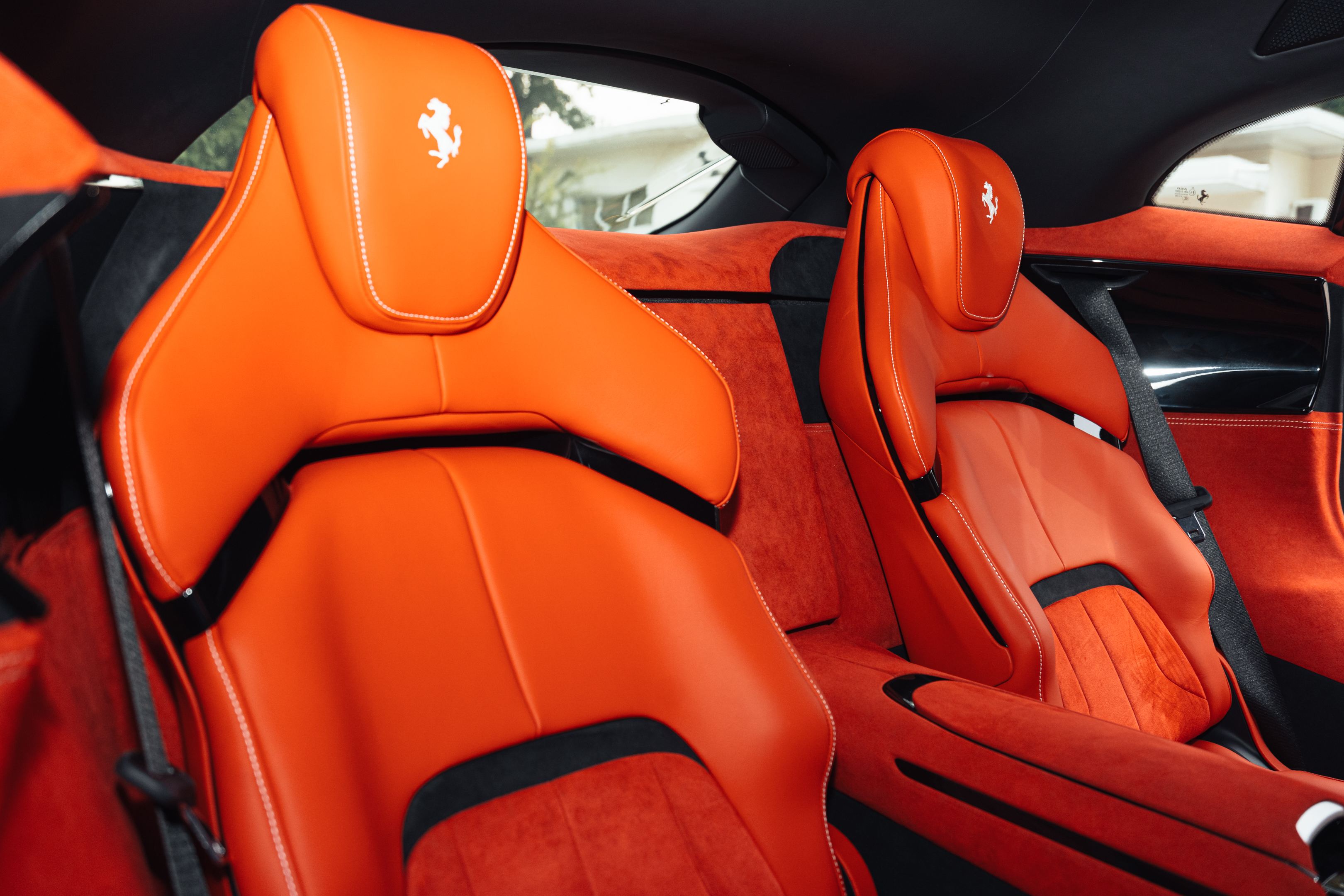
Ferrari brand models use Alcantara fabrics