A graphics card is sold for 50,000 yuan. Is AI pushing gamers out of the market?
A gaming graphics card that originally sold for over 10,000 yuan is now quoted at more than 50,000 yuan.
The graphics card market in Shenzhen's Huaqiangbei has recently experienced a rare price roller coaster ride.
In late October, high-end Nvidia RTX 50 series graphics cards saw 11 consecutive trading days of price increases. The quote for RTX 5080 on e-commerce platforms once approached 20,000 yuan, while the channel quote for RTX 5090 in Huaqiangbei reached 51,000 to 55,000 yuan, with some merchants even offering higher prices.
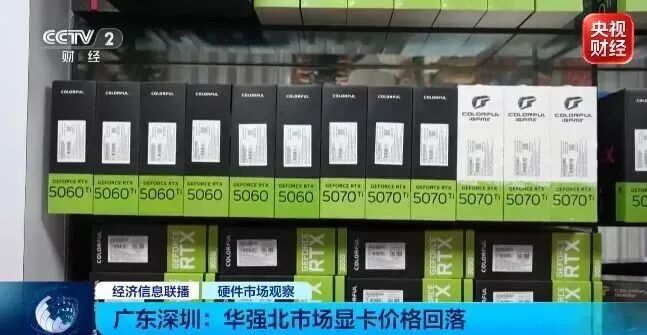
But the market rally did not last forever.
Starting from October 28, graphics card prices suddenly reversed downward. The RTX 5080 fell back from nearly 20,000 yuan to 16,000 yuan, with some models seeing obvious single-day declines. By early November, Huaqiangbei merchants had begun to stock goods cautiously. Faced with daily changing quotes, some people bluntly said they could no longer understand the market trend.
Why can a graphics card rise to two or three times its original price in a short period of time, and then drop sharply suddenly?
On the surface, this is a price fluctuation driven jointly by production suspension rumors, tight supply and channel speculation. But if we look further ahead, we will find a more noteworthy change:
In the past, graphics cards were mainly sold to gamers; now, AI developers, small and medium-sized enterprises and studios have also begun to compete for this type of hardware.
As AI becomes a new buyer of computing power, the market logic of consumer-grade graphics cards is changing.
Gaming Graphics Cards Are Being Repriced by AI
The most intuitive change in this round of market trend is the price.
The initial official retail price of the RTX 5090 was about 15,000 to 16,000 yuan, and the Huaqiangbei channel quote in late October had reached more than 50,000 yuan. The initial selling price of the RTX 5080 was about 8,000 yuan, and the market quote once approached 20,000 yuan.
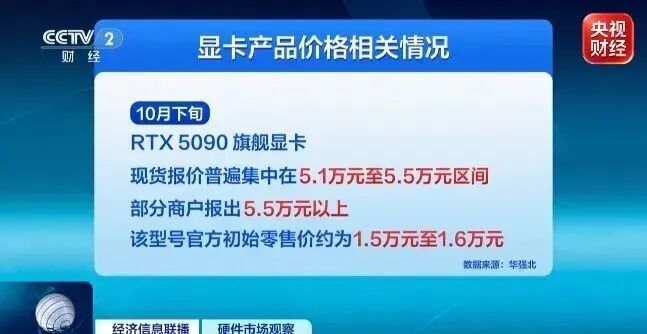
This is not a normal price increase for product iteration, but the result of simultaneous changes in supply-demand relationship and market expectations.
The first factor is AI demand.
In the past, consumers purchased high-end graphics cards mainly to run large-scale games, edit videos and do 3D rendering. The stronger the performance of the graphics card, the higher the game frame rate and the better the picture effect.
After the rise of generative AI, GPUs have gained new uses.
More and more developers are beginning to try to run large models locally. A high-end graphics card can undertake tasks such as model inference, AI image generation and code generation. Design studios can use it to run tools like ComfyUI and Stable Diffusion, and developers can also run quantized open-source models through local deployment tools.
For some small teams, purchasing a high-end graphics card means that they can complete some AI tasks locally without having to rely on cloud computing power services every time.
This has created new buyers for consumer-grade graphics cards.
In particular, high-end models with larger video memory capacity can support more complex local model tasks. The RTX 5090 is equipped with 32GB of video memory, which has certain advantages in local AI applications. For developers with limited budgets, although it is not cheap, it is still a relatively easily accessible computing device.
Gamers and AI developers have thus entered the same market.
But there is an easily overlooked difference here: consumer-grade graphics cards cannot completely replace professional AI computing cards. Large-scale model training, high-concurrency inference and enterprise-level computing still require professional products with stronger video memory capacity, bandwidth and multi-card interconnection capabilities.
The impact of AI demand on consumer-grade graphics cards is more reflected in local deployment, model inference and studio-level applications.
At the same time, the rise in graphics card prices is not only caused by people using them to run AI workloads.
Memory chips are becoming another important transmission chain. The demand of AI servers for HBM high-bandwidth memory continues to grow, and memory manufacturers are shifting resources to higher-margin products, which may also affect the supply and cost of consumer-grade video memory. Changes in the supply and demand of video memory such as GDDR6 and GDDR7 will eventually be transmitted to graphics card prices.
In other words, AI is not only competing for GPU computing power, but also changing the resource allocation of the entire memory industry.
The price pressure felt by gamers actually reflects the changes in the entire hardware industry chain behind it.
Nvidia Has Not Suspended Production, Why Is the Market Still Out of Stock?
If AI demand explains why graphics cards are more valuable, changes on the supply side explain why this round of market trend is so drastic.
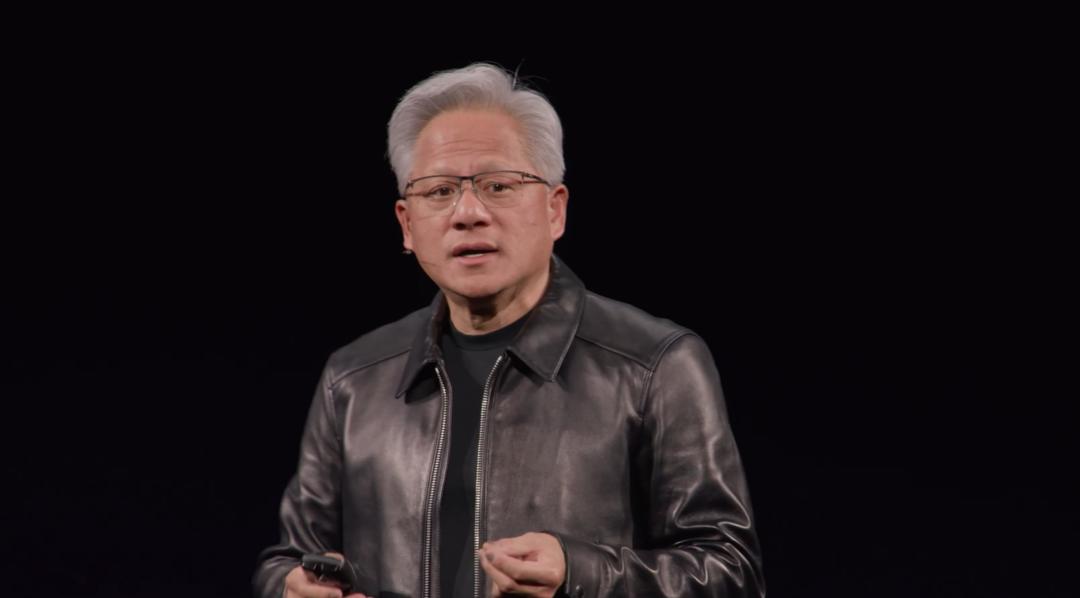
In October, news spread in the market that Nvidia might stop supplying chips related to the RTX 5090, which directly stimulated the tension among channel merchants and consumers.
Some merchants worried that they would not be able to get the goods later and began to raise quotes; channel merchants with inventory also had the incentive to hold back sales. The tighter the supply, the easier it is for prices to be driven up.
But this news soon reversed.
Nvidia executives publicly denied the production suspension of the RTX 5090, clearly stating that the product will continue to be shipped, while admitting that there are certain constraints on supply chain production capacity.
This means that the previously circulated production suspension news in the market cannot be taken as evidence that Nvidia has decided to abandon consumer-grade graphics cards.
However, the denial of the rumor did not immediately bring prices back to their original levels.
The reason is that the supply in the graphics card market is not a simple on-off switch.
Nvidia operates both consumer-grade GPU and data center computing businesses. With the continuous growth of investment in AI infrastructure, the data center business has become its most important source of revenue. In contrast, the weight of consumer-grade gaming graphics cards in the company's overall business is significantly lower.
From the perspective of commercial interests, Nvidia certainly has more incentive to prioritize securing the high-profit, high-demand AI computing market.
But this does not mean that Nvidia can arbitrarily shift all the production capacity of gaming graphics cards to AI chips. The two types of products have differences in chip design, packaging, video memory configuration and supply chain links, and production capacity adjustment is not a simple replacement.
What is really worth paying attention to is resource competition.
AI servers require a large number of GPUs, HBM and advanced packaging resources. When upstream production capacity is concentrated on serving AI infrastructure, consumer-grade graphics cards may be indirectly affected. Even if Nvidia does not actively suspend production of a certain model, the tight supply chain is enough to make channels generate expectations of price increases.
The price change in Huaqiangbei is exactly the result of this expectation being magnified.
More importantly, not all price increases in the graphics card market come from real demand.
A Shenzhen server parts wholesaler previously interviewed by Jiemian News mentioned that the price increase in October was not only due to tight production capacity, but also factors of news stimulation and channel speculation. When prices rise too high, downstream PC manufacturers and consumers may not be willing to take the orders, and channel inventory may turn into pressure.
This explains why the RTX 50 series rose for 11 consecutive trading days and then fell rapidly.
When prices rise, the market trades on the expectation of stockout; when prices fall, the market recalculates real demand.
When the price far exceeds the affordability of ordinary players, demand will be suppressed. If merchants find that high-priced graphics cards cannot be sold, they can only cut prices to clear inventory.
Therefore, this round of market trend is not simply driven by AI demand to push graphics card prices up continuously, but the result of the combined effect of supply shortage, market expectations and channel speculation.
Whose Business Has Changed After the Graphics Card Price Hike?
In this round of price fluctuations, the most directly affected group is gamers.
For ordinary consumers, a graphics card is a piece of hardware with a very low purchase frequency. Those who originally planned to spend about 8,000 yuan to upgrade their computers may now need to prepare more than 10,000 yuan; those who want to buy a flagship graphics card even have to face quotes of tens of thousands of yuan.
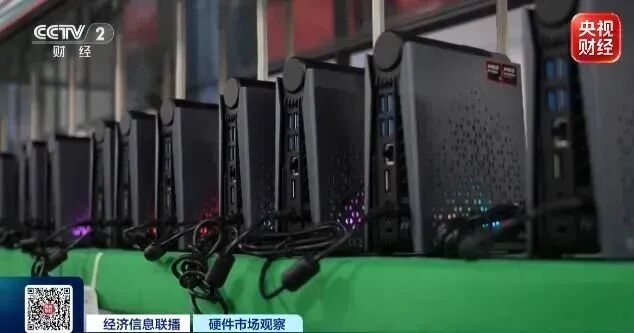
When graphics cards change from consumer electronics to scarce resources, gamers' purchase decisions will also change.
Some people choose to postpone the upgrade, some turn to previous-generation products, and some simply give up high-end discrete graphics cards.
But the rise in graphics card prices does not mean that everyone is benefiting.
Graphics card manufacturers have to face rising chip and video memory costs, channel merchants have to bear price fluctuations and inventory risks, and complete machine manufacturers need to recalculate product costs. For merchants who hoarded goods at high prices in advance, once the market trend reverses, the profits on the books are likely to disappear quickly.
The parties that truly have pricing power are still the manufacturers that control core chips and supply chain resources.
Nvidia's situation is particularly special.
It has a strong position in the consumer-grade graphics card market on the one hand, and is at the center of AI infrastructure investment on the other. The profit margin brought by the AI business is changing the company's resource allocation and operating priority for different product lines.
Gaming graphics cards are still important, but they are no longer Nvidia's core growth story.
For AI developers, the rise in consumer-grade graphics card prices may also change the economic calculation of local deployment.
When the price of an RTX 5090 reaches tens of thousands of yuan, the cost gap between purchasing hardware and renting cloud computing power needs to be recalculated. In the past, local deployment might be attractive due to one-time investment; now, if the hardware price is too high, on-demand rental of computing power may be more cost-effective.
This also shows that AI demand will not push up consumer-grade graphics card prices without limit. The more expensive the hardware is, the more users will look for alternative solutions.
From a longer-term perspective, what really determines graphics card prices is still whether supply can recover, whether AI demand can be sustained, and whether consumers are willing to pay high prices for the products.
This round of market trend has left a clear signal to the market: graphics cards are no longer just equipment for gamers, but also a computing resource in the AI era.
But scarce resources do not mean that prices will rise forever, and AI demand does not mean that every graphics card can turn into gold.
In the past, gamers determined how much a graphics card was worth; now, AI developers, data centers and upstream supply chains have also begun to participate in pricing.
When a graphics card faces two types of demand at the same time, its price is no longer determined solely by gaming performance.
AI has not made gaming graphics cards disappear, but it has made gamers no longer the only important buyers in this market.
This article is from the WeChat official account "Houxue Business", written by Wang Xin, and authorized for release by 36Kr.