HardKr Exclusive | Ex-Disney Asia-Pacific team members venture into developing an interactive intelligent base, securing millions of yuan in seed round financing
Author | QIU Xiaofen
Editor | YUAN Silai
Hard Krypton learned that SYNAPUFF, an interactive intelligence solution for AI Native terminals, has recently completed a seed round financing of several million yuan, with investors including FIRST RULE VENTURES and Pudong Venture Capital.
LI Shimiao, Co-founder and CEO of SYNAPUFF, told Hard Krypton that they hope to develop an interactive intelligence base for AI Native terminals, enabling agents to not only know what they can do, but also judge when to act, in what way, and how to adjust their behavior according to human responses.
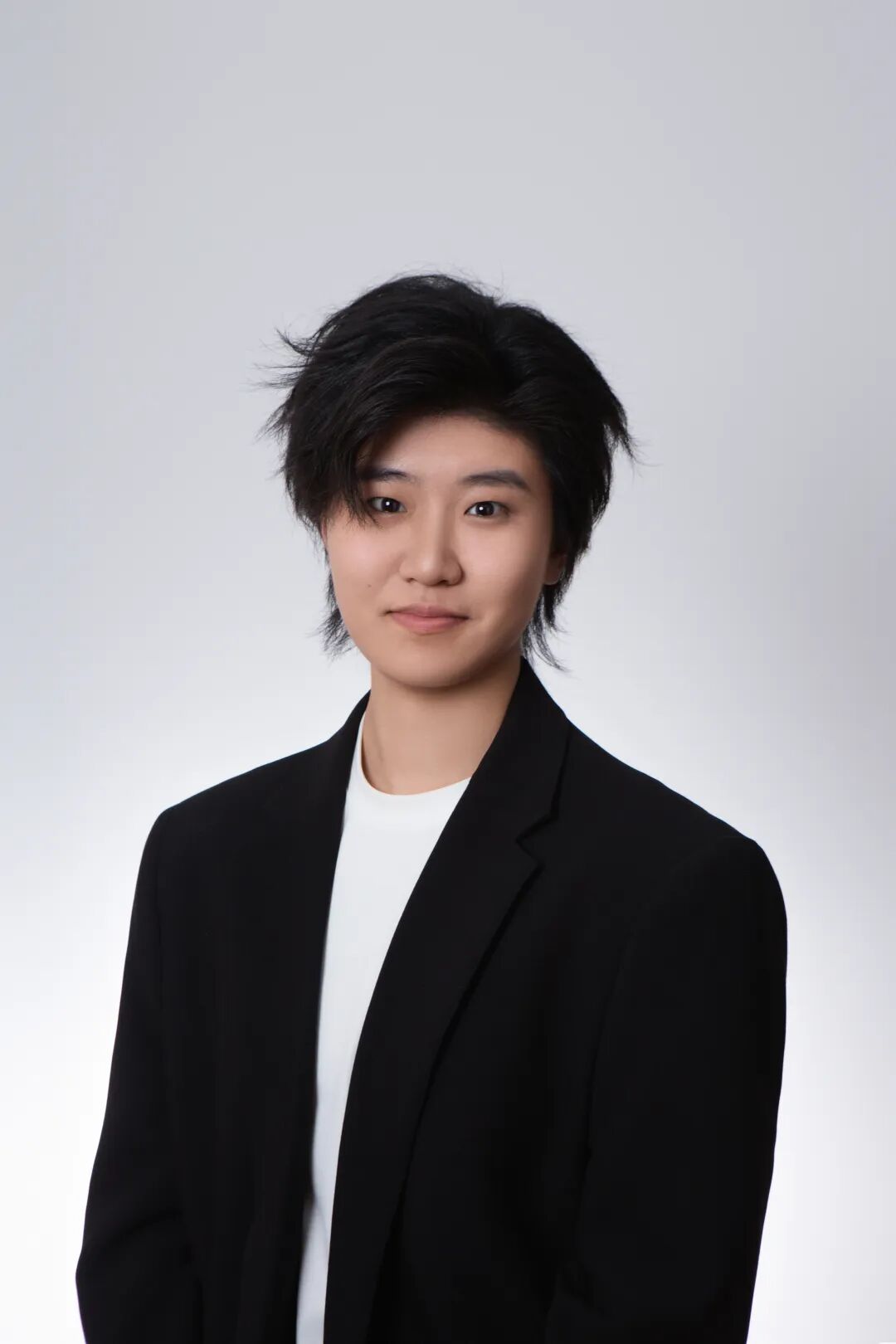
LI Shimiao, Co-founder and CEO of SYNAPUFF
LI Shimiao's experience spans entertainment experience, investment and human-computer interaction.
LI Shimiao once worked at Disney's Asia-Pacific headquarters, participating in derivative projects of a series of classic IPs as an early member. Later, she joined Shixiang Technology as a founding team member, participating in systematic research and investment in multiple hard technology unicorns;
In 2021, she founded Antouch Technology, focusing on haptic feedback models and multimodal interaction technologies to develop haptic advertising, haptic marketing and haptic cockpit products, serving clients including LVMH, Kering, Audi, etc., and has received investment from HSG.
In 2025, she began to carry out research at the Human-Computer Interaction Lab of The Hong Kong University of Science and Technology (Guangzhou), and launched her new entrepreneurial project in 2026. The other co-founder and Chief Scientist of SYNAPUFF is Dr. FAN Mingming, who is currently a tenured associate professor and doctoral supervisor at The Hong Kong University of Science and Technology (Guangzhou), and has long been engaged in artificial intelligence research in the fields of human-computer interaction and human-intelligence collaboration.
In the latest list of the World's Top 2% Leading Scientists released in October 2026, Professor FAN was selected for his research achievements in the fields of human factors and artificial intelligence.
Over the past decades, the basic logic of human-computer interaction has always been actively initiated by humans -- no matter keyboards, touch screens or voice assistants, users issue clear instructions and the device gives corresponding feedback.
But when AI becomes the native capability of terminals, agents begin to have the possibility to continuously perceive the environment, understand the context and actively provide services, and the traditional "instruction-response" mode also begins to show limitations.
In particular, as basic large model companies begin to extend their capabilities to various intelligent terminals, AI's task understanding and execution capabilities are expected to be further improved.
In contrast, how to understand human intentions, judge the timing of interaction, and respond in an appropriate way is still a problem that has not been fully solved, and it is becoming a new competitive focus in the industry.
SYNAPUFF positions itself as an interactive intelligence company for AI Native terminals. LI Shimiao told Hard Krypton that what they hope to improve is the "emotional intelligence" of agents. This is not just about identifying user emotions, but enabling agents to have the ability to understand interaction contexts, judge interaction boundaries and dynamically adjust their own behaviors.
For example, a robot knows that the user may be thirsty, but if the user is in a meeting, directly handing over water may not be appropriate. Therefore, the robot needs to combine the environment, user status and interaction history to judge when to intervene with its action, how to respond, and when to exit.
To this end, the company proposed the "P Framework" -- trying to transform the traditional "perception-understanding-action" into an interaction closed loop of "probe-receive response-decision-receive response-decision".
That is to say, the agent does not need to accurately understand the user's intention from the very beginning, but can first express the intention through eyes, body turning, voice or other lightweight interaction signals, and then decide to continue, wait or exit according to the user's response.
Specifically, the "P Framework" mainly includes three components: an interaction dynamics model that predicts user responses that actions may trigger; a personality strategy that selects actions according to roles, relationships and behavior constraints; and a non-verbal behaviour generation model that dynamically schedules different modalities to intervene in interactions.
However, this architecture is not intended to retrain all underlying capabilities, but hopes to organize existing models such as visual recognition and emotion recognition, and combine native non-text language action generation capabilities to form an independent interaction decision framework that can adapt to different terminal forms. At present, the company says it is training relevant models.
Data is also the key to this set of models.
LI Shimiao told Hard Krypton that SYNAPUFF plans to accumulate interaction data by labeling controlled experimental data, public film and television data, and real scenario deployment, and train the model to optimize interaction strategies by comparing different actions and user feedback.
Different from evaluating the model mainly based on whether the task is completed, interactive intelligence also needs to pay attention to whether a behavior occurs at the right time, whether the user is willing to respond, and whether the interaction can continue naturally. This means that the model needs to get feedback from the two-way interaction between humans and agents, instead of only judging whether an instruction is executed correctly.
In terms of future business model design, the company hopes to explore technical cooperation and commercialization paths with different types of AI Native terminal enterprises around the interactive intelligence technology platform, with the core goal of making the interactive decision-making capability a reusable technical capability across terminals of different configurations.
The following is the interview between Hard Krypton and LI Shimiao (slightly edited)
Hard Krypton: Your career experience seems diverse, why did you finally choose to start a business in the AI Native terminal interaction field?
LI Shimiao: I found myself longing for entrepreneurship when I was in high school. Rather than helping people complete tasks, I want to create experiences that make people feel happy, surprised, and even incredible.
My career path seems jumpy, but the main line has never changed. At Disney, I learned how the best character IPs and experiences are defined by scientific system engineering; after entering the investment industry, I began to understand technological evolution and its impact on life; later, I founded Antouch Technology, and tried to turn indescribable feelings into experiences that can be generated and transmitted through haptic interaction.
In early 2020, I read a paper introducing the virtual humidity rendering mechanism at CHI and was greatly inspired. The lead author of the paper is my current co-founder Professor FAN, and I therefore began to carry out systematic learning in the field of human-computer interaction.
All these experiences point to the same question: how many new experiences can technology create for people? AI Native terminals let me see that there are new possibilities for technology to create new experiences, and the stage has extended from the screen to the real world.
Hard Krypton: Why has the AI Native hardware industry begun to pay attention to interactive intelligence recently?
LI Shimiao: In the past, the whole industry mainly solved two types of problems: one is the level of intelligence, including the ability to perceive tasks, reason, understand tasks and respond; the other is the terminal body, including battery life, components, joints, dexterous hands, complete machines, etc.
But from the perspective of the broader AI terminal industry, basic models are gradually enabling different devices to have the capabilities of understanding, reasoning and execution. The competition in the next stage may not only be about whose model is smarter, but also about who can make these intelligent capabilities used in a more natural and human-habit-compliant way.
Therefore, a new interaction paradigm needs to be developed here. Essentially, we are experiencing the transition from traditional one-way task-understanding interaction to two-way intelligent interaction, which will include continuous interaction between humans and agents, as well as collaboration and communication between multiple agents. With the progress of hardware and task execution capabilities, AI Native terminals will inevitably need to further solve the problem of how to enter the real social space and coexist with humans for a long time.
Today's new generation of terminal industry is a bit like the shanzhai mobile phone era before the emergence of smartphones from 2006 to 2007. There are a large number of different AI recording cards, AI portable devices and even companion robots on the market, and it is difficult for users to tell which one is the product they can keep using all the time.
Just like smartphones gradually established the full-screen interaction paradigm back then, I believe that AI Native terminals also need to find their own interaction paradigm and redefine the relationship between humans and terminals.
Hard Krypton: What is the difference between the interactive intelligence you are working on and the basic models?
LI Shimiao: Our focus is not to retrain a large model with all knowledge and task capabilities, but to explore models and technical architectures that can adapt to different scenarios and terminals around the specific problem of intelligent interaction.
We hope that after limited task training, the model can still understand and try to deal with problems when facing new scenarios that it has never seen before, and provide two-way interaction capabilities for agents.
For example, different terminals may use different sensors and expression methods, but they all need to solve some common problems: judging whether the user is willing to interact, predicting the possible reactions caused by their own behaviors, and how to adjust the interaction strategy according to feedback.
We hope to abstract these common capabilities, instead of redeveloping a set of interaction logic for each hardware configuration.
Hard Krypton: What is the current progress of your technology R&D?
LI Shimiao: At present, the team has built the relevant technical framework, and is focusing on training the native cross-configuration non-verbal behaviour action generation model. This is an important R&D work in our exploration of interactive intelligence. Through terminals with physical bodies, we can observe how interaction behaviors affect user responses, and verify the relevant interaction decision-making mechanisms.
The whole project is in the early R&D stage, and the main work focuses on technical route and product definition.
Hard Krypton: How do you ensure that your technology will not be replaced by basic model companies?
LI Shimiao: If the core value is only to improve the efficiency of a certain task, it may indeed be quickly covered by the progress of basic models. However, human experience, behavior and social relations form a more complex problem space, which is difficult to measure by simple efficiency indicators. We hope to form a division of labor with general basic models: the former is responsible for understanding instructions and completing tasks, while we focus on how to establish appropriate interaction relationships with people.
We believe that the value of interactive intelligence comes not only from whether the model can understand a scenario, but also from whether it can form a continuous interaction closed loop on real terminals. For example, the same prompt and the same action may trigger completely different user responses at different timings and under different relationship backgrounds. Only by continuously obtaining interaction feedback, evaluating interaction effects, and optimizing behavior strategies can this capability be improved.
We hope to form a division of labor with general basic models: the former is responsible for understanding instructions and completing tasks, while we focus on how agents can transform their capabilities into natural and appropriate interaction experiences.
Homepage image source | SYNAPUFF official website