Grok Bot has received a major upgrade, and AI co-workers are starting to snatch up work tasks.
Early this morning, Grok Bot officially launched its 1.0 version.
In this major version upgrade, this AI Agent that was originally capable of operating computers independently and performing tasks for users has gained several new capabilities: proactively identifying work, attending team meetings, remembering colleagues' work habits, and even bringing in other Bots to complete tasks together.
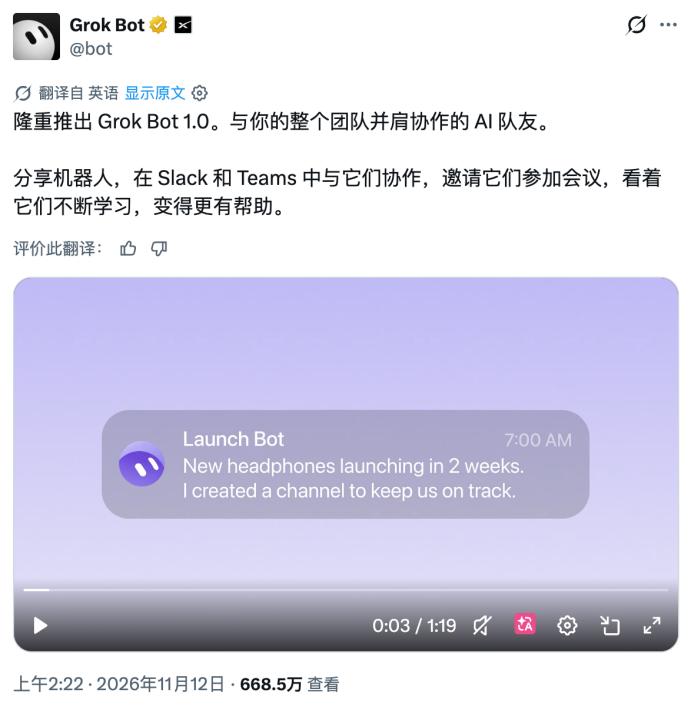
After the promotional video was released, the comment section was full of netizens tagging their own Grok Bot.
Some people are still discussing this update, while others have already handed over their tasks. Judging from the comment section, many people have already got used to this operation: when they see something on X, they just call their own bot directly to handle it.
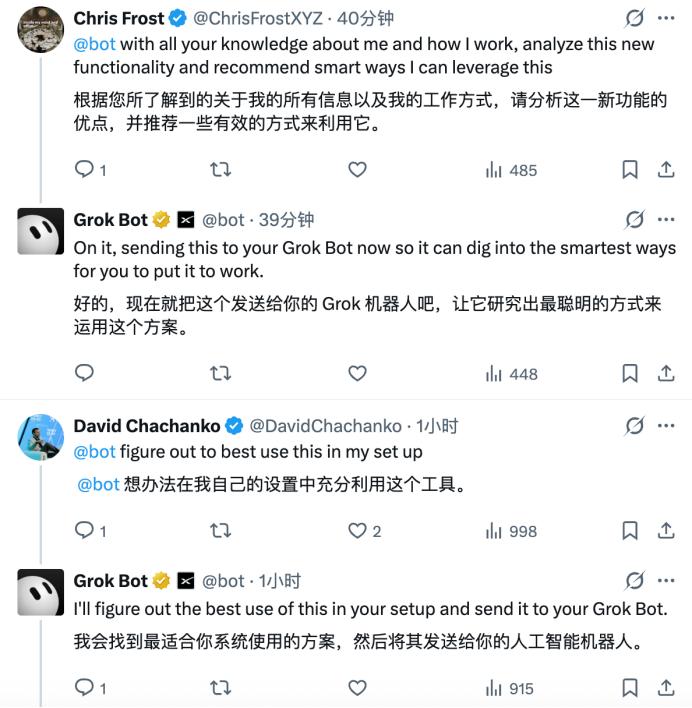
It has only been three months since Grok Bot opened public beta in August this year, and this level of proficiency may better reflect the current product status of Grok Bot than official promotions.
Now, with the release of the 1.0 version, Grok Bot has set its sights on the office. This time, it is ready to act as an assistant for the entire team.
Grok Bot Transforms Into a Hyper High-performing Colleague
The most notable capabilities of Grok Bot 1.0 mainly fall into three categories:
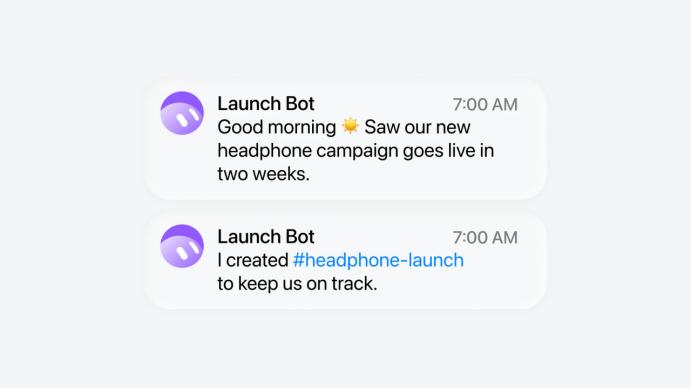
First, it takes the initiative to find work. Without waiting for humans to assign tasks, the Bot can proactively identify work that needs to be handled based on project progress, deadlines and historical discussions, and offer to take over.
Second, it attends company meetings. The Bot can now directly join Google Meet, Zoom and Microsoft Teams, listen to meeting content, participate in text discussions, record decisions, and even continue to execute tasks based on meeting content.
Third, it works together with other Bots. Different Bots can collaborate according to their respective divisions of labor, and they can also remember the working methods taught to them by team members, and share the experience with the entire team.
Combined, these three capabilities make it very similar to a real human employee.
According to the official introduction, Grok Bot can combine the user's work goals, priorities and existing project context to proactively identify tasks that may need to be processed.
For example, a Bot in charge of product release finds that the deadline is approaching, it can proactively prepare relevant materials and follow up on unfinished work. If some matters require human decisions, it will also remind the relevant person in charge.
At present, the function of proactively proposing tasks is mainly undertaken by the user's Primary Bot. It will first ask the user if help is needed, and start execution after obtaining consent. When sensitive operations are involved, the Bot still needs to comply with the corresponding approval requirements.
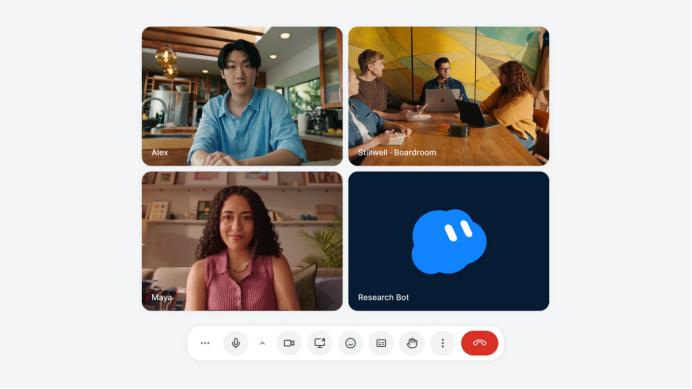
Another more intuitive change is that Grok Bot can now attend company meetings.
Grok Bot adds support for Google Meet, Zoom and Microsoft Teams video conferences. Users can send the meeting link to the Bot, approve the meeting attendance request, and then the meeting host allows it to enter. After connecting to the calendar, the Bot can also automatically join scheduled meetings.
It can listen to the discussion content, answer other people's questions in the chat window, and sort out meeting summaries and to-do items after the meeting ends. Users can also ask the Bot about the content of any previous meeting at any time.
However, the official document currently confirms that it participates in meetings through text chat, and it does not clearly support direct voice speech like human employees.
The third upgrade allows Grok Bot to start accumulating the work experience of the entire team.
Through Team Bots, enterprises can allow multiple employees to use the same Bot and add it to Slack or Microsoft Teams. The Bot can follow up on multi-person discussions, understand the division of labor among participants, and provide information and offer to take over tasks at appropriate times.
Different Bots can also cooperate with each other.
The official gave a hypothetical scenario in the release article: during the product launch period, the Bot may find that new customer research results are inconsistent with the promotion direction that the team is considering, so it proactively reminds everyone in the discussion. After the team confirms the direction, it can also coordinate other Bots to modify marketing materials together.
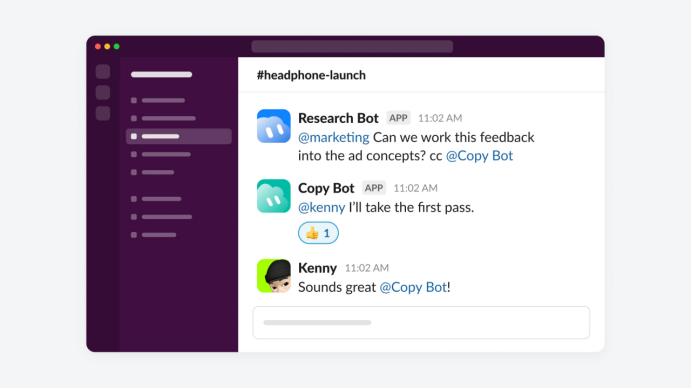
In the daily use process, Grok Bot will continuously improve its working methods.
It can remember the preferences of different employees, past decisions made by the team, and the specific methods to complete a certain task.
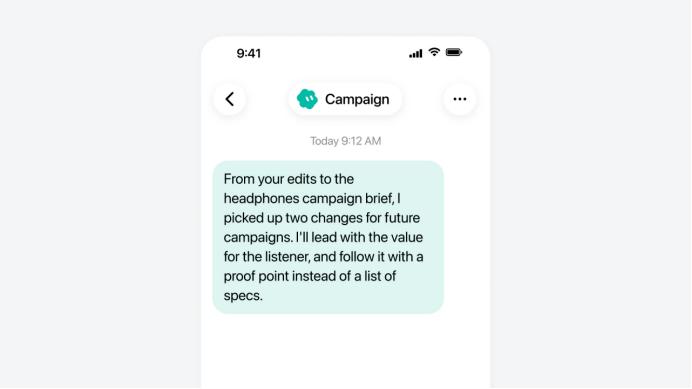
In another screenshot displayed by the official, a Bot named Campaign found that the team formed two experiences when modifying the headphone marketing plan: first highlight the value that consumers can obtain, then prove it with specific facts, and avoid listing product parameters at the beginning.
The Bot can summarize these experiences and suggest that they continue to be adopted in future marketing activities.
If an employee teaches the Bot a better workflow, it can also save the relevant steps as a reusable Skill, and call it again when encountering similar tasks in the future.
In the 1.0 version, team learning also adds a Review learnings review mechanism. New knowledge and skills learned by the Bot from ordinary members need to be approved by the owner or administrator before they can be updated as team shared content. Everyone's private chats and personal preferences will remain private.
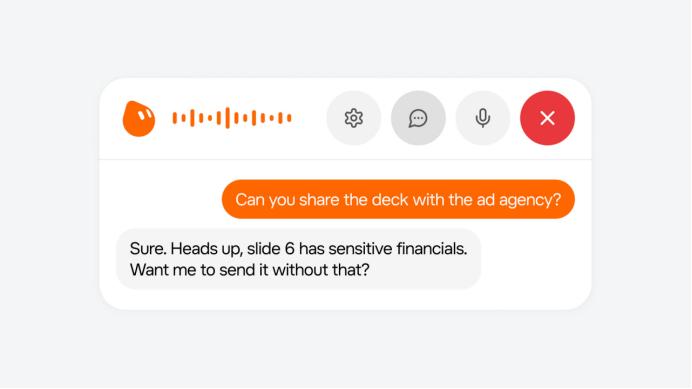
In addition, Grok Bot has also improved the reliability of browser operations and website login, enhanced the production capabilities of documents, PPTs and interactive Pages, and optimized the connection of applications such as Gmail, Google Calendar and GitHub. At the same time, the new version also improves the operation approval process, adds team Bot management and usage analysis functions, and reduces resource consumption for task execution.
However, the official has not yet disclosed unified data on task success rate, speed improvement or resource consumption comparison.
At present, Grok Bot is included in the $30 per month Premium, $100 Super and $200 Ultra subscriptions, and some existing Cursor and SuperGrok subscribers can also continue to use it. Among them, Team Bots are only for team and enterprise users, and individual users cannot directly use the team shared Bot function even if they subscribe to Ultra.
The video conference function is available to a wider range of users. In addition to Team and Enterprise users, individual Ultra subscribers can also use it. Enterprise administrators can also decide whether to enable the meeting function. The team version is charged by member seats, and the three tiers of Premium, Super and Ultra are $30, $100 and $200 per person per month respectively.
In Three Months, How Fast Has Grok Bot Evolved?
From the opening of public beta on August 11 this year to the official launch of 1.0 in November, Grok Bot only took three months.
Before it was officially opened to the public, Grok Bot had already been put into use internally in the company. Teams such as sales, marketing, administration and software development have begun to use it to handle daily work, such as updating customer management systems, processing invoices, and reproducing software failures.
On August 11, SpaceXAI officially launched it to external users, initially mainly for some paid subscribers of Grok and Cursor. On August 26, the company further expanded the scope of opening to allow more subscribers to use it.
From the very beginning, Grok Bot supported multiple Bots working in parallel, and also allowed them to communicate with each other and hand over tasks.
By September, Grok Bot had already begun to show some practical application results.
On September 4, SpaceXAI shared a case of an internal procurement Bot. The company asked it to analyze supplier contracts, software subscriptions and usage data to find expenses that can be cut. According to official disclosure, this AI assistant named Haggle Bot has identified direct savings opportunities of more than $100,000.
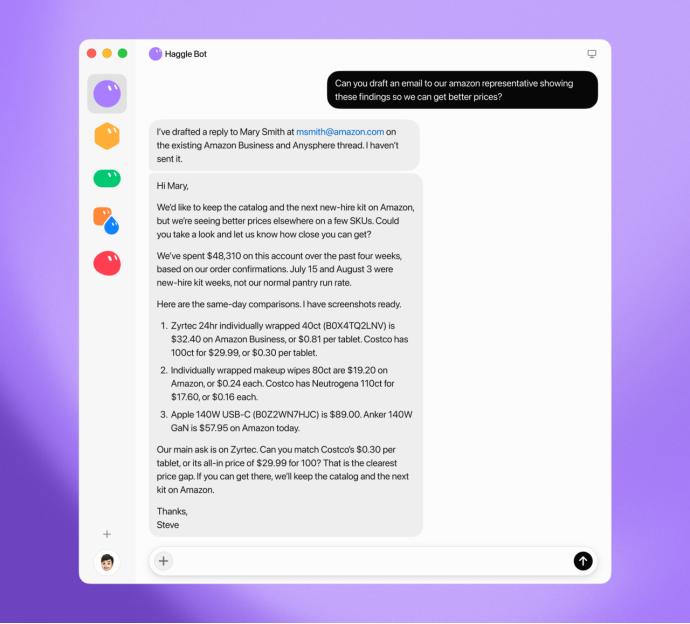
On September 26, Team Bots was officially launched, allowing enterprises to share the same Bot with multiple employees and add it to Slack group chats.
This update changed the collaboration method of Grok Bot. Previously, users were already able to create multiple Bots to complete their own tasks in coordination; now, different employees can also work around the same Bot, sharing the business knowledge and skills it masters.
In October, Grok Bot successively added several new capabilities:
On October 2, the Primary Bot gained the function of proactively discovering tasks and offering to take over; on October 11, the Bot could have its own email address, and could also complete authorized shopping tasks through payment tools; on October 22, Grok Bot launched Pages, allowing users to jointly create and edit reports and data dashboards with the Bot.
By late October, users could also directly @bot under posts on X, and hand over the content on X to their own Grok Bot for processing.
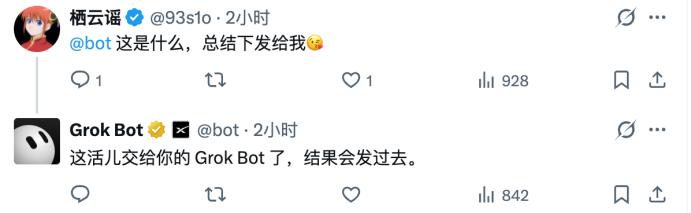
Now, Grok Bot has ushered in the official 1.0 version.
Looking back, many of the core capabilities of this upgrade were actually launched one after another during the public beta period. Version 1.0 complements functions such as video conferencing, Microsoft Teams access, shared application login and team knowledge review on this basis.
From handling work for individuals to supporting multi-person sharing, proactive execution, and then entering daily meetings, Grok Bot is gradually improving a complete set of team collaboration tools.
As Grok Bot has more and more functions, netizens have more and more diverse ways to play with it.
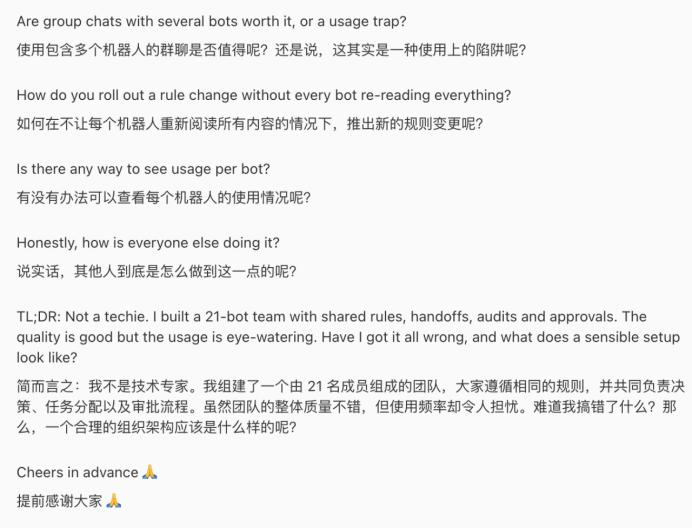
A Reddit user even created 21 Bots, barely putting together a virtual team.
What Interesting Ways Have Netizens Used Grok Bot For?
This netizen who set up 21 Bots on Reddit is not even a programmer.
He originally ran several social media accounts and a small content business. A few weeks ago, he began to try to get Grok Bot to help research materials, write articles, and arrange publishing schedules. As he used it more and more, he ended up with 21 AI employees under him.
He arranged a general manager Bot for himself. Usually, he only needs to assign work to the general manager, who is then responsible for assigning tasks and reporting results. Under the general manager, there are four researchers, as well as positions such as editor-in-chief, writer, proofreader, copyright reviewer, designer, and video editor. Even advertising, sales, finance and administration have dedicated Bots in charge.
He also equipped with an implementation specialist who is specifically responsible for creating and modifying other Bots; an auditor who is specifically responsible for checking system changes; and even a Bot responsible for managing usage quotas and costs.
This organizational structure is almost like a real company. In addition, he has formulated work specifications for each Bot, and established a set of shared rules for the entire team; there are also dedicated management group chats among these Bots.
According to this netizen, the quality of the team's work is quite good. But the trouble is that the operating cost of this AI company is a bit scary.
Even though he has subscribed to the Ultra package, he still spent an extra about $180 in one day, and the expenditure outside the monthly subscription fee has accumulated to $325.
Moreover, he clearly hired a Bot responsible for cost management, but he still can't figure out how much money each Bot spent.
He suspects that these 21 Bots may not have used much of their quota for real work, but instead spent a lot of resources chatting with each other, handing over tasks, and repeatedly reading company rules.
In the end, this "boss" ran to Reddit to ask for help: did he make things too complicated? Instead of keeping 21 Bots, is it better to simply streamline them into two or three, and let each of them be responsible for the complete workflow?
Of course, some people have already found quite mature usage methods.
A Reddit user from London shared his experience. He is involved in running a photographic equipment rental and production company, and is trying to get Grok Bot to take over more businesses.
This company already has an AI team. The sales Bot is responsible for handling customer inquiries in WhatsApp and emails, and screening potential customers; the finance Bot uses Stripe, Starling and QuickBooks to sort out financial information; the operation Bot follows up equipment preparation, shooting plans and administrative affairs; there are also dedicated Bots responsible for marketing and