Bringing stars back from the dead and rejuvenating them: How far can AI-powered film and television industry really go?
The other day, "Ji Gong", a memory shared by an entire generation, passed away.
With the line "torn shoes, tattered hat", the old monk who wandered through the sufferings of the world waving a fan will never return.
Fortunately, in February this year, You Benchang authorized the image and voice of "Ji Gong" to an AI short drama *Ji Gong: The Fake Dragon Subduer*.
The so-called authorization means entrusting a person's appearance and voice to AI for simulation, while the real person can act as the art director or final quality reviewer, and co-produce an AI work with the production team.
After Mr. You passed away, this short drama has become a digital heritage he left behind.
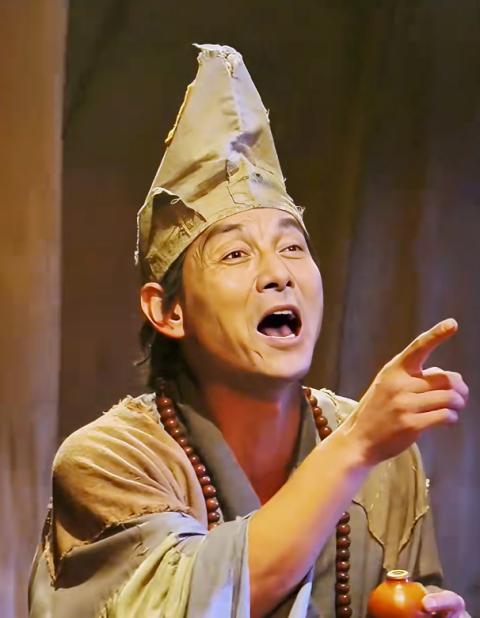
The AI-generated image of You Benchang in *Ji Gong: The Fake Dragon Subduer*
The technology he embraced has achieved explosive growth this year.
In the first half of this year, the number of AI short drama users has exceeded 600 million. On Douyin alone, more than 220,000 new AI dramas and animation dramas were added. The annual market size of AI dramas and animation dramas is expected to exceed 400 billion yuan, a 138% increase over last year.
On August 31, the 30-episode full-length AI drama *Post Journey to the West* was broadcast on Hunan TV in prime time, with each episode 40 minutes long and no real actors in the whole series.
In the early morning of September 5, the 12th season of the hit AI drama *Legend of Ten Thousand Demons* premiered, with a popularity of 137 million, and the cumulative views of the series have exceeded 6 billion.
Behind the prosperity, there are always hidden worries.
Also this year, Joey Wong, who has been out of the showbiz for 22 years, authorized her portrait at the peak of her career between the ages of 20 and 30 to NetEase's client game *Tianxia*.
To celebrate the 18th anniversary of this game, NetEase used this face to create a full-AI short film *Phantom Shadow* — letting AI "reprise" the role of Nie Xiaoqian for Joey Wong.
However, in the face of the brand-new AI-generated image, some netizens commented: "It looks too much like a generic internet celebrity style."
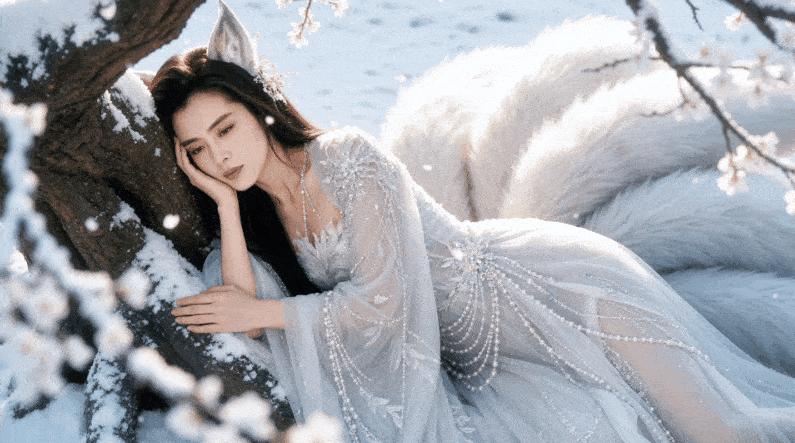
The commercial film of "Joey Wong (AI)"
It is not an isolated case that celebrities commercialize their own AI avatars.
Less than a month after the release of *Phantom Shadow*, artist Qi Wei also officially announced her personal AI digital avatar "Han Qingxia", who plays the leading female role in the AI animation drama *Doomsday Midsummer*, with Qi Wei herself participating in the whole supervision process.
And she also faced doubts from netizens: whether the low-angle upward shot in the promotional video is crossing the line in an inappropriate way.
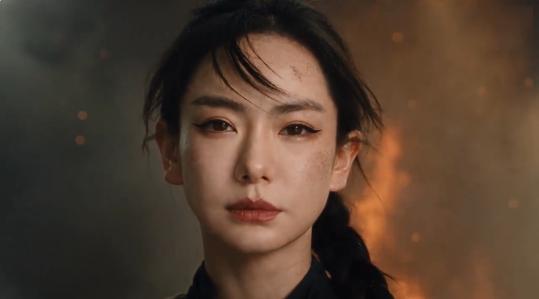
Qi Wei's AI digital avatar "Han Qingxia"
How far can AI film and television really go?
01 AI has made it, but not good enough
For a long time, the public has been full of expectations for the application of AI in the film and television field.
But at present, producing works authorized by celebrities is actually a very thankless task.
Take the AI version of Joey Wong's *Phantom Shadow* as an example. When it was first released, the hashtag #JoeyWongAI NieXiaoqian# immediately topped the Weibo hot search list, with the topic reading volume exceeding 2 billion and nearly 3 million views on Bilibili.
Some viewers commented after watching it: "Thank you technology for letting me see Nie Xiaoqian one more time."
It should be noted that when *A Chinese Ghost Story* was released in 1987, it grossed 18.83 million Hong Kong dollars at the box office in Hong Kong, set off a boom of "female ghost films" in Taiwan, and South Korean audiences called Joey Wong "Joey" which happens to be homophonic to "blessing" in Korean, a name that has been used to this day.
Therefore, when the AI version of Joey Wong appeared in *Phantom Shadow*, many netizens felt the impact of their old memories.
The commercial film of "Joey Wong (AI)"
The creative team was well aware of the value of this face, so they spent 11 months striving for perfect face restoration: training with more than 200,000 frames of facial motion capture data, modeling with 15 years of classic image materials and emotion semantic alignment algorithm, and iterating 47 versions for just one smile.
However, with all these buffs stacked up, the newly designed nine-tailed fox character feels further and further away from the Joey Wong in people's memories.
In hindsight, the audience has long set their demands silently in their hearts, only wanting the familiar vibe from their memories.
Therefore, the improvements and upgrades made by the production team are not easy to win over the group of audiences who watched *A Chinese Ghost Story* back then.
Similarly, an AI short drama *The Tale of Peach Blossom Pool* was broadcast on Anhui TV this year, telling an intangible cultural heritage story related to papermaking.
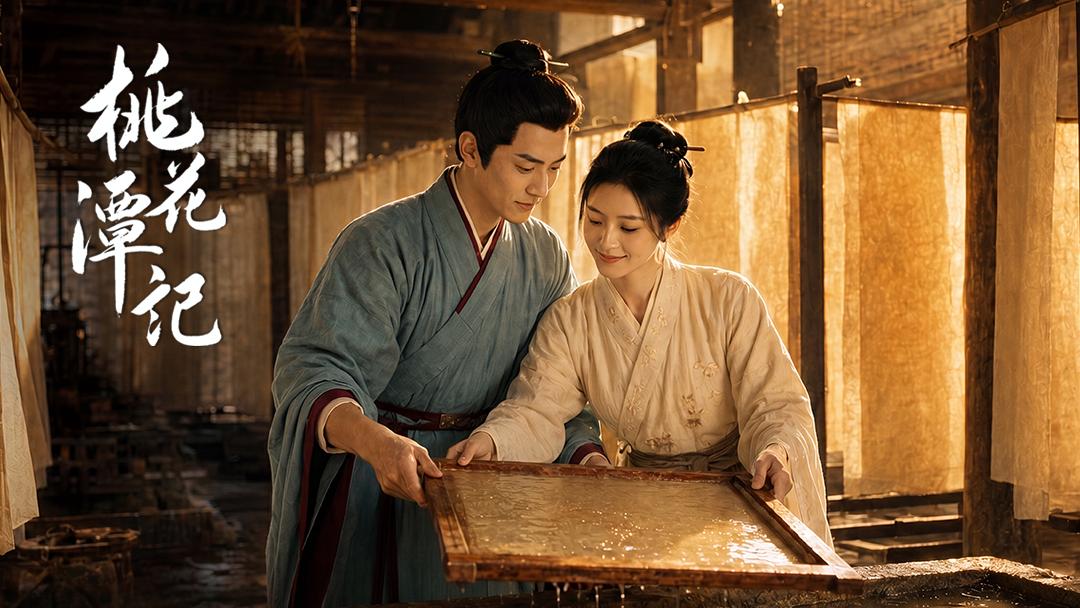
AI short drama *The Tale of Peach Blossom Pool*
As soon as the series was broadcast, a topic appeared on Weibo hot search: TV stations have started to broadcast AI dramas.
Obviously, there is another mismatch between the public's demands and the production team's ideas.
What the creative team wants to achieve is to restore an intangible cultural heritage story with AI technology. However, what the audience feels is that this short drama is too different from previous TV series — the lip movements don't even match when the characters speak.
A brief summary shows that current AI works do not lack advantages, but still have shortcomings, making it difficult to form a commercial closed loop.
According to DataEye data, in the first half of 2026, 221,900 new AI dramas and animation dramas were added on Douyin, but only 1,055 of them have exceeded 100 million views, accounting for about 0.48%.
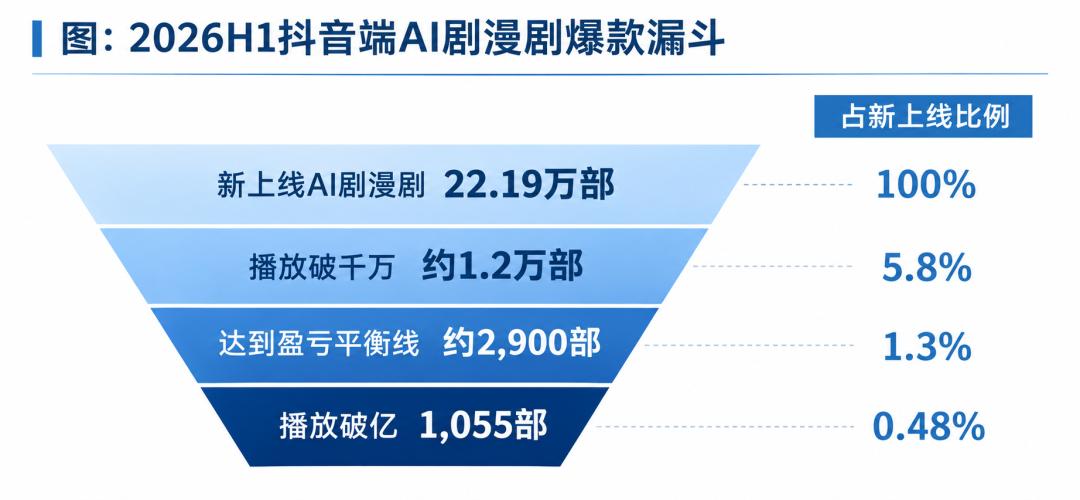
If 50 million views are taken as the break-even line, only 2,886 works have crossed this line.
Such data feedback almost equates AI drama productions with shoddy work.
From the perspective of celebrities, authorizing AI works is to explore new starting points and new opportunities.
But it also puts greater traffic pressure on themselves.
02 I know you are against it, but please don't oppose it for now
Places with the highest public discussion are often the places with the most controversies.
Take *Phantom Shadow* for example, there are actually two problems:
First, the short film directly stitches the three images of Nie Xiaoqian, Bai Suzhen and the nine-tailed fox together, which is logically confusing to the audience.
Second, Nie Xiaoqian and Bai Suzhen are calibrated frame by frame against the film materials, with full restoration of styling, lines and dubbing. But the nine-tailed fox has no film and television works as a template, so AI directly turned Joey Wong into a generic internet celebrity face.
Pictures speak louder than words:
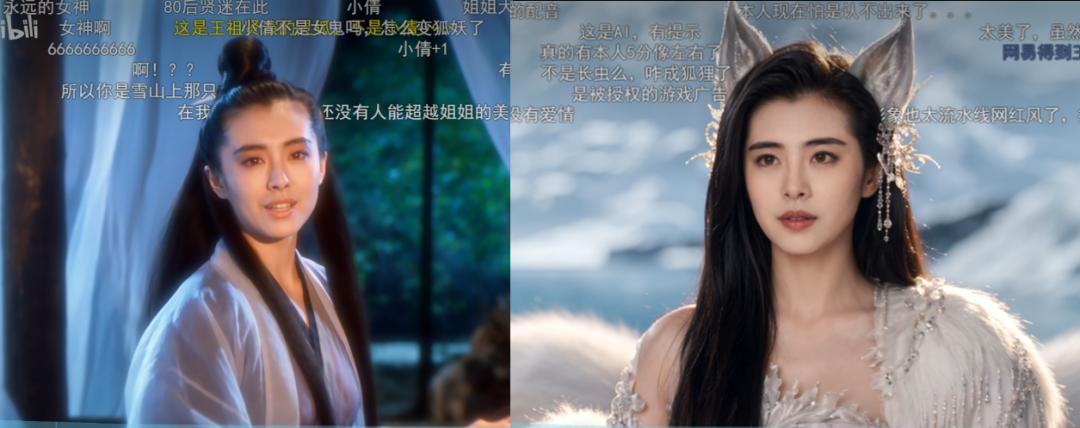
Left: Nie Xiaoqian (AI), Right: Nine-tailed Fox (AI)
Goddess in the first half, internet celebrity in the second half, that's why the reviews of the whole short film are so polarized.
The question is, the obvious difference between the two parts is obvious to all audiences, can't the production team see it?
Of course they can, but it is almost impossible to solve.
Because AI generates character faces based on a set of "rules" summarized by the large model after browsing countless human faces, that is, the "statistical average face".
When the production team hands over the materials such as works, photos and videos starring Joey Wong to AI, they are actually letting AI make judgments between Joey Wong's film and television materials and the "statistical average face", which will eventually lose personal characteristics and become a little "internet celebrity face".
What is more difficult than face generation is movement design.
Current AI is still very difficult to design complex movements, let alone the elegant and ghostly famous scenes in *A Chinese Ghost Story*.
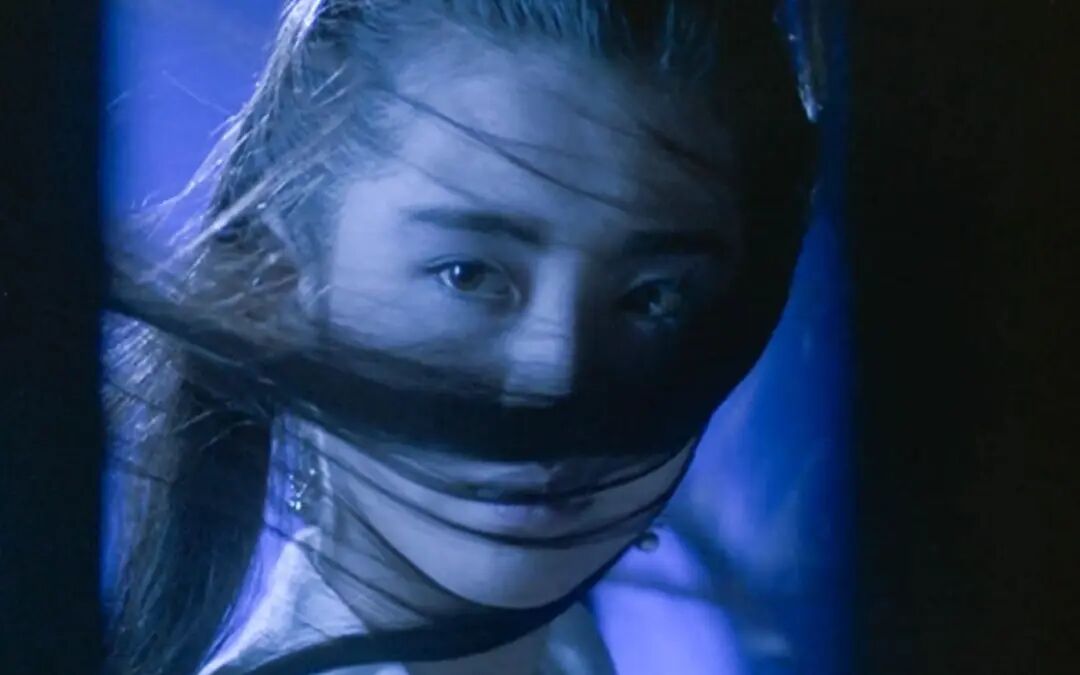
That is to say, AI is a hero that saves time and manpower, but when used on a large scale, it will also weaken the personality and texture of the works.
In this regard, the author of the supernatural short drama *Not a Demon* said: "The grand special effects that are extremely difficult in traditional live shooting are very easy to generate with AI; the simple fine-tuning of character positions and subtle emotional expressions in traditional shooting are extremely tricky for AI."
On the other hand, AI film and television has inherited the "traffic hunger" chronic disease from short dramas and animation dramas, and the scale problem can easily make the works questioned.
On August 6, Qi Wei officially announced her personal AI digital avatar "Han Qingxia", who starred in the doomsday-themed AI animation drama *Doomsday Midsummer*.
She not only authorized the use of her face, but also personally participated in the adjustment of the character's expressions, and dubbed the lines with her original voice. She can be said to be deeply involved in the production, and all commercial content in the end must be reviewed by herself.
This series of operations made *Doomsday Midsummer* receive a lot of expectations at the beginning of the official announcement.
However, the day after the promotional video was released, different voices emerged.
The reason is that the skirt of the AI protagonist Han Qingxia in the film is too short, and the shooting perspective is too low, which led to netizens' questioning of the "male gaze" of the work. The criticism directly targeted Qi Wei herself.
In fact, everyone knows that AI digital humans are different from real artists.
The first line of the *Doomsday Midsummer* pilot film is: "Hello, I am not Qi Wei", which has drawn a clear line between the digital avatar and the real person.
But it should be noted that the low-angle "thunder perspective" has been carefully polished and reviewed layer by layer by the creative team.
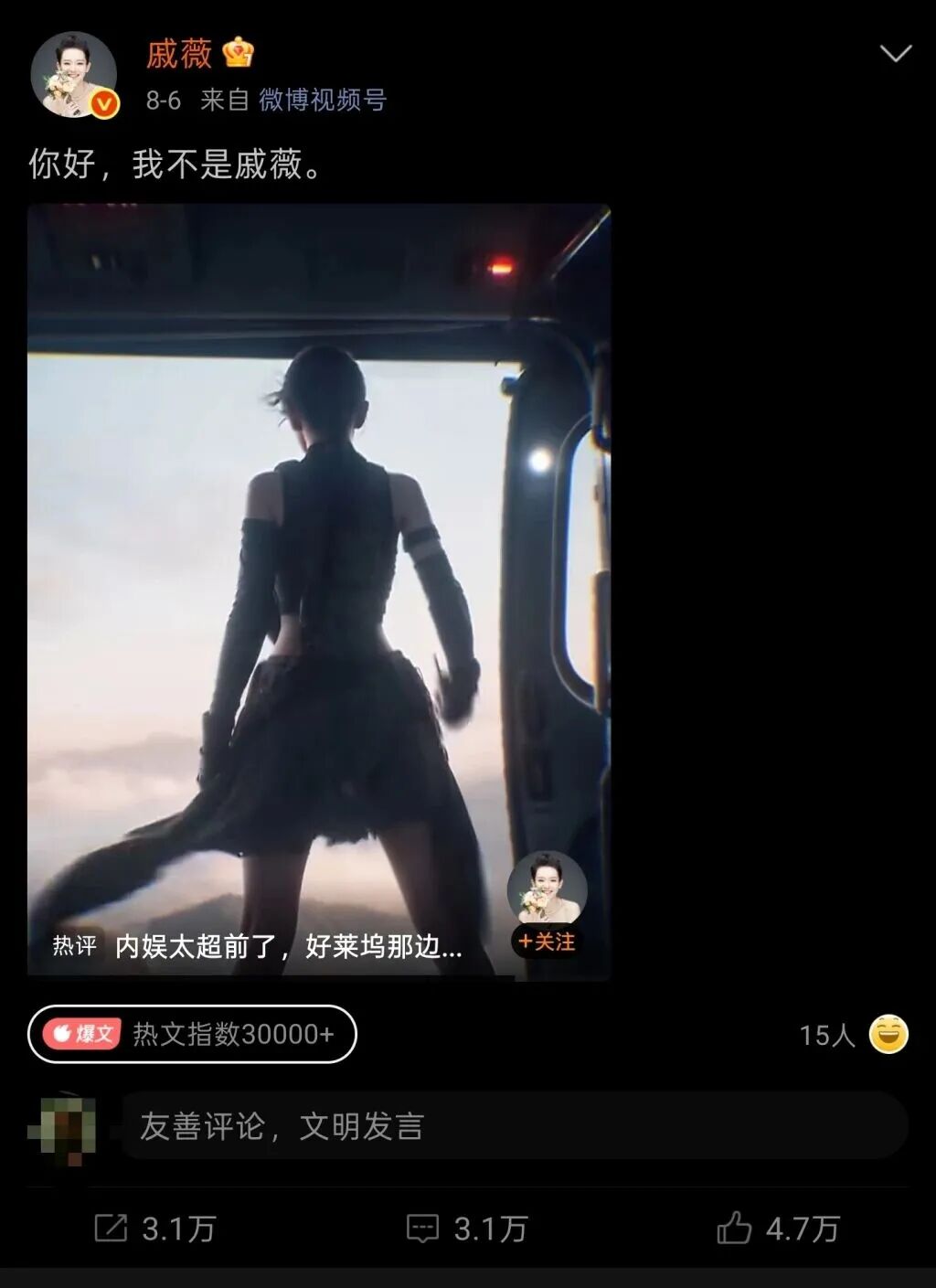
In the subsequent personal interview, Qi Wei admitted the problem of the low camera position to the media, she said: "I agree with everyone's suggestions, I accept them with an open mind, we need to optimize the prompts."
This response hides a realistic problem: with the current technology, the main way for creators to improve work quality is to adjust the prompts.
Technology has to take the blame silently again.
03 Are AI works qualified?
In the film and television field, whether a work has celebrity artists sitting in often affects its future promotion rhythm and revenue sharing model, and in extreme cases, it can even determine whether the work will be approved for production.
Therefore, AI works such as *Phantom Shadow* and *Doomsday Midsummer* must ensure high quality. No matter if they lack the right emotions, charm, or have inappropriate scale, a large number of audiences will not accept them.
In fact, this star-centered creation model is already a little outdated today.
In April 2025, the Drama Department of the National Radio and Television Administration held a symposium, clearly proposing that film and television creation should shift from "star-centered system" to "script-centered system".
More importantly, as an industry empowered by AI technology, if the star aura in the works is too dazzling, the role of technology may be ignored instead, which may further affect the development rhythm of the industry.
When it comes to the use of technology, two examples are very worth mentioning.
In 1937, in order to shoot *Snow White*, Disney spent a huge sum of 70,000 US dollars to build a 12-foot-tall multiplane camera, which required at least 4 people to climb up to operate at the same time.
