Behind G7 E6's 770 Billion Tokens: Logistics AI Moves From Screens to Frontline Scenes | The Frontline
Author | Huang Nan
Editor | Yuan Silai
As the hype around large language models gradually cools down, the AI competition in the logistics industry is undergoing a subtle shift. The industry is no longer satisfied with the effects demonstrated on presentation stages, and has begun to ask: how can AI truly enter the real sites of stations, carriages, loading and unloading handovers, and be translated into visible business results.
At the 2026 Digital Logistics Conference held in Wuxi, more than 3,000 industry practitioners focused on the theme of "AI Goes to Work" and put forward a core proposition: the key to winning in logistics AI does not lie in how gorgeous the model parameters are, but in whether it can open up the two-way communication channel between the headquarters and the frontline sites.
Cai Jin, President of China Federation of Logistics & Purchasing, pointed out in his speech that logistics is no longer just an industry, but a whole set of production organization methods for social economy. "Logistics enterprises should not only focus on their own scale and benefits, but also help upstream and downstream partners reduce costs, increase efficiency and create value through advanced organizational methods."
Over the past two decades, the logistics industry has completed two major stages: connection digitization and process onlineization. However, a large number of businesses are still trapped in the "on-site black box": key operations such as carriage loading and unloading, warehouse-station handover, and cold chain stocktaking are out of the sight of the system, and can only rely on patrol inspections. Once cargo damage or disputes occur, it is very difficult to restore the real process. The back-end system has massive amounts of data, but it is difficult to penetrate the hierarchy to deliver management requirements directly to the execution ends such as drivers and warehouse keepers; problems at the frontline sites are also difficult to efficiently feed back to the back-end for rule iteration. This is the root cause why many enterprises have invested heavily in digitalization, but hardly translated it into real benefits.
In his annual speech, Zhai Xuehun, Founder and CEO of G7 E6, disclosed a set of highly representative data: the monthly Token consumption of the platform soared from an average of 6.7 billion in 2025 to 770 billion, an increase of 115 times in one year. However, the computing power is highly concentrated, only about 4% of active customers have actually put AI into large-scale business operation, and the vast majority of logistics enterprises are still in the wait-and-see stage.
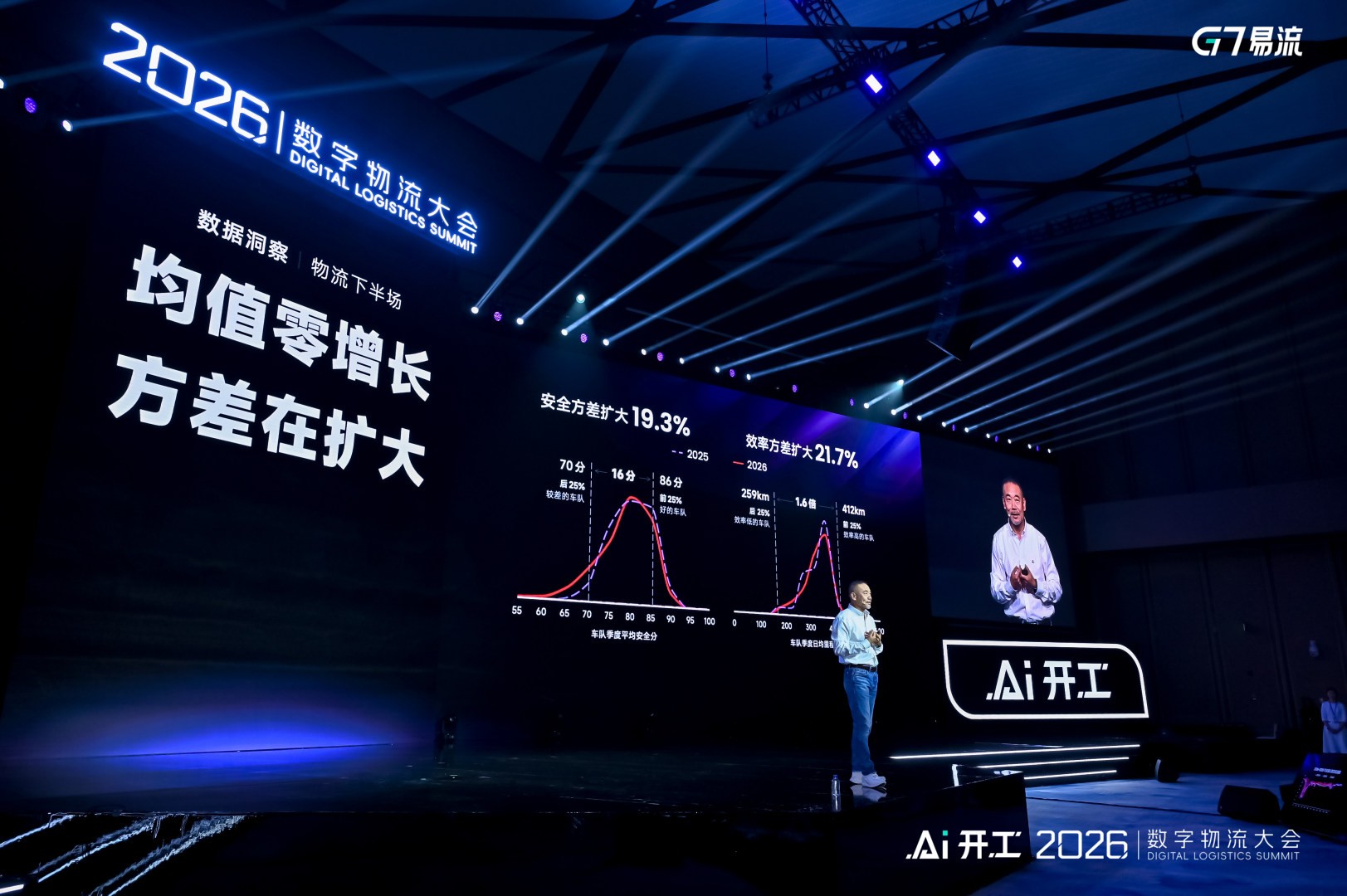
Annual speech by Zhai Xuehun, Founder and CEO of G7 E6 (Source / Enterprise)
"The essence of AI going to work boils down to two things: obtaining on-site facts and providing on-site assistance," said Zhai Xuehun. "The threshold for large language models has been lowered, but there is a huge gap in the physical world between 'usable AI' and 'AI that can actually work at logistics sites'."
The truly implemented AI needs to extend its perception tentacles to the blind spots in the past. Relying on the Purple Box on-board hardware and the Paipaidou wearable terminal, the perception capability is no longer limited to vehicle driving, and the handover, temperature measurement and cargo inspection under the vehicle are converted into recordable and analyzable data.
In the instant retail and chain catering supply chain, the handover between logistics warehouses and drivers that only lasts a few minutes has long been a management blind spot.
Shan Xiaodong, Head of Logistics and Warehousing of Tims Coffee, pointed out at the roundtable that warehouse monitoring can only cover the scenes inside the warehouse. During the two or three minutes when the driver and the warehouse keeper dock to unload the goods, temperature changes, product appearance verification, and oral communication between the two parties are all in a blank state. When cargo damage or deterioration occurs afterwards, all parties shift responsibilities to each other, and it is very difficult to define the liability. After the store network is expanded, manual inspection cannot cover all points at all.
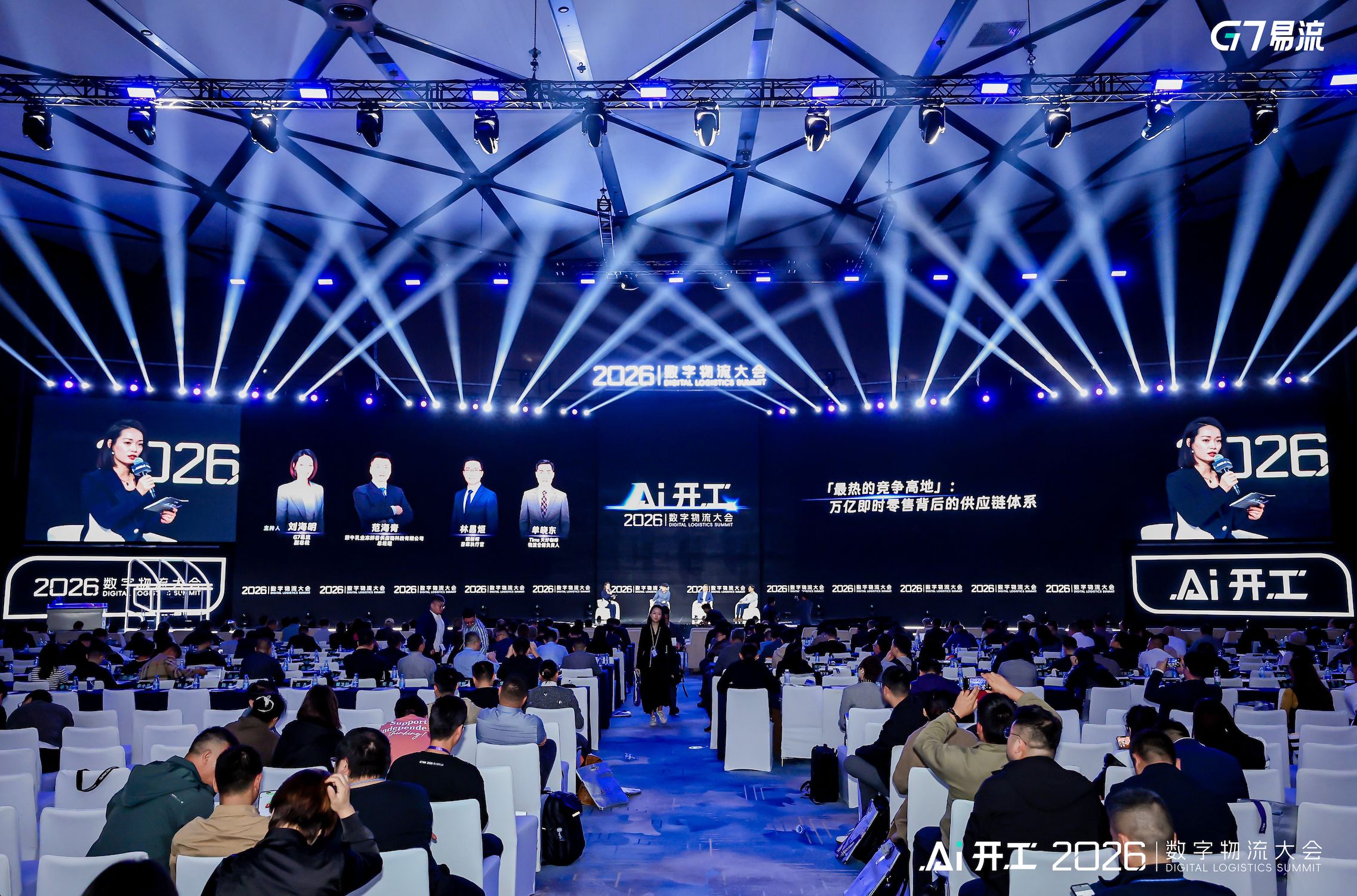
Roundtable on "The Supply Chain System Behind the Trillion-Yuan Instant Retail" (Source / Enterprise)
Relying on wearable AI devices such as Paipaidou that G7 E6 has launched, drivers can wear it when they get off the vehicle to work, and it will automatically record videos. The AI identifies the appearance of goods and handover actions, completely retains the whole process from the warehouse end to the driver, and turns the previously invisible on-site behavior into reviewable and assessable data.
Its value does not lie in adding an extra camera, but in turning the handover link from an unstructured scenario into structured data: the SOP changes from "required to be done" to "verifiable whether it has been done". Many management problems do not lack standards, but the process of standard implementation is not visible, and Paipaidou exactly solves this visibility problem.
In large stations of manufacturing factories, AI automatically completes the collection of ledger data for train arrival and forklift inbound and outbound, automating 92 ledgers that were manually recorded by seven or eight people, and alleviating the persistent problem of vehicle congestion and waiting in the station; in a new energy heavy truck fleet with a scale of 600 vehicles, AI outputs safety scores in real time, combined with an instant incentive mechanism, the number of weekly near-accidents in the fleet has dropped from five or six to two; in the urban high-quality distribution scenario, Paipaidou records the complete actions of drivers sorting goods in cold cabinets and handing over goods, so that service quality no longer relies on verbal promises, and can be traced with evidence.
There is a common misconception in the industry that AI and autonomous driving are simply equivalent to replacing drivers. The real situation gives a different judgment: driving is only one of the seven types of tasks in logistics delivery, and a large number of complex tasks such as communication and coordination, loading and unloading handover, quality control verification, and exception handling still require human participation.
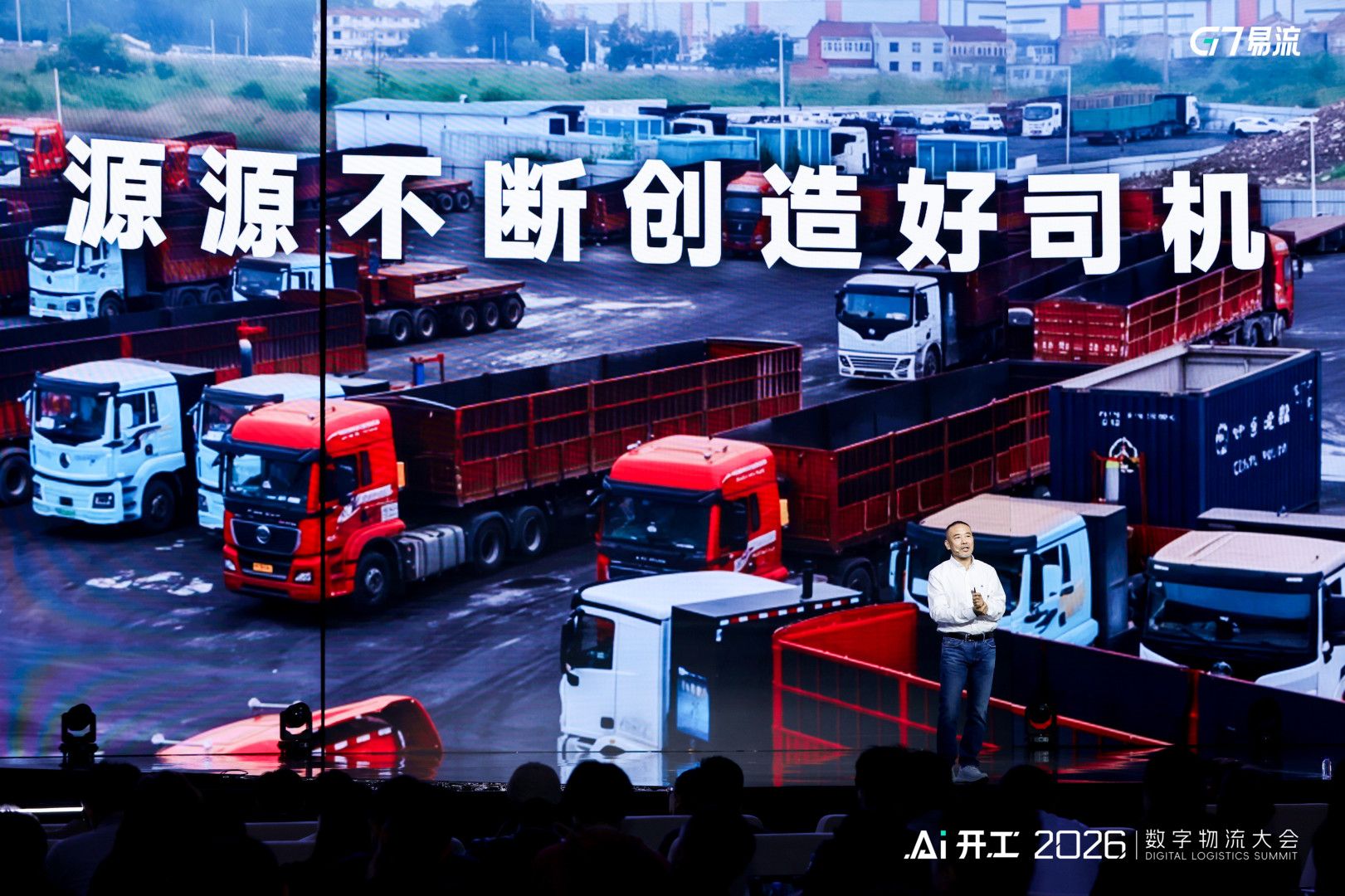
Redefining Drivers (Source / Enterprise)
"The speed at which autonomous driving replaces drivers cannot keep up with the speed at which young people voluntarily leave driver positions. There will be a million-level driver gap every year in the future," Zhai Xuehun said. "We are not trying to replace drivers with AI, but to redefine drivers. The term 'driver' refers to the person who works outside on behalf of the management, who helps you deliver services and ensure safety at the site."
The essence of logistics AI is not to eliminate frontline personnel, but to reconstruct post value: hand over repetitive, high-risk and mechanical work to AI, and free up human energy for high-value links such as exception handling and customer collaboration.