In the AI era, who will incubate the next generation of hardware companies?
AI is making startup teams smaller and smaller, yet driving the value of the entire industrial chain higher and higher.
In October, in Yizhuang, Beijing, 29 participating teams gathered at the site of the extreme creation show of the second season of JD Aidol Creation Camp, to take on a rather crazy challenge: turning an AI idea into a finished work within 48 hours.
The HEYGO team spent roughly 42 hours, made more than 200 code submissions, and connected their existing ski AI smart wearable device to a chest-mounted screen. Skiers do not need to take out their phones repeatedly to check their sliding speed and turning data, and can even directly ask the AI what parts of their movements need improvement.
Jiangying, a brand of AI handheld work consoles, developed a new Agent demonstration: users only need to tell the AI their budget and usage requirements through the handheld console, and it can independently operate the computer, select accessories such as graphics cards and memory on JD.com to form a DIY solution that meets personal needs, and add suitable products to the shopping cart. The whole process took only three and a half minutes.
AI is making some development work that used to require multi-person collaboration much easier. But in the real hardware world, the speed is far slower than imagined.
To develop its first-generation ski hardware, HEYGO completed product validation across two ski seasons in the northern and southern hemispheres, going through more than 20 rounds of iterative updates. From technical prototype to product launch, manufacturing, cost control, delivery and sales, every step can become a huge hurdle for a startup.
As more and more small teams are able to create products with the help of AI, how to turn a good idea into a real viable business has become a new industrial proposition.
JD.com is working to find its own answer.
Through the Aidol Creation Camp, JD.com tries to bring its supply chain, retail and industrial resources accumulated over years to the new generation of AI entrepreneurs. As JD.com gets involved even before a product is born, what new possibilities can it really bring to AI hardware startups?
No matter how fast AI runs, it still has to wait for a cover plate
In the past, to develop a hardware product, just forming a team, sourcing components, making prototypes and connecting with factories would take a lot of time and cost.
Now, the situation is starting to change.
On the one hand, the development of large models and AI programming tools allows more and more work that originally required professionals to be completed with AI assistance. On the other hand, after decades of development, China's manufacturing industry has formed a mature system of electronic components, hardware modules and production and manufacturing. The 0-to-1 stage of hardware entrepreneurship is no longer an unreachable goal.
The initial product prototype of Jiangying was "hand-made" by engineers in the office with a 3D printer and code.
Today, there are only about 10 members involved in the R&D and production of this product. The software can even be updated to a new version on a daily basis. Even the overseas independent website was built by the marketing and design colleagues with the help of AI, without the participation of front-end engineers.
But when it comes to hardware R&D, the situation is completely different.
Chen Tongxin, product manager of Jiangying, told 36Kr that there is a small screen on Jiangying's AI handheld work console, which is responsible for displaying the power level and AI working status. To make the screen blend perfectly with the body when it is off, the team initially chose an acrylic cover plate.
When the first batch of prototypes was produced, it was found that this material was extremely prone to scratches. After switching to glass, the appearance problem was solved, but new trouble came: some components in the glass would interfere with the RF signal of the device. So the team had to continue adjusting the solution and retesting.
There are many similar cases. For a tiny button, the team has to repeatedly compare the hand feel and pressing force from hundreds of options, then go through proofing, whole machine adaptation and testing. One round may take one or two months. If you choose the wrong button, you may have to spend an extra cycle to re-verify.
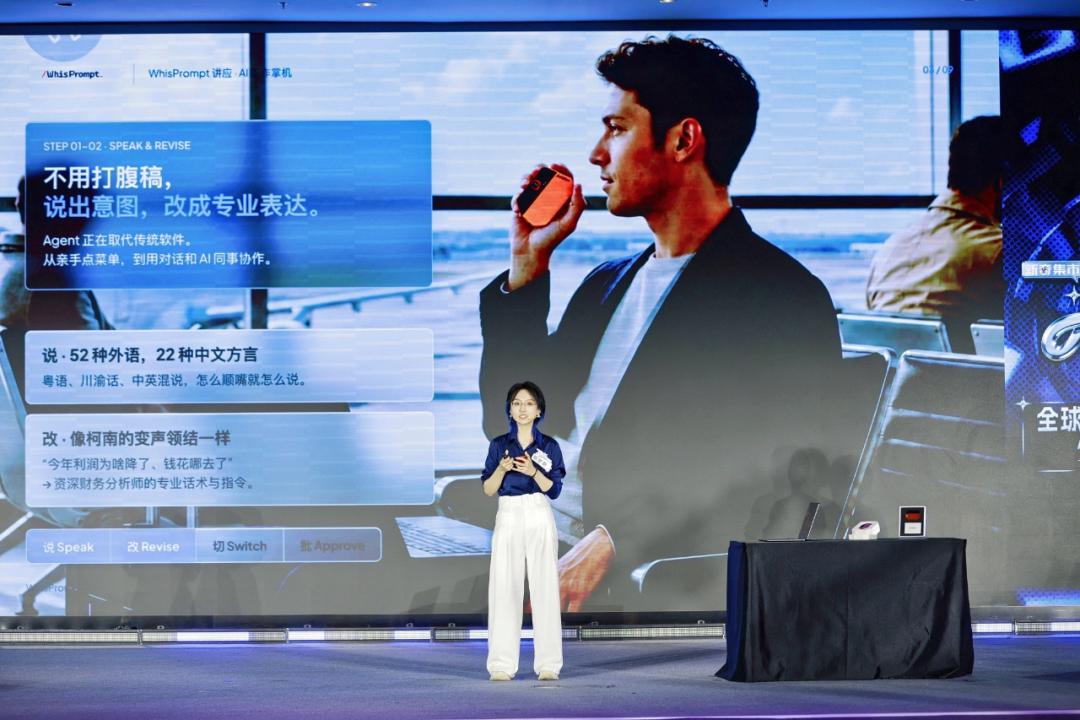
HEYGO faces similar problems. To ensure the reliable operation of the ski AI smart wearable device in real ski resorts, the team needs to repeatedly test the performance of the sensor under low temperature, sports impact and different equipment conditions. From R&D to mass production, a series of issues such as product consistency, after-sales service and inventory also need to be considered.
But for HEYGO, the stability of the device is only one of the hurdles. Can the AI suggestions accurately help users improve their movements? Are users willing to pay for follow-up services? Will users keep using the product for a long time? All these issues are related to whether HEYGO can turn a single product into a long-term business. Especially for highly seasonal sports like skiing, short-term order growth and long-term operation need to be viewed separately.
From the perspective of the consumer market, these are exactly the key points to judge whether a product has commercial potential.
The person in charge of the JD Aidol Creation Camp project told 36Kr that when screening innovative projects, in addition to paying attention to the development space of the track, they will also examine the product differentiation, supply chain capability and future sales potential.
Over the past year, JD.com has also observed a change in the AI market. The industry has shifted from initially focusing on how many units a product can sell to paying more and more attention to user activity rate and retention rate.
There is still a long way to go from making a product to turning it into a profitable business.
JD Aidol Creation Camp, getting involved before the product is born
The value of the supply chain has long been no longer limited to the efficiency of production and delivery.
SHEIN in the apparel industry has created a typical sample with the "small order and quick response" model. New styles are first sold in small batches for trial, then orders are adjusted according to market feedback. This reduces inventory risks and can also keep up with changes in consumer demand faster.
Apparel products can be replenished quickly, but the development and production of hardware is obviously much more complex. But the common point between the two is to let the real needs of consumers in turn affect product and production decisions.
JD.com has been exploring on this path for more than 10 years.
As early as 2016, JD.com's notebook business began to regularly invite users for in-depth interviews to study the demand of different groups of people for computers. After that, JD.com successively carried out reverse customization cooperation with brands such as Lenovo, HP and Dell. In 2019, JD.com officially established the C2M platform. Since then, JD.com has worked repeatedly with many brands to develop a number of hit notebooks that meet users' price expectations and high configuration product requirements, based on consumer demand insights.
In the AI era, JD Aidol Creation Camp began to bring this set of experience to a group of younger startup teams.
In the mature gaming laptop market, users know exactly what they want to buy. But many AI hardware products have not yet formed stable consumer awareness. Entrepreneurs not only need to land their technology, but also have to answer a more tricky question: why are consumers willing to pay for it?
Zhimengke from the first season of Aidol Creation Camp encountered exactly this problem.
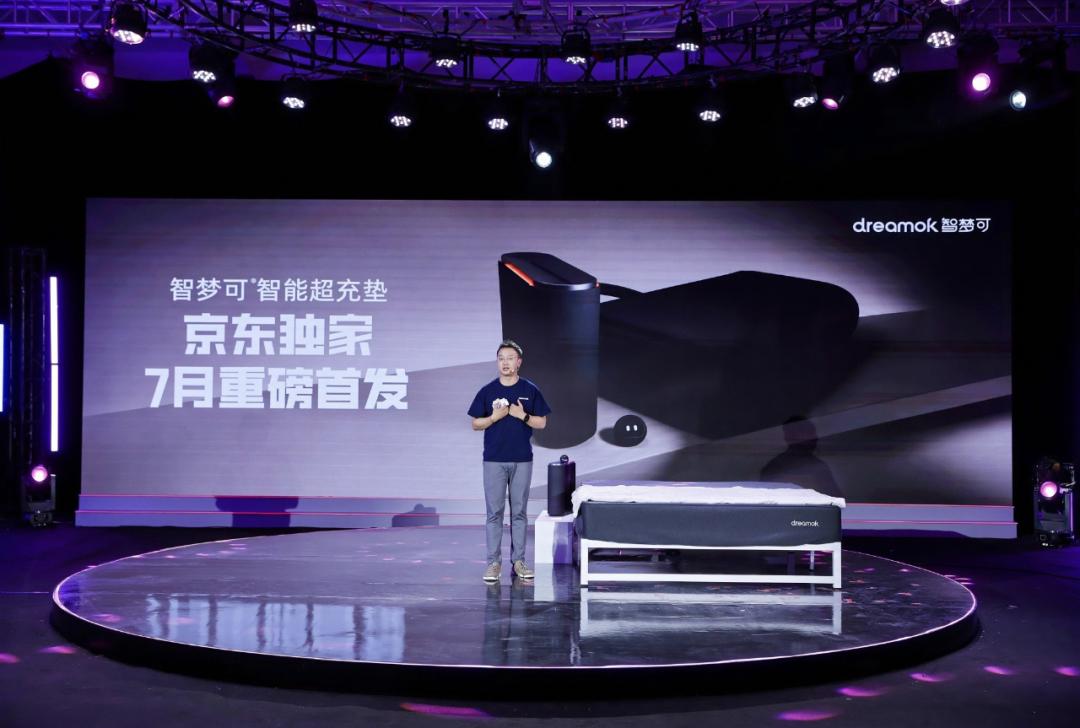
The team's AI sleep super-charging mat is designed to improve sleep experience through intelligent perception and dynamic temperature control. When JD.com contacted them, the product was still in the design stage, and the team was struggling with whether to position it as a smart home product or a high-end digital product.
This represents two different sets of consumption logic. "If it is positioned as a smart home product, consumers pay more attention to comfort and daily experience; if it is positioned as a high-end digital product, consumers expect new experiences brought by new technologies. This also determines who the product is targeted at and what selling points to use to impress them." the person in charge of JD Aidol Creation Camp told 36Kr.
In the end, the two sides chose the direction of high-end AI digital products, targeting consumers who have sleep management needs and are willing to try new technologies.
In the first season of Aidol Creation Camp, the new product of Zhimengke made its debut in advance, received real feedback in the live streamer experience session, and successfully won the "Emerging Aidol Award" of the first season. During the preparation for launch, the team also combined the experience of JD's procurement and sales, and feedback from early users and influencers to continuously polish the selling points and launch strategy.
In July 2026, the Zhimengke AI sleep super-charging mat launched exclusive pre-sales on JD.com, with sales exceeding one million yuan on the first day.
From product optimization in mature categories to cultivation of new consumer categories, JD.com is bringing its industrial chain capabilities polished over years to an earlier stage full of more uncertainties through the Aidol Creation Camp.
The first season mainly focused on new AI hardware products, helping new products enter the consumer market faster through live stream display, user experience and debut sales. In the second season, Aidol Creation Camp further expanded the incubation boundary, forming four tracks: AI applications, AI ideas, AI native devices, and AI device interconnection.
At the same time, the 48-hour extreme creation show setting gives more independent developers, students, and even projects still in the creative stage the opportunity to participate.
The AI industry is not short of hackathons, startup roadshows or new product launches, but there are still few explorations that can accurately connect links such as creative development, product incubation, manufacturing resources and market sales. After the high-profile debut, many new products entered the crowdfunding stage on JD.com to face their real big test. Many previously unknown products have achieved pretty good results in the crowdfunding stage — the Mooza noise-canceling mask from the first season exceeded 1000 units in crowdfunding in three days, and the Jiangying AI handheld work console from the second season has achieved more than 150% of its crowdfunding target as of November 9.
As the industry's first full-link AI new product incubation project, what JD Aidol Creation Camp is trying to do is to turn an innovation competition into an entry point for long-term industrial incubation, providing a more complete and efficient path for AI ideas to move from technical prototype to commercialization.
It is JD.com's industrial chain capabilities accumulated over years that support this exploration.
The next-generation incubator is deeply rooted in the supply chain
For teams that already have clear product directions such as HEYGO and Jiangying, the 48-hour challenge is an attempt of new functions and new scenarios.
HEYGO used the AI Passport provided on site to try to develop a new interactive entrance for its ski assistant; Jiangying verified its new AI Agent capability within 48 hours, and also discovered potential scenarios such as AI education for teenagers from user communication.
On the other hand, the intra-ear brain-computer interface brought by the "Xianggu Niuniu" team is still in the stage of product application exploration. Previously, they have participated in many hackathons. In the Aidol Creation Camp, the team had the opportunity to connect with solutions and explore possible product forms for technology landing with the help of JD's procurement and sales resources for the headphone category.
In the same competition, some people brought products that are about to be launched, while others brought what could be the starting point of a future company.
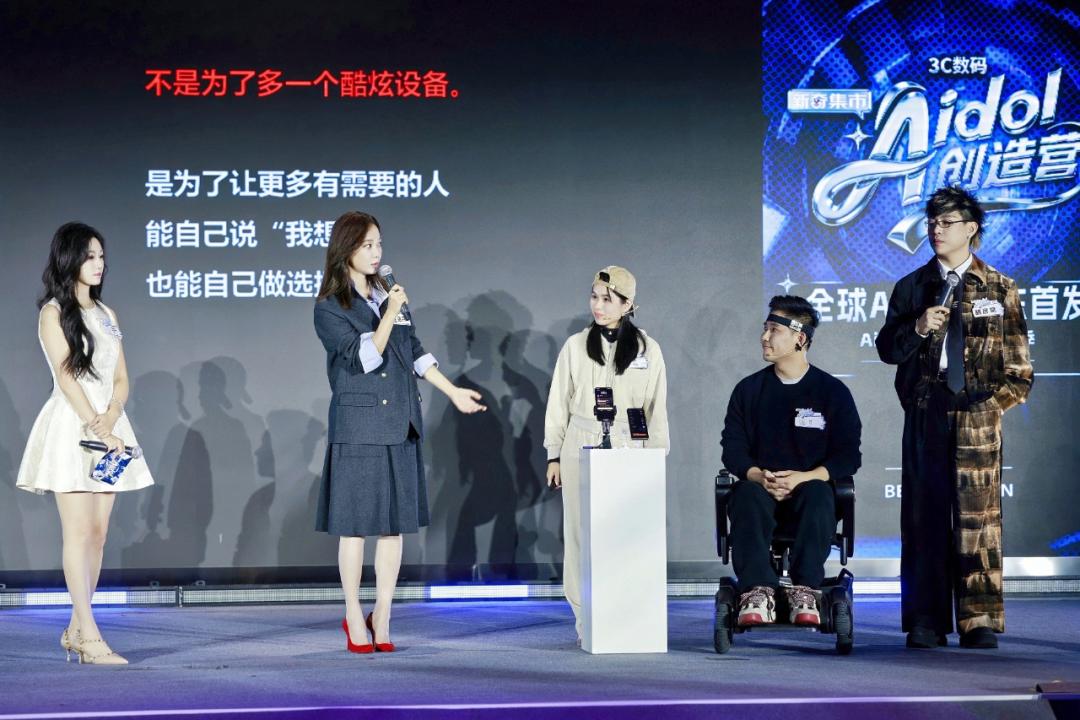
Off the competition field, the resources that JD Aidol Creation Camp can call upon span multiple business lines including JD Retail, JD Industrial, JD Technology and JD Logistics.
JD Industrial's AI CAD allows users to complete product design and generate editable drawings just by describing with a few words or a photo. The AI smart procurement housekeeper can help startups automatically parse BOM lists and connect with procurement resources to improve the efficiency of model selection decision-making; JD Logistics covers transportation, warehousing and fulfillment; JD Technology can provide supply chain financial support; JD Cloud provides participating teams with 5 billion Tokens resources and support of JD Lingjing AIGC platform, lowering the threshold for AI application development and creative verification, so that teams can devote more energy to product innovation. For follow-up incubation of excellent projects, JoyInside provides platform support, AI capability support and technical guarantee to help teams accelerate product polishing and scenario landing, and promote more AI ideas to move from demoable prototypes to the real consumer market.
In the sales link, JD's procurement and sales staff can predict sales demand based on market experience, and help potential new products enter the market through crowdfunding, self-operated procurement and product operation.
For AI startups, a relatively clear procurement order may directly affect stock preparation and production arrangements. This is also a significant advantage that distinguishes JD.com from startup incubation projects that only provide capital, mentors or exposure.
Moreover, the Creation Camp also cooperates with industrial partners such as Beijing Yizhuang to connect capital and policy resources for early-stage projects. Offline, its support plan covers display opportunities in the JD MALL AI zone and more than 6,000 JD 3C digital stores; overseas, there are channel resources such as Joybuy to help AI hardware reach a broader market.
This reminds people of the previous wave of smart hardware entrepreneurship in China.
Around 2014, the industry promoted the growth of a number of emerging hardware technology enterprises such as Roborock through investment, brand and supply chain support. This shows that when R&D, manufacturing and channel resources are reorganized, a group of startups that originally could not cross the market threshold on their own also have the opportunity to grow into new consumer electronics brands.
More than ten years later, AI is changing the other end of hardware entrepreneurship. As the starting point of product development keeps getting lower, several engineers can create a product with great potential.
But the operating logic of the industrial chain has not changed because of this. Factories need orders, channels need sales volume, and capital needs returns. Innovators are becoming more and more scattered, but the resources that can turn innovation into commercial scale are still concentrated.
The imagination space of JD Aidol Creation Camp lies exactly in this mismatch.
In the past, JD's procurement and sales and supply chain capabilities mainly served existing products and brands. Now, it tries to introduce consumer demand, procurement capabilities and industrial resources into the product birth stage in advance, so that scattered innovators can participate in market competition with the help of the mature industrial system.
If this model can operate on a large scale, it may change the long-standing competition pattern of the consumer electronics industry. The advantages established by mature brands in the past relying on R&D investment, manufacturing scale and channel accumulation will face more challenges from young teams. Whoever can continuously discover new product opportunities and organize scattered innovations into large-scale product supply will have the opportunity to participate in shaping the next generation of brand pattern.
For JD.com, the Aidol Creation Camp is a business for the future. But what is more valuable than finding the next hit product in advance is that it gives JD.com the opportunity to become an industrial mechanism that continuously spawns new brands.
The next round of industrial transformation in consumer electronics may start with changing the way a company is born.