Taking Chongqing Wanguo as the starting point, how industrial M&A has become the strategic engine of Xinwei CVC
The capital structure and return logic in the primary market are undergoing a brutal reshaping. On one hand, state-owned background managers, accounting for 30% of the total number, manage 70% of the market's total capital. On the other hand, driven by the huge anxiety of missing out, capital is intensively and rapidly poured into hard technology tracks such as AI and semiconductors. However, information transmission has become nearly synchronous, the dividend period for traditional VCs to profit from "cognitive gaps" is fading, and the arbitrage model of "investing in early-stage and small projects to wait for IPOs" is gradually failing in the face of the extreme power-law distribution and tightened exit channels.
Facing the new landscape, XMC Capital has completed an in-depth transformation from a technology VC to an industrial CVC, and industrial M&A is precisely the most powerful strategic engine in this leap.
Recently, XMC Capital won two major awards in the 2025 G50 Outstanding State-owned Fund Manager Series selection results. In addition to the "Outstanding State-owned Venture Capital Fund" award, XMC Capital won the "Outstanding Industrial M&A Project" award for the first time with its Chongqing Wanguo project.
The Chongqing Wanguo project is not just a remarkable transaction. More importantly, it clearly demonstrates how XMC Capital has completed a profound transformation from a "financial return-oriented" entity to a "industrial integration enabler".
At the other end of innovative investment lies industrial M&A
From last year to the first half of this year, both the "recovery" and "clear-out" of the venture capital industry are taking place simultaneously. According to Zero2IPO data, the number and scale of newly raised funds in 2025 rose by 26.6% and 14.1% year-on-year respectively, and the number and amount of investment cases increased by 28.4% and 45.6% year-on-year. However, the rebound on both fundraising and investment ends has not eliminated the structural squeeze on the exit end: the A-share IPO channel is still narrowing, the industry clearance is accelerating, and the number of deregistered equity investment fund managers reached 356 in the first half of 2026.
The drastic change in the exit structure has directly reshaped the path of capital flow. In 2025, the number of M&A exit cases rose by 77.3% year-on-year, accounting for 64.70% of the total exit amount of the whole market, surpassing IPO for the first time and becoming the most important exit method.
The shift of industry logic is the macro reason for XMC Capital's transformation to CVC. The core difference between VC and CVC is that the former is oriented to financial returns, while the latter serves the industrial layout of the group. In recent years, XMC Group has transformed from an early-stage scientific and technological achievement transformation platform into an industrial group, which is not only an expansion of scale, but also a fundamental strategic leap — converting "existing technology stock" into "industrial increment", and further upgrading it into "new driving force for development". In this process, XMC Capital's industrial M&A capability is the indispensable key.
Based on this logic, "innovative investment + industrial M&A" has become the core two-wheel drive for the operation of XMC Capital's CVC model: the front-end equity investment is responsible for discovering and cultivating projects to seize the position of cutting-edge technologies; the back-end industrial M&A is responsible for resource integration and scale expansion, acquiring mature assets and integrating them into the manufacturing system, replacing market transactions with management synergy, and reducing external market friction costs caused by pricing, negotiation and default. The synergy between the two ends jointly serves the core business of XMC Group's special process manufacturing.
Behind a 10-billion-yuan level industrial M&A
Strategy needs capability support. Industrial M&A at the 10-billion-yuan level is never an arithmetic problem with a standard probability model, and value judgment, M&A execution, and integrated operation are all indispensable.
Locking in the Chongqing Wanguo project is a precise strategic position completed by XMC based on its deep cultivation in the whole semiconductor chain. As the largest strategic investment of XMC Group to date, the Chongqing Wanguo project is China's first and the world's second 12-inch integrated power semiconductor base, covering the full range of core devices from 12V to 1200V, which exactly fills the missing part in XMC's manufacturing map.
This is an extremely complex multi-party game, and the transaction counterparties span state-owned assets, US listed companies, 6 employee stock ownership platforms and 11 market-oriented minority shareholders. Facing high pressure, XMC Capital quickly set up a full-time M&A team to cover the whole process of due diligence, state-owned assets compliance procedures, anti-monopoly review and transaction execution. From the entry of the due diligence team to the completion of delivery, the whole process only took 168 days.
In a very short period of time, XMC's M&A team played a professional "combination punch": through precise scheme design and high-intensity negotiations, it effectively balanced the interests of all parties, and further optimized the shareholder structure of Chongqing Wanguo; in addition, the team fully communicated with multiple shareholders on technical cooperation, intellectual property rights and other matters, providing clear guarantees for subsequent cooperation and operation.
However, the project delivery is only the first step, and the real test lies in the integrated operation in the "post-M&A era". Many financial M&As eventually fall into the quagmire of "acquisition without integration", because many hidden assets of the factory often cannot be handed over through a simple list, and need to be digested and integrated within the system. After XMC Group acquired Chongqing Wanguo, it directly embedded it into the "SIMIC FOR AI" strategy, and launched capacity expansion and silicon photonics process R&D.
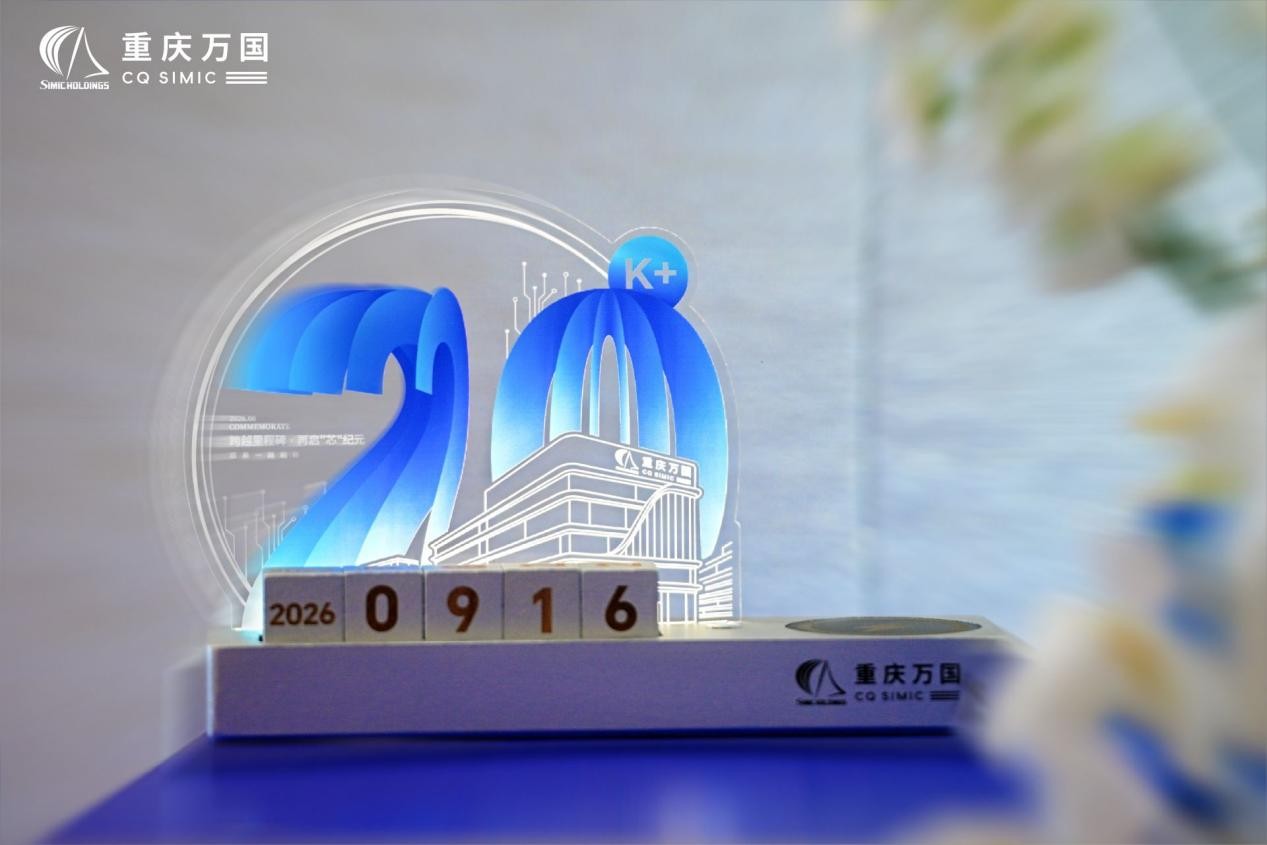
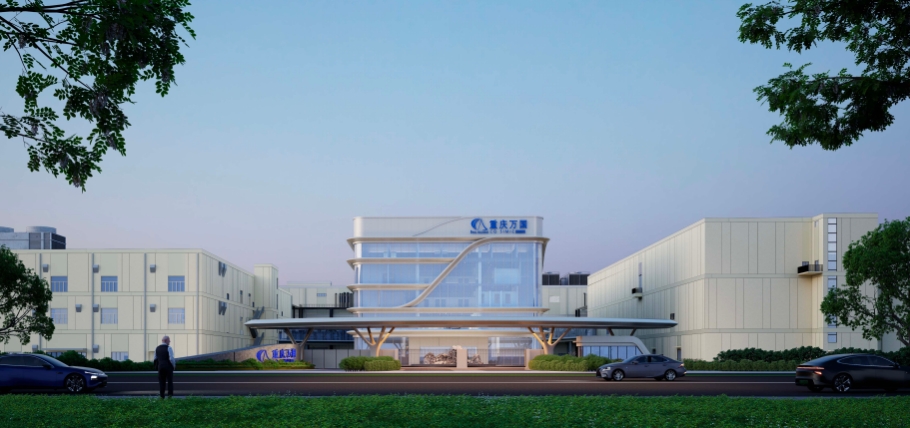
In August this year, the enterprise's wafer production capacity exceeded 20k at one stroke, achieving a rapid ramp-up of 36% month-on-month compared with the monthly output in 2025. At the same time, the R&D building of Chongqing Wanguo, which integrates corporate image, production collaboration and comprehensive management, was officially capped. Relying on XMC's profound manufacturing heritage, Chongqing Wanguo has truly realized "integration immediately after acquisition, and upgrading immediately after integration".
From single-point acquisition to building XMC's "resilient forest"
The full assembly of the four manufacturing bases of Shanghai Industrial Technology Research Institute, XMC Semiconductor, Yipu Semiconductor and Chongqing Wanguo means that XMC Group has officially built a complete industrial chain covering optoelectronics, power semiconductors, RF semiconductors and advanced packaging.
The four manufacturing bases and nearly 200 invested projects form a new XMC innovation ecosystem with high-frequency circulation of technology, verification and demand. On this basis, the "capital matrix" of XMC Capital is gradually rolled out: positioning as a CVC to serve the group's strategy, attracting long-term capital such as national-level funds and insurance funds; in combination with local industrial foundations and development needs, cooperating in depth with government guidance funds; focusing on scenarios such as M&A projects, Pre-IPO projects, Hong Kong stock funds, strategic placement, and linkage between the primary and secondary markets, setting up special investment tools flexibly.
Following the context of capital, XMC's reach is expanding along the Yangtze River Economic Belt: taking Shanghai and the Yangtze River Delta as the base, focusing on integrated circuits, AI and new-generation information technology; taking Wuhan in the middle reaches as the breakthrough point, focusing on optoelectronics and optical communication; taking Chengdu-Chongqing region in the upper reaches as the fulcrum, focusing on commercial aerospace and power semiconductors. At the same time, with the opportunity of joining the Shanghai State Investment Pilot Integrated Circuit M&A Alliance, the scope of XMC Capital's target coverage is spreading from the internal system to the entire integrated circuit industrial chain, efficiently linking upstream and downstream enterprises in the industrial chain, innovative investment platforms and other ecological partners.
While expanding the landscape horizontally, the logic of XMC's M&A is also upgrading vertically: when the foundation is sufficiently stable, XMC's M&A standard has crossed from "making up for shortcomings" to "strengthening long boards". In the future, in the fields of sensing, silicon photonics, compound semiconductors, advanced packaging and other fields, XMC's M&A decisions will not only value the scarcity of the target's technology, but also the depth of its engagement with the XMC ecosystem, and whether it can help the group form a real structural barrier in special processes.
In the current industrial cycle, a single M&A is a short-term event, and the industrial layout will also fluctuate with the cycle, while the model explored by XMC will be precipitated for a long time. XMC Group is building an anti-risk integrated circuit industrial ecosystem through continuous industrial integration. The Chongqing Wanguo M&A project is an important node of XMC Capital's CVC transformation. For XMC Capital, the next journey of M&A has just begun.