In-depth Analysis of Roborock and Ecovacs Financial Reports: Some Significant Changes Have Taken Place in the Competitive Landscape of the Robot Vacuum Cleaner Industry
On the last day of October, the two leading domestic robot vacuum players listed on A-share released their financial reports on the same day. Judging from performance alone, both delivered fairly excellent results.
In the first three quarters of 2026, Roborock recorded a revenue of 156.99 billion yuan, up 30.10% year on year; Ecovacs achieved a revenue of 149.88 billion yuan, up 16.39% year on year. Roborock's net profit attributable to parent company shareholders reached 14.66 billion yuan, up 41.23%; Ecovacs hit 13.69 billion yuan, down 3.47%.
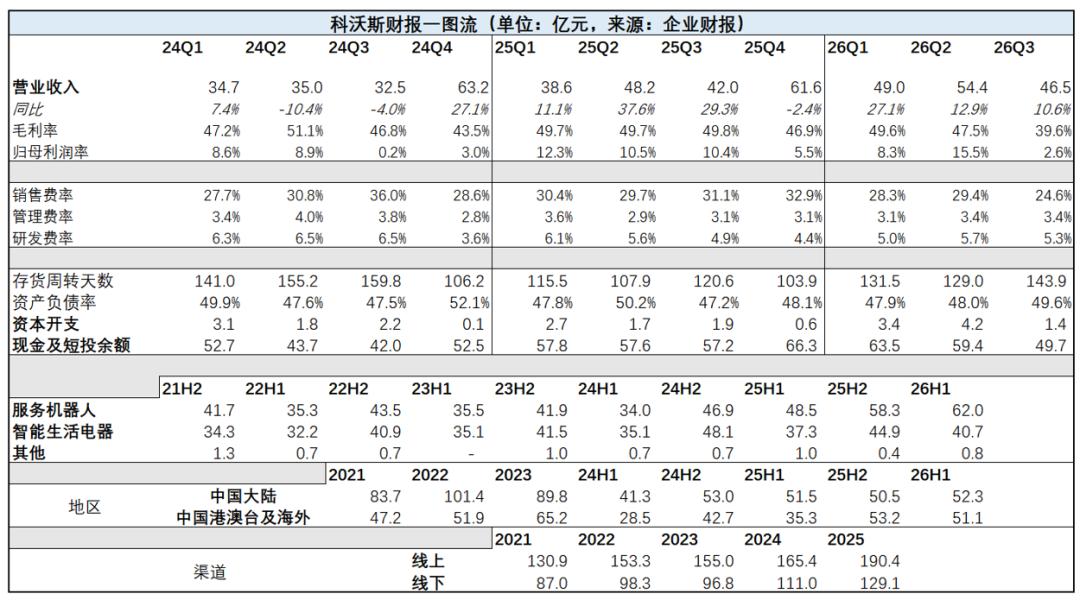
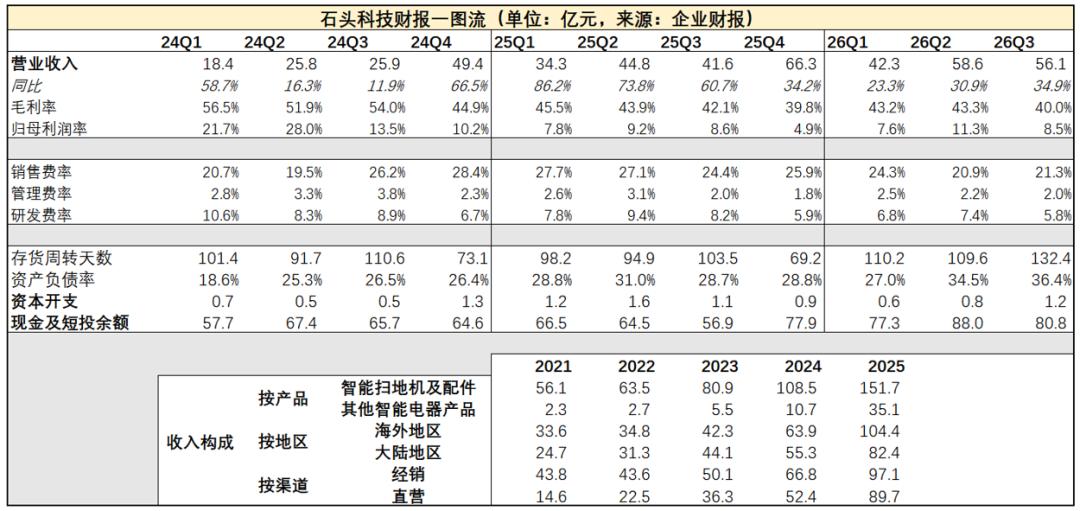
(Financial report infographic as shown, unit: 100 million yuan, Source: corporate financial reports, sorted out by Financial Report Chronicle)
The growth of Roborock and Ecovacs since the beginning of this year basically comes from overseas markets. Against the current relatively involuted industry background, the actual profit levels of both Roborock and Ecovacs are quite satisfactory. Besides, the two have jointly captured 60% of the market share in the past year, becoming a well-deserved duopoly.
Generally speaking, Roborock and Ecovacs have successfully submitted a satisfactory anti-involution report card through micro-innovation, increasing product configurations instead of cutting prices and other logics.
Overseas market is the only incremental growth driver for robot vacuums at this stage, Roborock seizes the time difference
First look at the revenue side: the sales scale of the domestic market is shrinking. In the first half of 2026, the retail sales of domestic robot vacuums reached 9.8 billion yuan, down 4.0% year on year; the retail volume was 3.09 million units, down 4.6% year on year. The revenue growth of the two companies is increasingly dependent on overseas markets.
In the first half of the year, Roborock's overseas revenue was 6.073 billion yuan, up 53.77% year on year; its domestic revenue was 4.012 billion yuan, up 1.47% year on year. The total revenue was 2.181 billion yuan more than the same period of last year, of which about 2.123 billion yuan came from overseas, accounting for 97% of the total revenue increment. The proportion of overseas business in total revenue also rose to 60.22%.
Ecovacs' overseas business is also growing. The overseas revenue of Ecovacs and Tineco brands increased by 46.5% and 40.6% respectively, and the proportion of overseas revenue of the two major self-owned brands rose from 40.8% to 49.0%.
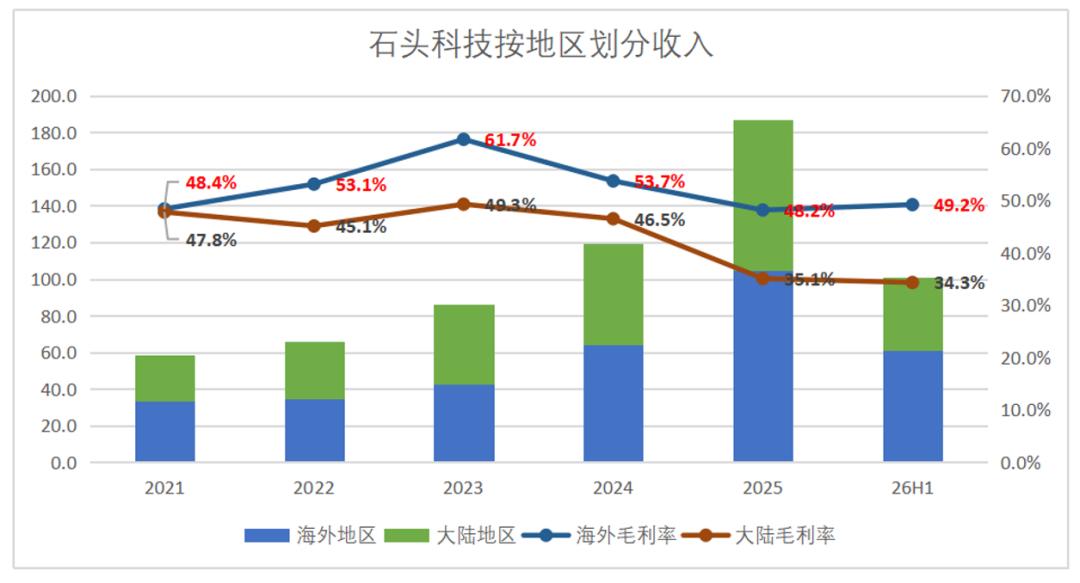
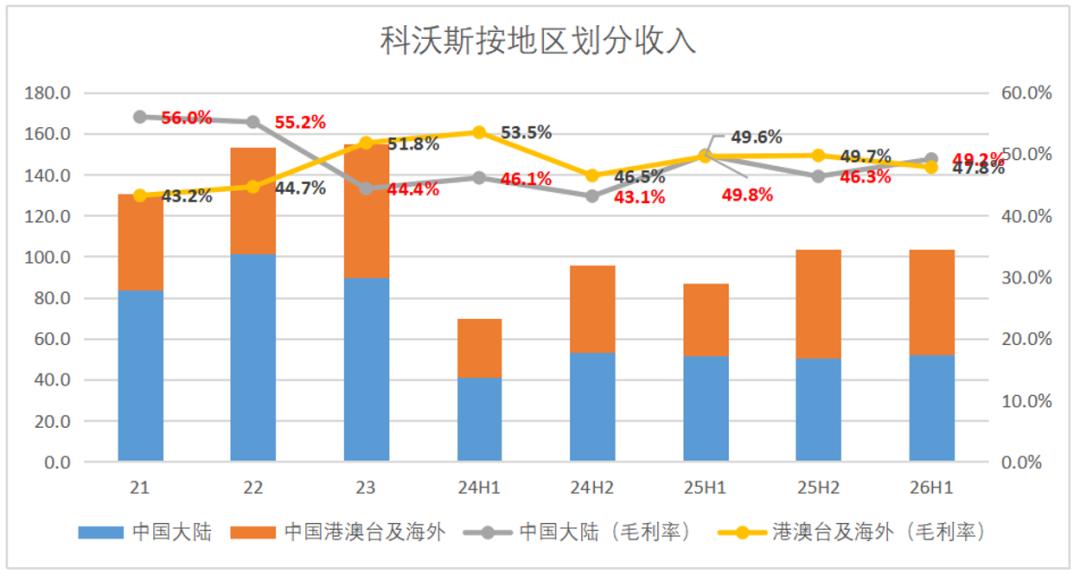
In other words, all the incremental revenue of Roborock and Ecovacs comes from overseas.
Among the overseas revenue of Ecovacs and Roborock, Roborock has a faster growth rate, which is mainly because Roborock's current outbreak is in the North American market, and there is a time window for this.
As early as the end of 2018, Ecovacs had entered more than 3,500 mainstream retail stores in the United States such as Best Buy, Target, Home Depot and Costco. In that year, its revenue in the United States increased by nearly 100% year on year. Ecovacs has accumulated years of experience in distributing products in these supermarkets and malls.
Roborock has accelerated its offline layout in North America since 2024. On the basis of its original e-commerce business, it has cooperated with retail channels such as Target, Costco and Sam's Club. In the first half of 2026, Roborock further expanded its business in channels including Costco, and increased the number of offline stores and launched models. In the European market, it is also expanding cooperation with retail systems such as MediaMarkt and Carrefour.
Newly added stores mean more shelves and display positions, so products that were originally only sold on e-commerce platforms can reach consumers in supermarkets. For Roborock, which is still expanding its stores and product models, these channels are bringing a batch of new sales opportunities. Part of the growth difference between Roborock and Ecovacs comes from the different stages of North American channel construction.
Roborock, in this round of overseas expansion, is reaping the incremental benefits brought by the rollout of new channels.
Dual profit growth: Roborock relies on business streamlining, Ecovacs relies on investment
From the perspective of profit, the two leading robot vacuum players have performed well since the beginning of this year. However, their profit composition is completely different:
In the first half of the year, the net profit attributable to parent company shareholders of Roborock and Ecovacs increased by 45.60% and 27.40% respectively. Entering the third quarter, Roborock's single-quarter net profit attributable to parent company shareholders continued to grow by 33.01%, while Ecovacs' dropped by 72.43%. The difference in profit sources became more distinct in the third quarter.
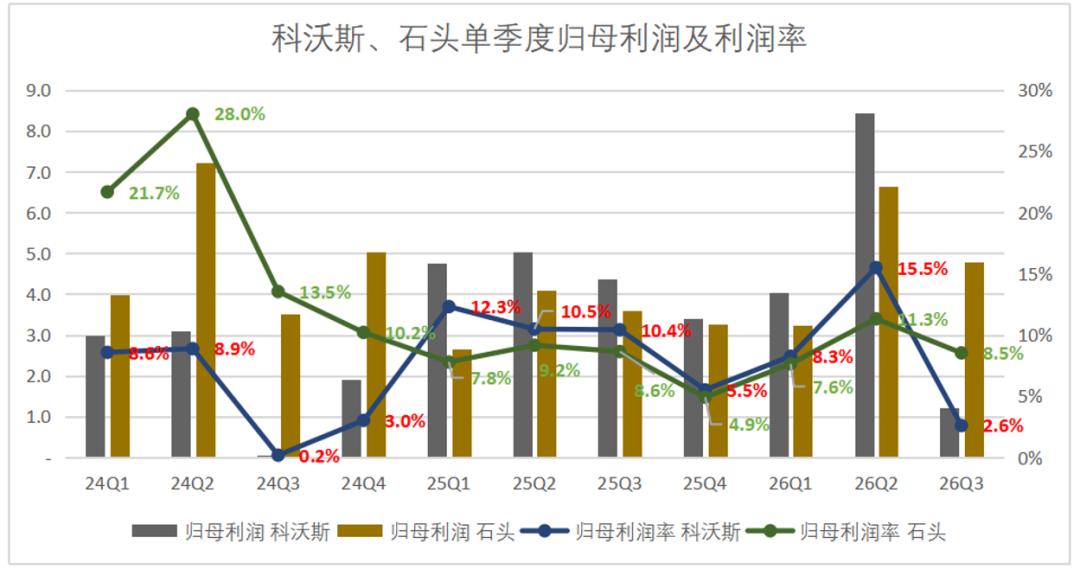
The main reason behind this is that Roborock's profit performance relies more on operational behaviors:
(1) Roborock boosts profit by streamlining non-core businesses
We mentioned before that Roborock cannot make diversified business operations work well.
But the smartest point of Roborock is that it clearly knows that sunk costs will not be involved in future decision-making. Since the second half of last year, it has decisively shrunk related businesses such as washing machine and white home appliances.
In the first half of 2025, the investment in the washer-dryer all-in-one project was 43.52 million yuan; in the same period of 2026, the figure dropped to 15.32 million yuan, a decrease of 28.2 million yuan or 64.8%. The estimated total investment scale of the project was also reduced from 400 million yuan to 300 million yuan, entering a phased contraction stage; the robot vacuum innovation platform and handheld cleaning product projects continue to be developed. Roborock is reducing investment in washer-dryer products and leaving resources for its core cleaning business.
Shrinking the washer-dryer business is just one step. Roborock is also controlling marketing expenses and curbing the growth rate of costs, so that more revenue growth can be converted into profits.
In the first half of the year, Roborock's advertising and marketing promotion expenses reached 1.459 billion yuan, 46.8 million yuan less than the same period of last year. The simultaneous contraction of washer-dryer project investment and marketing expenditure reduces the newly added costs in the process of revenue growth.
In the first three quarters, Roborock's revenue increased by 30.10%, while its sales expenses only increased by 8.34%, and the sales expense ratio dropped from 26.36% to 21.95%; its R&D expenses reached 1.045 billion yuan, up 1.65% year on year. The growth rate of main expenses is far lower than the revenue growth rate.
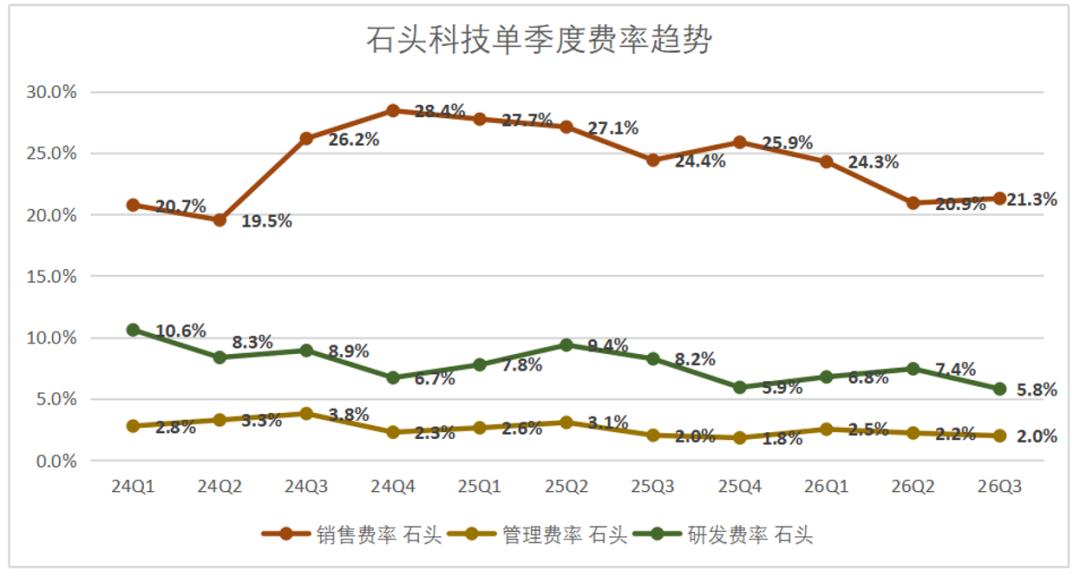
This incremental account can better explain the profit change: Roborock's gross profit in the first three quarters increased by 1.332 billion yuan compared with the same period of last year, while the total sales, management and R&D expenses only increased by 317 million yuan. Roborock reduced investment in the washer-dryer business and controlled advertising expenses, curbing the cost growth while expanding sales, which pushed the profit growth rate to exceed the revenue growth rate.
(2) Ecovacs boosts profit through investment
In the first half of the year, Ecovacs' net profit attributable to parent company shareholders was 1.248 billion yuan, up 27.40% year on year; its non-recurring profit and loss deducted net profit was 805 million yuan, down 6.37% year on year. The net non-recurring profit and loss reached 442 million yuan, accounting for about 35.5% of the net profit attributable to parent company shareholders. The main reason is that investment income raised profits, and the profit pressure from product operation has already appeared.
After SDRobot went public, the impact of relevant shareholdings on Ecovacs' net profit was about 182 million yuan; after the board of directors of RealMan was restructured, Ecovacs no longer exerts significant influence on it, and the relevant equity is accounted for as financial instruments. The change of accounting method and subsequent valuation changes affected the net profit by a total of about 224 million yuan. The two items combined exceeded 400 million yuan.
In the third quarter, the fair value change and disposal profit and loss of relevant financial assets turned to negative 146 million yuan. The single-quarter net profit attributable to parent company shareholders dropped to 121 million yuan, down 72.43% year on year; the non-recurring profit and loss deducted net profit was 226 million yuan, down 46.77% year on year. Investment income changed from boosting profit to dragging down profit, and the profit from product operation is also declining.
In the first three quarters, Ecovacs' newly added gross profit was 453 million yuan, while the total sales, management and R&D expenses increased by 388 million yuan, and most of the newly added gross profit was consumed by newly added expenses. Roborock released profits by streamlining investment and controlling expenses, while Ecovacs' profit growth in the first half of the year relied more on equity investment income. The two paths led to different results in the third quarter.
Relatively speaking, it is obvious that Roborock's profit growth quality is slightly higher.
Under the strong inventory cycle, robot vacuum makers are also frantically stocking up
In the first three quarters, Roborock's gross profit margin was 42.09%, down 1.64 percentage points year on year; Ecovacs' gross profit margin was 45.76%, down 3.98 percentage points year on year. In the third quarter, Ecovacs' gross profit margin further dropped to 39.64%, down 10.16 percentage points year on year.
As is known to all, since the fourth quarter of last year, memory chips have entered a "strong product cycle", and the price increase pressure has been transmitted to the manufacturing cost of robot vacuums. In addition, the rising memory procurement price and the appreciation of RMB jointly compressed the profit margin.
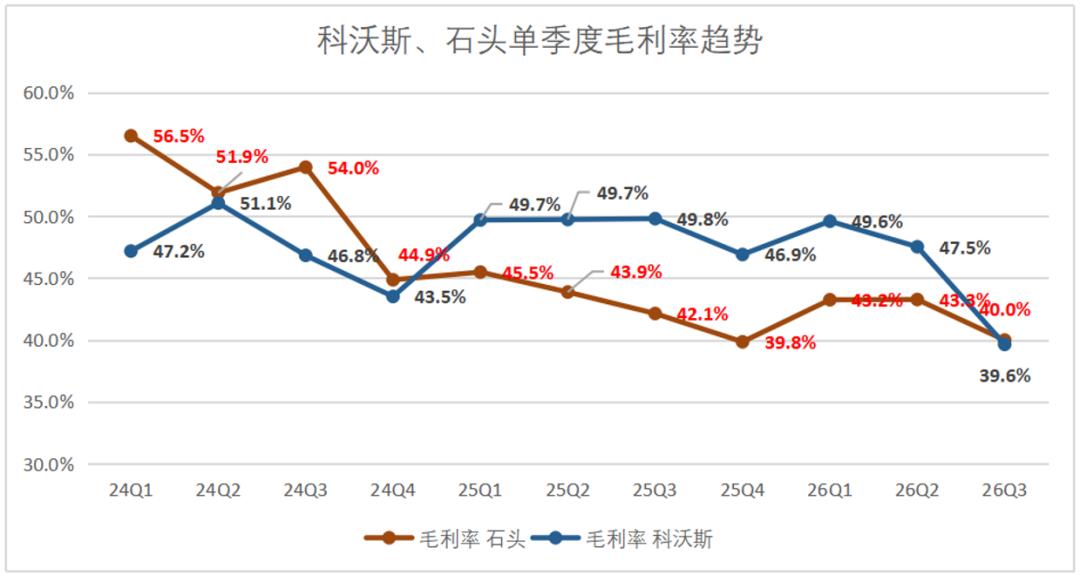
When chip prices keep rising, raw materials stocked in advance at lower prices can reduce the quantity of subsequent high-price procurement, and ease the squeeze of rising manufacturing costs on gross profit margin. Therefore, procurement timing and raw material reserves have become important factors affecting subsequent profitability.
The same goes for the robot vacuum industry. The inventory level basically determines the profit scale. Obviously, both Roborock and Ecovacs are making up lessons in this regard.
Both companies are stocking up in advance. At the end of September, Roborock's inventory was 6.263 billion yuan, up 135.88% from the beginning of the year; Ecovacs' inventory was 5.410 billion yuan, up 66.32%. Ecovacs purchased semiconductor components including memory in advance; the net amount of Roborock's raw materials in the first half of the year has increased from 259 million yuan at the beginning of the year to 820 million yuan, up 216.1%.
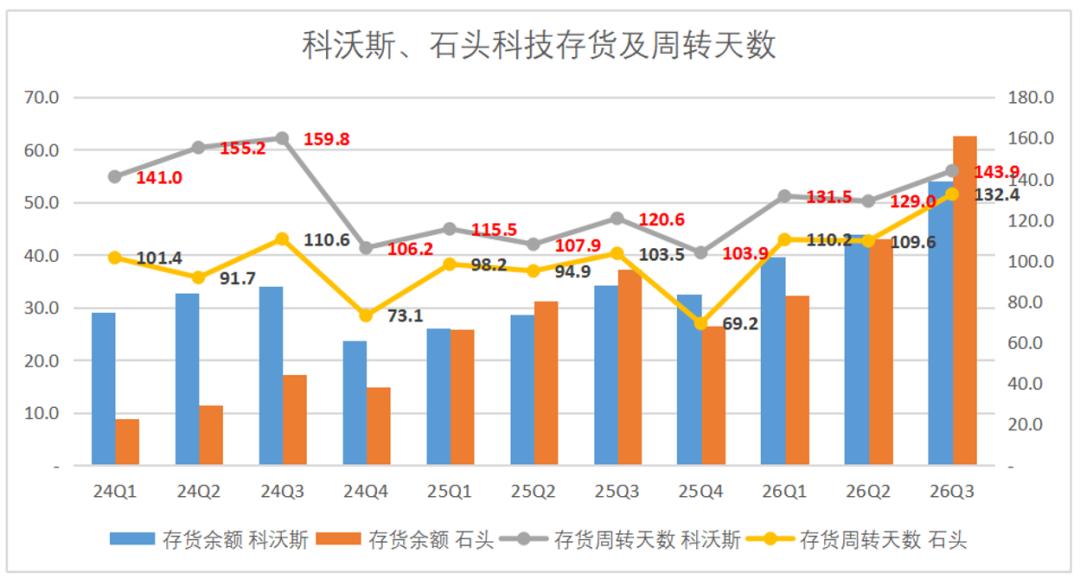
Roborock's cost response plan also includes centralized procurement, expanding reserves of key materials, optimizing algorithms and improving the use efficiency of memory devices. Striving for better conditions on the procurement side and reducing memory resource consumption on the product design side are specific adjustments made around the chip price increase.
The rising memory price is changing the procurement arrangements of the two companies. Pre-stocking has become a common choice for Roborock and Ecovacs to ensure the supply of components and reduce the impact of real-time market quotations on subsequent procurement.
Duopoly competition leaves Xiaomi affected
From the perspective of market competition pattern, the competition pattern of the robot vacuum industry has undergone some obvious changes in the past year. Goldman Sachs mentioned in its research report that the current domestic market share of robot vacuums is concentrating on the two leading players Roborock and Ecovacs.
In the first half of 2026, the domestic online sales volume share of Roborock and Ecovacs was 26.10% and 34.20% respectively, and the total of the two reached 60.30%. In the same period, the domestic online retail sales of robot vacuums dropped by 7.3%, while the online retail sales of Roborock and Ecovacs increased by 8.4% and 8.9% respectively. The overall sales of the industry are shrinking, but the two companies still achieve growth, and the market share