People will become utterly blind even with their eyes wide open when staying in the water, and this heretical cultivation method can avoid this problem.
The other day when I was swimming, I forgot to wear my goggles and dove straight into the water. Apart from the unpleasant choking sensation from getting water up my nose and throat, I found that when I opened my eyes underwater, I could only see large patches of color and halos, completely unable to focus. I couldn't tell at all if there was anyone in front of me, and it felt like I suddenly developed severe hyperopia, which scared me so much that I scrambled to get out of the water. Phew, back in the air, my vision was still there.
Just switching from air to water turns me into a person who can't see anything even with eyes open. Don't laugh at me, you will be exactly the same if you don't wear swimming goggles.
Why do your eyes "stop working the second you get in the water"?
This starts with how the human eye focuses.
When talking about myopia and hyperopia, we often mention the crystalline lens. The crystalline lens is a transparent biconvex lens in the eye between the iris and the vitreous body, which looks like a dorayaki stuffed full of fillings. Controlled by the surrounding ciliary muscle, it can become more convex or flatter, thus adjusting the position where the image of an object forms on the fundus to achieve accurate focusing. If this coordination fails, and the image forms too far forward or too far back, you will not be able to see things clearly.
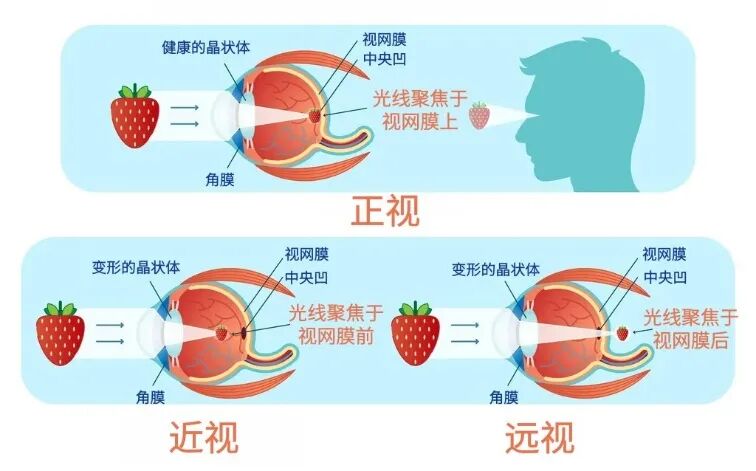
Emmetropia, myopia and hyperopia | Reference [1]
However, the crystalline lens only contributes 30% of the human eye's focusing power, and the remaining 70% is actually provided by the cornea.
When light enters the cornea from the air, the large difference in refractive index between air and the cornea causes significant refraction, as if the light is roughly converged first.
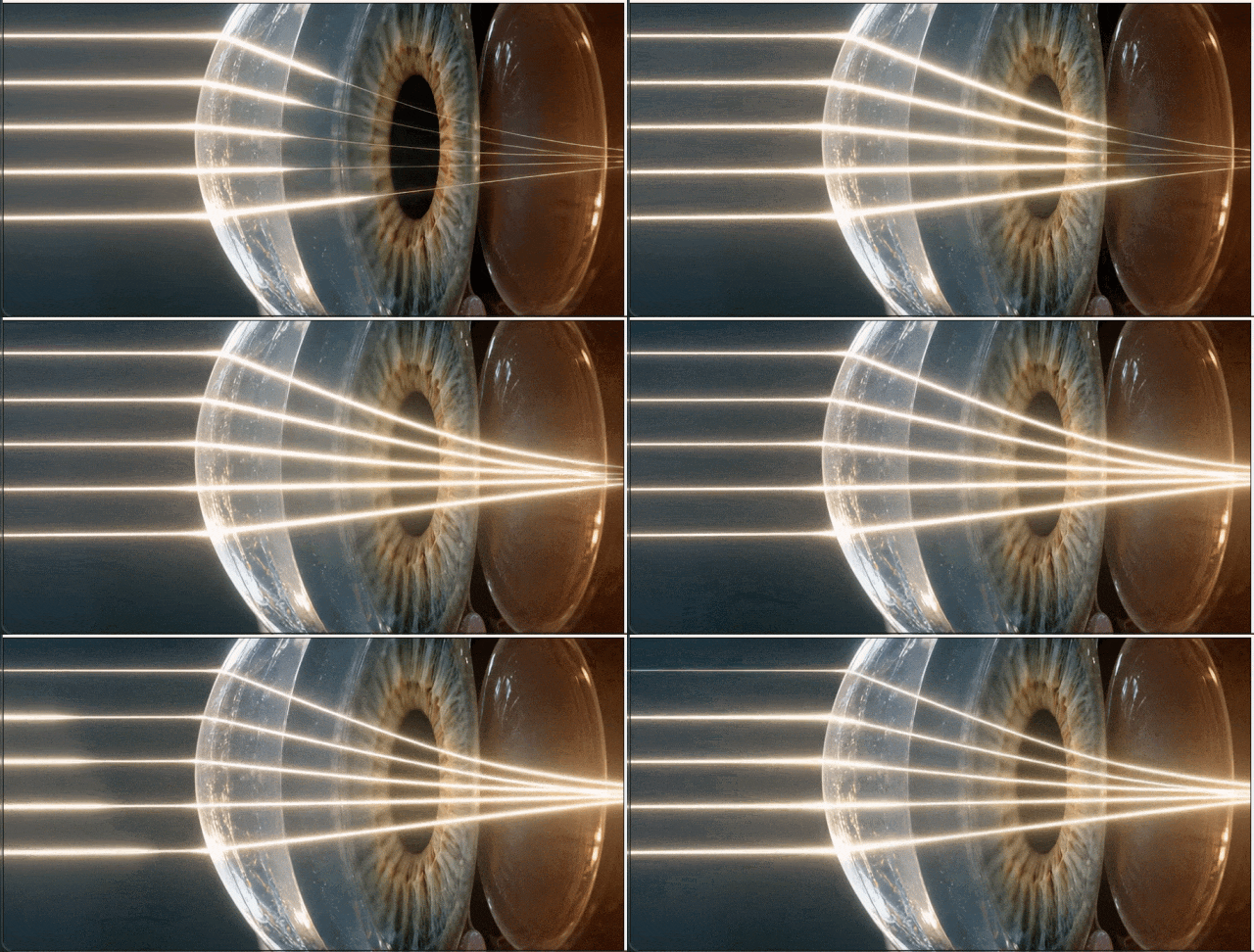
Light refracts as it passes through the cornea | bilibili / Medical Vision Exploration
Then the converged light passes through the crystalline lens, which performs fine focusing to finally form an image.
But the refractive index of water is 1.33, which is very close to that of the cornea. When you open your naked eyes underwater, there is no obvious refraction of light entering the cornea from the water, so the light cannot be converged. Even if you have a top-tier crystalline lens, you still cannot focus accurately, and the image will form behind the retina, giving you a hyperopia experience.
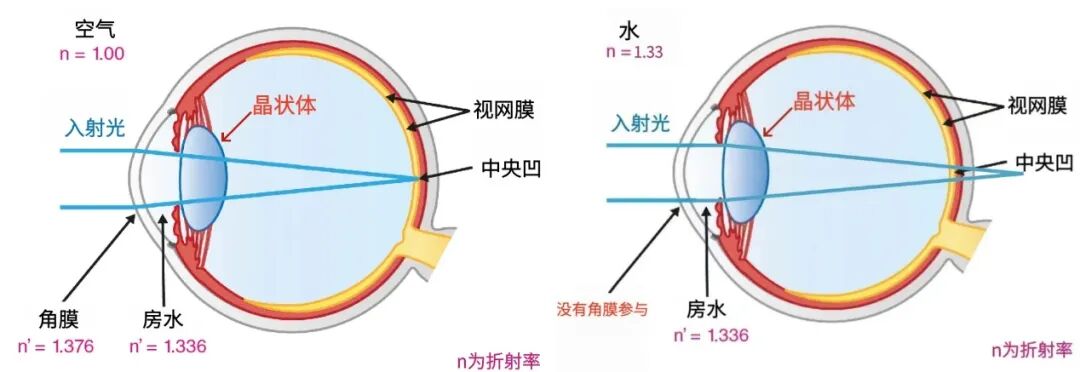
Focusing results in air and water | Drawn based on Reference [2]
In other words, after terrestrial humans move from air to underwater, the change in the refractive index of the medium outside the cornea directly causes the loss of about 70% of the eye's focusing function, so the vision becomes blurry, leaving only light perception and color perception. To get clear vision underwater, humans need to retain the air in front of the cornea to create the refractive index difference required for focusing, for example, by wearing swimming goggles.
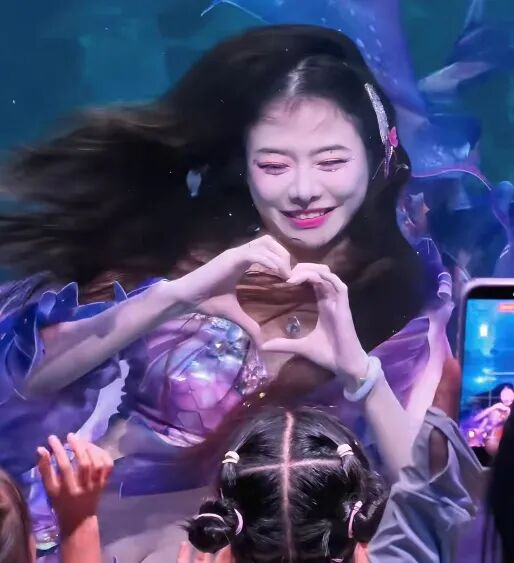
When we interact with mermaid performers through the glass of a fish tank or when they dive with bare faces, the performers can only see blurry human figures underwater | Xiaohongshu @Mermaid Leichongchong
Here is an unorthodox trick for people who don't wear swimming goggles: curve both hands into an arc against your supraorbital ridges, then exhale through your mouth or nose. The rising bubbles are blocked by your palms, forming an air chamber in front of your eyes, which helps you focus.
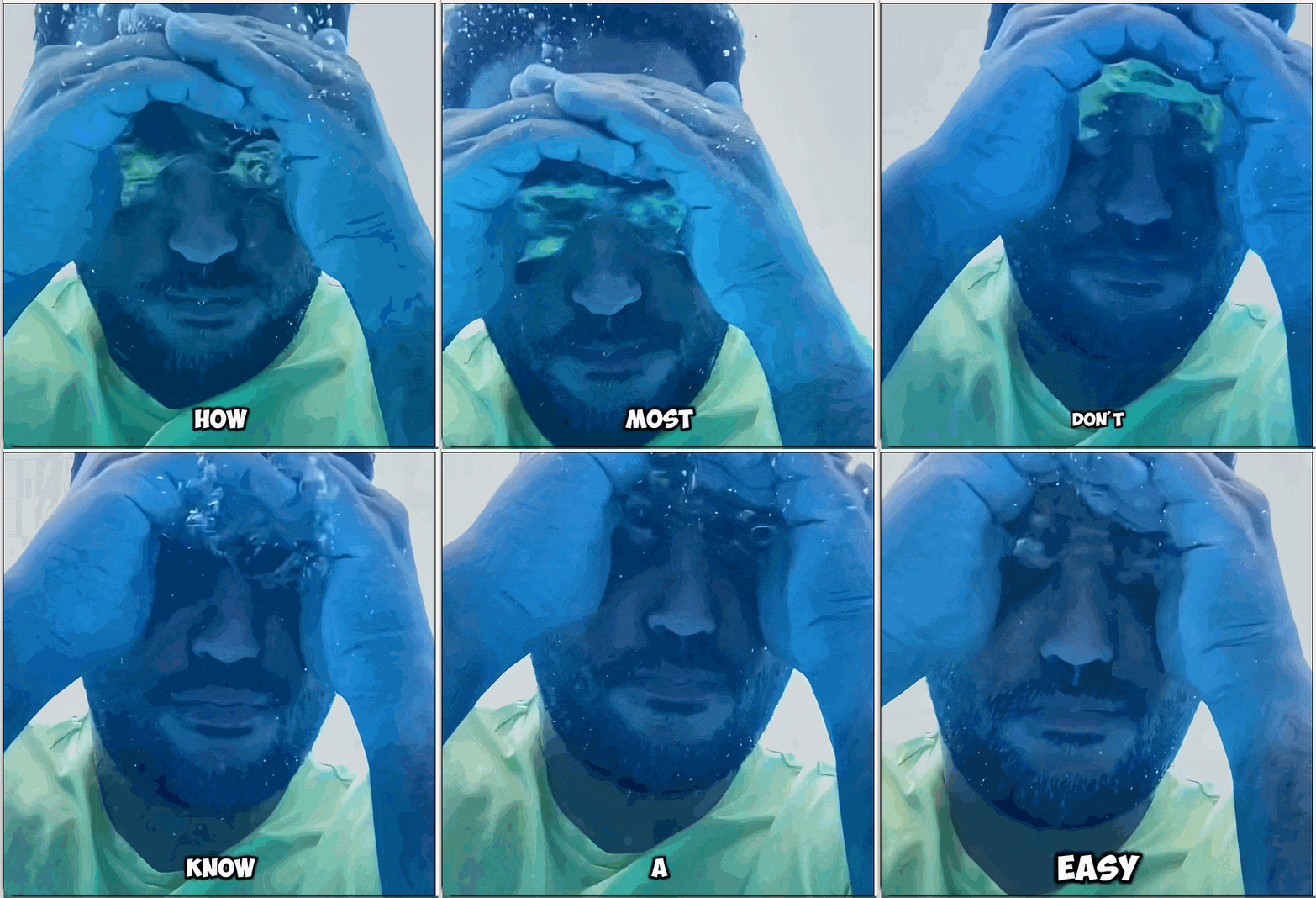
Unorthodox trick for clear naked-eye vision underwater | Youtube@Fact_Detective
The vast majority of humans have no habit or need to open their eyes naked underwater, and it's no big deal to be effectively blind when submerged. But what about penguins and seals that dive into the water every other day to catch fish for food? What do they do if they go blind underwater?
The penguin's solution is: since the cornea stops working underwater, weaken the cornea and strengthen the crystalline lens. Compared with other birds with similar eye lengths, penguins have extremely thin corneas, while their crystalline lenses are powerful and nearly spherical, surpassing most terrestrial vertebrates. This design of penguins is very similar to that of fish eyes, giving them clear vision underwater. Similarly, pinnipeds such as seals and sea lions that often go underwater to hunt for food also have nearly spherical crystalline lenses.
Every coin has two sides. Some penguin and pinniped species cannot flatten their plump spherical crystalline lenses enough after coming ashore to adapt to focusing in the atmosphere. Plus, their thin corneas can still provide some focusing power, so they are myopic on land, which is exactly the opposite of the human situation.
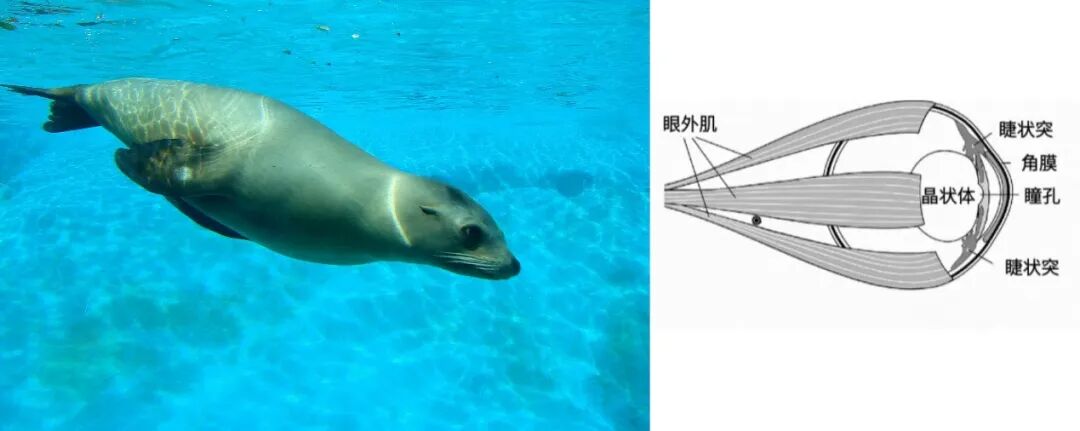
California sea lion and its eye structure, with an extremely round crystalline lens | Wikimedia Commons / Vassil; Reference [5]
Then what about flying fish, which spend most of their lives in the water and occasionally leap into the air to escape predators? Are they also myopic when gliding in the air?
Triangular Pyramid-Shaped Cornea
Faced with the choice of "thick cornea + flat thin lens for land adaptation, or thin cornea + nearly spherical lens for underwater adaptation", flying fish choose both.
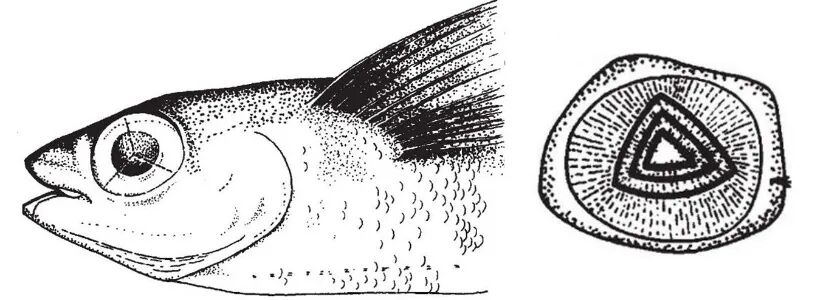
Triangular pyramid-shaped cornea of flying fish | Reference [6]
The triangular pyramid-shaped cornea of flying fish is unique across the entire animal kingdom. The center of the cornea bulges out, forming three relatively flat planes facing the oblique front, oblique back and downward directions. Scientists speculate that this kind of cornea provides flying fish with three key fields of view: the rear-facing plane is used to see predators behind them, the downward-facing plane can be used to estimate the distance to the water surface when they are in the air, and the front-facing plane is used to find a safe landing spot.
The three "flat planes" of the cornea barely provide any additional focusing function in the air. Combined with the nearly spherical crystalline lens, flying fish will not become myopic on land like penguins. According to scientists' speculation, flying fish are nearly emmetropic in the air and slightly hyperopic underwater. After all, flying fish only take to the air when they are fleeing for their lives, so clear vision in the air is far more important.
It seems that it's not just humans that are "not good enough" — other animals that move between land and water can only maintain good vision in one of the two environments. Has nature never created any animal that can see clearly both on land and underwater?
The Pressure Falls on Amphibians
Amphibians that live mainly in water when young and move onto land after reaching adulthood should be able to see well both in water and on land, right?
Surprisingly, that's not the case.
When tadpoles live in water, their eye structure is more similar to that of fish, with nearly spherical crystalline lenses that give them better underwater vision. After they grow up, frogs that are mainly aquatic retain these characteristics; but frogs that are mainly terrestrial have eye structures more similar to humans after maturing, obtaining a focusing system more adapted to land, and their underwater vision degrades. Similarly, species that are mainly aquatic such as salamanders and giant salamanders also tend to retain underwater vision after growing up.
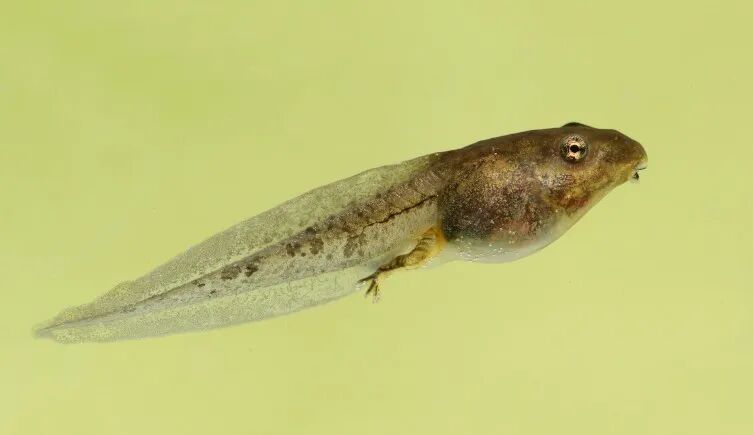
Tadpoles live in water, their eye structures are more similar to those of fish, adapted to underwater vision | Shutterstock / Steve Byland
The king of amphibious vision is the fiddler crab, a type of crab that lives in intertidal zones and constantly moves between land and seawater every day.
The eyes of crabs are compound eyes made up of thousands of ommatidia. The focusing structure of each ommatidium consists of the outermost cornea and the crystalline cone.
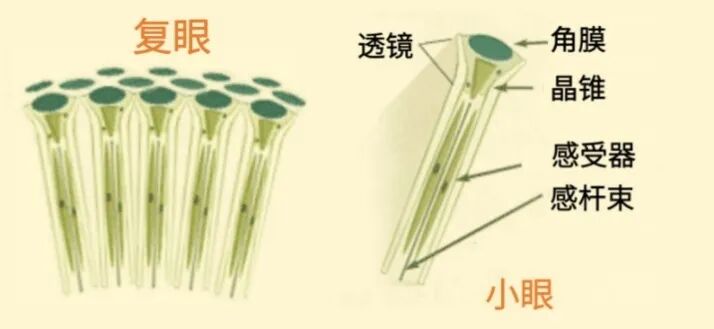
Structure of compound eye and ommatidium | Reference [10]
The crystalline cone of the fiddler crab does not participate in focusing; the corneal surface of the fiddler crab is flat, which has almost no focusing ability in terms of shape. But the material of its cornea is very special: the entire cornea is stacked layer by layer from the outer layer to the inner layer, and its refractive index varies accordingly, forming a cornea with gradient refractive index distribution. In this way, even if the external environment changes, light can still be converged layer by layer through the cornea from outside to inside to complete focusing.
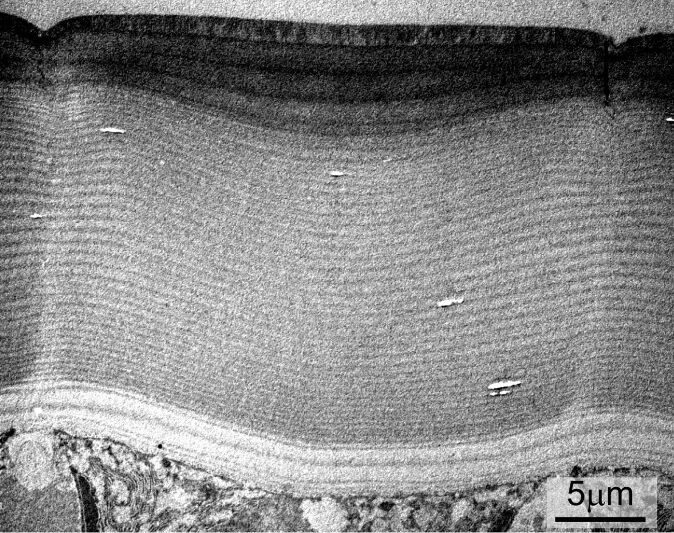
Gradient refractive index structure of the fiddler crab's cornea under electron microscope | Reference [12]
Korean scientists even took the gradient refractive index cornea of fiddler crabs as inspiration to design an amphibious camera. The focusing lens of this camera is composed of a series of microlenses with different refractive indices, which can clearly focus and form images at the same position whether in air or underwater. Under the same experimental conditions, cameras with a single refractive index can only form images in the air.
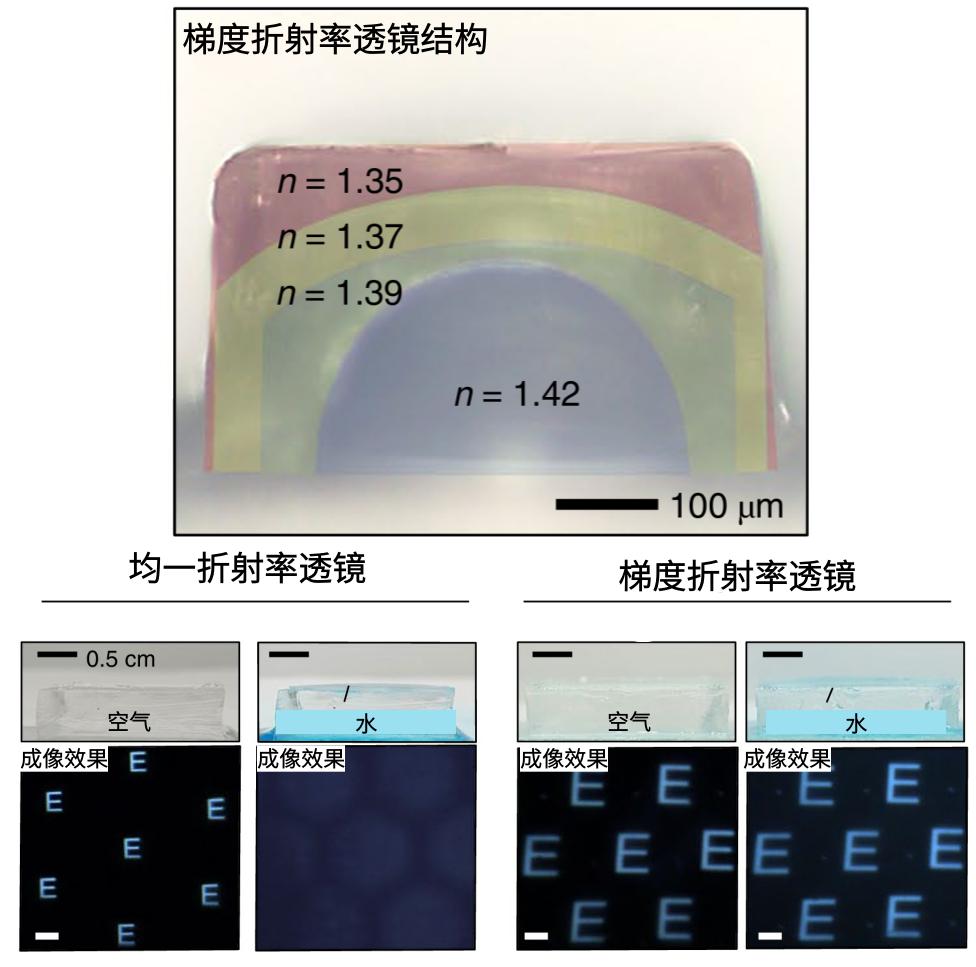
The bionic gradient refractive index lens inspired by the fiddler crab's cornea has excellent imaging performance both in air and water | Reference [11]
In comparison, the solution for commercially available underwater action cameras is much simpler and cruder: between the lens you can touch and the real focusing lens, there is a layer of air reserved specifically for focusing. In this way, from land to water, the medium in front of the lens actually does not change. It's just like how you can see clearly underwater while wearing swimming goggles, and your focusing will not be affected even if you keep the goggles on when you get back to the shore.
References
[1] https://designeroptics.com/blogs/news/myopia-vs-hyperopia?srsltid=AU7gw4XOGZ1_X5tJQMr2u4_mA0tKfGLyjkKQ9Pe3YfM5n2zgrCJaQdZz
[2] https://entokey.com/create-a-cornea/
[3] Hadden P W, Zhang J. An overview of the penguin visual system[J]. Vision, 2023, 7(1): 6.
[4] Schusterman R J, Balliet R F. Visual acuity of the harbour seal and the Steller sea lion under water[J]. Nature, 1970, 226(5245): 563-564.
[5] Gutiérrez J, Simeone C, Gulland F, et al. Development of retrobulbar and auriculopalpebral nerve blocks in California sea lions (Zalophus californianus)[J]. Journal of Zoo and Wildlife Medicine, 2016, 47(1): 236-243.
[6] Baylor E R. Air and water vision of the Atlantic flying fish, Cypselurus heterurus[J]. Nature, 1967, 214(5085): 307-309.
[7] Schwab I R. Eye in the sky[J]. British Journal of Ophthalmology, 2007, 91(8): 994.
[8] https://phys.org/news/2022-11-frog-lenses-differently-environment