Paralyzing 4 towns and jamming tens of thousands of devices, French authorities tracked down the culprit across 17 kilometers, only to find the source located in a private backyard.
In 2024, a public wireless communication network covering dozens of square kilometers and serving tens of thousands of devices suddenly suffered a large-scale outage across the vast area spanning the two provinces of Rhône and Isère in southeastern France.
The technicians at the network backend were the first to notice something unusual. In the Rhône and Isère provinces, which are dozens of kilometers apart, data from 4 communication stations began to be lost on a large scale.
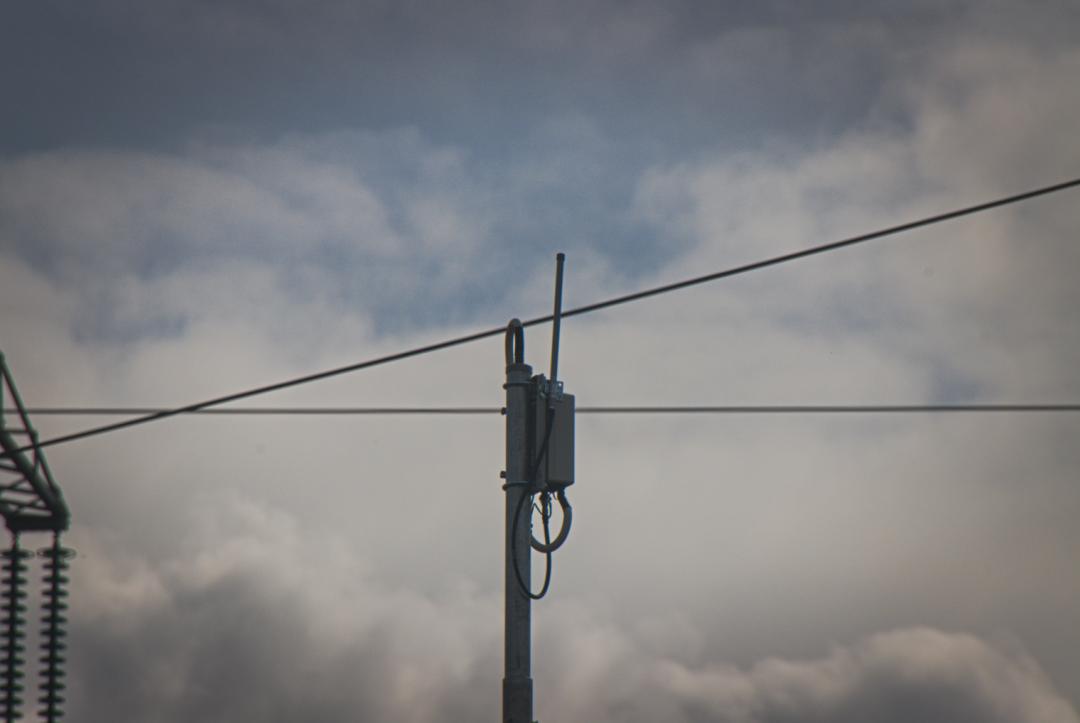
LoRaWAN gateway and antenna mounted on a pole Source: Wikimedia Commons
The small base stations that usually transmit data for water meters, electricity meters and various types of sensors found their messages vanishing halfway. Even if a few messages were barely received, the content was all fragmented garbled code.
What is even more eerie is that the 4 communication stations are far apart from each other, but the time of damage and symptoms are surprisingly consistent.
This large-scale continuous interference is unusual. Investigators from the French National Frequency Agency (ANFR) immediately stepped in and rushed to the scene with professional radio direction-finding antennas.
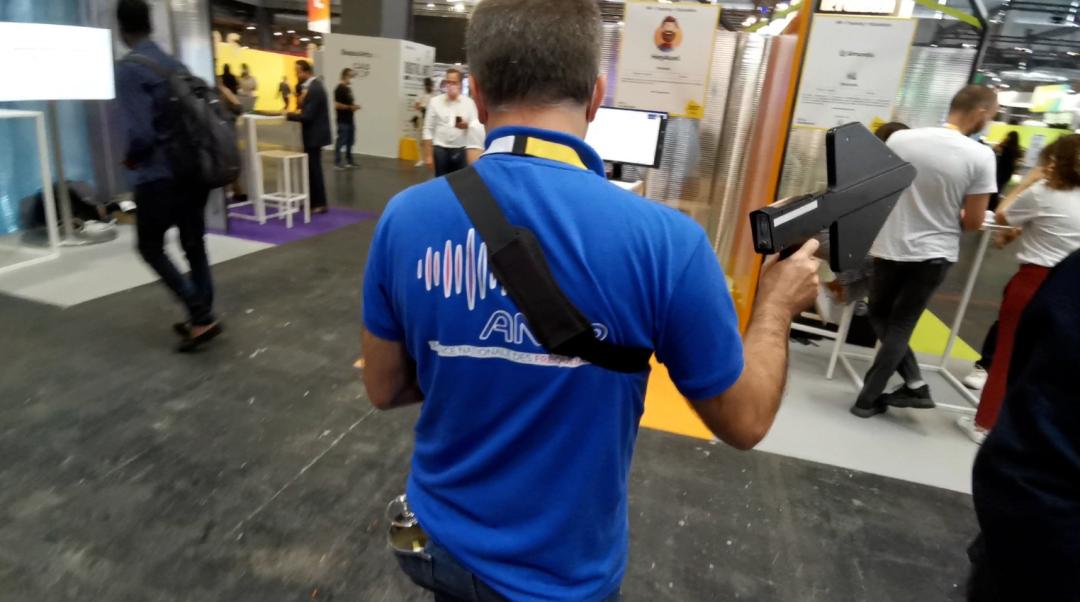
Staff members holding directional receiving antennas to search for radio signals Source: Clubic
The direction-finding equipment can draw direction lines on the map by capturing the incident angle of radio waves in the air.
As investigators repeatedly measured at different coordinate points and calculated the intersection points, the abnormal signal lines of the 4 base stations finally all converged at the same coordinate — a small town called Saint-Georges-d'Espéranche in the Isère province.
It is nearly 17 kilometers away from the nearest damaged base station. In the field of radio, to create large-scale blockage that can penetrate hills and houses 17 kilometers away, fairly large-scale power generation equipment or industrial high-power transmission towers are usually required.
However, guided by the pointer of the direction finder, the place where the investigators stopped was just an extremely ordinary private rural residence.
Walking through the yard, the answer finally appeared on the lawn: the culprit was just a white four-wheeled household lawn mower robot that was slowly mowing the lawn.
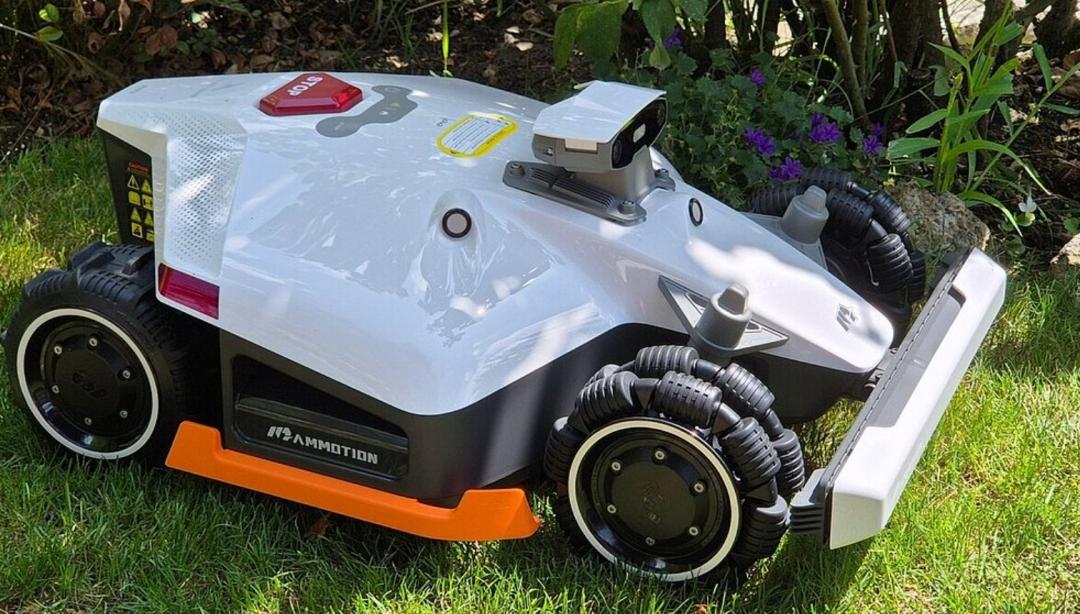
Source: Les Numériques
The question is, how can a lawn mower that only moves around in the yard break through a distance of 17 kilometers and paralyze a formal communication base station?
Source: Clubic
The investigators soon found that the problem lay in the positioning system of the lawn mower.
In order not to damage the flower beds or run to the neighbor's house, this robot needs to know its position very accurately.
Since ordinary satellite positioning may have an error of several meters, the manufacturer equipped it with a set of RTK positioning system.
The owner installs a fixed base station in the garden, which continuously sends positioning correction information to the robot, so that the robot can achieve centimeter-level accuracy and work along the edge of the lawn.
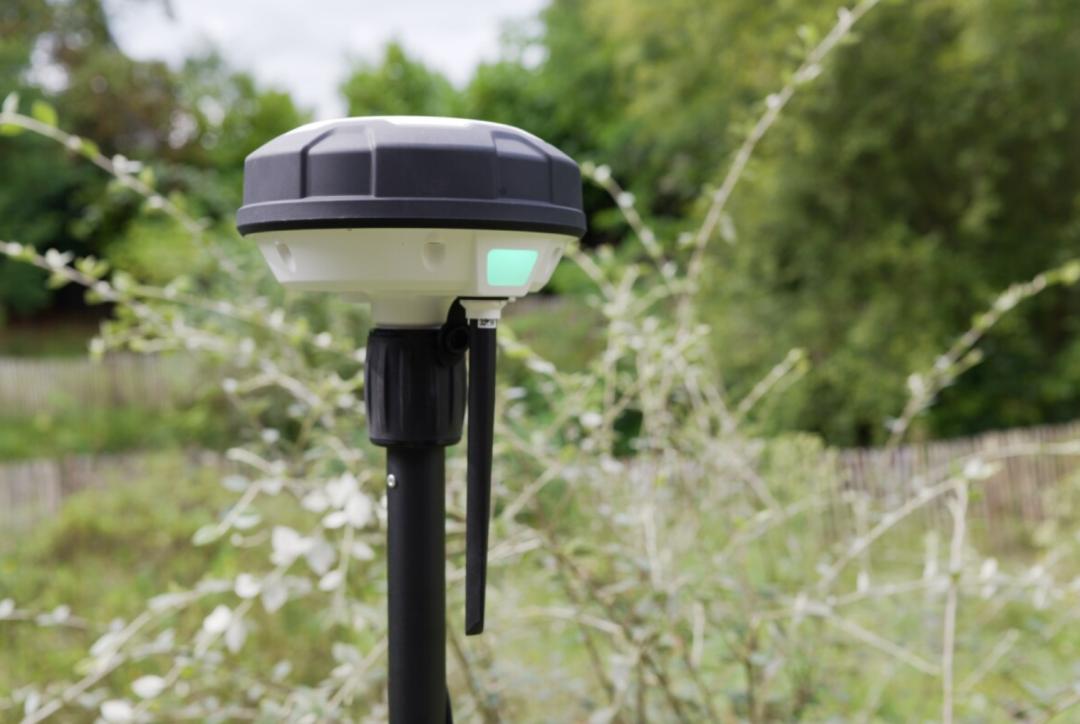
RTK fixed base station Source: Frandroid
The radio frequency band it uses during operation completely overlaps with the LoRa IoT frequency band.
This shared frequency band is like an extremely quiet conference room. Water meters, electricity meters, temperature and humidity sensors are like speakers, and everyone abides by the rules by default: every few tens of minutes, they quickly send a message like "2 tons of water have been used" or "the temperature is 20 degrees", and then go completely silent immediately after finishing, leaving the channel to others.

Smart water meter, with an additional wireless communication module compared to ordinary water meters Source: lorawan
According to French radio control regulations, the upper limit of channel occupancy time for such devices in the involved frequency band is usually only 1%. Converted, the device can only be turned on to transmit for a maximum of 36 seconds per hour.
However, the investigators were shocked after capturing the packets of the lawn mower base station: its channel occupancy rate was as high as nearly 40%.
Converted to one hour, that is 24 minutes, which is 40 times the specified upper limit.
It keeps reporting the position to the lawn mower robot, so the weak signals sent by other devices are more likely to be submerged.
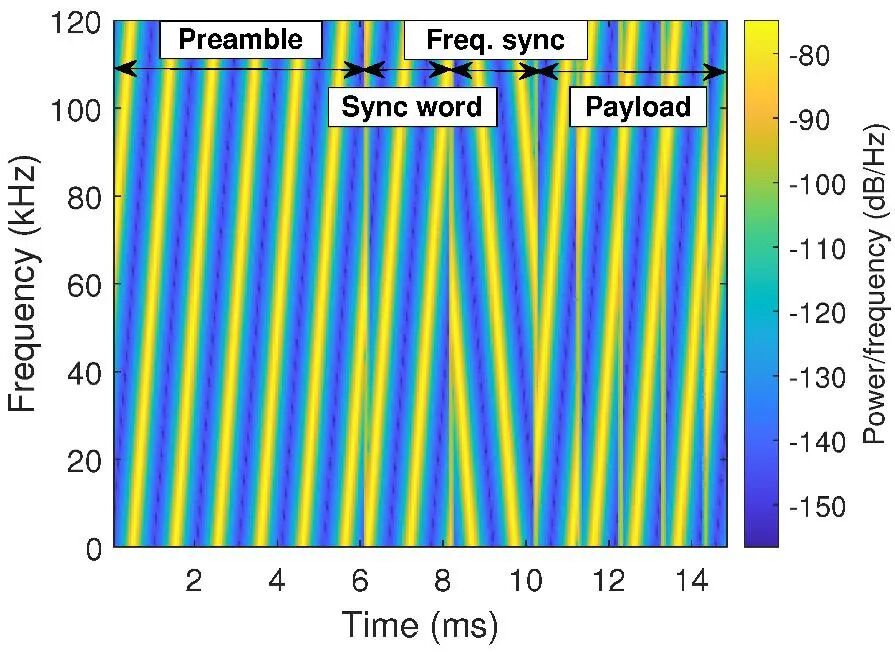
"Fingerprint" of radio signal Source: Internet
LoRa is a technology specially designed for long-distance communication. The receiving station can receive weak signals from several kilometers or even more than ten kilometers away.
As a result, even the positioning base station in this garden 17 kilometers away became a trouble for it. After learning about the situation, the homeowner immediately deactivated the base station as required.
However, the matter did not end there.
Similar interferences continued to appear in other regions of France. From 2024 to 2025, ANFR handled more than 120 complaints about LoRa network interference in total. The investigators realized that the problem must be solved at the product level.
So they bought a robot of the same model directly from the distributor and sent it to the laboratory for testing. The manufacturer had previously tried to reduce radio transmission through software adjustments, but the test results still failed to meet the standards.
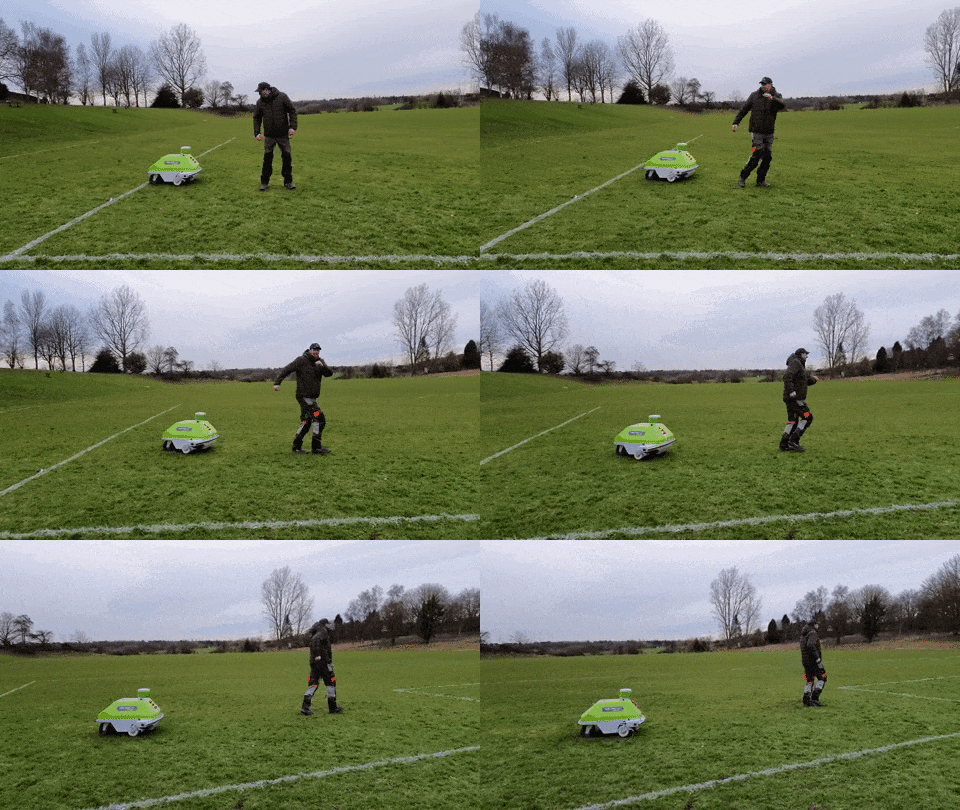
Source: giphy
Eventually, ANFR required the manufacturer to continue rectification, launch a new software version, and update the relevant sold devices through the network.
In November 2025, the French regulator confirmed that the updated devices had complied with the radio usage regulations. The investigation that lasted for more than a year finally came to an end.
References:
French National Frequency Agency (ANFR). Deux missions, un objectif : débusquer la tondeuse qui ne mangeait pas que de l’herbe (Review of the investigation into the lawn mower robot interference incident). April 22, 2026.
French National Frequency Agency (ANFR). MAMMOTION LUBA 2 4WD 5000X Radio Frequency Compliance Rectification Notice. November 17, 2025.
Boero, A. Ce robot tondeuse perturbait les réseaux IoT de toute la France, sans que personne ne comprenne pourquoi. Clubic, April 23, 2026.
This article is from the WeChat Official Account "Bring Science Home" (ID: steamforkids), written by the editorial team of All Magazine, and published by 36Kr with authorization.