Is Ulanqab the right answer for AI data centers?
The data center has ushered in its darkest hour.
On November 5, 2026 Eastern Time, the US stock market AI industry chain recorded its largest single-day drop in 19 months.
The NASDAQ Composite Index closed down 5.52%, retreating more than 10% from its October high and falling into the technical correction range; the Philadelphia Semiconductor Index fell 12.25%, NVIDIA fell 9.26%, AMD fell 17.26%, Western Digital fell 22.26%, and the total market value of the entire market shrank by about 3 trillion US dollars in one day.
Just two days before the sharp drop in US stocks, residents in Ohio, Illinois, Maine and Florida launched votes one after another to oppose the construction of data centers in their own communities. On November 3, 10 states held votes on data center construction restrictions, with a total of 41 local bills. Among the 38 bills that have been fully decided this year, 37 tend to restrict data center construction.
Although the opposition bills will not affect data centers already under construction, it can be said that it is extremely difficult for AI companies to build large-scale data centers in the future.
China is also building data centers, and the construction speed is accelerating.
According to the Ministry of Industry and Information Technology's plan in September, the national intelligent computing power scale will reach 9800 EFLOPS by 2030. Compared with 2185 EFLOPS in June 2026, it will increase by 3.5 times in 4 years, with an average annual compound growth rate of 45.5%, and the cumulative investment in information infrastructure is expected to reach 3.8 trillion yuan.
The fundamental reason why the US has called a halt to related construction while China is busy starting work is that all the obstacles encountered by the US in the process of building data centers have been bypassed by China's model.
1
All reasons can be attributed to PJM. The full name of PJM is PJM Interconnection, which is the largest regional power dispatch center and wholesale market operator in the United States.
PJM itself does not own power plants, because power plants and transmission lines are assets of member companies. PJM is responsible for real-time command of how electricity is generated and where it flows in the entire region, ensuring a balance between supply and demand every second and preventing the power grid from collapsing; at the same time, it operates the electricity wholesale market, allowing power generators and power supply companies to compete for transactions on its platform.
It manages power dispatch for 13 states and the District of Columbia, covering about 67 million people, and it is also the region with the densest data centers in the world.
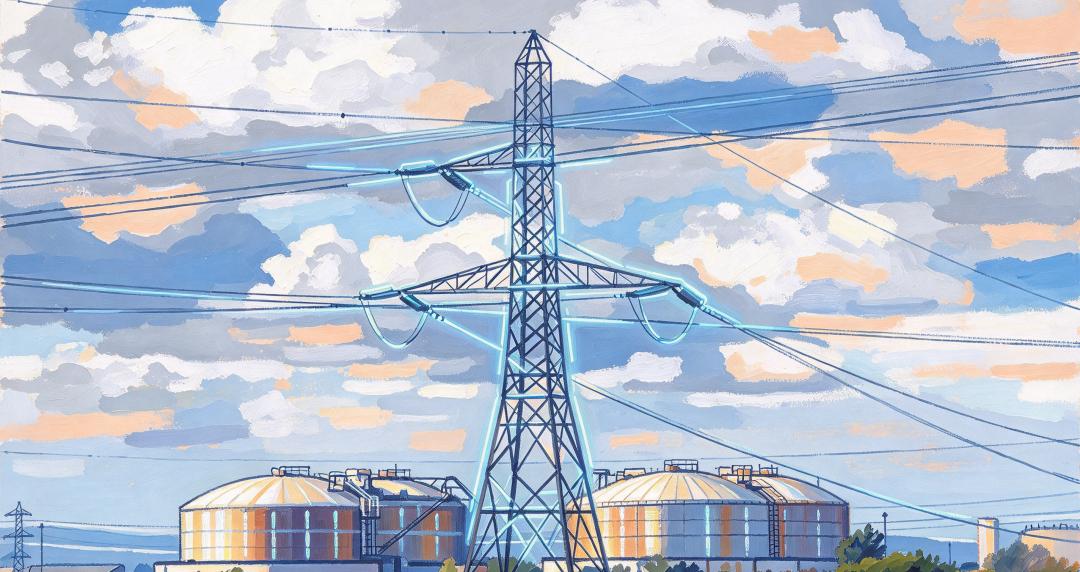
PJM holds a capacity auction every year, and the auction item is the commitment to access electricity at the peak moment three years later.
It is just like you booking a banquet table, even if you do not order a single dish on the banquet day, PJM still has to prepare all raw materials, kitchen space and chefs on the banquet day.
The capacity clearing price for the 2024/25 delivery year is $28.92 per megawatt per day, which rose sharply to $269.92 in 2025/26, $329.17 in 2026/27, $333.44 in 2027/28, and $325 in 2028/29.
Fortunately, the latter three auctions are all capped. Otherwise, according to PJM's own calculation, the price will rise to $554.72 per megawatt per day.
Who ends up paying for all this money?
PJM's independent market regulator re-ran the four auctions, removed the data center load from the forecast for recalculation, and concluded that data centers contributed 29.4 billion US dollars, accounting for about 46% of the capacity fee. Spread over 67 million people, it is about 440 US dollars per person in four years.
This is like a sudden heavy rain, a large number of people without umbrellas want to take a taxi, but the number of cars the platform can provide is limited, and extra fees are required to dispatch cars from other regions. As a result, the platform raises the dynamic surge pricing of the whole region, which leads to extra fares for passengers who usually take taxis.
The New Jersey Board of Public Utilities estimates that starting from June 2025, the average bill of PSE&G users will increase by 17.24%, JCP&L by 20.20%, Atlantic City Electric by 17.23%, and Rockland Electric by 18.18%.
Calculations in Maryland show that users pay an extra 14 to 18 dollars per month; users in the District of Columbia pay an extra 10 dollars per month; many users in Ohio saw power prices jump by 10% to 35% in the same month.
Figures from the U.S. Energy Information Administration show that from January to July 2026, the average residential electricity price in the District of Columbia rose by 17.8% year-on-year.
As the old saying goes, you make up for what you lack. Since data centers are short of electricity, why not build more power plants?
The U.S. Energy Information Administration states that the total electricity consumption across the United States has remained basically flat in the past two decades. The small increment brought by population and economic growth has been offset by energy efficiency improvement and manufacturing relocation.
The U.S. power grid follows a long-term plan and is planned based on long-term demand. Data centers were not originally included in the power grid planning, and no one expected that the demand for data centers would be so huge.
Statistics from Lawrence Berkeley National Laboratory show that by the end of 2025, there were still 2061 gigawatts of power generation and energy storage projects queuing for grid connection across the United States, about 1.6 times the installed capacity.
The median waiting time from submitting an application to commercial operation is 61 months, while it was only about 22 months from 2000 to 2008. Among the applications submitted between 2000 and 2019, only about 13% were actually put into operation in the end, and 75% were withdrawn.
Even after approval, the work is not finished, and you still have to wait for equipment delivery.
According to Wood Mackenzie's statistics, the average delivery time for large power transformers in the United States in 2025 is 128 weeks, generator step-up transformers 144 weeks, and distribution equipment up to 160 weeks. The price has increased by 77% compared with 2019, and about 80% of them rely on imports.
A computer room park can be completed in 18 to 24 months, while a high-voltage transmission corridor generally takes 5 to 15 years. Cross-state lines take more than four years just to get permits, and the longest takes 11 years.
In 2024, less than 900 miles of new high-voltage transmission lines were completed across the United States, compared with about 4,000 miles in 2013.
The cost is borne locally, but the benefits are not.
Nearly three-quarters of states now offer some form of tax relief for data centers, exempting sales tax and property tax for more than a decade. The threshold in Texas is a $200 million investment plus 20 jobs, while New York State simply sets no minimum investment amount.
The 2024 report from Virginia's Joint Legislative Audit and Review Commission states that a typical 250,000-square-foot data center has about 50 long-term full-time positions, nearly half of which are outsourced; there can indeed be 1,500 workers during the construction period, but the construction period only lasts 12 to 18 months.
In Gallup's March 2026 survey, 71% of Americans oppose building AI data centers near their communities, and 48% are "strongly opposed"; by contrast, only 53% of people oppose building nuclear power plants near their homes.
Half of the reasons for opposition point to resources, including water use, power grid and farmland; nearly a quarter mention quality of life, such as noise, traffic and housing prices.
The water issue is particularly specific. A large facility can use up to 5 million gallons of water per day, about 18,900 tons, which is equivalent to the daily water consumption of a small and medium-sized town. Residents in Newton County, Georgia, have been informed that water bills are expected to rise by 33% in the next two years.
2
However, for China, none of the above problems exist.
In 2025, the total power consumption of China's computing centers was about 170 billion kWh, accounting for 1.6% of the total social electricity consumption; according to the caliber of the U.S. Department of Energy, data centers consumed 176 TWh of electricity in 2023, accounting for 4.4% of the total U.S. electricity consumption.
In 2025, China's newly added installed capacity reached 542 million kilowatts, and the newly added renewable energy power generation reached 519.3 billion kWh, which has exceeded the increment of the whole society's electricity consumption.
The place with the fastest growth rate of data center construction in China now is Inner Mongolia. There are always people online saying that the reason for choosing Inner Mongolia is that it has a vast territory with a sparse population and suitable temperature, but these are only superficial phenomena.
The Western Inner Mongolia Power Grid is the only provincial-level power grid in China that is independent of the State Grid and China Southern Power Grid. It is directly under the jurisdiction of the autonomous region, managing 8 leagues and cities including Hohhot, Baotou and Ulanqab, covering 720,000 square kilometers and more than 14 million residents.
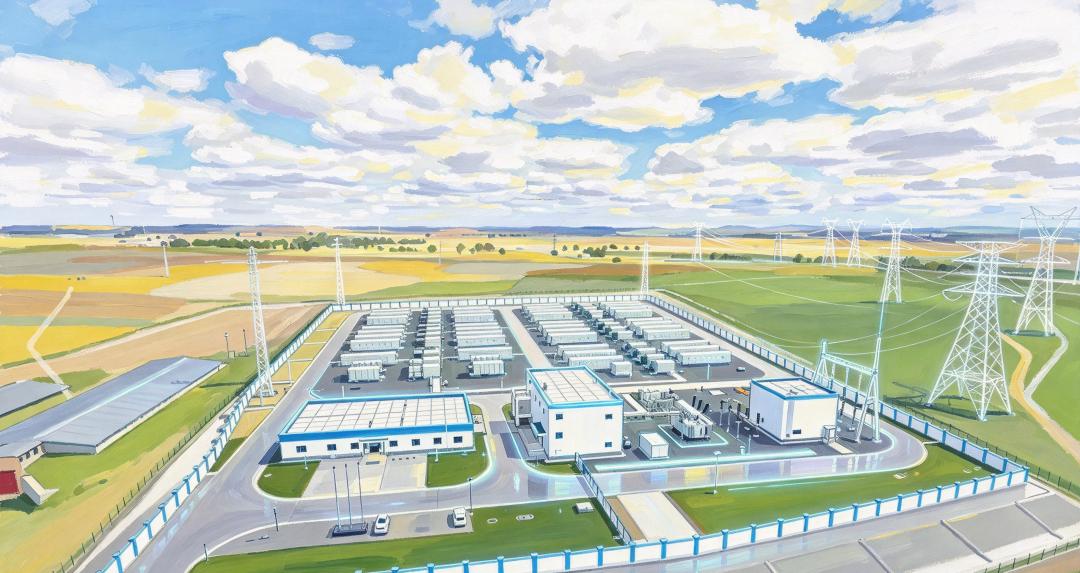
In 2002, the separation of power plants and power grids was implemented. Due to its small scale and heavy debt, this asset was not taken over and was left behind. Two years later, when the national power shortage broke out, Inner Mongolia turned around relying on coal and wind power.
It is easy to invite a god but hard to send it away, and troubles follow. Electricity is not a daily fast-moving consumer good, it has to be used as soon as it is generated. For example, when the wind is strong these two days, if there is no load to absorb the excess part, the generating unit has to reduce its output, or even directly abandon the power generation.
At the end of 2015, the surplus thermal power in western Inner Mongolia was about 10 million kilowatts, and that in eastern Inner Mongolia was about 6 million kilowatts.
After that, Inner Mongolia built 8 UHV lines including "five AC and three DC". In December 2025, the ±800 kV DC project from western Inner Mongolia to Beijing-Tianjin-Hebei started construction. It is 700 kilometers long with an investment of about 17.2 billion yuan, and is scheduled to be put into operation at the end of 2027.
However, a photovoltaic power station can be completed in one or two years, while it takes about five years for a transmission channel from being included in the planning to being put into operation.
Just as mentioned earlier, the electricity that cannot be sent out can only be discarded.
The wind curtailment rate in western Inner Mongolia rose from 6.8% in 2023 to 15.6% in the first quarter of 2026.
According to media reports, the time-sharing data of a subsidized wind farm in May is as follows: for 9 hours a day, it can only clear 40% of the declared power, for 10 hours less than 10%, and only in the 3 hours of evening peak can it reach 90%.
Western Inner Mongolia is the first "single-track" power spot market in China. Thermal power and new energy submit volume and quotation on the same stage, accounting for about 94% of the market-oriented units. Since June 2025, the lower limit of declaration has been set at -0.05 yuan per kWh.
In April 2025, the highest clearing price here was 1.5 yuan and the lowest was -0.004 yuan within one day, with an intraday price difference of 1.5 yuan. In the first half of 2026, the average settlement price of wind power in western Inner Mongolia was 170.6 yuan per MWh, and that of thermal power was 315.6 yuan.
What a coincidence, data centers are just large power consumers. Ulanqab is 240 kilometers away from Beijing. Although two 144-core point-to-point dual-routing dedicated optical cables were laid over two years starting from 2017, the one-way measured delay is 2.1 milliseconds and the end-to-end delay is 4.2 milliseconds. But for reasoning tasks, it is still a bit long.
Therefore, the data centers built in Inner Mongolia are generally used for training, rendering, offline big data, warm and cold storage. Scientific research and supercomputing that are not sensitive to delay but sensitive to cost are basically placed there.
There is another problem. As mentioned earlier, in addition to the shortage of electricity, U.S. data centers also face water shortage. Data centers need heat dissipation, and the most commonly used heat dissipation method is water cooling.
In fact, Inner Mongolia is also short of water. "Collaboration of computing and water" is even one of the key tasks of the municipal water bureau, which strictly controls the access of project water use.
So the solution here is: use outdoor cold air for natural heat dissipation for most of the year, and only turn on spray for assistance during high temperature periods in summer; add high-power density liquid cooling cabinets on the basis of air cooling to reduce evaporation and sewage discharge. For example, the Kuaishou project has a designed WUE lower than 1, using a variety of water-saving and water-free air conditioning technologies.
The waste heat of the computer room can also be used for heating. For example, the UCloud Ulanqab Intelligent Computing Center can recover 78,000 GJ of heat a year, reducing carbon emissions by about 7,380 tons. Huawei Cloud uses heat recovery heat pumps to send heat back to the return air of computer rooms and park offices in winter.
In Hohhot, the data center of China Mobile cooperates with Jingneng Shengle Thermal Power Plant, using the high-temperature waste heat from power generation to drive lithium bromide water chillers to replace traditional electric refrigeration. The municipal heating pipe network has been transformed into two-way reuse of "heating in winter and cooling in summer", and the utilization rate of pipe network assets has increased from 50% to 100%.
After the B02 computer building is put into operation, the PUE drops from 1.315 to 1.209; after all the computer buildings are completed, it is expected to save 10 million kWh of electricity and 150,000 tons of water a year. The computer room, thermal power plant and municipal pipe network are connected into a loop.
Although water is still scarce, the water consumption has been minimized through various methods.
Then will local residents who originally enjoyed low electricity prices be forced to pay more because data centers "grab" electricity?
In fact, this will not happen.
After the issuance of Document No. 1439 in 2021, industrial and commercial electricity prices are formed by the market, while residential and agricultural electricity prices are still set by the government.
Zheng Shanjie, Director of the National Development and Reform Commission, said in a reply to questions from the National People's Congress in January 2026: "Residential electricity prices have been lower than the power supply cost