Yang Yuanqing has made an ambitious pledge that the PC market share will reach 30%, but it is far from easy to achieve this goal.
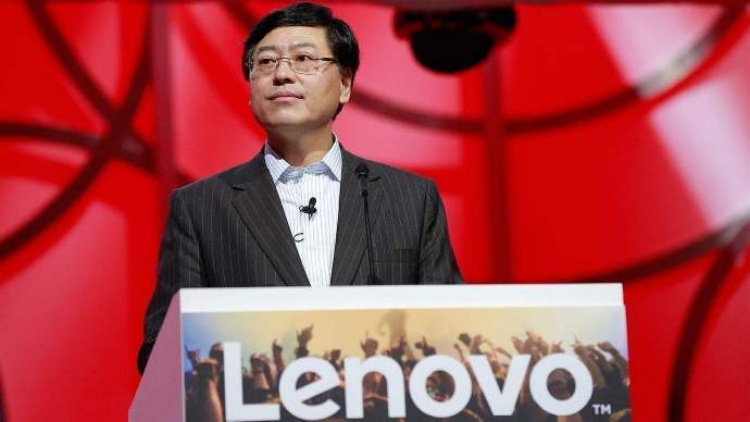
Yesterday, at Lenovo's Global Industry Analyst Conference, Yang Yuanqing, head of Lenovo, made a bold statement that Lenovo is advancing toward its long-term target of 30% global PC market share. He noted that Lenovo is translating market fluctuations into competitive advantages, further widening its lead over the second-ranked player in global PC market share, and maintaining its leading position across all market segments and regions.
According to the latest IDC report, Lenovo shipped 14.9 million PCs in Q3 of this year, ranking firmly first across the globe with a 23.8% market share, while HP and Dell took the second and third spots with 16.5% and 12.1% share respectively. In my view, it is not surprising that Yang Yuanqing has set the 30% market share target, yet the difficulty of achieving it is significantly higher than that in past years.
At present, Lenovo's global PC market share stands at around 23.8%, leading the second-ranked HP by 7.3 percentage points, and its short-term advantage is indeed expanding. However, the 30% long-term target means it needs to seize a large amount of additional industry share, and has to face constraints including fluctuating global PC demand, rising supply chain costs and the uncertain monetization pace of AI PCs.
Why Does Lenovo Dare to Target 30%?
1. The lead in market share is expanding. In Q3 of this year, Lenovo shipped 14.9 million PCs, hitting a 23.8% market share. HP and Dell followed closely with 16.5% and 12.1% market share respectively, and the gap between Lenovo and the second-ranked player keeps widening.
2. High-end transformation is driving up per-unit revenue. Yang Yuanqing emphasized that shipment volumes may face short-term pressure, but higher per-unit revenue, brought by product structure upgrading and income growth from high-value models, can partially offset such pressure.
3. AI PCs drive product structure upgrading. Lenovo is shifting its PC business from pure hardware sales to being an AI terminal entry point. The rising proportion of high-end PCs, AI PCs and workstations helps improve profitability.
4. Supply chain and global operation remain its competitive moat. Lenovo has advantages in multi-region manufacturing, global procurement and channel coverage, making it easier to stabilize market share during industry downturns with relatively stronger operational resilience.
But 30% Is No Easy Target
1. The industry is still in the downward adjustment phase. In Q3 of this year, global traditional PC shipments reached 62.7 million units, down 20.1% year on year, marking the quarter with the largest decline in this cycle. Meanwhile, all the top three vendors posted double-digit drops in shipments. Among them, Dell suffered the steepest decline of up to 30.9%.
2. Cost pressure is a real problem. Rising prices of components such as storage and processors will squeeze the profit of finished devices, and may also affect channel stocking and end-user demand.
3. The closer the market share gets to 30%, the harder it is to gain marginal increments. The growth from 23.8% to 30% is not a simple linear increase. To achieve that, Lenovo has to encroach on the existing market share of HP, Dell, Apple and a large number of regional brands, which will inevitably face fierce market competition.
4. AI PCs still need verification of long-term user willingness to pay. At present, AI PCs are mainly manifested as high-end positioning and ASP (Average Selling Price) growth. However, whether personal intelligent agents and cross-device collaboration can continuously drive device replacement still depends on ecological experience, making rapid growth in the short term rather uncertain.
From the Perspective of Business and Capital Market
With all due respect, for Yang Yuanqing's latest statement, what deserves more attention is not whether the 30% target can be achieved immediately, but that Lenovo is upgrading its narrative from being the top PC shipment vendor to pursuing three-fold growth in AI terminals, infrastructure and services.
For Lenovo, PC market share remains its fundamental business base, but its future valuation flexibility will rely more on three matters: whether the penetration rate of AI PCs can keep rising, whether per-unit revenue and profit margin can stay stable, and whether infrastructure and solution services can continue to deliver high-quality profits.
Therefore, the 30% target is not only a strong signal, but also a bet placed by Lenovo's management on the AI PC cycle and supply chain capabilities. In the short term, it mainly plays a role in boosting confidence and strengthening the narrative of its leading position. But whether it can be delivered in reality depends on whether Lenovo can continue to seize market share against industry headwinds in the coming quarters, and turn AI PCs from a selling point into a stable driving force for device replacement, which is the core leverage to raise market share.
Conclusion
The 30% long-term target is an ambition declaration of a leading enterprise at the industry inflection point, proving that Lenovo still believes in the value of PC-side entry points. However, it is a highly challenging upper limit. Whether it can be achieved does not fundamentally depend on whether Lenovo can produce more devices, but on whether AI PCs can truly trigger a large-scale device replacement wave, and whether Lenovo can maintain its profit margin and cross geopolitical barriers while expanding its market share. What is your opinion?
This article is from the WeChat Official Account "Gong Jinhui", authorized for release by 36Kr.