Three Harvard girls bravely break into the AI entrepreneurship circle, and she has raised more than 100 million US dollars in financing.
Readers born in the 1980s and 1990s may still remember Liu Yiting, the first generation of the "Harvard Girl".
In 1999, Liu Yiting, a student from Chengdu Foreign Languages School, was admitted to Harvard University for undergraduate study with a full scholarship. Her mother Liu Weihua immediately published the book *Harvard Girl Liu Yiting*, which became a phenomenal publication that caused a huge sensation. Liu's mother gained both fame and fortune, and it is said that her royalty income alone exceeded millions of yuan.
Digging up the old story of Liu Yiting is not for nostalgia, but because more than 20 years later, a new group of "Harvard Girls" have become her control group: different from Liu Yiting's later career path of entering a Fortune 500 company and engaging in financial investment, they actively seize the ongoing wave of artificial intelligence technological revolution, start their own businesses to develop products, raise financing, hit headlines, and bravely break into the AI track.
Post-95er Guo Wenjing founded AI text-to-video project PIKA with financing exceeding 100 million USD
In 2015, Guo Wenjing from Hangzhou No. 2 High School became the first student in Zhejiang to be admitted to Harvard for undergraduate study through early action, and was reported by CCTV as a "genius girl", rising to fame overnight.
At Harvard, she obtained a bachelor's degree in Mathematics and a master's degree in Computer Science, and successively interned at Meta AI Research, Microsoft, Google Brain, and Epic Games. Almost every experience on her resume is a starting point that ordinary engineers dream of.
She then entered Stanford AI Lab to pursue her doctorate, with a research focus on computer graphics.
In April 2023, the huge wave set off by ChatGPT reached every AI researcher's desk. Guo Wenjing and Chenlin Meng, who was also a Stanford PhD student, made the same decision: drop out of school to start a business.
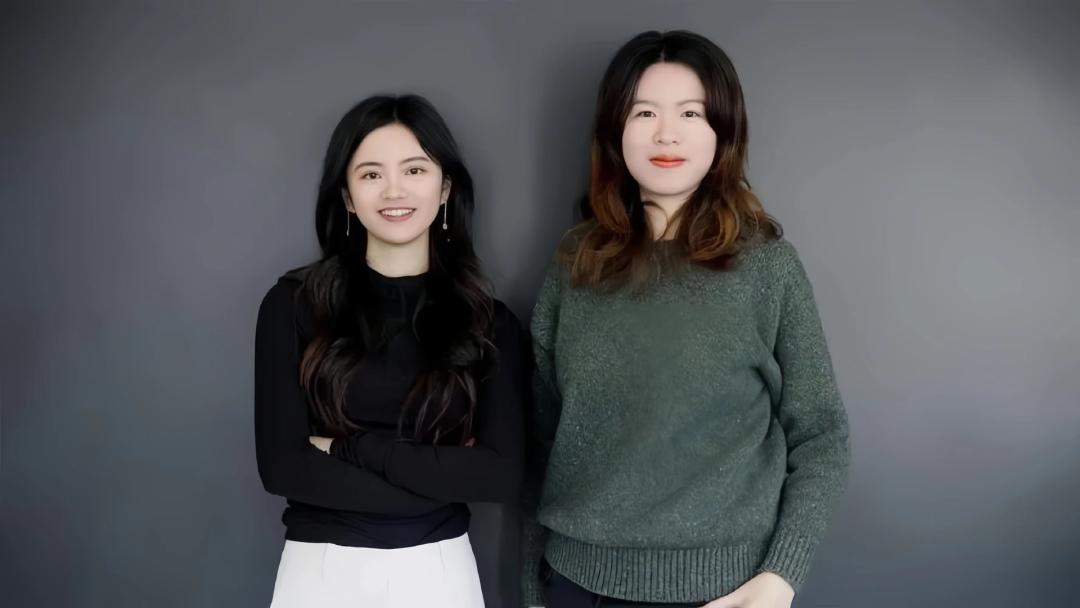
The two co-founded Pika Labs, with Guo Wenjing serving as CEO and Chenlin Meng serving as CTO; the third founding member Chen Siyu is Guo Wenjing's classmate from Hangzhou No. 2 High School and a member of the first Turing Class at Peking University.
Pika focuses on AI video generation.
In November 2023, Pika 1.0 was released. An AI-generated video of "Elon Musk wearing a spacesuit" went viral across the entire network, and there were hundreds of thousands of users queuing for product registration at one point.
After the product became a hit, the financing speed also rocketed. Within half a year of its establishment, Pika completed three rounds of financing totaling 55 million USD, with well-known institutions and individuals such as Nat Friedman, Daniel Gross, and Lightspeed investing in succession.
In June 2024, Spark Capital led an 80 million USD Series B round, bringing Pika's total financing to 135 million USD with a valuation of over 470 million USD, equivalent to about 3.4 billion RMB.
Unexpectedly, this story also drove the Chinese capital market by the way: it turned out that Guo Wenjing is the daughter of Guo Huaqiang, the actual controller of A-share listed company Sunyard. After Pika became a smash hit, Sunyard's stock price hit consecutive daily limit-ups in a short period of time, and remarks like "daughter concept stock" and "father gaining status through daughter" went viral for a while.
Entering 2025, the AI video track entered a stage of fierce competition among tech giants. Sora from OpenAI and Veo from Google entered the market one after another, and Pika's influence was once considered to be squeezed. But according to Bloomberg, Meta is negotiating with Pika on acquisition or technology licensing.
However, in 2026, the AI video generation sector underwent major reshuffling. Sora was officially shut down at the end of April, and domestic AI video platforms such as Seedance 2.0 and Keling rose strongly. It remains unknown whether the acquisition negotiations between Pika and Meta are still ongoing.
Post-00 girl took a leave of absence from Harvard to start GEO business and raised 1 million USD
If Guo Wenjing represents the route of "genius PhD dropping out of school", then Christine Zhang's story is a more typical Gen Z script, where entrepreneurship comes earlier than graduation.
Christine Zhang's parents came from Lanzhou and Min County in Gansu Province, and later immigrated to the United States. She was admitted to Harvard and was originally supposed to follow the elite path step by step.
But in the dormitory, she and her roommate Julia Hudson, who is also a CS major at Harvard, discovered a new business opportunity: the e-commerce industry knows how to place keywords in search engines, but when consumers start asking ChatGPT and Gemini "recommend a pair of running shoes", the products are almost invisible — because AI cannot understand pages optimized for traditional search.
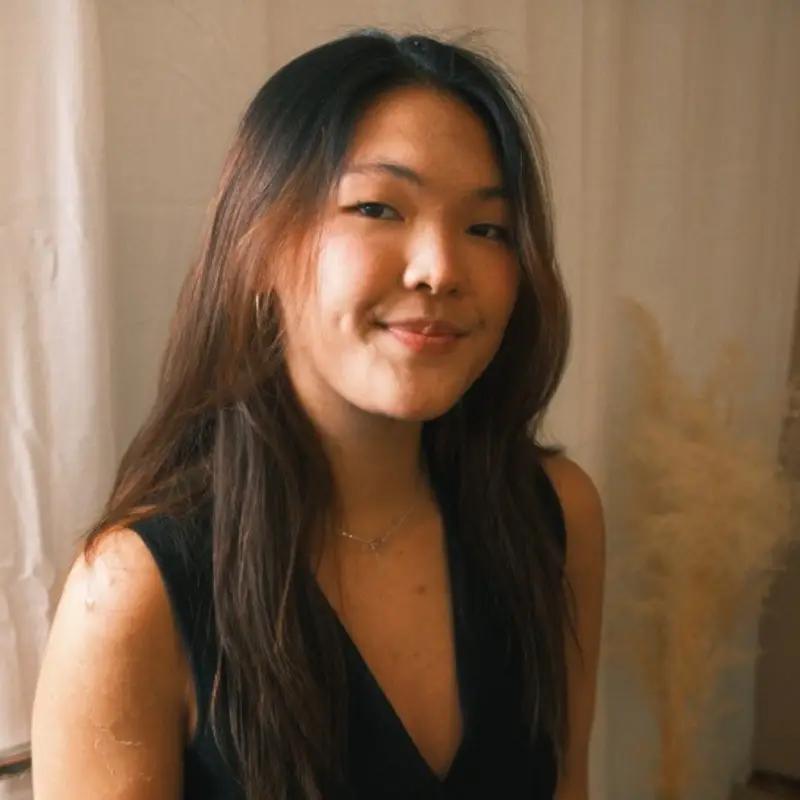
The company they founded is called Veil, and what they do is known in the industry as GEO (Generative Engine Optimization) or AEO (Answer Engine Optimization): rewriting product content into a format that AI can understand, so that brands can rank higher when recommended by AI.
According to its public data, the AI visibility of customers has increased by an average of about 67%.
In October 2025, American business media Business Insider published her personal account:
"I am 19 years old, taking a gap year at Harvard, and I am running my own AI startup." Less than three months after the company was founded, Veil completed a 1 million USD seed round, had nearly 500 customers, and the team had only 6 members.
When she told her parents that she was going to take a leave of absence from school, their reaction was "they thought I was crazy". But she also deliberately clarified a detail that it was a "leave of absence" rather than "dropping out", which means that she can go back to Harvard later to finish her degree if she has the chance.
For Christine Zhang, entrepreneurship is just a halftime break, opening a new side quest in life.
She started AI education business for 2 years, and the project has been acquired
The third Harvard Girl AI entrepreneur Avery Pan is the co-founder and CEO of AI education company Class Companion. She graduated from Harvard University, used to be a writing tutor, and both her mother and mother-in-law are teachers.
Before starting her own business, Pan worked at well-known K12 online education company Outschool, in charge of international growth business; and served as a strategy and corporate development intern at Zymergen.

This entrepreneur is very low-key, no promotional photos have been found, only the profile photo in her resume is available
Class Companion hit the biggest anxiety in the education sector in 2023: ChatGPT made students' homework "untrustworthy" overnight.
Avery Pan's solution is not to fight against AI, but to put AI in the hands of teachers, let students write as usual, AI is responsible for generating personalized feedback in real time, and teachers retain the final grading right.
This "teacher-centered" position made the company unexpectedly popular in the education sector.
In October 2023, Class Companion completed a 4 million USD seed round of financing, led by Index Ventures, participated by OpenAI Startup Fund, and followed by well-known individuals such as Andrej Karpathy.
In April 2025, education data company Panorama Education announced the acquisition of Class Companion.
It only took two years from establishment to exit, which is a complete sample of "Harvard Girl AI entrepreneurship": it not only raised funds from top-tier capitals, but also achieved a smooth exit.
The rise of Chinese female AI entrepreneurs, the choice of the new generation
It can be said that "Harvard + Chinese + drop out/take leave of absence + AI entrepreneurship" is becoming a stable narrative branch in the Silicon Valley venture capital circle in the past three years.
On this track, men are of course not to be outdone, but women are also occupying more and more prominent positions. And Harvard is just a synonym for top American universities, which can be replaced by Stanford, MIT and so on.
For example, Jessica Wu dropped out of MIT and founded the automated programming platform Sola Solutions in 2023, successively receiving investments from institutions such as a16z and Conviction, with total financing of about 21 million USD.
There is also the rising star Hong Letong, who graduated from MIT with a bachelor's degree, dropped out during her PhD study at Stanford to start a business, founded the "AI Mathematician" model company Axiom Math in 2025, and secured a 200 million USD Series A round this year. Only one year after its establishment, the company's post-investment valuation has exceeded 1 billion USD.
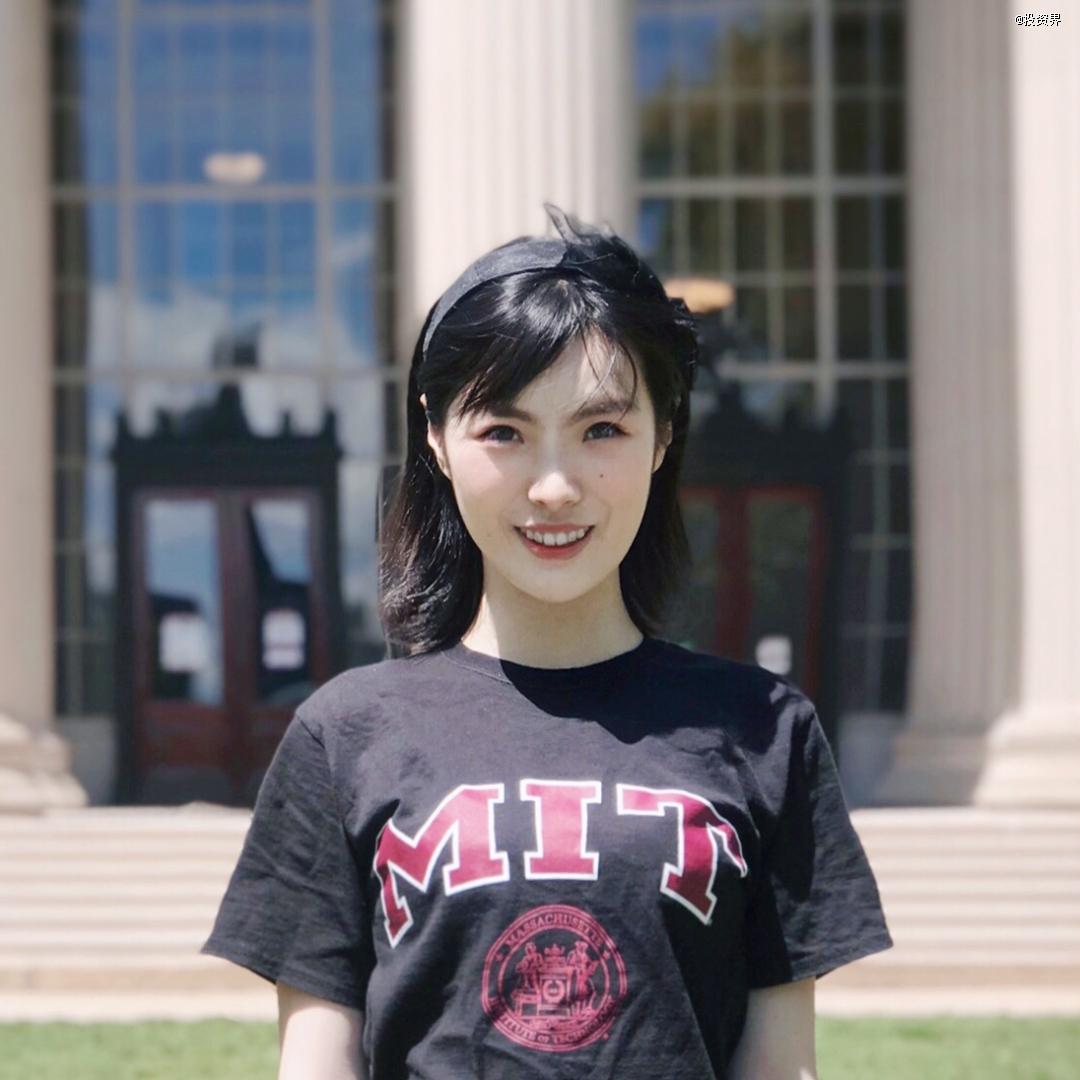
It is thought-provoking that the narrative context and trend in the new era seem to have completely changed.
For Liu Yiting, who was born in the 1980s, the highlight moment of her life was frozen on the afternoon when she received the admission letter. Her story was written by her mother, and finally settled into a parenting book and a national debate on "whether it is worth pushing children to excel".
The post-95 and post-00 Harvard Girls in the new era have bet the most important chip of their lives on the road after graduating from Harvard. They founded Pika, Veil, and Class Companion, and prove their own value through entrepreneurial experiences and achievements.
The core narrative of the first generation of "Harvard Girls" is "being selected by Harvard equals being a winner in life", and Liu Yiting's greatest value is that she proved for countless families that "girls can also go to Harvard".
The core narrative of this generation of "Harvard Girls" is "not being defined by Harvard". Some drop out, some take a leave of absence or a gap year. The source of their aura is no longer the degree or the school itself, but the ideas in their minds and the capabilities in their hands.
The choices of the two generations seem completely different, but the underlying driving force is similar. The previous generation of parents bet on "education changes fate", while this generation of young people believe that "timing changes fate".
And AI just gives them the opportunity to rewrite their life scripts.
This article is from the WeChat Official Account "IT Juzi" (ID: itjuzi521), written by Wu Meimei, and authorized for release by 36Kr.