Zhou Chang and Pang Tianyu have left their roles. Has multimodal generation fallen out of favor?
Liang Wenfeng once said, "Video generation, 3D generation, and world models have little to do with the core AGI development line, and we will not work on them."
This statement was completely contrary to the industry landscape at that time. In the first half of 2026, multimodal generation was the core priority of major AI manufacturers, each with independent departments, independent product lines and independent heads in charge.
Tencent's large language model department and multimodal model department coexist at the same level, with the latter independently managing image, video and 3D generation; ByteDance's visual generation businesses including multimodal interaction, world models, Seedream and Seedance, together with the robotics team, report directly to Zhou Chang; Alibaba released a world model based on the native multimodal architecture in April.
During that period, multimodal generation was regarded as the "consensus exit for capital in AI enterprises", and all major manufacturers took multimodal generation as the new AI narrative.
However, within the most recent week, two pieces of news came out one after another.
On October 31, according to Z Finance, Zhou Chang, the core head of ByteDance's Seed business, has left the company to start his own business, focusing on Physical AI, with support from leading US dollar-denominated funds. On November 2, multiple sources reported that Pang Tianyu, Chief Research Scientist of Tencent Hunyuan and head of multimodal reinforcement learning, left his post after less than 9 months of employment.
Behind the brain drain is the shift in attitudes of major manufacturers towards multimodal generation. With the rapid development of Agent and other related technologies, major AI manufacturers have tilted their computing power and budgets to these businesses that deliver tangible growth.
In the current industry narrative, multimodal generation seems to be an "option-type business". Major manufacturers only invest a small amount of capital: the upside is unlimited if they succeed, and they can retreat immediately to recover the principal if they fail.
Is Multimodal Generation an Option-Type Business?
Multimodal is a business that consumes a huge amount of tokens.
Take images as an example. To make the model understand an image, you have to cut the image into a number of small image patches.
A 224×224 image cut into 14×14 patches corresponds to 256 tokens, a 336×336 image corresponds to 576 tokens, and when the resolution goes higher, a single image will generate thousands of tokens. For long videos, the number of tokens increases by orders of magnitude as it equals the number of frames multiplied by the number of patches per frame. The attention overhead of Transformer grows with the square of the sequence length, so once the visual sequence gets longer, the cost rises sharply immediately.
Architectures that run both autoregressive and diffusion processes at the same time, such as visual understanding and diffusion generation (VLM+DiT), will only consume even more tokens.
The most typical example is OpenAI's Sora. It only took about half a year from the launch of its application to OpenAI's announcement of shutting it down. Foreign media reported that Sora had a daily computing power cost of 1 million US dollars, and its user base was declining. With costs significantly higher than revenue, the company finally chose to stop losses.
The inference cost is even higher. Text models can batch dozens of requests on one GPU card, but multimodal generation models cannot: they need to generate an environmental state every few milliseconds and output the content in real-time streaming, which means each user essentially occupies a dedicated GPU pipeline.
Another major problem of multimodal generation is the difficulty of scoring, which requires a large number of evaluators to grade the content generated by the model. The data evaluation team behind Seedance has as many as thousands of members.
LLMs can be graded with relatively unified benchmarks, such as reasoning, coding and mathematics. Different versions can be directly compared, and team KPIs are also easy to align.
The situation of multimodal generation is completely opposite. The authors of the MMMG benchmark stated that the reproducible evaluation of multimodal generation lags behind the development of the model itself. Although manual evaluation is regarded as the gold standard, it cannot be implemented on a large scale, and it is highly subjective, making it difficult to systematically locate the weaknesses of the model.
This is why ByteDance needs an evaluation team of thousands of people to evaluate Seedance. The core logic is to stack manpower to reduce the impact of subjectivity on model performance.
When evaluation relies on aesthetics, temporal coherence and human preferences, it is very difficult to judge the quality of the model by scores, and to decide whether it is worth continuing to invest resources in the model team.
Compared with highly subjective discussions like "Is this video good-looking?", people generally find discussions like "This version has improved by several points on the benchmark" more valuable.
Although ByteDance has obtained considerable revenue from Seedance, the most critical technical inflection point is actually AGI, which is equivalent to the strike price of the option.
If AGI truly cannot be achieved without multimodal generation, it is equivalent to exercising the option and cashing out the profit. If it turns out that AGI does not require multimodal generation at all, all the premiums paid will go to zero.
The tokens that major manufacturers burn every month are the option premiums they pay on a rolling basis.
Obviously, more and more people now believe that AGI has nothing to do with multimodal generation.
For example, both GLM-5.2 to 5.3 and DeepSeek V4 Flash to Pro did not do visual expansion, and their performance was improved only through post-training. In the ablation experiment of K3, the researchers stated that "every additional bit of multimodal data may degrade the model's performance in text understanding, coding or mathematics."
Yann LeCun delivered an even more devastating blow. As his H-JEPA paper became a hit, the JEPA route advocated by Yann LeCun has won the recognition of more and more people.
JEPA advocates predicting the world in the abstract representation space without generating a single pixel throughout the process. The reason is that the physical world is full of unpredictable random details, and reconstructing it pixel by pixel is both wasteful and erroneous. This provides technical proof for the argument that "AGI does not require pixel-level generation".
It is naturally inevitable that business departments will shrink. For example, after Tencent's Q2 earnings call, WorkBuddy was given priority in resource allocation, while the priority of other new AI products was being lowered.
What Exactly Happened to Multimodal Generation?
On July 24, Tencent TEG issued an internal notice: it revoked the large language model department and the multimodal model department, and established the Fundamental Model Department. Yao Shunyu, the chief AI scientist, concurrently serves as the head of the new department and reports to Lu Shan, President of TEG.
The reason Tencent gave at that time was to "improve the efficiency of model R&D and collaboration, and explore the intelligence upper limit of pan-modal models".
The two revoked departments were split off in April 2025. The language line was responsible for text reasoning, and the multimodal line was responsible for image, video and 3D generation. The two lines were at the same level and operated independently, which Tencent called "dual-track R&D".
Previously on March 20, Tencent had already disbanded the AI Lab that had been established for nearly ten years. Some of its members were merged into the large language model department, some went to the industry-university-research cooperation center, and the originally independent capabilities such as computer vision and speech were all integrated into the Hunyuan system.
It was widely believed at that time that the real reason for the merger was that the training standards of large language models and multimodal models were not unified, so the technologies could not be interconnected, which also caused internal consumption of computing power resources.
A month later, it was ByteDance's turn. In the organizational adjustment in August, the visual language model VLM that Zhou Chang built his career on was merged into the LLM system, becoming a data sub-department under the LLM business. A person from the Seed team told 36Kr that "he lost his birthplace, and basically no longer has core territory."
Because at that time, to make the large model "see" things, people had to rely on a kind of "glue technology".
Take a pre-trained pure-text LLM, connect a visual encoder in front of it, cut the image into small patches and convert them into vectors, then train a projection layer in the middle to translate these vectors into the vocabulary space of the language model, and finally splice them together with the text and feed them into the model. The models LLaVA, Qwen2-VL and DeepSeek-VL2 at that time all followed this path.
Its biggest advantage is low cost.
There are open-source visual encoders for reference, the language model is already available in-house, and only one glue layer in the middle is needed to connect the two.
An independent multimodal department is basically built around this glue layer. Some people are in charge of the visual encoder, some are in charge of alignment data, some are in charge of image-text instruction fine-tuning, and some are in charge of evaluation. As long as the glue layer exists, the department exists.
However, this glue layer no longer exists now, and major manufacturers have begun to shift to native multimodal architectures, which mix the tokens of images, texts, audios and videos into the same backbone from the very first layer of pre-training.
In February this year, Alibaba started integrating visual capabilities into the main model through early fusion starting from Qwen3.5, and has not released new general VL understanding models since then.
Now major manufacturers are mainly following two routes for multimodal development. The first one is the understanding route advocated by Liang Wenfeng, which enables the model to understand images and videos and focuses on how to perceive the world. This route has indeed been proven feasible.
The second route is to integrate visual understanding and diffusion generation into one single architecture, so that the model can generate content on the basis of understanding the world.
After the release of GPT-4o in 2025, Google, Alibaba and ByteDance all tried this route, but none of them succeeded.
Image and video generation relies on diffusion models, which perform denoising step by step in the continuous latent space. Their training objectives, data representations and calculation mechanisms are all different. If you force them into the same model, it is already troublesome enough just to prevent different tasks from dragging each other down.
A multimodal researcher from Tencent Hunyuan told 36Kr, "Multimodal understanding and generation are not that unified. The understanding part is usually managed by the LLM team, while the generation part is relatively independent." A researcher from Alibaba Qwen said that there is no known highly effective solution for the unification of understanding and generation. The evaluation system has not been established yet either. Judging whether an image is well drawn or a video meets the user's intention is much more difficult than judging whether a math problem is solved correctly.
The narrative of "unification of multimodal understanding and generation" that Zhou Chang promoted at ByteDance belongs to the second route.
In terms of options, this is called out-of-the-money, and when the enterprise shrinks the department, it means giving up exercising the option.
The Gap
After the business department shrinks, the former head of this business department will naturally be demoted in practical terms.
Zhou Chang joined ByteDance from Alibaba in August 2024 at the job level of 4-2. Reports say that his annual compensation package is in the eight-digit range. More than a dozen of his former Alibaba colleagues came to ByteDance with him, and the two sides were once involved in non-compete labor arbitration.
At Alibaba, he served as the core technical lead of the Tongyi large model. The Qwen2 he released before leaving the company topped the Hugging Face open source ranking, surpassing Llama 3-70B at that time. After joining Seed, he was in charge of multimodal interaction and world models, reporting to Wu Yonghui.
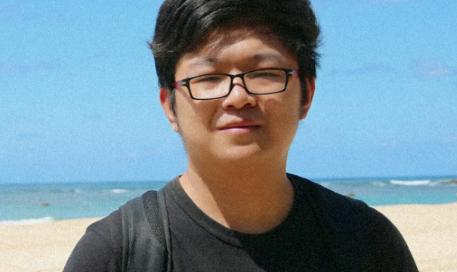
In the next two years, his scope of management kept expanding. In July 2025, Yang Jianchao, head of Doubao's visual multimodal generation business, announced that he would "take a temporary break". Citing insiders of Seed, 36Kr reported that the organization required Yang Jianchao to report to Zhou Chang, and Yang Jianchao left the company immediately after that. The two visual generation lines Seedream and Seedance were transferred under Zhou Chang's management.
On June 2, 2026, according to LatePost, ByteDance adjusted its internal architecture. The Seed Robotics team previously led by Li Hang had been reporting to Zhou Chang for more than a month, and ByteDance was also recruiting a embodied intelligence technical lead at job level L8, which is equivalent to Alibaba's P10-P11, who would also report to him.
Reports say that the reason for the further expansion of Zhou Chang's management scope was that robotics can form a data and technology closed loop with multimodal interaction and world models. With four business lines under his management, the media called him one of the technical leads with the widest management boundary in Seed at that time.
He just expanded his territory in June, but in August, the VLM business was merged into LLM and demoted to a data sub-department.
Pang Tianyu made an even bigger splash when he joined Tencent than Zhou Chang did.
Pang Tianyu joined the Exploration Center of the Hunyuan multimodal department, with his responsibility described as "exploration of cutting-edge reinforcement learning algorithms".
On January 29, he posted a recruitment notice on Xiaohongshu, which also officially announced his joining Tencent; he officially joined the company on February 4; in June, he led the team to open source the UniRL framework, which integrated the reinforcement learning post-training of diffusion models, autoregressive models and the unified model of generation and understanding into one single process; in October, this framework was updated to v0.2.0, and he was still among the core authors.
However, on November 2, media reports said that in the process of Hunyuan shifting from decentralized management to centralized management, he "lost the position that was originally promised to him on the organizational map".
At the all-hands meeting on January 26, Pony Ma said that "after Yao Shunyu joined, the company has stepped up its efforts to attract talents and restructured the R&D team", and also mentioned accelerating hardware-software co-design internally and strengthening the collaboration between Hunyuan and Yuanbao.
On January 28, Tencent open-sourced the image-to-image version of Hunyuan Image 3.0, and connected it to Yuanbao. The data at that time showed that the total number of derived models of Hunyuan image and video had reached 3000, the video models had been downloaded more than 5 million times in the community, and the Hunyuan 3D series had been downloaded more than 3 million times. At that time, the multimodal model department was still a first-level department at the same level as the large language model department.
Then on July 24, the two departments were merged, and before September, Tian Yonglong, a former OpenAI researcher, took the position of head of Hunyuan multimodal business.
No one was demoted, everyone still kept their titles, their code, and their past achievements.
But when some people rise, others have to fall. From having others report to you and being solely responsible for an independent business line, to reporting to others and being in charge of a component of the main business, it is inevitable that people will feel a psychological gap after entering the company with a high profile and experiencing such a transition.
For large manufacturers, options are just a small bet with a little money. But those who are deeply involved in this process are the ones who suffer.
This article is from the WeChat Official Account "Letter AI", written by Miao Zheng, and published with authorization by 36Kr.