Zhihui Jun's robot has started working.
Although 2026 is regarded as the first year of mass production for embodied intelligence, with the number of robots rolling off the production line rising steadily, third-party statistics show that over 60% of global humanoid robots in the first half of the year were deployed in laboratories, scientific research institutions, exhibition demonstrations and cultural tourism display scenarios, while less than 20% actually entered industrial scenarios.
Especially for precision manufacturing industries such as 3C and semiconductors, factories are the most stringent examination sites for humanoid robots.
Traditional industrial robots perform repetitive operations relying on fixed programs, while the new generation of embodied robots need to perceive the environment autonomously through vision and large models. The number of robots that can be put into actual work has become a new standard to measure the commercial maturity of embodied intelligence.
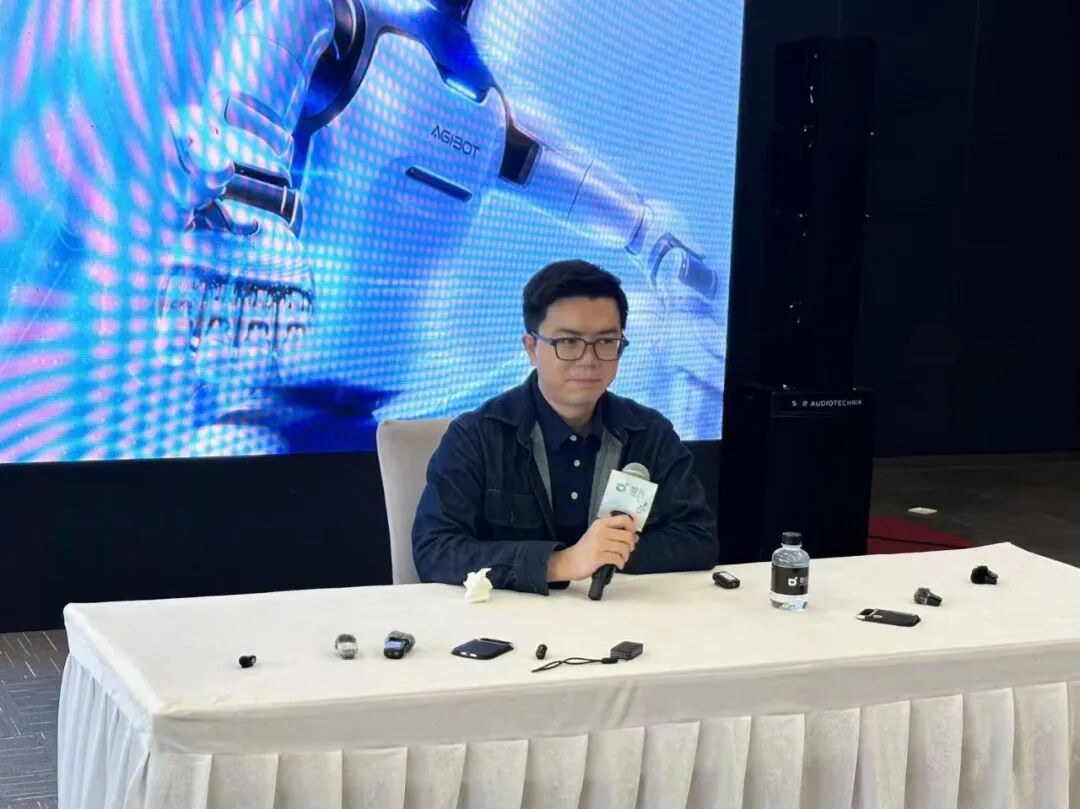
On October 29, at the Shanghai World Expo Center, Peng Zhihui (Zhihui Jun), Co-founder, President and CTO of Agibot, launched a new measurement unit "Worken" to measure the effective intelligent working hours of robots.
Zhihui Jun told *China Entrepreneur* that just as Token has the corresponding definition of "word token", the Chinese name of Worken can be defined as "Zhiyuan", which is exactly the name of our company. In the past, everyone only looked at the parameter sheet to see how strong the robot's performance parameters are and how cool the demos are. In the future, people will pay more attention to the working hour sheet.
Photography: Lin Qiuyi
Agibot and 3C OEM enterprise Longcheer Technology have now launched the world's first complete 3C production line fully covered by embodied intelligence, which was put into large-scale production in March this year. This production line has undergone a 6-day full-process live broadcast. The robots have accumulated more than 64 hours of operation, completed 64,824 pick-and-place actions, produced 17,625 tablets, with an average cycle time of 22 seconds per unit, which is at the same level as human workers. The robots are only allowed to make one mistake for every 10,000 operations.
Zhihui Jun said that the deployment scenario of full-process alternative quality inspection stations operating 24 hours a day, 7 days a week has been promoted in the Longcheer factory. The demand for robots should start from real practical needs, rather than assuming which positions will be replaced in the future.
"The quality inspection work at Longcheer is extremely boring and highly anti-human for humans. Robots do not necessarily have to replace humans, they can cooperate with humans to realize human-robot collaboration."
According to statistics from Counterpoint Research, Agibot shipped 9,700 robots in the first half of 2026, accounting for a share of over 43% and ranking first in the world. Zhihui Jun revealed that in September this year, Agibot's 20,000th robot rolled off the production line, its revenue in the first half of the year was close to 2 billion yuan, and the process of listing in Hong Kong has also been launched.
But the fact that 10,000 units rolled off the production line is only a victory for the manufacturing industry, while the fact that 10,000 units can be actually put into work is the victory of physical AI. "It is very impressive if thousands of units can be actually deployed this year," said Wang Chuang, Partner and Senior Vice President of Agibot.
01
Where Have the 20,000 Robots Gone
Zhihui Jun divides the robot industry into three curves X, Y and Z, among which the Y curve refers to the actual entry into real scenarios to convert capabilities into sustainable commercial value. "2026 is the first year of the Y curve of the entire industry, when robots move from the development state to the deployment state."
The most important change is not that more scenarios have robots, but that the evaluation criteria for robots have changed. "Many customers begin to ask how much stable work the robot can do, how well it can perform, and how much it costs to complete these tasks," said Zhihui Jun.
Yao Maoqing, Dean of Agibot Research Institute, said that Agibot's "Sprite G2 Robot" has achieved horizontal expansion in Longcheer's production line, extending from tablet detection to mobile phone detection. The proof of concept for mobile phone scenarios has been completed, and it is now entering the parallel operation stage. According to his disclosure, more than 3 enterprises in the 3C electronics industry are cooperating with Agibot, and some of them have completed the parallel deployment.
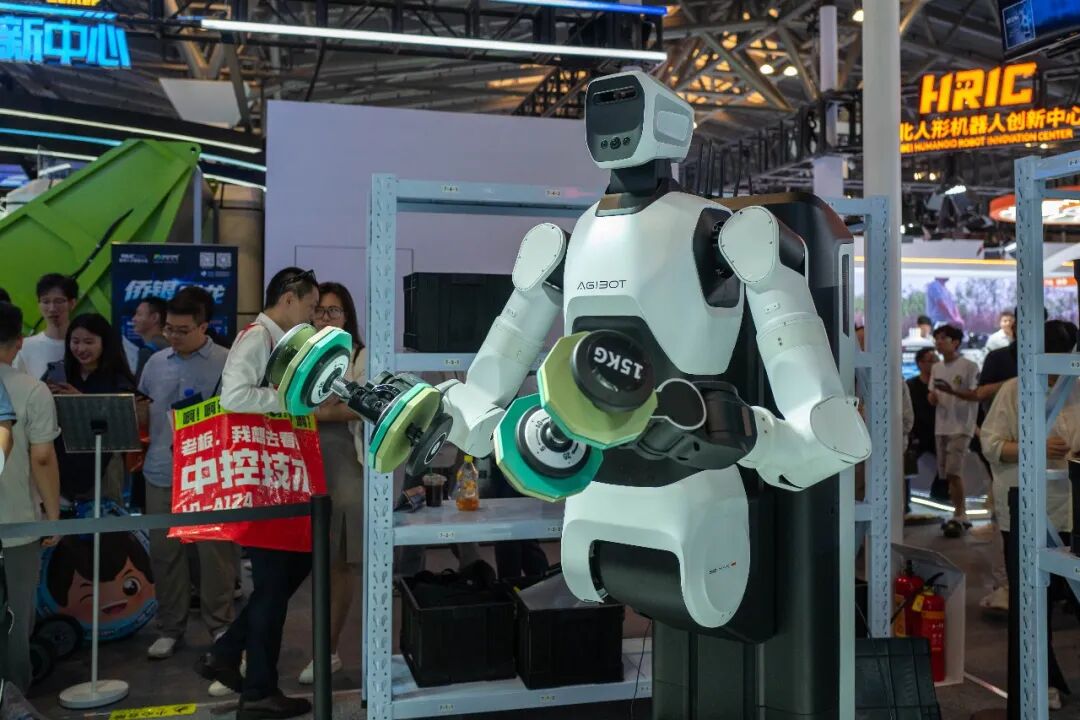
When the promotional video was played at the press conference, a heavy-duty robot "G2 Max" walked onto the stage holding a Lingxi X2 device. This also verifies that the dual arms of Agibot's heavy-duty robot have a load capacity of 40kg and a peak load capacity of 50kg. "G2 Max has found application scenarios for handling and depalletizing at Longcheer," said Yao Maoqing.
Source: Visual China
Semiconductor packaging and testing scenarios with higher requirements are also under deployment. Robots need to operate continuously around the clock, while avoiding scratches and material warping, with a success rate requirement of 99.999%, after all, a single chip may be worth tens of thousands of yuan.
Outside factories, robots are entering places with denser crowds. Chimelong Zhuhai opened on September 24, and the first batch of more than 300 Agibot robots were launched at one time, distributed in more than 100 locations. The robots undertake different interactive functions: they can play tic-tac-toe, rock-paper-scissors, and table tennis with tourists, and also lead tours in some exhibition areas, with content generated in real time by the interactive model, and can also receive foreign tourists in multiple languages.
"In the past, the park exhibition areas needed to be equipped with a large number of commentators, and children would ask all kinds of strange questions, which was very challenging to the physical strength of the commentators. In the past, human commentators had a very heavy daily workload, working in shifts every 15 minutes." After replacing them with robots, "three robots working in shifts can solve this problem," said Xiong Yan, Partner and Co-President of Agibot, in an interview with *China Entrepreneur*.
More than 120 "Sprite G2" robots have also been deployed in Guangzhou Metro, undertaking tasks such as security check guidance, passenger violation identification, multilingual Q&A, and security patrol. The metro scenario has higher requirements for robots, with large passenger flow, changing situations and high safety responsibilities.
Wang Chuang said that when selecting scenarios, the first priority is to check whether the technology can support the demand. "The current problem faced by embodied intelligence is that its capabilities have not yet developed to the point where it can do everything well. Scenarios such as industrial loading and unloading, explanation reception, and tour guide and shopping guide are all scenarios that can be achieved with a little technological breakthrough."
The deployment in the service industry is progressing faster instead, "If robots can bring traffic, emotional value and revenue growth to customers, customers will not strictly require that the cycle time of robots must completely exceed that of humans as in factories, and the cost and reliability need to be fully cost-effective for customers."
02
Pull the Engineers Out of the Field
However, the entry of robots into the site is only the first step, and there is still a considerable distance before they can work completely independently.
Wang Chuang calculated an account at the press conference: if a large number of algorithm experts need to be stationed at each deployment scenario, manpower will become a bottleneck and large-scale replication will be impossible. "In that case, we will only complete individual projects, rather than building a scalable business."
Chimelong was exactly like this at the very beginning. More than 300 robots were deployed in more than 100 locations, each with a different environment and different tasks for the robots. "At the beginning, almost one robot was equipped with one engineer. For 300 robots, 300 engineers had to be on site. In this case, the cost was even higher than the original pure human labor," said Wang Chuang.
However, with the accumulation of scenario data, the ratio of robots to on-site personnel is gradually increasing. Wang Chuang revealed that the ratio at Chimelong has dropped from the initial 1:1 to 3:1, with the goal of reaching 10:1 by the end of the year and 20:1 next year.
He believes that after reaching the ratio of 10:1, many experts only need to provide remote support at the headquarters. When a new location is added on site, operation and maintenance personnel can directly copy the template. "The ratio of 20:1 means that only 5% of additional manpower budget is needed for this position, and 5% is an acceptable point for many customers."
Unexpected situations encountered in real scenarios often exceed the assumptions made in the laboratory.
Some children like to hug or push robots, and they will not follow the preset rules when playing games. "When interacting, the robot will make 360-degree observations in real time. If someone invades its safety zone, it will actively stop the movement. When encountering unexpected external force, it will instantly reduce its output force and limit the maximum output force to a safe range. Each robot also needs to be set with an electronic fence, cannot go out of the fixed service range. In case of any abnormality, the back-end will send an alarm, and the operation personnel will intervene quickly," said Xiong Yan.
Robots are also learning to maintain themselves. Wang Chuang told *China Entrepreneur* that elevators and access control systems need to be connected to the network, the Wi-Fi of robots needs to be well configured, and problems should be solved through hot plugging or recovered within 3 minutes. "Now the 'Expedition A3 Ultra' can also charge itself. When robots no longer need manual intervention for charging, they will truly become productivity."
The Longcheer production line is verifying the normalized operation of robots in factory scenarios.
Yao Maoqing said that Agibot's R&D team withdrew from the site very early, and handed over the basic software operation and maintenance to Longcheer's own team. The problems of sensors, wiring harnesses and motors exposed in the strict industrial environment in the early stage have been completely solved through version upgrades, and now only very lightweight operation and maintenance is required.
Zhihui Jun told *China Entrepreneur*: "When will customers be willing to pay? It is when they start to seriously change their mindset from 'I am willing to try your product and see if you can make it' to 'can I afford to run your product'."
He said that robots are not done after a demo is completed after leaving the factory. Equipment health requires long-term management, continuous iteration of software versions, spare parts support, remote diagnosis, on-site service and continuous task optimization.
"After real large-scale deployment is achieved, the operation and maintenance efficiency and management system of working robots may have a greater impact on customer experience than a single model inference."
Zhihui Jun revealed that in Agibot's R&D team, 30% of personnel are working on ontology hardware, and 70% are working on intelligent capabilities.
When asked why Agibot insists on doing everything by itself, he replied, "I always believe that full-stack capability is not an optional choice, but a must. Teams that only do large models or only do robot ontology will encounter bottlenecks."
In response to this, Yao Maoqing cited the example of autonomous driving to explain to *China Entrepreneur* that many technology suppliers are gradually replaced by vehicle manufacturers, and in the robot industry, teams missing any core module are very easy to be eliminated by vertical integration.
"A good team can deliver a new vehicle model with 10 people in 3 months, while an inefficient team needs 100 people to complete the work in a whole year. Agibot's work in the past year has been to platformize the entire tool chain including training, test exit, software release, OTA, data closed loop and problem backflow, so as to improve the work efficiency of deploying new customers and new scenarios."
03
Count Working Hours for Robots
Recently, the problem of scenario data closed loop for humanoid robots has become the focus of discussion. The industry is facing a new contradiction of data scarcity, and the data collection and processing logic for industrial and service industries are completely different.
The robots at Chimelong have been working for one month, and have completed more than 1 million interactions with tourists. "The data of interactions that were not completed before tourists left is more valuable. The team will check and label these data, and feed them back to the platform as materials for the next round of training. After working in the environment for a period of time, robots will obviously be more capable than when they were first deployed, and this process is automated. Once one robot masters the skill, all robots will master it," said Xiong Yan.
He previously worked on video generation models at Google, "Large models are only generalists that know a lot but are not proficient in specific fields, and the expert capabilities required by robots come from post-training." Xiong Yan does not believe that the industry will use 5-trillion-parameter models for embodied deployment, for two direct reasons: first, it is slow. The motor control of robots requires an output frequency of more than 50Hz, which large models cannot support; second, it is very expensive.
Yao Maoqing shared another experiment. Agibot networked 100 physical real robots in a laboratory, connected them to the back-end H100 training cluster and 4090 edge inference cluster through IB network. The robots transmit operation data in real time, the server updates the model, and then continuously distributes dozens of gigabytes of model weights to the 100 robots.
With this networking architecture, the downtime of one robot will not affect others, and its impact on the overall training progress is controlled at about 1%. He said that robot data accumulation has economies of scale. For the same set of training, the success rate is vastly different between using 4 robots and 100 robots.
The accounting logic for factory scenarios is completely different.
Yao Maoqing told *China Entrepreneur*, The data of many industrial users involves process information and commercial information, and the data is not allowed to be taken out of the factory or workshop. The corresponding solution is to deploy a set of training servers and software platforms inside the customer's factory wall to complete model upgrade and iteration on site.
"Fortunately, industrial scenarios are usually single repetitive operations. For positions such as loading and unloading, one hour of data is enough to be added to the pre-training data shelf, because pre-training pays more attention to the diversity of data."
Data itself has also become a business that needs cost accounting. Yao Maoqing judges that data pricing will be layered. For high-quality standard data sets, 1 million hours will be priced at about 200 million yuan in the next two to three years. "Running a data factory is not cheap. Thousands of GPUs cost hundreds of millions of yuan a year. Only 10% to 20% of the trajectories collected by pure blind collection are valid. When we arrange collection tasks after entering real scenarios, the efficiency can reach 80% to 90%."
As the working capability of robots improves, Agibot wants to use the new term "Worken" to answer the question of how to charge for the work completed by robots.
This term is a combination of "Work" and "Token". Zhihui Jun shared a piece of history at the press conference: in the steam era, horsepower was used to measure the power of machines; in the electric era, kilowatt-hour was used to measure the capacity of machines; starting from 2022, in the digital AI era, Token is used to measure the amount of thinking of machines. His conclusion is that Token measures how much a machine thinks, while Worken measures how much a machine acts.
Worken has already been applied in real scenarios. At the press conference, Zhihui Jun showed a real-time scrolling Worken dashboard, which recorded the effective intelligent working hours contributed by each robot in October.
However, the charging model based on Worken has not yet been clarified. Zhihui Jun said in