You are still waiting for solid-state batteries to be used in vehicles, but they have already been deployed in both aerospace and deep-sea scenarios.
Solid-state battery is a term that we have heard so many times in recent years that it almost feels overused.
Automakers and battery manufacturers keep bringing it up every now and then: it is safer, offers longer range, and features faster charging and discharging speeds.
It seems to be perfect in every aspect.
However, most consumers respond with a dismissive "Yeah yeah, sounds great".
Because in our impression, this product is extremely difficult to produce, and its cost is almost impossible to bring down.
Once a car adds the gimmick of solid-state battery, it is hard to say how much the range will increase, but the price will rise by at least 100,000 yuan.
This perception is not wrong at all. Especially in the field of household passenger vehicles, it will still take several years for solid-state batteries to be widely deployed in mass-produced cars.
But in corners that most of us cannot see, solid-state batteries have actually been put into use long ago, working both in the sky and deep under the sea.
In March this year, an American underwater robot company launched an autonomous underwater vehicle named DarkWake, which can carry out tasks independently once it is put into water.
One of its selling points is: solid-state battery.
Chinese teams are actually moving faster.
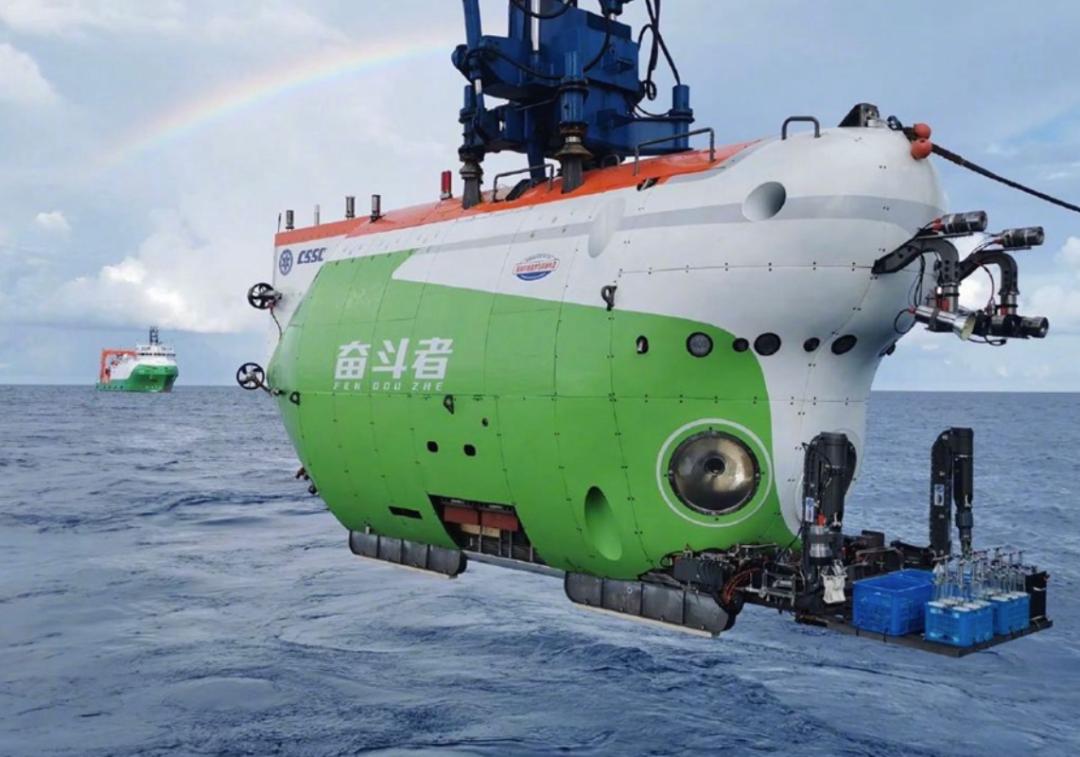
In November 2020, the "Fendouzhe" manned submersible operated on the seabed 10,000 meters deep in the Mariana Trench. Next to it, the "Canghai" video lander was responsible for shooting and live broadcasting, and the power supply for "Canghai" was a set of solid-state lithium batteries.
This set of batteries was developed by the team led by Cui Guanglei from the Qingdao Institute of Bioenergy and Bioprocess Technology, Chinese Academy of Sciences. Back in 2017, their batteries followed the lander to a depth of more than 10,000 meters under the sea, and the total number of deep-sea battery systems they have delivered has exceeded 200 batches.
While household vehicles are still waiting in line for it, solid-state batteries have first been applied in high-end scenarios such as deep sea and drones.
Because these scenarios do not care much about higher battery cost or smaller production volume, what they fear most is battery failure.
01. Why can it work under the sea?
For every 10 meters you dive down in seawater, the pressure increases by approximately one atmospheric pressure. At a depth of 10,000 meters, every square centimeter is under the pressure of about one ton of water, which is equivalent to a small car parked on your fingernail.
The temperature there is only a few degrees Celsius all year round, and seawater is conductive. If there is even a tiny leak caused by poor sealing, the circuit may short circuit.
If traditional batteries are used, they are prone to break down halfway: the camera stops shooting, the instruments stop measuring. It goes without saying that the entire scientific expedition trip is wasted, and there is even no guarantee that the equipment worth hundreds of millions of yuan can be recovered.
Some people may wonder: the battery is filled with liquid, why is it afraid of water pressure?
It is true that liquids like water and oil are almost incompressible, and can transmit pressure completely as it is.
However, in an ordinary lithium battery, after the electrolyte is filled, many gaps and cavities will remain.
Therefore, if a liquid lithium battery is taken to the deep sea, it will most likely show several defects.
First, there are cavities inside. Common cylindrical cells naturally have air cavities. Once external pressure is applied, they are most likely to be crushed and deformed.
Second, it is prone to leakage. Pouch cells rely on a circle of heat-sealed edges to seal the electrolyte inside. Under high pressure, the sealed edges may bubble, external liquid will seep into the cell along the edges, and the internal electrolyte will also be squeezed to the structurally weak parts. Tiny burrs on the edge of the electrode may also be pressed into the separator, which is a thin film between the positive and negative electrodes specially used to separate the two sides. Once the separator is pierced, a short circuit will occur.
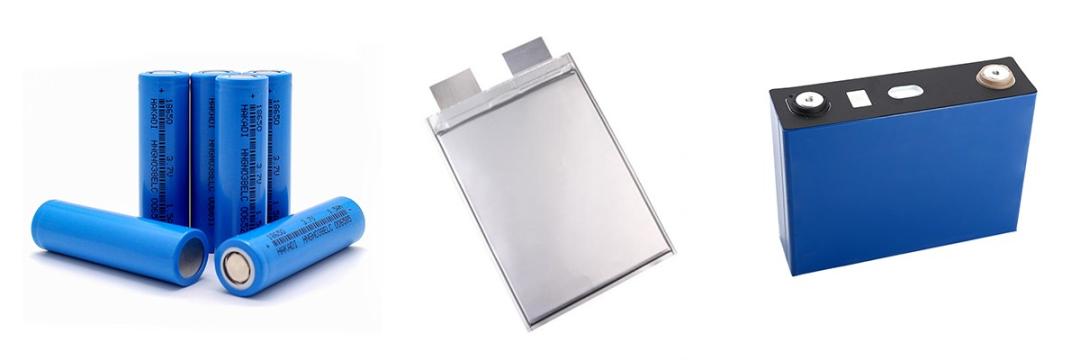
Third, it is flammable. Most liquid electrolytes are flammable organic solvents. Once thermal runaway occurs, the higher the temperature inside the battery, the more intense the reaction will be, and the more intense the reaction, the higher the temperature will rise. It is particularly difficult to handle if this happens in a closed cabin.
Therefore, the common practice for ordinary lithium batteries to go to the deep sea is to put them in a pressure-resistant cabin, so that they can remain in an environment of one atmospheric pressure inside the cabin. The pressure-resistant cabin is like a safe, all the external pressure is withstood by the cabin wall. To reach a depth of 10,000 meters, the cabin wall often needs to be made of titanium alloy and be very thick.
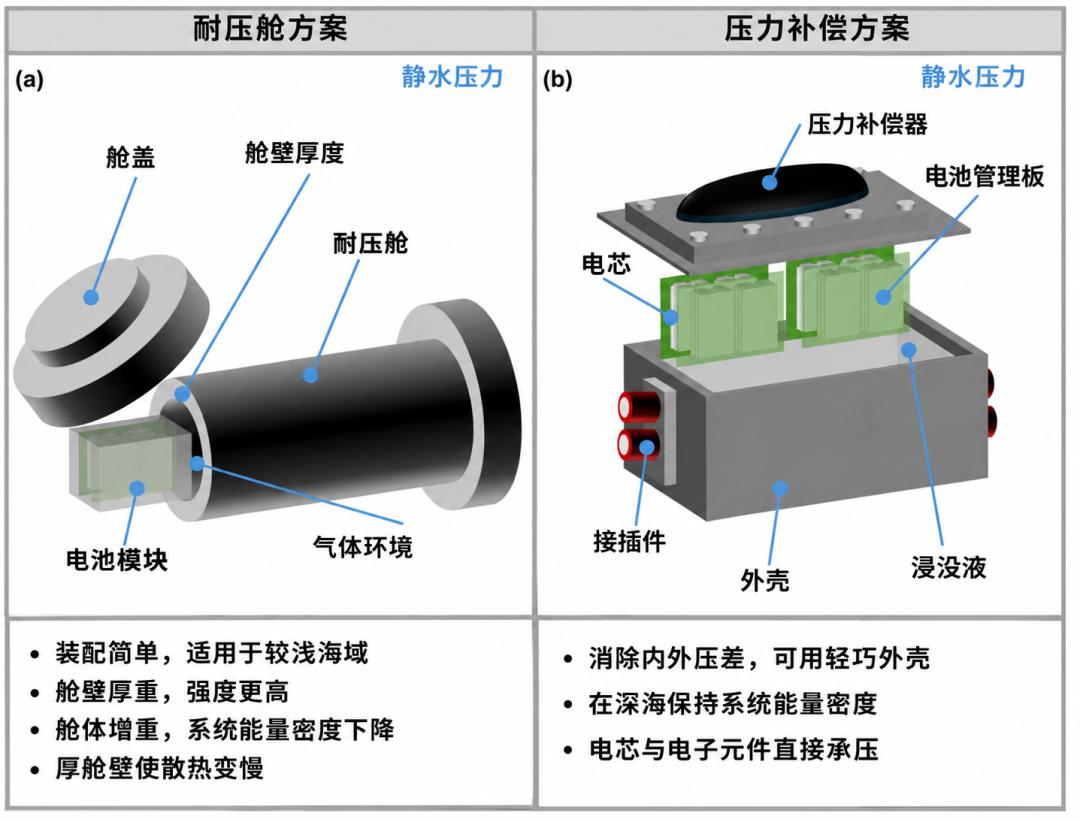
Once the shell becomes thick, it touches a key point that deep-sea equipment cares a lot about: weight.
Many deep-sea equipment do not have engines to push themselves. Take the lander as an example: when it enters the water, it carries ballast iron to sink by itself. After finishing the work, it discards the ballast iron and floats back to the surface relying on its own buoyancy materials. For every extra kilogram of the battery together with its shell, an extra piece of buoyancy material is needed to lift it back. The whole machine will become larger and heavier, making it more difficult to lower it into the sea and retrieve it.
Therefore, when designing a deep-sea machine, the battery is often a major constraint: the amount of power it carries determines how long it can stay under the sea; the total weight of the battery and its shell determines how much buoyancy material is needed; only after these factors are confirmed can positions be arranged for cameras and sensors.
Cars carry the battery as just one of their components; but on the seabed, it is more like a machine is configured to serve the battery.
Solid-state batteries can just avoid all these problems.
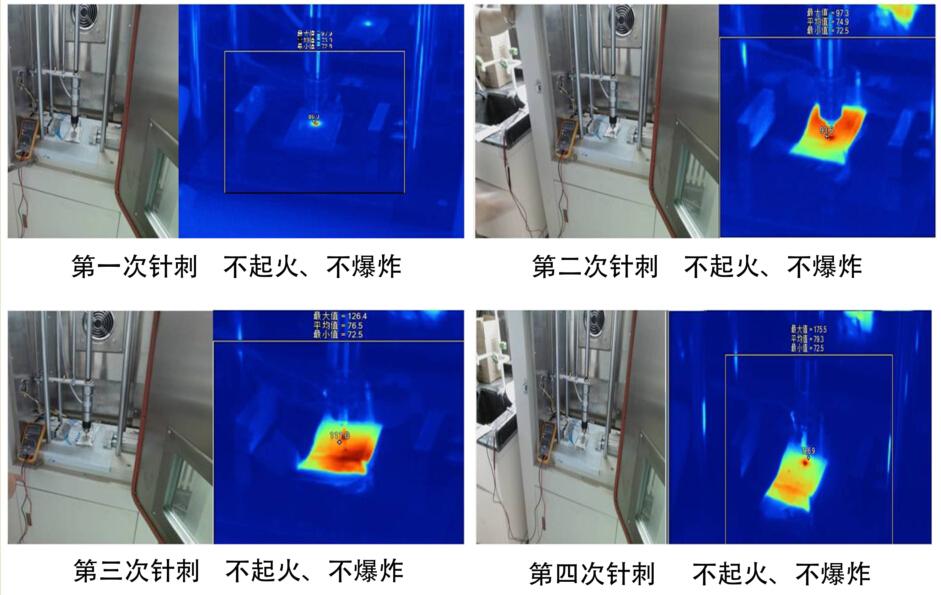
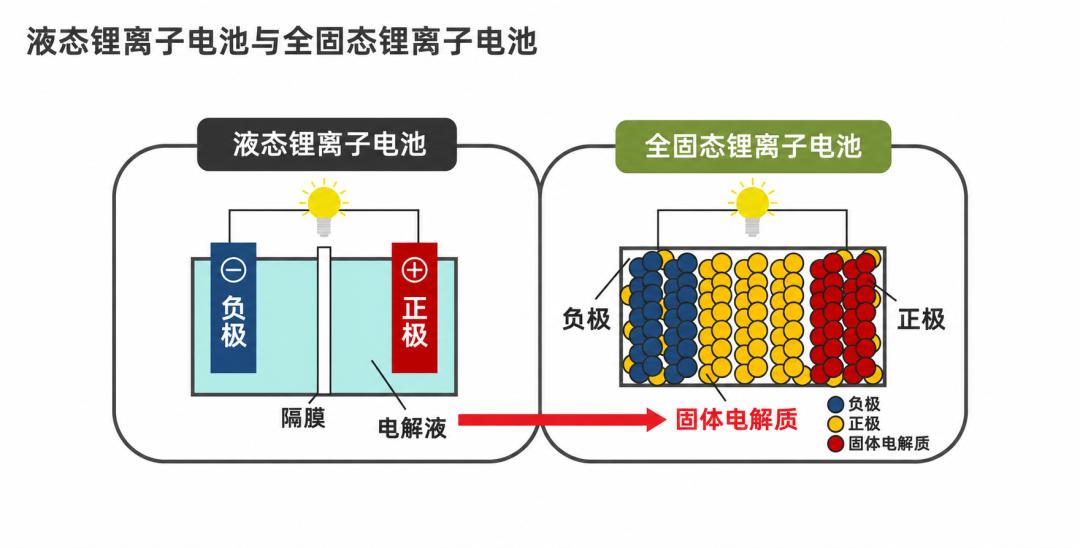
This type of battery has no free-flowing liquid electrolyte inside. Without flowing liquid, there is no liquid that can leak or be squeezed out. The solid electrolyte fills all the gaps inside the cell, so there is no empty space that can collapse when pressure is applied. With a large amount of flammable solvents removed, the corresponding combustion risk is also reduced.
In the laboratory simulating deep-sea high pressure, the team's battery system withstood a pressure of 121 MPa, which is about 20% higher than the pressure at the 10,000-meter seabed, remaining intact and supplying power normally.
Solid material alone is not enough. Too hard solids are easy to crack, and too soft solids cannot maintain their shape. The team uses a "rigid-flexible integrated" composite electrolyte: a rigid skeleton material supports the shape, and flexible polymer and lithium salt fill the gaps between the skeletons to allow lithium ions to pass through. It is a bit like a net fully soaked with glue: the net maintains the shape, and ions move through the glue.
After such cells are immersed in oil and equipped with pressure compensation, there is no need to carry a heavy pressure-resistant cabin. The combination of materials, packaging and pressure compensation forms a complete power supply system that can work under the sea.
When the battery is scaled up, it can even become a subsea power station.
In October 2022, the research vessel "Tan Suo Er Hao" deployed a subsea scientific experiment station in the kilometer-level deep sea, with a core subsea base station equipped with 1000 kWh of solid-state lithium batteries, which is roughly equivalent to the total battery capacity of more than a dozen electric vehicles. Subsequently, the "Deep Sea Warrior" manned submersible connected an in-situ laboratory to the base station on the seabed, and the laboratory drew power from this giant power bank to operate.
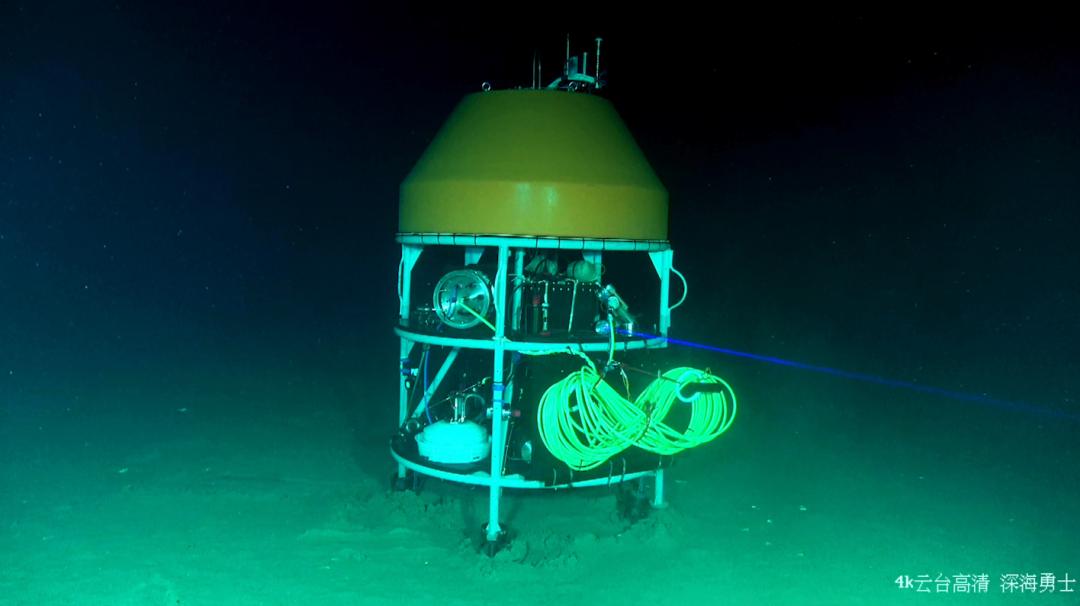
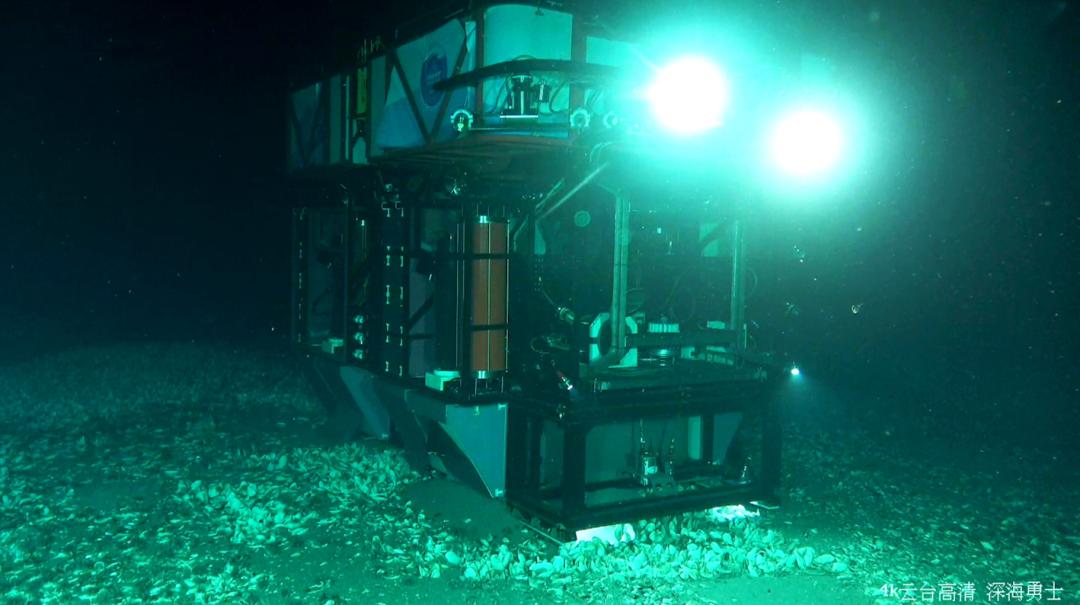
From the actual results, these batteries perform very well in all aspects, and their only shortcoming is high cost.
But different parties have different calculation methods: when buying a household car, people will hesitate for a long time even if they need to spend an extra 1,000 yuan; while deep-sea equipment fears malfunctions most. A single voyage requires sailing the ship, carrying a full crew and a large number of instruments. If the battery stops working under the sea, the entire mission will be wasted. As long as the battery can complete the work stably, a slightly higher cost is worthwhile.
02. The most difficult step for solid-state batteries
Solid-state batteries are difficult to manufacture, and the trouble lies exactly in the two words "solid state".
In liquid batteries, the electrolyte will automatically seep into the gaps, soaking every corner between the electrode particles. Lithium ions can move back and forth along the liquid to complete the charging and discharging process.
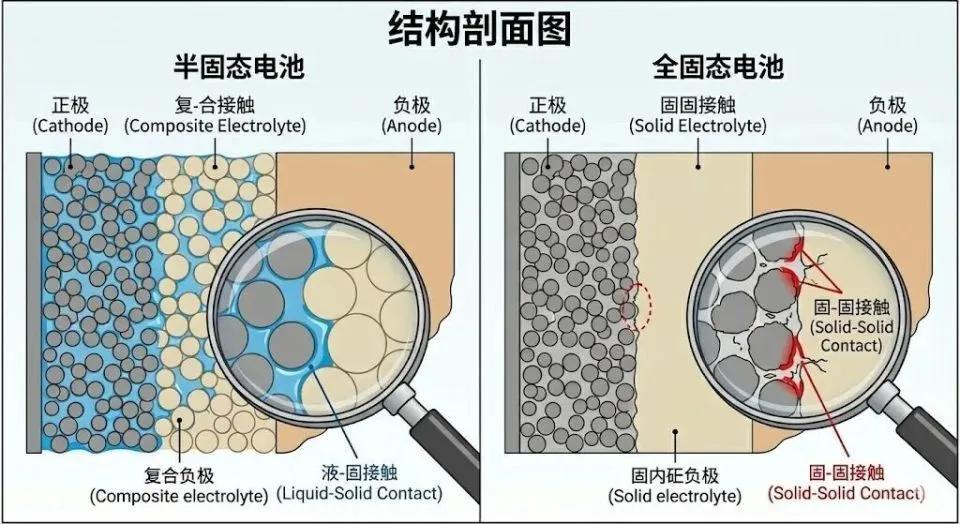
When it comes to solid materials, things become much more difficult. If you magnify the surface of the electrode, you will see it is full of bumps and hollows. When a piece of solid electrolyte is attached to it, only a few raised points are actually in contact, just like two bricks stacked together: they look tightly fitted, but there are full of gaps in between.
If the contact is not tight, lithium ions cannot pass through. In addition, every time the battery is charged and discharged, the electrode will expand and shrink, and the previously attached parts will be separated again.
Ni Jun, Chief Manufacturing Officer of CATL, cited this example when talking about all-solid-state batteries some time ago. He said that most practices in the industry are to apply huge external pressure on the battery to press all layers together. But the volume of the battery changes every time it is charged and discharged, so it is difficult to maintain tight contact all the time only relying on external pressure.
The solution depends on the specific type of solid-state battery. Solid-state batteries cover a whole family of products, which are mainly divided into three categories according to the electrolyte materials used.
The first category is sulfide. Lithium ions move the fastest in it, and its performance can rival that of liquid electrolyte. Therefore, many large manufacturers that want to install all-solid-state batteries in vehicles adopt this route. Toyota has partnered with Japanese oil company Idemitsu Kosan to focus on sulfide electrolytes. Its shortcoming is that it is very sensitive to the environment: when it encounters water vapor in the air, it will release toxic hydrogen sulfide, the gas that smells like rotten eggs. Therefore, its production must be carried out in an extremely dry environment, and huge pressure is required to press all layers tightly during assembly.
The second category is oxide, which is essentially a type of ceramic. It is stable and high-temperature resistant, but hard and brittle. When it is attached to the electrode, it is just like the two bricks mentioned earlier. Now it is often made into fine particles and coated on the separator of ordinary lithium batteries to make the separator more high-temperature resistant.
The third category is polymer, which can be understood as a special type of plastic. It is soft and easy to process, and can deform along the surface of the electrode. But the trade-off is that lithium ions move slowly in the polymer at room temperature, so this type of battery needs to be kept at 60 to 80 degrees Celsius all the time to work properly.
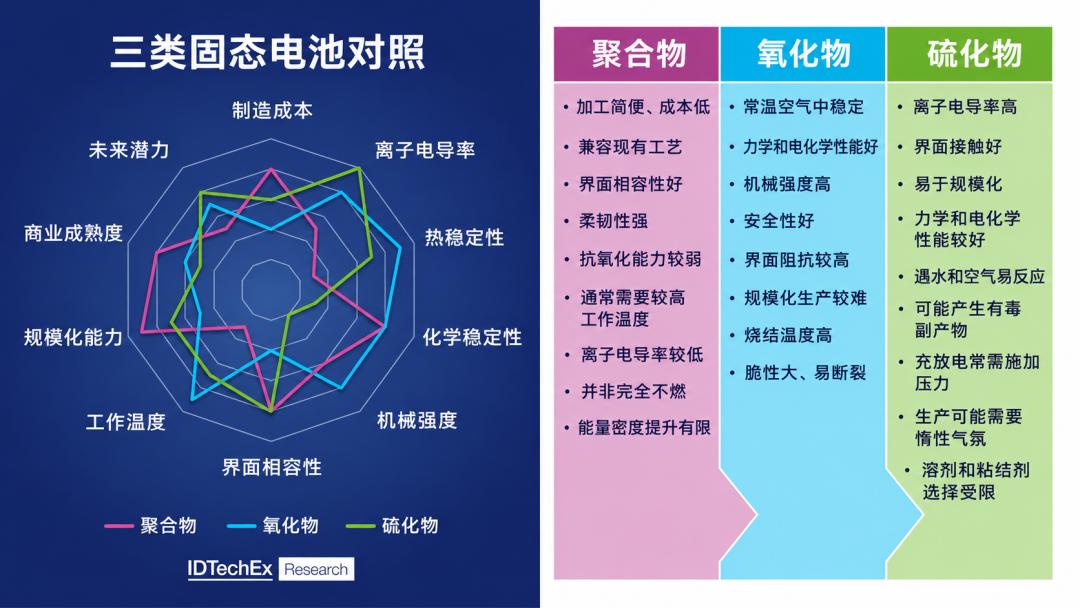
Performance comparison of polymer, oxide and sulfide routes, source: IDTechEx Research
There is another type that needs special mention: semi-solid battery, which is now mostly called solid-liquid battery. It uses a mixture of solid and liquid in the electrolyte, which is a transition between liquid battery and all-solid-state battery, and has already been installed in some mass-produced vehicles.
The team from Qingdao Institute of Bioenergy and Bioprocess Technology, Chinese Academy of Sciences takes the polymer route, but does not copy the old formula, and has made two modifications.
One modification is the rigid-flexible integration mentioned earlier: the soft polymer is equipped with a rigid skeleton to support its shape, and matched with lithium salt that makes lithium ions move more smoothly, so that it can work at room temperature and supply power normally even on the seabed with a temperature of only a few degrees Celsius.
The other modification mainly targets the poor contact problem: they reversed the process. First, the still flowable raw materials are poured into the battery, so that it can seep into every pit and every hole on the electrode surface just like electrolyte. After all the corners are filled