By joining hands with Mark Zuckerberg, can Fourier reverse the long-term predicament of its $8 billion valuation?
Launched for over a month and a half, Muse has been set up by more than 10 million users in the United States and Canada, and has topped the App Store rankings almost every day.
During Meta's earnings call in October 2026, Mark Zuckerberg called it "one of Meta's most successful launches" and explicitly stated that Muse is the product form of Meta's "personal superintelligence" vision.
But the impact of Muse cannot always remain confined to the screen. To accomplish more tasks in the physical world, Meta needs robots to complement its motion capabilities.
Andrew Bosworth, CTO of Meta, once disclosed that the robotics research team was established at Zuckerberg's request, who referred to humanoid robots as Meta's next "AR-level" bet.
Meta intends to develop its own models and software, but does not necessarily need to manufacture the robot bodies itself. Finding a robotics company with a mature platform, supply chain and engineering team is a faster path.
Max provides a concrete example for this path.
In the factory of Fourier Intelligence in Shanghai, Li-Chen Miller, Vice President of Meta Robotics Products, has stayed for nearly two months, focusing on one assembly line.
According to The Information, the two sides spent about three months building a 1.5-meter-tall, 48-kilogram humanoid robot codenamed Max. It can recognize sounds 5 meters away and gestures 3 meters away, and its facial screen displays states of listening, thinking, speaking and uncertainty.
At the end of August, this robot appeared at Meta's internal robotics summit, with its brain developed by Meta and its body manufactured in Shanghai.
A Meta spokesperson said in response to The Information that this cooperation with Fourier focuses on internal research and experimentation, and there are no plans to sell these robots. Gu Jie, founder of Fourier, only gave a six-word reply to Yicai: "Temporarily unavailable for comment".
Some Chinese media reports described this cooperation as "joint R&D".
A company that has been developing robots for 11 years, with a valuation of 8 billion yuan and preparing for listing on the Sci-Tech Innovation Board, has thus been pushed into the spotlight by several prototypes.
The prototypes have been manufactured, while the purchase volume and commercial revenue have not been disclosed.
01
Prototypes: Meta Needs Verification, Fourier Needs Brand Exposure
Max is modified based on Fourier's GR series platform, with its height, proportion, head, cameras, hands and feet all redesigned.
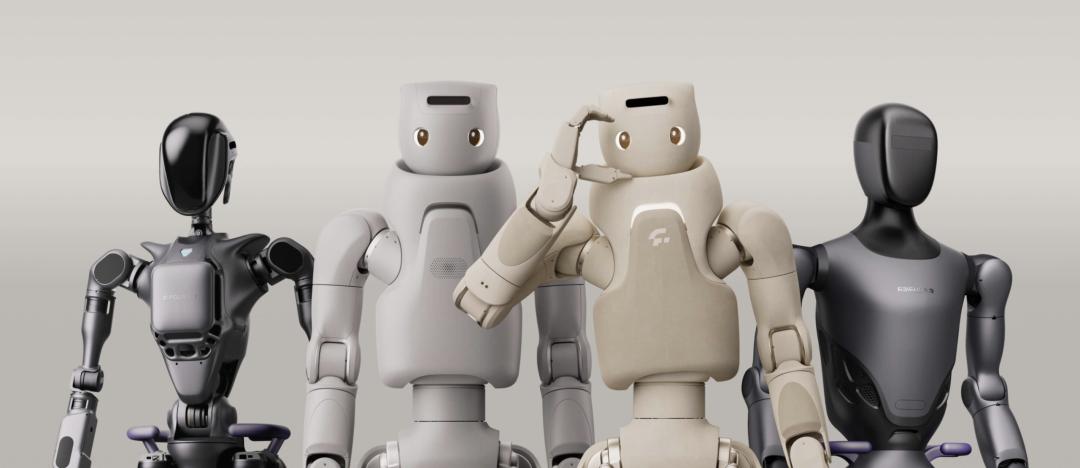
Fourier GR Series
The Information reported that the two sides completed the prototype in about three months, and launched Max 2 in September, with a redesigned torso and robotic hand, adding a projector and sensors to help climb stairs.
Meta has not announced any mass production timetable, nor has it stated how many units it will purchase.
For Meta at this stage, Max is first and foremost a verification machine: to verify how Muse can see, hear, grasp and respond after entering the physical world. Bosworth has placed his hopes on humanoid robots as the physical embodiment of Muse.
What Meta wants to build is still a platform, which can authorize the intelligent layer to hardware manufacturers just like Android, leaving other companies to produce the robot bodies.
It does not need to build a complete production line in the first place, and what it needs more is an engineering system that can turn drawings into prototypes within one quarter. The Meta spokesperson also mentioned that the company is facing the industry reality of purchasing components that are difficult to obtain in the United States, and Shanghai's factories provide an alternative option.
In this software roadmap, the Superintelligence Lab led by Alexandr Wang is another crucial puzzle piece.
In 2025, Meta acquired approximately 49% of the non-voting equity of Scale AI for 14.3 billion U.S. dollars. Wang, founder of Scale AI, joined Meta as Chief AI Officer to lead the Superintelligence Lab.
In its October 2026 report, Fortune quoted Zuckerberg as saying when talking about this appointment: "No, Alex is the guy."
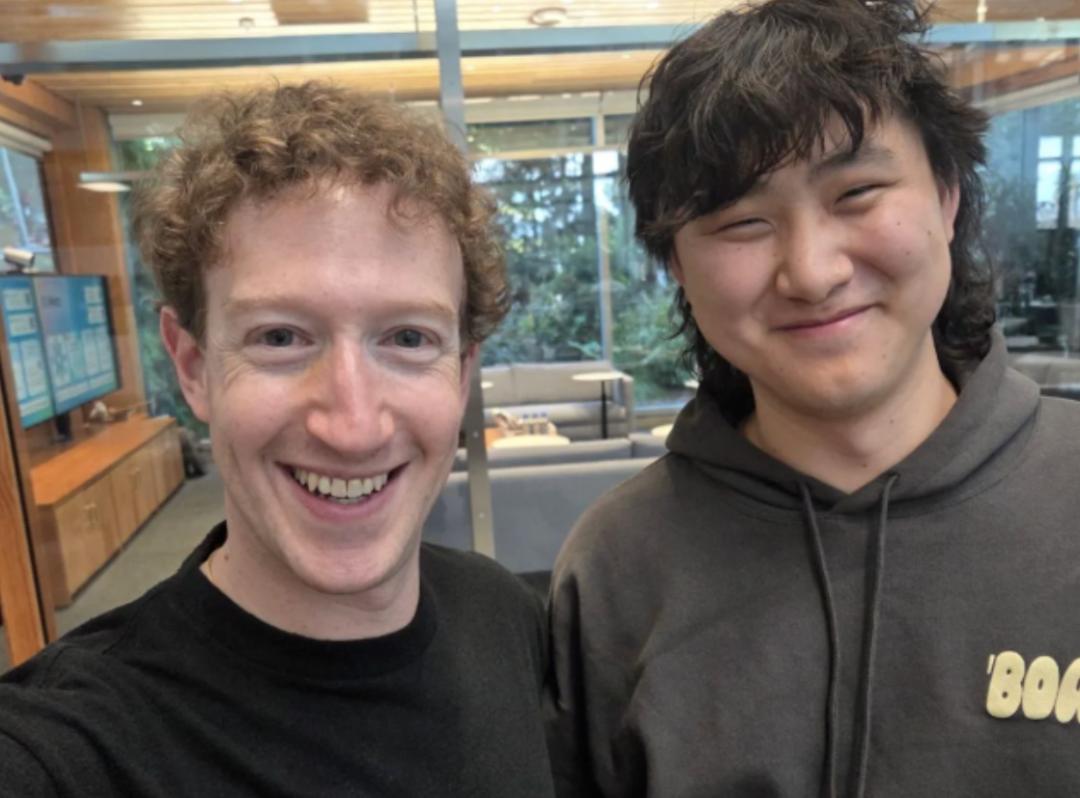
Mark Zuckerberg (Left) and Alexandr Wang (Right)
Bosworth confirmed that Wang's lab is working with the robotics team to develop world models and perform software simulations required for dexterous hands.
"Without this lab, we would not be doing this."
Putting all this public information together, the division of labor presented by Max is: Wang's team develops the models, Reality Labs takes charge of interaction and product definition, and Fourier quickly integrates all these components into a robot body.
What Zuckerberg needs is an engineering system that can respond to Meta's demands within one quarter, rather than all of Fourier's business.
As for the speculation that "Wang once worked at Fourier and thus facilitated the cooperation", the official resume of Scale AI lists his early work experience at Addepar, Quora and Hudson River Trading, with no record of Fourier.
Public reports also do not show that he participated in the selection of Fourier, and there is insufficient evidence to describe this cooperation as "facilitated by a popular figure".
However, there are different statements about the nature of the cooperation.
Meta said it focuses on internal research and experimentation with no sales plan; Ifeng Tech quoted industry insiders as saying that these are ODM prototypes with only a small number of prototype units, not large orders or long-term joint development. Fourier has not confirmed this statement.
As described by The Information, Fourier is responsible for the body design, manufacturing and engineering implementation, while Meta provides the agent, scenario definition and interaction requirements.
It cannot be confirmed at present whether it will eventually become a long-term R&D cooperation or a one-off prototype project.
02
Fourier: 11 Years, 300 Units
Fourier was founded in 2015, initially focusing on rehabilitation robots.
In 2019, it started to develop humanoid robots. GR-1 was released in 2023, GR-2 in 2024, and GR-3 in August 2025.
By the first quarter of 2025, the company's total robot deliveries exceeded 10,000 units. This figure includes products such as rehabilitation robots and humanoid robots, and cannot be regarded as the shipment volume of humanoid robots alone.
Fourier's products have entered more than 40 countries, over 2,000 institutions and hospitals. According to *Phoenix Weekly*, its overseas revenue accounts for about 20% of total revenue.
The shipment volume of humanoid robots is much smaller.
CCID's *2025 Humanoid Robot Market Research Report* shows that Fourier shipped about 300 units in 2025, accounting for about 1.8% of the global total; Unitree shipped more than 5,500 units in the same year, accounting for 32.4%.
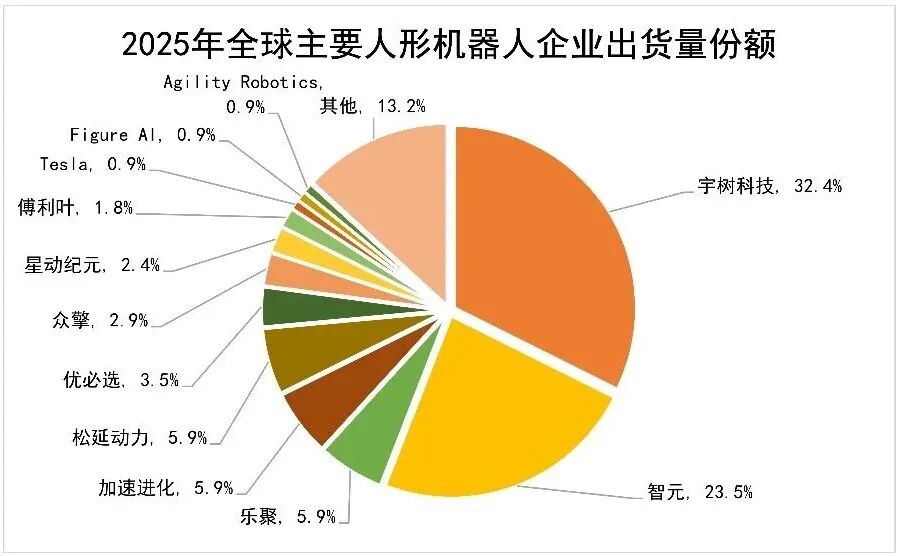
CCID *2025 Humanoid Robot Market Research Report*
According to *Phoenix Weekly*, in 2026, about 60% of Fourier's humanoid-related revenue is still expected to come from R&D, education and data collection. The company has not disclosed its full 2025 revenue and profit data.
Bloomberg reported in February 2025 that Meta had discussed humanoid robot plans with Unitree and Figure AI at that time; later, the publicly launched cooperation was with Fourier. The report did not explain why the previous two companies did not continue the discussion.
Fourier's GR platform has been iterated for three generations, and it is also a NVIDIA GR00T ecological partner. Building Max in three months does not mean manufacturing a robot from scratch, but modifying specifications based on the existing mechanical, electrical and supply chain foundation.
The rehabilitation business has allowed it to deal with safety, interaction and medical compliance for a long time, and the companion care orientation of GR-3 also matches the voice, gesture and facial interaction functions of Max. It may not yet be capable of manufacturing home robots, but these experiences are suitable for undertaking the interaction tests at this stage.
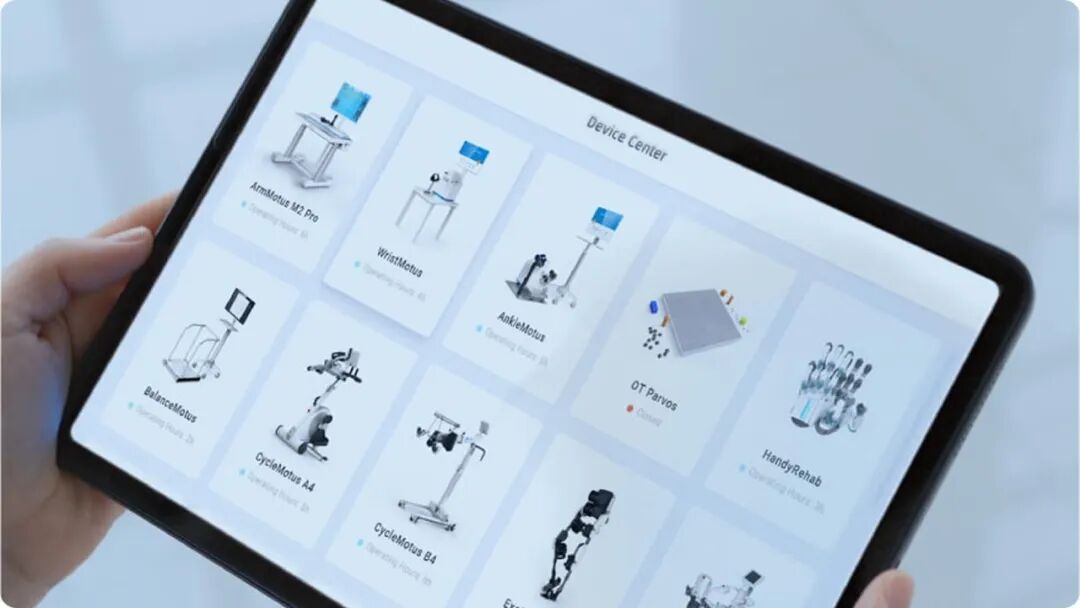
Fourier's Rehabilitation Business
For Meta, such a team with an existing platform and the ability to cooperate in in-depth customization is more useful than a standard non-modifiable robot body.
03
Valuation: The 8 Billion Yuan Threshold
Fourier's financing pace is not slow.
In January 2022, it completed the 400 million yuan Series D round, led by SoftBank Vision Fund 2.
In January 2025, the total Series E financing amounted to nearly 800 million yuan, led by Guoxin Investment, with participation from Pudong Venture Capital, Zhangjiang Sci-Tech Investment, Zhangke Yaokun Fund, Prosperity7, Junshan Capital and others.
In May 2025, Runyang Technology announced that it planned to make a capital increase of no more than 300 million yuan, corresponding to a pre-money valuation of 8 billion yuan; on August 1 that year, Runyang Technology paid the full 300 million yuan investment.
The 8 billion yuan is the pre-money valuation disclosed in this capital increase, not the post-money valuation announced for the Series E financing in January 2025. The two figures are at different time points and under different calibers, and cannot be mixed.
In July 2025, the company completed share reform, and planned to sprint for listing on the Sci-Tech Innovation Board in 2026. As of early November 2026, it has not submitted its prospectus, nor entered the counseling filing stage, and is still in the preparation stage for listing. The online rumor that its IPO progress has been blocked has not been confirmed by the company.
Institutional funds have maturity limits, and IPO is an important exit channel for old shareholders.
Peer companies have moved ahead: Unitree was listed on August 19, 2026, with a market capitalization of about 200.6 billion yuan at the close of trading on October 19; DeepMotion and Leju received listing acceptance on the Sci-Tech Innovation Board and ChiNext respectively in May 2026.
Valuation calibers vary from company to company.
DeepMotion's post-money valuation at the end of 2025 for its Pre-IPO round was about 5.2 billion yuan, and the valuation estimated according to its IPO issuance plan was about 13.9 billion yuan; Leju's post-money valuation for its latest financing round was 4.327 billion yuan.
These sets of figures cannot be directly classified as the same level, but they show that the capital market will reprice companies based on their revenue, profitability, scarcity and listing progress.
Behind Fourier's 8 billion yuan valuation, there is the basic market of its rehabilitation business, about 300 units of humanoid robot shipments, GR platform and production lines. Public information cannot answer which of these items can be converted into sustainable profits.
The company has not disclosed its complete financial data, so the outside world cannot calculate how much cash flow the rehabilitation business can generate, nor confirm how long the humanoid robot business will continue to invest.
What can be confirmed is that the 8 billion yuan valuation comes from the capital increase plan disclosed in May 2025. Since then, there is no new pricing in public information.
But in 2026, when embodied financing and valuation surges are extremely fierce, Fourier has not won the favor of capital, which is thought-provoking: why this veteran who has been in the robot track for 11 years is less covered by the spotlight than those new players who have just entered the industry for two or three years?
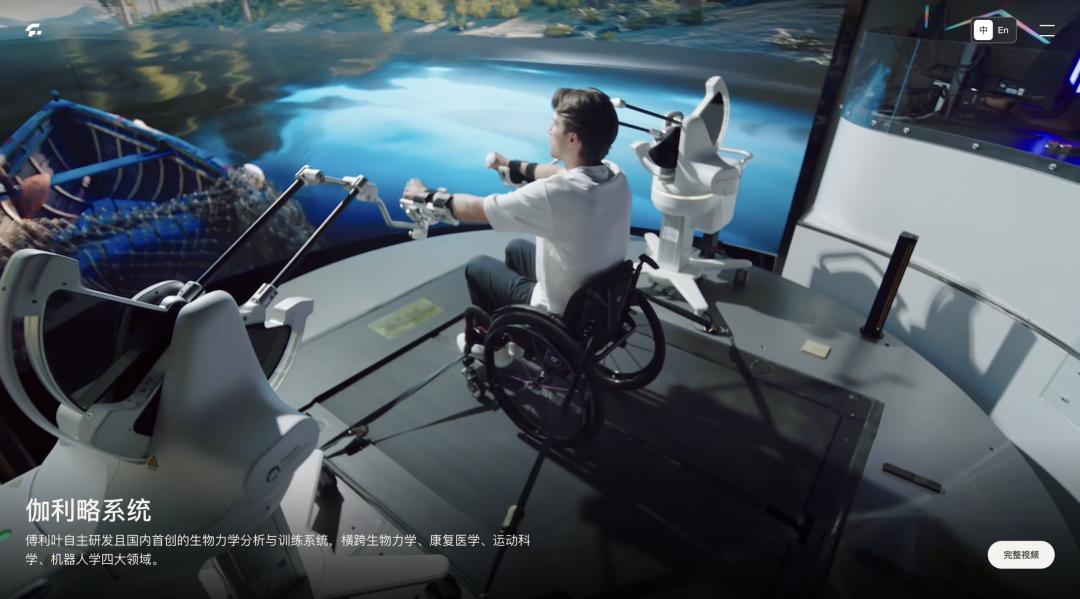
Screenshot of Fourier's Official Website
Fourier regards IPO as its main path. The completion of share reform means that the company has set up the framework for listing; the successive listing or listing acceptance of peer companies shows that the review channel is not closed, but the quality of revenue and technical content will be examined more carefully.
The Information reported in September 2026 that regulators have issued informal "window guidance" to some investment banks and investment institutions, paying attention to whether enterprises can generate recurring revenue, narrow losses, or achieve real technological innovation. This news has not been officially confirmed by the regulators, and cannot be written as three unified rigid regulations.
For Fourier, it will have to account for its revenue structure and profit schedule sooner or later. The current cooperation with Meta can supplement its technical verification, but cannot replace its revenue, profits and customer structure.
04
Boundary: Fast Engineering Does Not Equal High Profit
Prototype development, large-scale manufacturing and platform licensing are three completely different businesses.
Prototype development depends on response speed, large-scale manufacturing depends on cost, yield and delivery, and platform licensing depends on models, data and standards. Fourier has proved its capability in the first item on Max, but there is no answer for the latter two.
In the statistical sample of Guojin Securities' research report in November 2025, the net profit margin of the core robot components segment is about 9.33%, that of the equipment segment is about 6.96%, and the overall net profit margin of the ontology and assembly segment is relatively low.
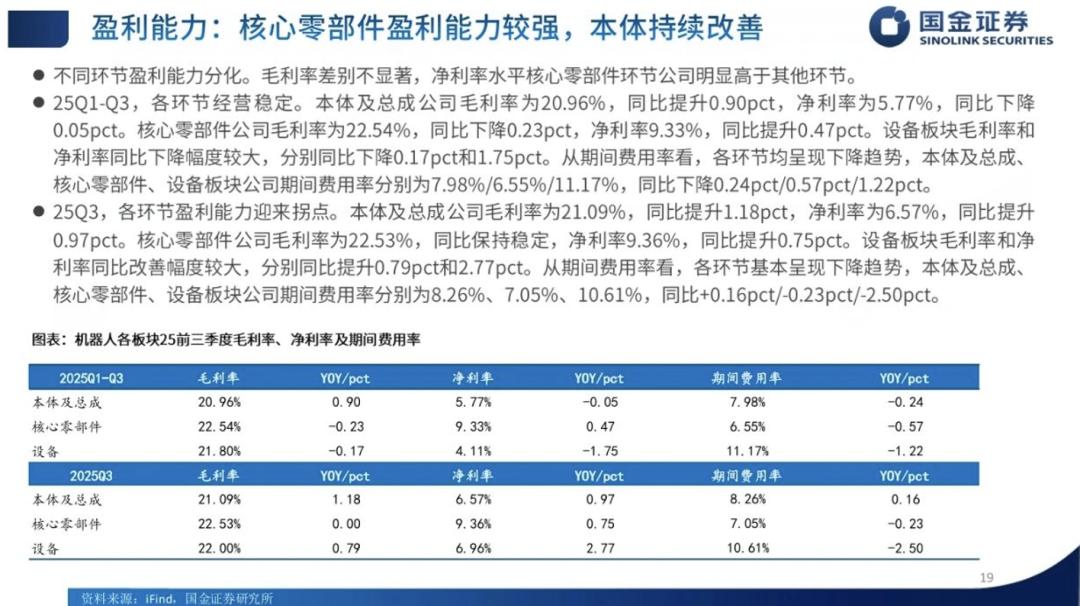
Guojin Securities *The Industrial Chain Moves Towards Mass Production, Focus on Segment Leaders*
This set of samples cannot be regarded as the unified profit margin of the entire industry, but it reminds us of a basic problem: manufacturing and engineering implementation do not naturally bring high profits, let alone pricing power.
In the