Tongyi Qianwen has been integrated into Siri: the intelligent feature for the Chinese mainland version of Apple has entered the testing phase, the system entry is now available, so when will the Siri that can handle tasks on your behalf be officially launched?
Domestic mobile phone manufacturers have long integrated large language models into their system assistants. Today, the China-market iPhone has also caught up with this feature.
On November 4 Beijing time, Apple Intelligence opened for testing on the Chinese mainland along with the iOS 27.3 developer beta.
The Chinese press release released by Apple on October 31 states that these features will be rolled out to Chinese users in December with the official version of iOS 27.3, and the launch on other platforms will follow after obtaining necessary approvals.
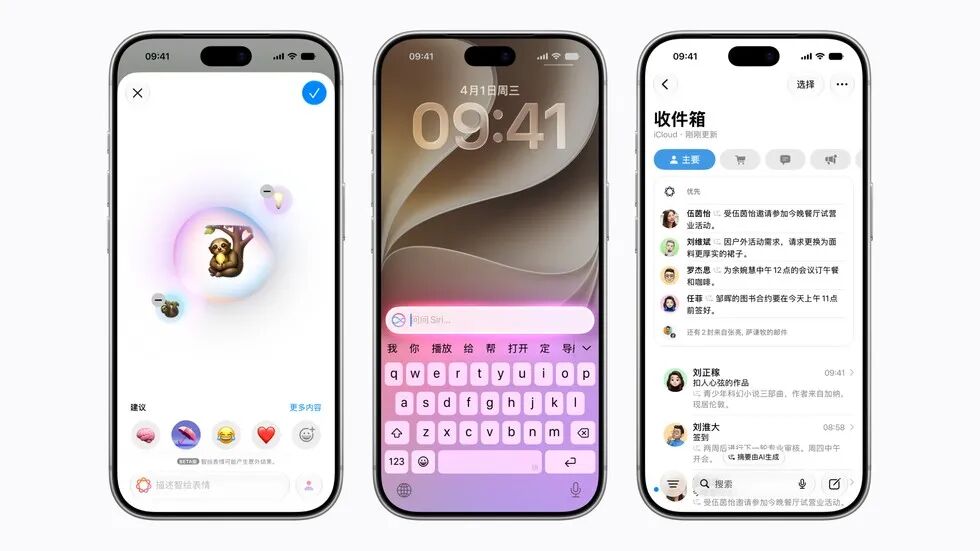
The most widely noticed part this time is Alibaba's Qwen, which is connected to three system entry points: Siri, the writing tool, and Visual Intelligence.
For the first time, a domestic large language model has entered the system-level call chain of iPhone, so users do not need to open a specific App first.
This leads to a question: with the system entry handed over to Qwen, how much can the AI experience of China-market iPhones catch up?
First, let's clarify the boundaries.
Apple stated in the same press release that this update does not include Siri AI, nor does it include other next-generation Apple Intelligence features announced by Apple at WWDC 2026.
The features that start testing today are the first batch of core functions, which are not equivalent to the new Siri that overseas users got access to this autumn, let alone an intelligent agent that can handle tasks across Apps for users.
The China-market iPhone has already added the entry for generative AI. What remains to be seen next is how many things this entry can do.
Part 1:
The version being tested today
is the supplemented first-generation, not a new generation
The capabilities of China-market Apple Intelligence can be divided into two parts, with different sources and boundaries.
The first part comes from Apple's own models.
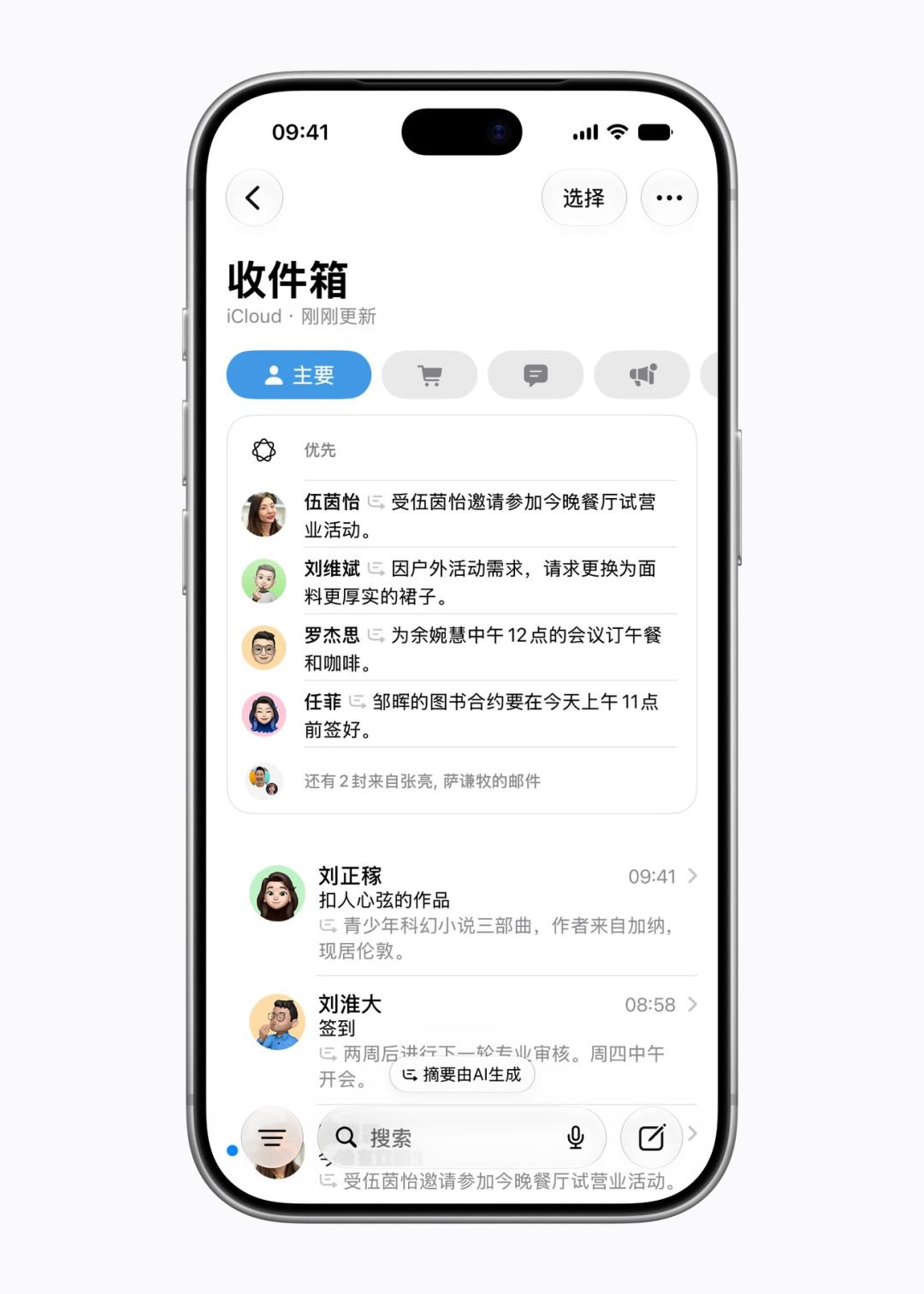
According to the press release, the first batch of features includes: real-time translation in Messages, FaceTime calls and phone calls; system-level writing tools and smart replies; photo removal, natural language image search, memory movies and Genmoji; email summary, notification summary, "Reduce Interruptions" focus mode, and transcription summary for recordings and calls.
Siri also supports typed conversations, can understand incoherent speech, and retains context in continuous dialogues.
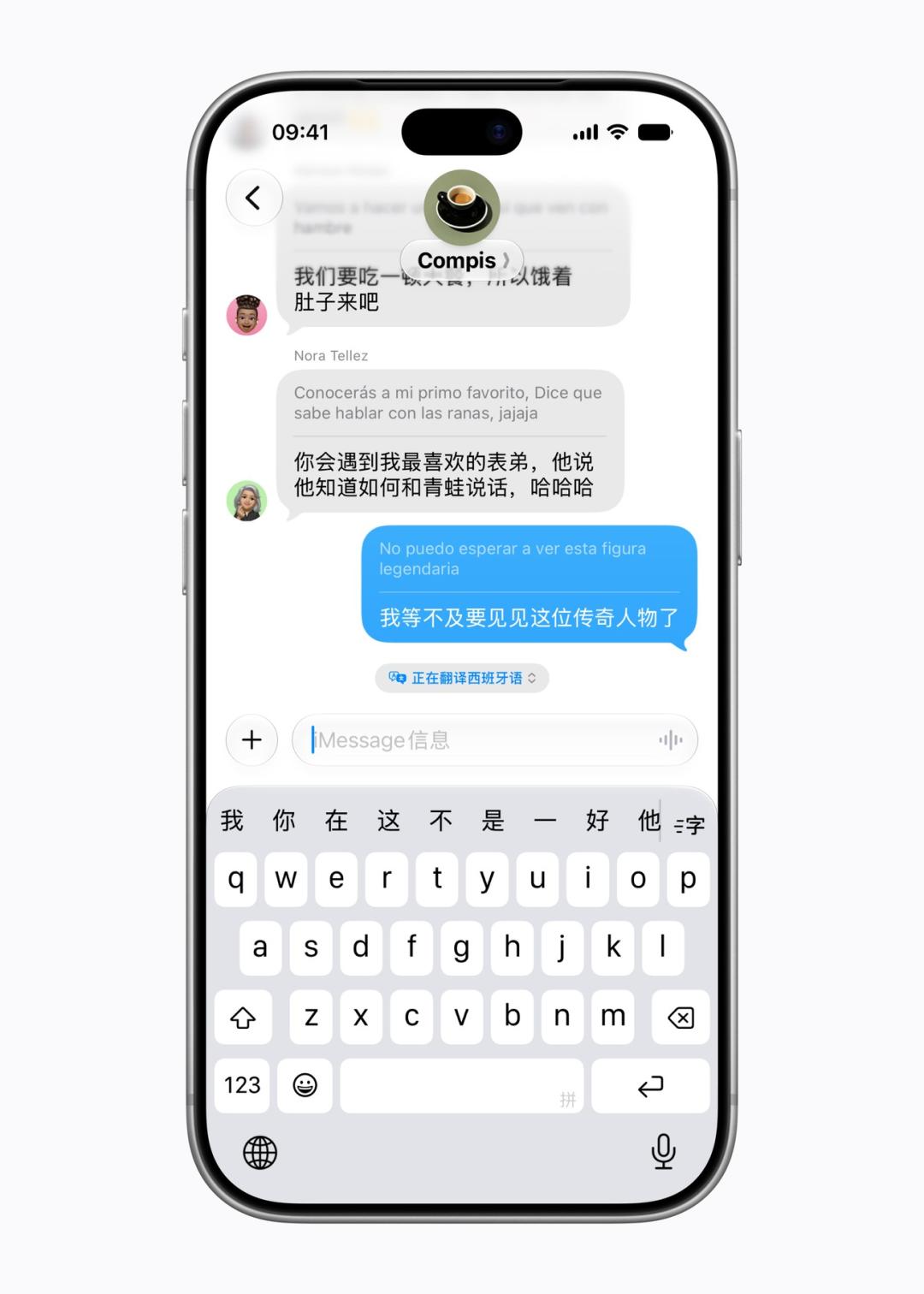
The second part comes from Qwen: Siri will hand over specific requests to Qwen for answers, "Qwen Creation" is added to the writing tool, and "Ask Qwen" is available in Visual Intelligence.
The combination of these two parts is roughly equivalent to the first-generation Apple Intelligence that Apple has launched overseas in the past two years, supplemented by Qwen for large model Q&A and generation.
Therefore, the launch of the test proves that China-market iPhones have system-level generative AI, but it does not prove that the China version and the overseas version are of the same generation.
On the positive side, the starting point is not low: the features cover communication, writing, photo and information organization, which is almost a one-time full supplement. On the cautious side, these capabilities are no longer new overseas, and they have to be directly compared with the system assistants of Android manufacturers in China.
To judge how valuable this update is, we should see whether users will use it repeatedly every day, rather than how long the feature list is.
Part 2:
The system entry is given to Qwen
What it proves and what it does not prove
For Alibaba, the significance of this cooperation lies in the position. Users can call Qwen by holding the side button, no need to download the App first and then find the dialog box. System entry has always been the most scarce traffic position in the mobile Internet.
According to the first batch of actual tests by media such as sspai, when Siri encounters a question it cannot answer, it will transfer it to Qwen and directly give the answer in the dialog box, instead of only replying "I found the following information on the Internet". Users can also ask Qwen questions about photos, PDFs and presentations.
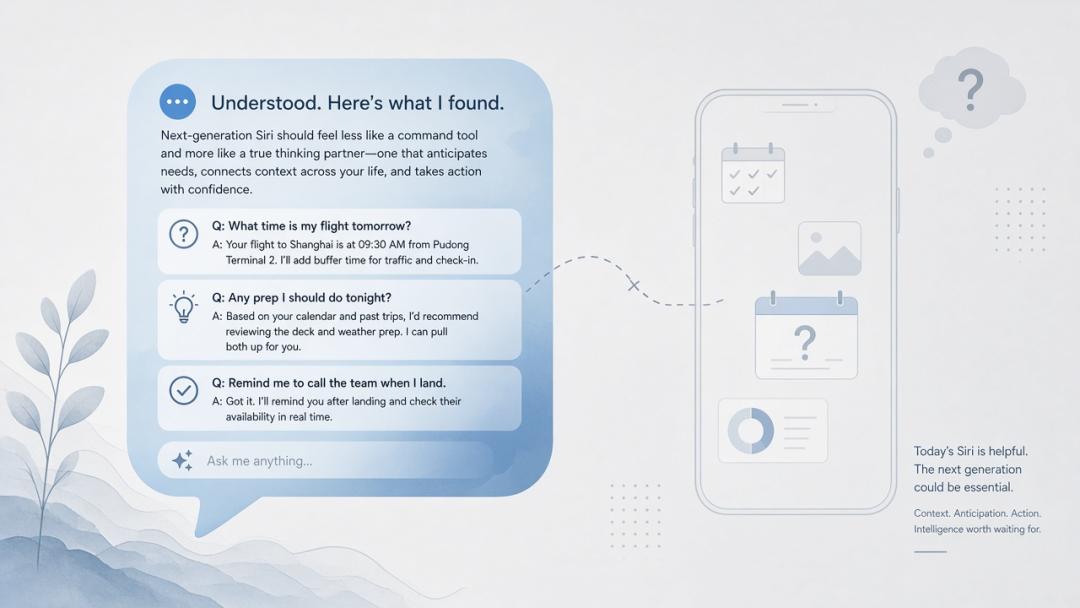
But getting the entry does not mean getting usage. Qwen requires users to actively enable it, and confirmation is required before sending content each time. The default off status plus one-by-one authorization will filter out some casual calls.
The statements of the two companies are not completely consistent. Alibaba claims that "Qwen Creation" can also generate images, which is not mentioned in Apple's official press release. Sspai mentioned that the China-market version also cooperates with Baidu for image recognition search, and this media is the only one that has reported this so far.
These differences show that the specific scope of cooperation has not yet been fully finalized.
What is more worth observing is the division of labor: Apple's models are responsible for local high-frequency functions, and Qwen is responsible for long-tail problems that require large language models. Phoenix Tech stated that functions such as real-time translation, summary, and object removal use Apple's local models and do not require the Qwen App. If this division of labor holds, Qwen's role in the system is closer to an "external brain" rather than the system assistant itself.
There are still two gaps of call frequency and retention between being callable by Siri and becoming the AI that users turn to by default.
Part 3:
Who can use it, how data flows:
Privacy is exchanged for a longer operation path
According to the footnote of Apple's press release, the supported models are iPhone 15 Pro, iPhone 15 Pro Max, iPhone Air, iPhone Duo, and iPhone 16 and later models. Siri and device language need to be set to English or Simplified Chinese. Only iPhone is supported at the initial launch, and iPad and Mac have to wait for approval.
Currently, only users of the developer beta can try it. Jiemian News stated that free developer accounts can receive the push, no paid membership is required. Sspai said that up to about 7GB of supporting content needs to be downloaded when enabling, and there is no waiting list this time. Ordinary users have to wait for the official version in December.
There are divergences in regional conditions. Alibaba's announcement states that the Qwen integration is for iPhones purchased in China, or users whose device location and Apple account region are both set to China.
The activation method is to log in to a Qwen account, or use "Sign in with Apple". The entry tested by media is in "Settings > Apple Intelligence & Siri > Extensions > Qwen". Under the same account, the Qwen App can see the history of questions asked through Siri.
In terms of privacy, Alibaba promises: users will be asked for consent before questions, documents and images are sent to Qwen, and requests and replies will not be used for model training.
On the positive side, the authorization is relatively restrained. There are two points to be cautious about. First, "not used for training" is a corporate promise, not a third-party audit conclusion; neither of the two press releases has elaborated on where the data is stored and how long it is retained. Second, Jiemian News feedback shows that each time you upload an image or document, you need to confirm again, which makes the operation of continuous dialogues longer.
The stricter the privacy design, the higher the experience cost. Apple chose the former between the two, and whether users accept it depends on the usage data of the official version.
Part 4:
The "new Siri" is absent:
What is missing is the cross-App task execution capability
The biggest gap in the China-market version is Siri AI.
According to the statement on Apple's developer website on November 3, Siri AI is "a completely new version of Siri": it can understand personal context, perceive screen content, and perform operations in Apps.
On the same day, Apple opened the preview to developers in the iOS 27.3 beta. Any App can be accessed through App Intents, from checking express delivery, making reservations to placing orders; the newly added "skills" can also string multiple operations into one completion. These capabilities are planned to be launched to users in a few months.
This is the dividing line between "answering questions" and "handling tasks". China-market Siri plus Qwen can answer questions, view images, and read documents; but there is no official information showing that it can perform operations across Apps. The actual test by Phoenix Tech also shows that Siri cannot call the Qwen App to complete tasks in relay.
Apple did not explain why the new Siri is absent, nor did it announce a timetable. What can be confirmed is: the Siri AI supported languages listed on the developer page will soon add Traditional Chinese, and Simplified Chinese is not in the list; Siri AI is temporarily unavailable on some systems in the European Union; functions that rely on server-side models have a daily quota, and Apple says expanding the quota in the future will be charged.
Regulatory approval, local model adaptation, and language support may all be the reasons. But the official has not given a statement, so this cannot be written as a final conclusion.
Another detail is worth comparing. Apple's annual report (10-K) submitted on November 3 added a new risk warning: AI agents may "act in unexpected or unpredictable ways", including accessing unauthorized systems, sending messages and completing transactions.
This does not mean that problems have already occurred. But it shows that Apple regards "letting Siri handle tasks for you" as both an opportunity and a risk. When entering a market with stricter supervision, it makes sense to slow down the pace.
A Siri that can answer questions only makes up for the short board; a Siri that can handle tasks for you determines the upper limit.
Part 5:
Before the official version, wait for four types of evidence first
China-market Apple Intelligence already has system entry, local models and cooperation with Qwen. These conditions bring iPhone back to the comparison of domestic AI mobile phones.
But having conditions does not mean having results. Around the official version in December, at least four types of evidence need to be checked.
The first type is stability. The first batch of media feedback focuses on overheating, power consumption, crashes, and Qwen timeout under weak network. It is normal for the beta version to have problems, and the key is whether the official version can fix them. It is not recommended to try it on the main phone at present.
The second type is Qwen's quota and charging. Neither Apple's nor Alibaba's press release has mentioned this. Phoenix Tech said "there is no charging description at present". Apple has set daily quotas for server-side functions globally, and it is unknown whether the China-market Qwen is similarly restricted.
The third type is how the final scope of cooperation is determined: whether non-China-region iPhones with a China-region account can be used, whether "Qwen Creation" can generate images, and whether Baidu's image recognition is true. These will determine how many people can actually use it and where the functional boundary lies.
The fourth type is the China-market timetable of Siri AI and Simplified Chinese support. This directly determines whether iPhone can move from "being able to answer" to "being able to handle tasks".
We also need to look at competitors. At this stage, the experience still lags behind the system assistants of domestic Android manufacturers. While Apple is supplementing features, its opponents are also moving forward, and the gap will not automatically narrow just by accessing Qwen.
The system entry allows Qwen to enter iPhone, making up for the short board of "no AI". Whether the new Siri can arrive determines whether this supplement can catch up.
Note on Sources:
Features, supported models, and launch time are subject to Apple China's press release (2026-10-31);
The regional conditions and privacy commitments for Qwen integration come from Alibaba's announcement, which are corporate statements and have not been independently verified;
The capabilities and language list of Siri AI come from Apple Developer (2026-11-03);
The setting path, actual test experience, whether non-China-region iPhones can be enabled, and Baidu's image recognition are from media reports, some of which conflict with each other or have only a single source, and this article treats them as unconfirmed.
The launch of China-market Apple Intelligence for testing does not mean that Siri AI has entered China, and Qwen access does not mean that Siri has the cross-App task handling capability.
This article is from the WeChat official account "New Mang xAI", author: Ge Lin, Dong Yizhen, published with authorization from 36Kr.