Unitree trades profits for time, how far is embodied intelligence from the critical point of physical AI?
In 1957, a stray dog named Laika was sent into space, becoming the first life from Earth to enter orbit. Sixty years later, a young man named Wang Xingxing in Hangzhou named his first commercial quadruped robot "Laika".
The process from dogs to humans represents the journey of Earth life moving towards outer space, while Unitree spent 10 years completing the evolution from quadruped robots to humanoid robots. These robots can perform boxing moves, somersaults, and change positions and formations flexibly. After continuous iterations, Unitree's humanoid robots have been developed to a level where they can fight against assailants, lift cars with bare hands, pounce to save people, and climb Mount Tai.
But does Unitree really need to build more stunning humanoid robots? In its official promotional video, the H2-X robot, which can kick a car door into a dent and jump down from a 4-meter-high platform then roll to stand steadily, lost its balance when performing a side somersault, with one of its mechanical calves breaking on the spot. Unitree did not disclose how many movements of this robot were completed autonomously, nor did it provide test data in real scenarios.
On November 4, at the 2026 World Internet Conference Wuzhen Summit, Wang Xingxing once again broke the conventional action-focused narrative, stating that the current problem that embodied intelligence needs to solve is how to make full use of data to train AI models, and the most core bottleneck in the industry is the alignment of the "last few millimeters" in the physical world.
The difficulties faced by the embodied intelligence industry are well known: how to achieve deeper and wider application, whether robots can work continuously in real scenarios, and the era when robots truly work on a large scale has not yet arrived. This is no longer a problem faced by Unitree alone.
Unitree Robotics is currently the only expression tool with sufficient liquidity, sufficient public attention and a sufficiently complete story. Against the background of releasing its first financial report after listing, we will have a more real perception of embodied intelligence, because this is the first time that the outside world can use public financial data to verify the strategic assumption that hardware makes profits while the "brain" consumes capital.
Looking at the third quarter alone, Unitree's revenue increased by 69.93%, while the net profit attributable to owners of the parent company decreased by 17.37%. A company that has proved that it can manufacture and sell robots is facing greater difficulties on the profit side.
Wang Xingxing predicted that next year will most likely be the critical point for the development of the entire robot industry or robot models.
If this judgment holds true, in the stage when the entire embodied intelligence industry has mature hardware but no mature "brain", how will profits be distributed, how will organizations differentiate, and how will risks be priced? As the most complete sample in this industry, Unitree currently uses hardware profits to subsidize the "brain", which results in revenue growth without corresponding profit growth in its financial report. Can it align the last few millimeters and achieve reusability before the critical point arrives?
I. The Last Few Millimeters
In the third quarter of 2026, Unitree recorded a revenue of 665 million yuan, a year-on-year increase of 69.93%; its non-net profit after deducting non-recurring items was 105 million yuan, a year-on-year decrease of 17.42%. In the first three quarters, the revenue reached 1.817 billion yuan, a year-on-year increase of 55.71%, which has exceeded the full-year revenue of 2025; however, the non-net profit after deducting non-recurring items was 349 million yuan, a year-on-year decrease of 18.78%.
This is a typical financial report featuring revenue growth without corresponding profit growth: revenue is still accelerating, while profit is shrinking instead.
The mainstream explanation is that R&D expenditure erodes profits. The R&D expenditure in the third quarter was 127 million yuan, a year-on-year increase of 249.58%, accounting for nearly 20% of the revenue in the quarter. But this explanation only stays at the level of increased spending, and we need to further explore how this sum of money is recorded and what exactly is purchased in the industrial chain.
In accounting terms, R&D investment has two approaches: expensing and capitalization, the difference lies in whether the cost is recognized at one time or amortized over a period. For a company with rising R&D investment, different choices will create huge numerical differences on the income statement.
Unitree chose to expense almost all R&D expenditures, which means the income statement bears all the impact. Because Unitree is transferring resources from profitable hardware to the "brain" that does not make profits in the short term, the financial phenomenon of revenue growth without corresponding profit growth is exactly the accounting expression of this strategic shift, rather than the deterioration of the business fundamentals.
From the perspective of revenue structure, the hardware business fundamentals of Unitree are still accelerating. In the first three quarters, humanoid robot revenue accounted for 51.07%, and quadruped robot revenue accounted for 41.05%. Humanoid robots have replaced quadruped robots as the largest source of revenue, and the sales volume of both product lines maintains growth.
Quadruped robots are even more solid cash cows, with cumulative shipments exceeding 33,000 units. Their global market share has long remained above 60%, and they have basically monopolized the procurement of quadruped robots for universities and scientific research institutions at home and abroad.
However, the hardware revenue growth curve will hit a ceiling sooner or later. The gross profit margin of Unitree's humanoid robots is as high as 62.9%, but it largely relies on universities and scientific research institutions. These institutions pay a premium for products that support secondary development, paper publication and experiment, but will not pay for completing a production task for a factory.
The capacity of the scientific research and education market has an upper limit. Once the procurement pace slows down, or lower-cost substitutes enter the market, the high gross profit margin will loosen.
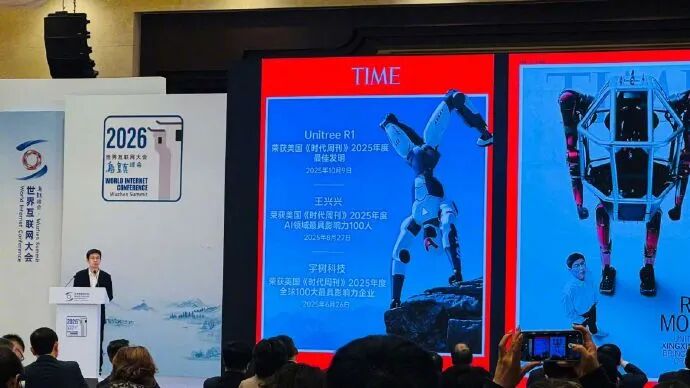
Image source: 36Kr
To open up the industrial market, robots must be able to actually perform work, which can be better understood in combination with the "last few millimeters" mentioned by Wang Xingxing at the Wuzhen Summit.
In his speech at the 2026 World Internet Conference, Wang Xingxing described the current state of embodied intelligence as a state of being almost there: "The alignment between the input and output of AI models and the real world is still a little bit short."
At present, the success rate of robot grasping and handling is already very high, and the world's top models are also close to being usable at the level of planning and navigation. But for tasks that require tactile feedback and micron-level force control, such as disassembling mobile phones, threading needles, and precision assembly, the success rate drops rapidly.
The corresponding "a little bit short" state is the fundamental threshold that distinguishes the physical world from the digital world. There are errors in sensors, delays in actuators, and factors such as grasping force, friction, occlusion and light changes will cause deviations in the instructions output by the model during actual contact.
Without improving the "brain", it is impossible to convert hardware capabilities into continuous operation in real scenarios. The hardware advantages will most likely stay at the demonstration and scientific research stage, and cannot enter the field where industrial customers calculate accounts based on return on investment.
According to the financial report data, Unitree's gross profit margin has dropped from 59.75% in the same period last year to 54.02%, and further slid to 50.58% in the single third quarter.
Therefore, Unitree's choice is clear: use the sufficient cash flow provided by hardware profits and IPO fundraising to invest in models, computing power and data closed loops, and raise the R&D expense ratio from single digits to nearly 20%.
However, Unitree still faces some problems. First, the revenue structure has not formed a real exogenous cycle, and the commercial closed loop has not been completed. Scientific research and education contributes most of the revenue and gross profit. Although the proportion of industry applications is on the rise, the absolute level is still very low, and repurchase signals have not formed a verifiable trend.
Second, there is a narrowing exposure on the revenue base. Unitree's overseas revenue has long accounted for more than 40%, of which the US market accounts for between 13.30% and 19.54%, and potential risks cannot be ignored.
II. Hardware Geek, Turning to AI Believer
Unitree's stock price has shown a roller coaster-like curve as a whole.
On the first day of listing, it surged to 1100 yuan, with a market cap once exceeding 440 billion yuan. Then it fell to around 404 yuan in more than 30 trading days, with a maximum drawdown of more than 60%. In October, it rebounded intensively due to Wang Xingxing's public statements and ecological conferences, and fluctuated again after the release of the third quarterly report.
In fact, the market's pricing anchor for Unitree does not lie in the current profit, but in the time judgment of when physical AI will achieve breakthroughs.
Unitree has long been labeled by the market as having strong "cerebellum" but weak "brain": its motion control and ontology capabilities are in the first echelon, while the capabilities of its embodied models have not yet been verified.
The capital market is willing to give Unitree a high valuation. The core assumption is not the current hardware profit, but that when the physical AI breakthrough occurs, the hardware that Unitree has deployed, the accumulated real machine data and developer ecosystem will become scarce assets.
The direct evidence for this anchor point is JPMorgan Chase's rating reversal in October 2026: its target price was 300 yuan a month ago, but on October 25, it raised the rating two levels in a row to "overweight", and the target price was adjusted to 995 yuan. The reason is that Wang Xingxing has compressed the breakthrough window of physical AI from a maximum of 10 years to 1 to 3 years.
Looking back at Wang Xingxing's public statements in 2026, we will find that the "time judgment" has undergone a significant compression.
At the World Robot Conference in August, his judgment was "as fast as 2 to 3 years, as slow as 5 to 10 years". At the Industry Expo and the World Physical AI Conference in October, the most optimistic time window was shortened to "1 to 2 years", and even "the upcoming GPT-7 next year may directly break through the embodied intelligence problem". At the Wuzhen Summit in November, he further clarified "next year" as "a very likely critical point".
At the same time, one thing Wang Xingxing has repeatedly done is to "admit mistakes", believing that his biggest mistake in the past ten years was that he did not believe in AI enough.
By compressing the timetable, Wang Xingxing is objectively narrowing the narrative gap between current hardware revenue and long-term AI valuation, and striving for the capital market's patience for strategic investment. If the breakthrough still takes 5 to 10 years, the current model investment is like far water that cannot quench immediate thirst; if the breakthrough occurs in 1 or 2 years, Unitree's investment is to occupy a position in advance for the upcoming window.
Narratives of course need facts to support. According to public reports, Unitree's self-developed "brain" UnifoLM-WLA-1.0 has 6B parameters, about 2500 hours of high-quality real machine data, and a single model covers 64 tasks (54 desktop operations and 10 full-body operations). Among the 16 multimodal perception and understanding benchmarks, 7 of them are ahead of the participating open source models. The scores of some spatial understanding tasks, such as Where2Place and EmbSpatial, are even higher than GPT-6 Astra, which shows that Unitree has verifiable output on the model side.
But there is still a gap between leading in evaluation and self-verification on real machines. 2500 hours of real machine data is just a fraction compared with the industry's tens of millions of hours of data gap. Wang Xingxing himself also admitted in Wuzhen that including Unitree, the utilization rate of robot data is still relatively low, and a large amount of data has not been fully utilized.
The spatial understanding ability of the model in benchmark tests and the ability to continuously complete long-range tasks in unfamiliar environments are two different levels of verification. Unitree still needs a period of time to cross the gap to achieve the goal of stably working on real production lines with its self-developed model.
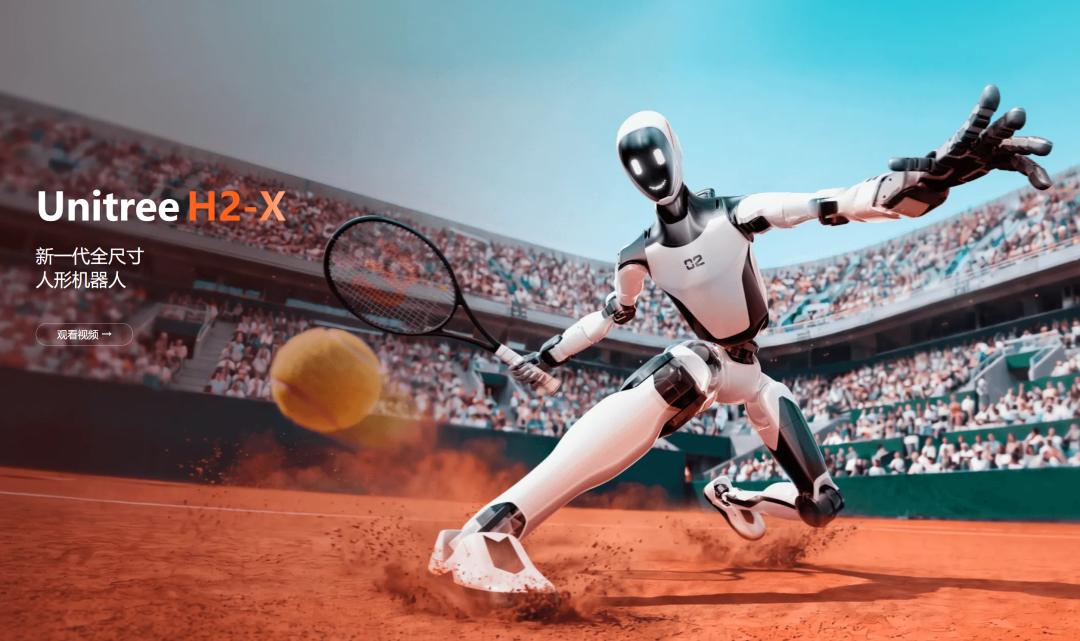
Image source: Unitree Robotics
Organizational constraints cannot be ignored either, and they are also hard constraints for whether the strategy can be implemented.
Unitree's most urgent task at present is to improve the "brain", including embodied large models, self-evolution systems, computing power clusters, etc. The organizational logic required for AI model competition is distributed decision-making, high-density autonomy of algorithm talents, and high tolerance for trial and error.
However, Unitree's management style is described by the outside world as highly centralized, and the company is summarized as "Wang Xingxing and others". Some investors bluntly said that he "is unwilling to delegate power, and it is difficult to find a partner in the AI algorithm direction". A report from *Caijing* mentioned that even a 100-yuan reimbursement in Unitree requires the CEO's signature. Whether such an organization can accommodate another top algorithm team that dares to argue with Wang Xingxing is another threshold for the "brain improvement" strategy beyond technology.
Precisely because self-developed "brain" has boundaries, the data gap cannot be filled by a single company, and organizational shift also takes time, Unitree has not chosen to build the "brain" alone. Wang Xingxing himself has said on many occasions that the success probability of Unitree's self-developed large robot model is less than 50%.
Since it is impossible to build a general-purpose brain by spending money alone, let more people test around Unitree's hardware.
In October 2026, Unitree launched the "Unitree Creation Plan", planning to incubate more than 200 ecological enterprises in the next five years. In the same month, Unitree jointly established the "Shan Yu · Chuang Plan" with HSG, focusing on early-stage projects in embodied intelligence, robot applications and key upstream and downstream technologies, participating in the way of "engineer + investor".
The essence of the two plans is to distribute the trial and error cost of scenario algorithms and industry applications to ecological partners, while Unitree retains the ontology, motion control, mass production and data entry.
Obviously, Unitree wants a bigger game, shifting from selling hardware to building an ecosystem. This is not only a pragmatic response to the boundaries of self-developed brains, but also a way to make up for the insufficient data collection and scenario coverage capabilities of a single company through the ecological network when the data bottleneck cannot be solved in the short term.
III. Managing the Time Difference
The strategy of exchanging time through ecosystem is theoretically feasible for Unitree, but whether the final effect can be established depends on its actual position in the industrial chain and how much bargaining space this position can bring.
From the manufacturing side, in China's humanoid robot industrial chain, Unitree is already the de facto chain owner, and its orders are pushing upstream components from customized parts negotiated on a per-order basis to serialized standard parts.
Generally speaking, the shift from customization to standard part catalog is a sign that an industry has entered the industrial stage from the manual assembly stage, and it is Unitree's orders that drive this transformation.
For example, Zhuoyu Technology produces robot drive components. In the early stage, it was basically customized through per-order negotiation. With the accumulation of customized orders, the products have converged into three types of serialized standard parts: planetary modules, harmonic modules, and linear modules, covering more than 95% of robots on the market.
Therefore, Unitree's binding force on the supply chain is much higher than most of its peers. According to the *Caijing* report, suppliers need to sign non-disclosure agreements with Unitree. If they hype externally in the name of Unitree, the cooperation will be terminated, with a liquidated damages as high as 5 million yuan, regardless of the size of