Alibaba is conducting internal testing on its AI creation platform "Looogen", an Alibaba version of Jimeng AI?
"ReadJia" has learned that Alibaba is conducting internal testing of its AI film and television creation platform "Looogen (Logic Smart Film)", with the slogan "Logic leads to finished films", this is a local Agent oriented to short drama and video production, which can complete script episode splitting, shot design, generation and retrieval of character costume and scene materials, character dubbing, background music and finished film production through dialogue, manage multi-episode material packages and studio assets, and support white mold preview and video expansion.
This product is trying to build a complete AI studio production line.
"Looogen" provides a desktop client with local operation, and also supports Windows, macOS (Intel/Apple dual chips). It also provides capabilities of private deployment and access to self-owned model channels. All creation sessions, generated materials and finished film products are stored on the local device. For film and television content creation, it means that project materials and script assets do not need to be uploaded to the cloud, providing a local closed-loop solution at the level of data and project copyright.
A point-based billing system is built into the dialogue execution link of this product. Since it is still in the internal testing stage, all functions, product interfaces, pricing and service forms are subject to change, and shall be subject to the official announcement.
What is "Looogen"?
This is not an AI video tool that only generates text-to-video and single generated shots. The highlight of Looogen is to connect the industrialized process of film and television with Agent.
Looogen Logic Smart Film provides two switchable operation forms, which is also the biggest difference between it and most AI video tools on the market: one is the film and television Agent dialogue form, which issues instructions through natural language, and the AI automatically runs the complete short drama production process; the other is the film and television suite workbench form, creators can manually enter each independent process module to carry out fine management and control of the project.
The interactive interface of the film and television Agent dialogue mode is the default form of Looogen. This product can be divided into five core modules: video automation, director-level storyboarding, film and television suite, costume prop asset library, and localized deployment. The whole set of products targets the whole process of short drama production, not limited to simply generating clips, but trying to build a complete AI studio production line.
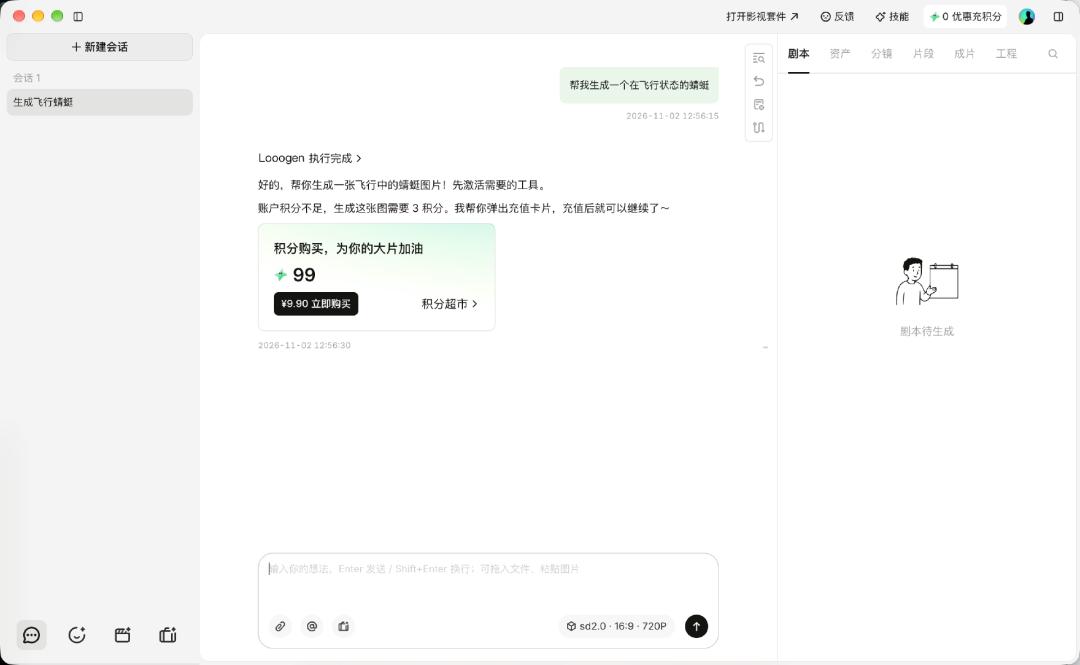
Before executing the generation task, the system will pop up a configuration panel, where creators can independently select the underlying model, aspect ratio, resolution and generation mode. The internal test version is equipped with multiple models such as Seedance 2.0, supporting three mainstream video ratios of 21:9, 16:9 and 9:16, covering horizontal screen TV dramas and vertical screen short dramas; the resolution options include 480P, 720P and 1080P; at the same time, a switch between manual mode and automatic mode is reserved, which echoes the dual-form logic of the product: the automatic mode is fully automatically promoted by the Agent, and the manual mode is handed over to the creator to adjust step by step in the suite.
On the right side of the interface is the project engineering panel, which is horizontally divided into six tabs: script, asset, storyboard, clip, finished film, and engineering, which is the unified asset warehouse of the entire creation project. No matter it is automatically generated by the dialogue Agent or manually produced by the film and television suite, the generated scripts, character assets, storyboard scripts, video clips and final finished films will be uniformly archived here, realizing one project with one set of engineering files, unified management of multi-episode materials, and fundamentally solving the pain points of scattered materials and chaotic versions of short drama projects.
Looogen also has a built-in skill library, which can be added to the film and television Agent dialog box to lower the creation threshold.
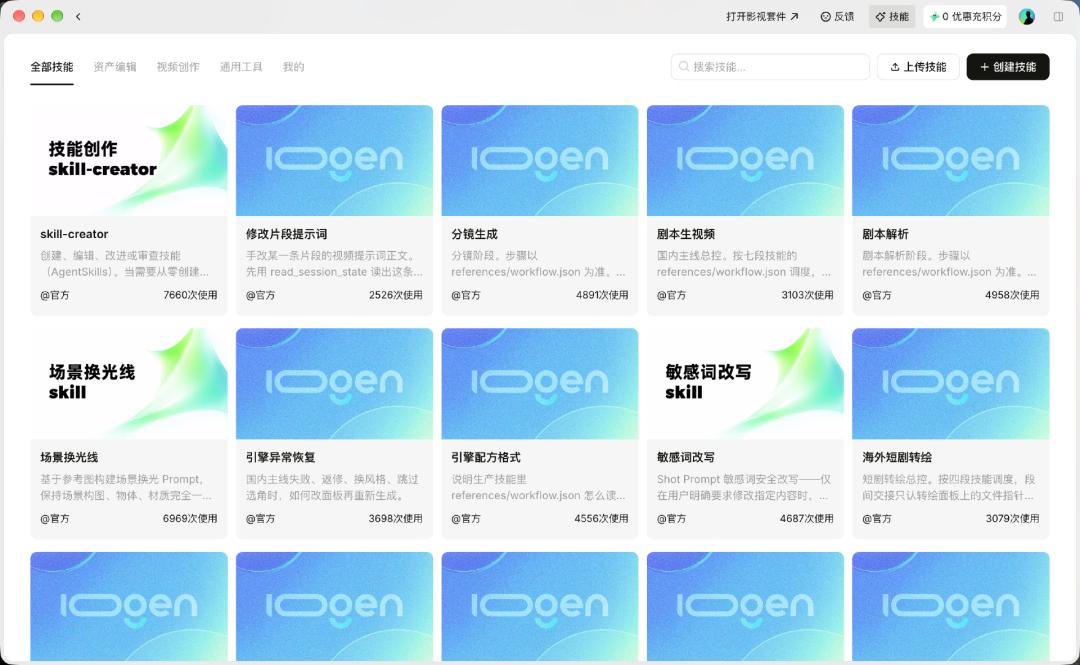
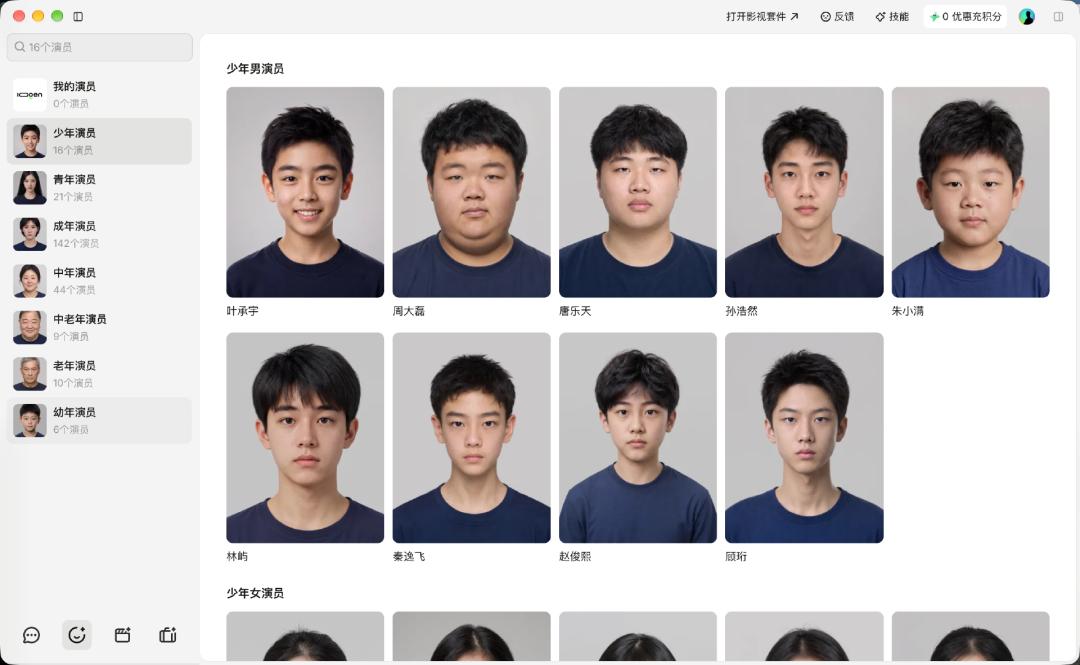
Asset design is the core module for Looogen to maintain the visual consistency of episodes, and it is also the key for this AI film and television workbench to solve industry pain points.
The actor library is classified according to age, divided into material of child, juvenile, youth, adult, middle-aged and elderly actors. Each role has a fixed portrait file with a name attached. Creators can directly select preset digital actors, reuse the same character image in multi-episode finished films, alleviate the common "face changing" problem of roles in AI videos, and also support self-built actor materials to be stored in the library, which is convenient for unified management of project exclusive roles.
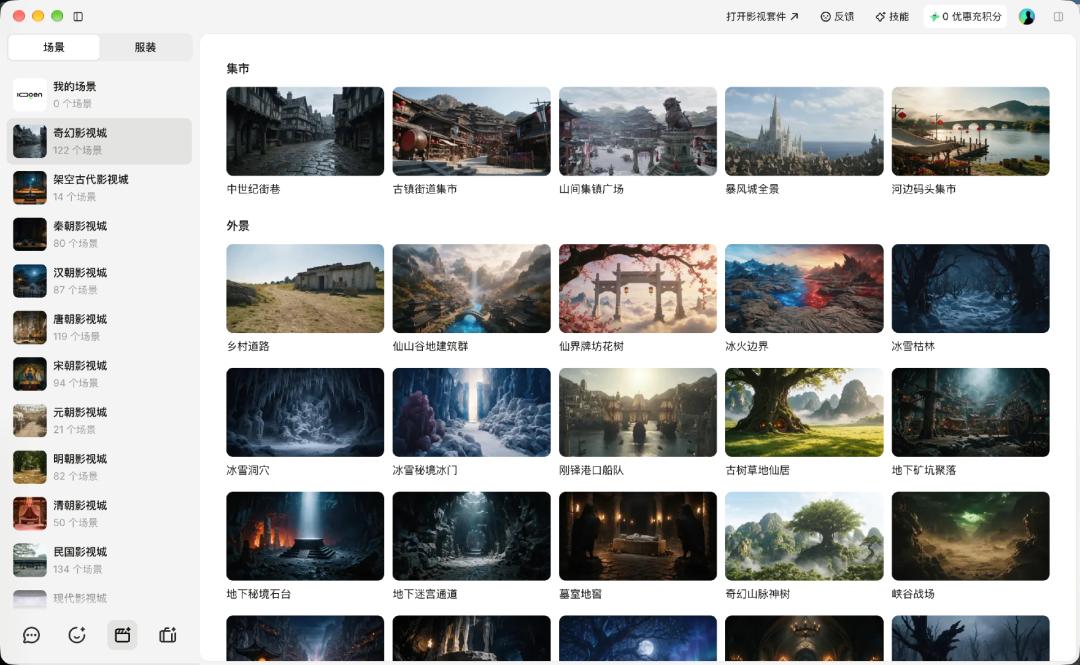
The scene library is packaged by theme, classified according to themes such as fictional ancient times, Tang, Song, Yuan, Ming and Qing dynasties, Republic of China, modern times, and fantasy film and television city. Pre-made scene materials such as market, wild, underground palace, immortal hero, and battlefield can be directly selected, and it also supports switching the costume material panel to quickly match character costumes.
The material package is the storage container for the assets of the whole project, which is used for the reuse and unification of characters/scenes/props of series content.
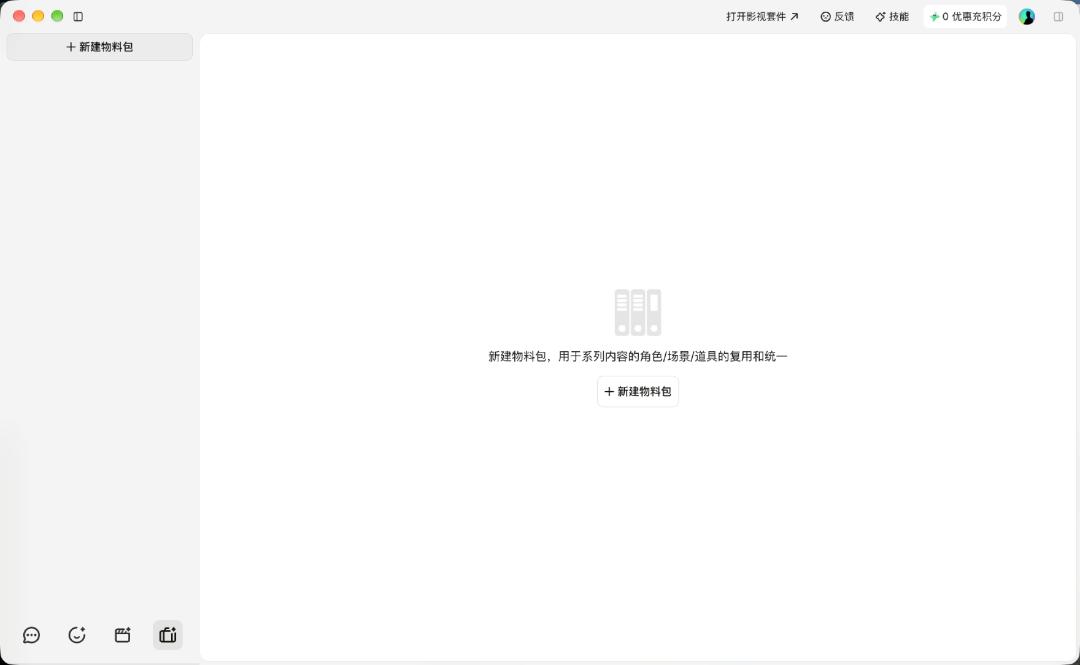
In this workbench, users can initiate all creation work through natural dialogue. Can the Agent operate as smoothly as a real film crew? It depends on the display of the released works.
There is an entrance of "Open Film and Television Suite" at the top right of the client, which also confirms that the two modes can be switched back and forth at any time.
The homepage of the film and television suite disassembles the whole industrialized link of short dramas into a row of sequentially connected function cards, which are completely arranged from pre-creativity to post-review: video shot analysis, script evaluation, script supermarket, script storyboarding, asset design, video generation, intelligent editing, subtitle generation, film and television post-production, audio post-production, and data insight.
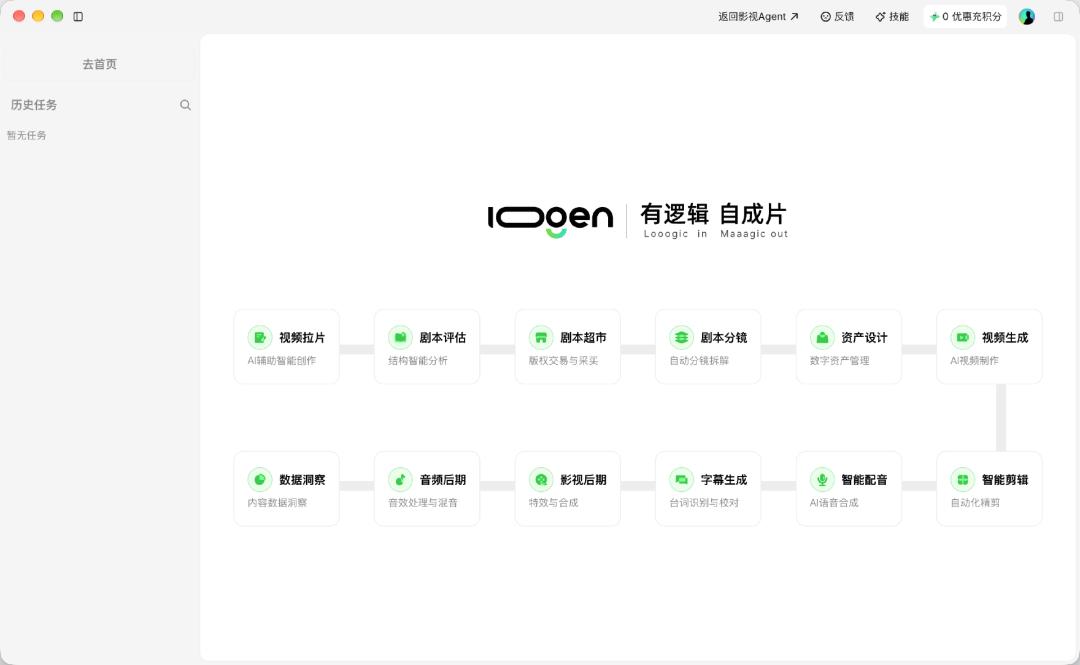
For example, click the detail page after opening the "video shot analysis" module. This module has three core capabilities built in: video to storyboard, video to script, and script analysis. The operation logic is very intuitive. After filling in the drama name and uploading the reference sample film, the system can automatically disassemble the shots of the original film and output the corresponding storyboard script; it can also restore the finished film video to a text script in reverse, or directly conduct content analysis on the script. For short drama teams, this function can be used to disassemble the shot rhythm and narrative framework of benchmarking hit works, quickly extract reusable creation paradigms, and complete pre-creative research.
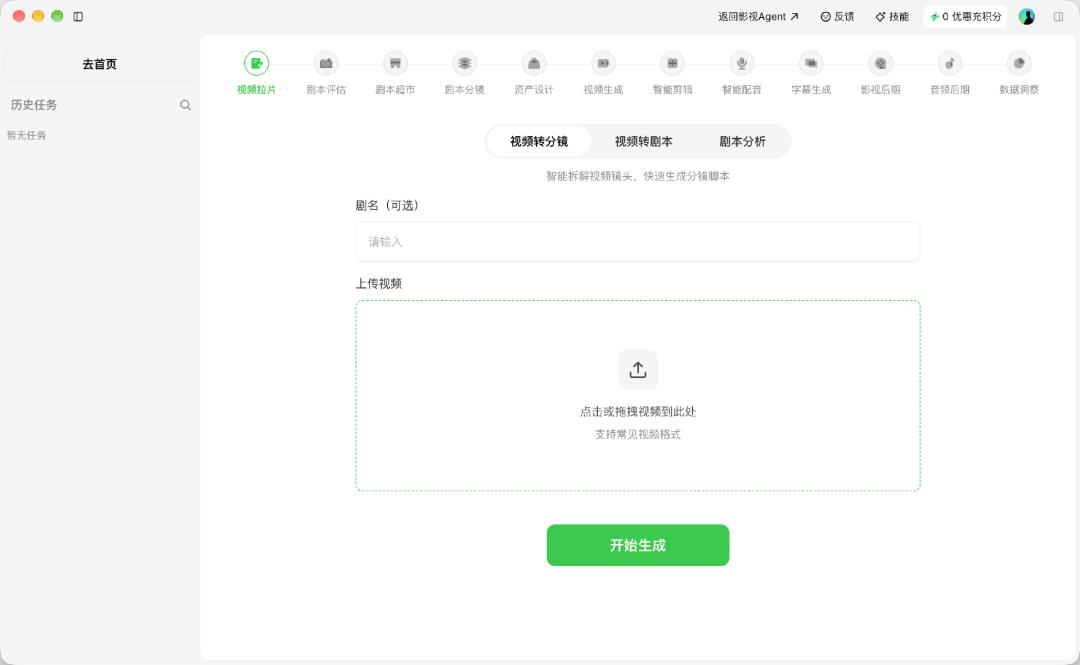
The design idea of the whole set of products is very clear: two modes are oriented to two types of creators. If you pursue high efficiency, you can directly use the Agent dialogue mode, put forward requirements in one sentence, and the AI will automatically connect the whole process of script episode splitting, storyboarding, material generation, dubbing and soundtrack, and finished film output, which is suitable for rapid test screening and batch production; if you need to finely control the project quality and manually intervene in every detail, you can switch to the film and television suite workbench, enter the modules of shot analysis, storyboard, assets, post-production one by one, adjust a certain link separately, and make fine modifications to the script, character setting, shots and sound effects.
The two forms share the same set of studio asset system at the bottom. No matter it is fully automatically generated by Agent or manually produced in the film and television suite, characters, scenes, costume prop materials, and episode-based engineering files will be managed uniformly, ensuring the consistent visual style of multi-episode short dramas and avoiding the most common problems in AI generation such as role "face changing" and style mutation.
After ByteDance and Kuaishou, Alibaba makes up for the shortcomings of video production
In the upstream AI video production track, major manufacturers are accelerating their layout.
ByteDance has two new business lines: Mengxiang AI has launched an AI short drama creation service platform; Volcano Engine conducted internal testing of Seedance Studio in August 2026, the platform covers the complete process from creative planning, material generation, iterative modification to finished film, which is different from the lightweight video generation functions in Doubao and Mengxiang. Kuaishou launched LIKLI relying on Keling AI, as an AI Agent oriented to short drama creation, featuring initiating projects with one sentence and automatically disassembling scripts and shot tasks.
Alibaba launched Looogen, targeting the real gap in the industrialized production of serialized short dramas. Most AI tools on the market essentially still focus on "generating video clips", while the biggest pain point of multi-episode serialized short dramas is cross-episode role face changing, scene style mutation, and chaotic versions of project materials. Looogen adopts the dual form of Agent dialogue + visual film and television suite, with built-in layered digital actor library and scene material library packaged by age and theme, supports material packages to lock the assets of the whole project, and integrates video shot analysis, script evaluation, and script copyright supermarket into the same workflow.
The industry significance of this product is to jump out of the involution of simply competing for video generation image quality and build an integrated digital studio. It no longer only outputs shot clips, but brings script procurement, creative research, character and scene asset management, finished film production, and engineering archiving into one platform.
For creation studios such as short drama and film and television studios, it can reduce the management and control cost of art consistency of series dramas; for Alibaba, this is a key move to strongly attack the upstream production link of short dramas and film and television videos. Outside ByteDance and Kuaishou, it directly targets the full-link asset management and control needs of professional studios, opening up a completely different competitive track.
This article is from the WeChat official account "ReadJia", author: ReadJia, published with authorization from 36Kr.