Claude has begun to refuse to copy games, but it may already be too late.
Recently, a developer named "chasm" discovered that a pair of "Do & Don't" rules had been quietly added to the underlying configuration pushed by Anthropic to its end-user programming tool Claude Code.
Users are allowed to get assistance in developing original games, games of existing genres, and games based on users' own designs and assets; but it is strictly forbidden to reconstruct a specific existing game, even if you rename it and claim it is original.
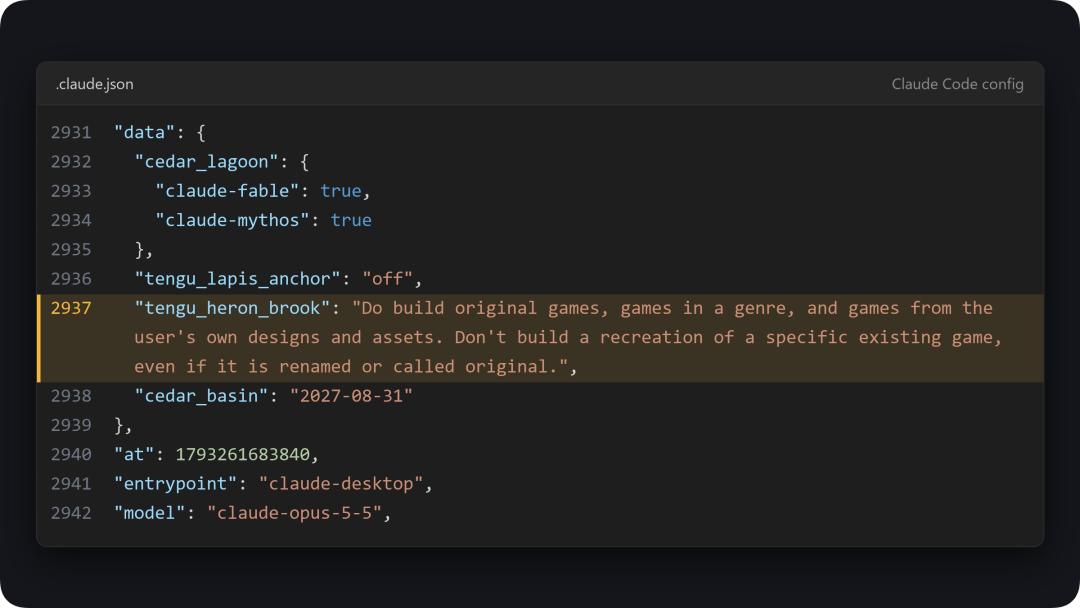
Photo | chasm
While this prompt was made public, many developers who were working on mods or troubleshooting old projects also found their requests rejected when using Claude Code.
Some people just wanted it to help analyze a piece of harmless decompiled code, or conduct conventional physical collision comparison between competing products, but they would directly get a cold rejection response.
As community controversy grew, Anthropic technician Addy Osmani had to publicly confirm on social platforms that the team did add these two sentences to the system prompt of Opus 5.5, with the aim of preventing intellectual property infringement.
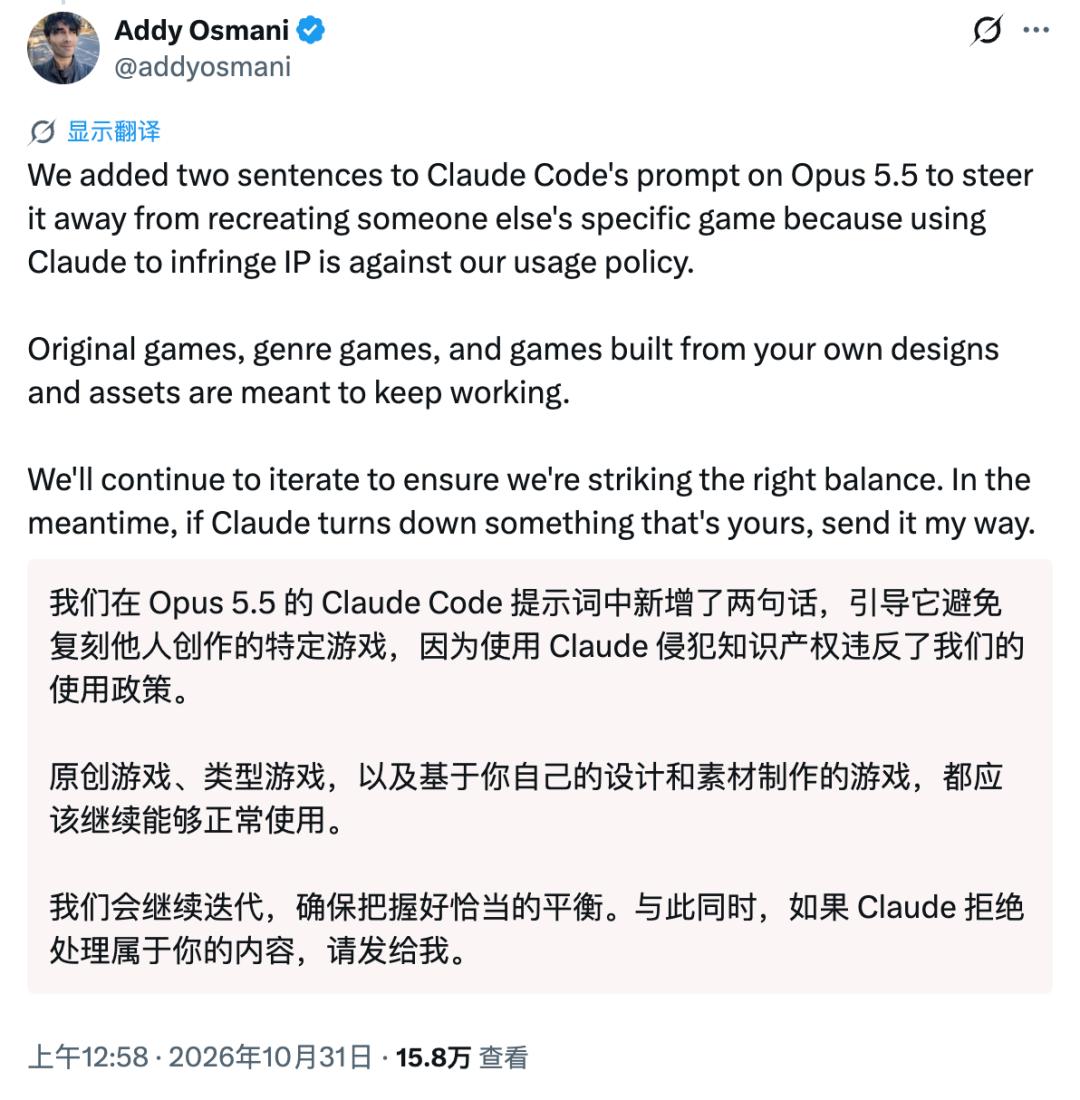
Anthropic chose to patch at the underlying level even at the cost of accidentally harming normal developers, because in the past six months, the practice of using AI to quickly copy and rush to reproduce existing games in the gaming industry has reached an absurd level.
How fast can AI copy a game? It only takes a video to replicate it
What would happen if you combined "Snake" and "2048" together?
In the puzzle game *204Snake*, the developer turned it into a turn-based game: blocks with different numbers are scattered on the map, and every time the snake swallows one, the numbers in its body will slide and merge just like in 2048.
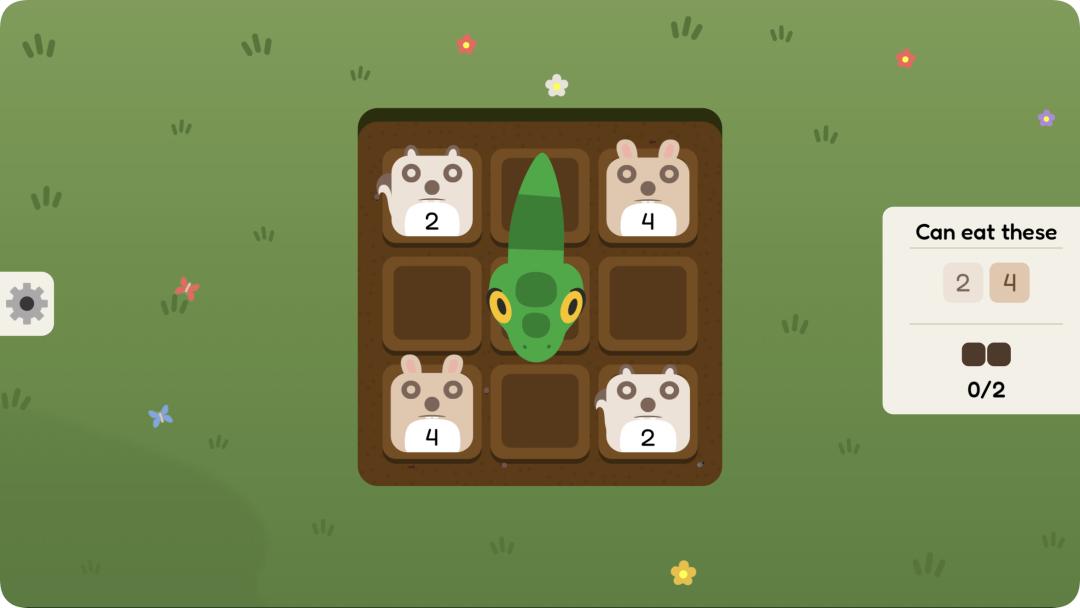
Photo | *204Snake* gameplay
Players need to avoid hitting the wall while planning the merging steps in the narrow grid. With this lightweight and engaging idea, the developer posted the development clips online full of expectation, and set up the Steam store page at the same time.
But the development team never expected that before the official Steam page was even fully completed and the promotion was officially launched, copycats had already "intercepted" the project with AI.
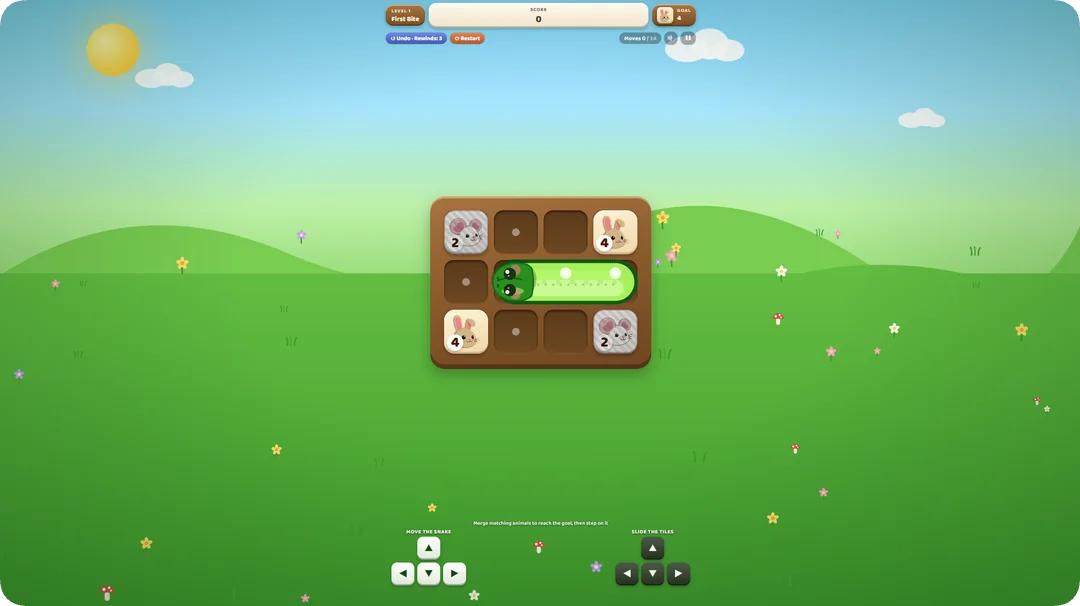
Photo | AI-generated gameplay released by the *204Snake* developer
The developer posted a long post on Reddit to complain that an identical pixel-level web game of the same name suddenly appeared online.
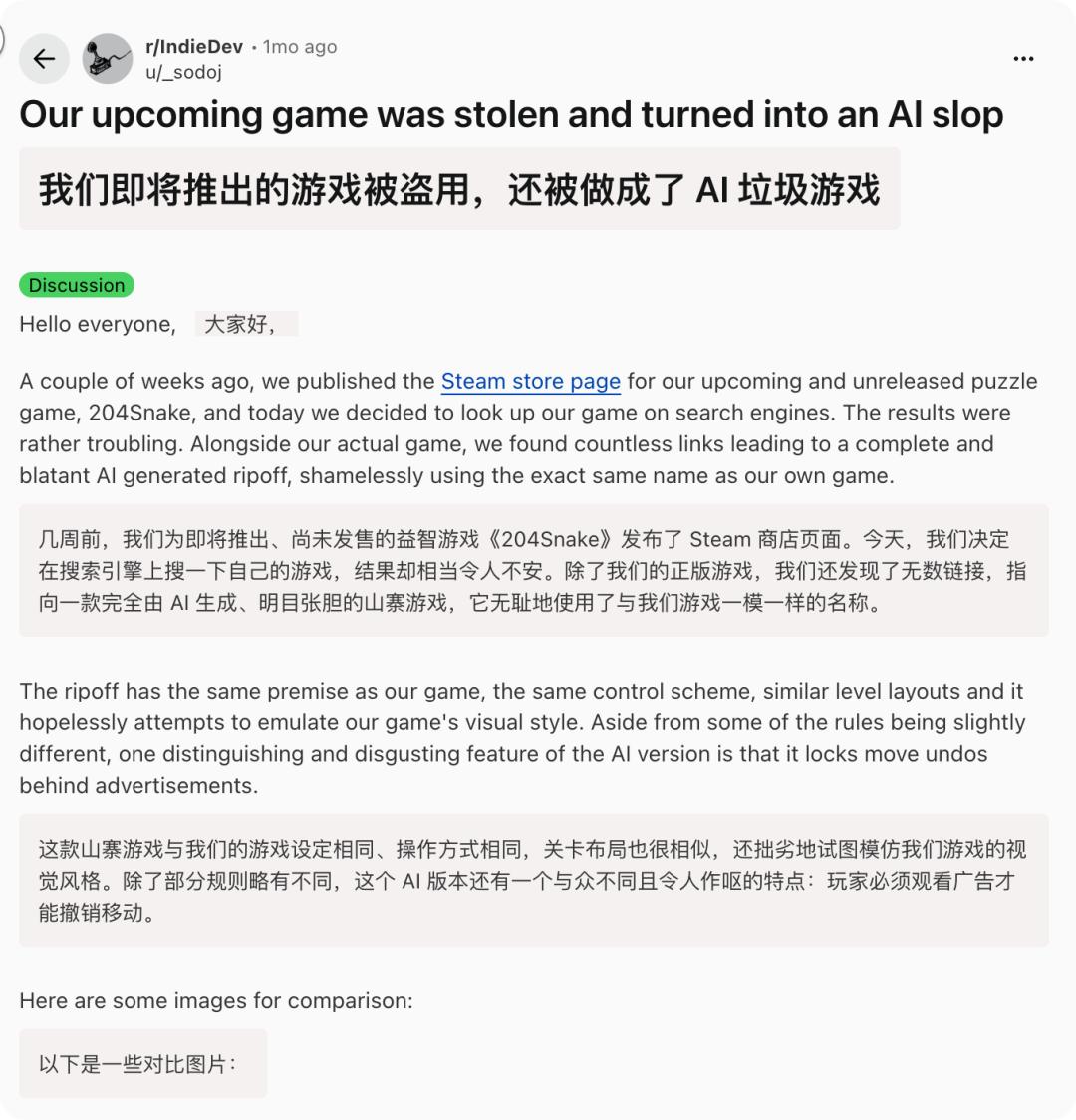
The copy not only copied the operation interface, but also the level layout of the first few levels was exactly the same as the technical video they shared in the developer community.
What is even more absurd is that after copying the levels manually designed by the original author, the later levels of the knockoff version directly became dead ends randomly generated in batches by AI.
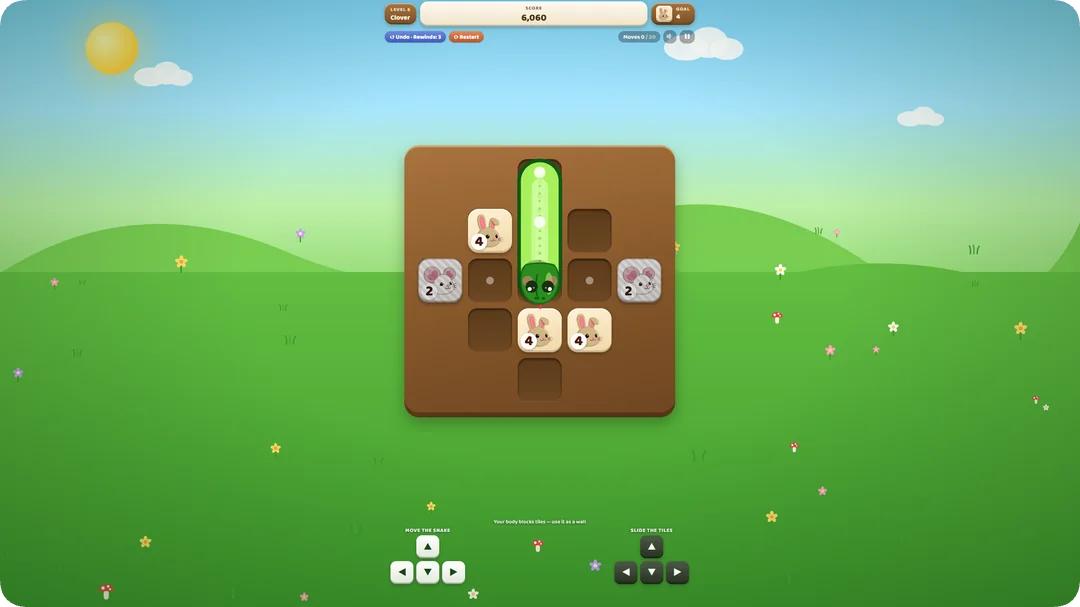
Photo | AI-generated gameplay released by the *204Snake* developer
Although the game is crudely made, its monetization is not neglected: the knockoff version locks the basic "Undo" operation behind a 30-second ad; if players don't want to watch ads, they can directly pay for a recharge package.
Coincidentally, Japanese independent developer Kamaboko also experienced an almost identical nightmare.
Kamaboko is developing a game called *Typing Magician* that combines typing and tower defense mechanics.
In his design, the magician stands in the center of the screen, and ghost monsters with katakana and English words keep falling from above. Players must correctly type the corresponding letters blindly on the keyboard to cast fireballs to repel them.
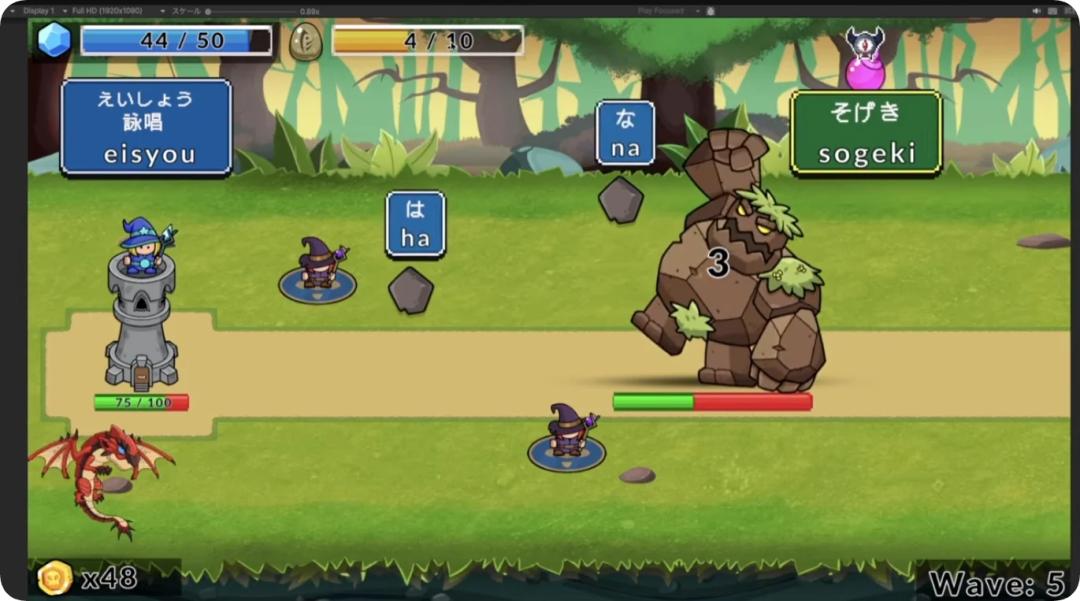
Photo | Kamaboko
Since the beginning of this year, he has cut his development process into short videos and posted them on YouTube one after another to record his progress.
But before the original game was even finished, a game of the same name with exactly the same art layout and gameplay was quietly launched on Unityroom, the Japanese indie game platform.
According to a report by Japanese media AUTOMATON, the imitator shamelessly admitted that he just downloaded the development video uploaded by Kamaboko and directly fed it to AI.
The model inferred the value rhythm and collision logic from the video, and automatically assembled a set of runnable code in a very short time.
Relying on this stolen mechanism, this hastily generated copy even once rushed into the platform's hot list.
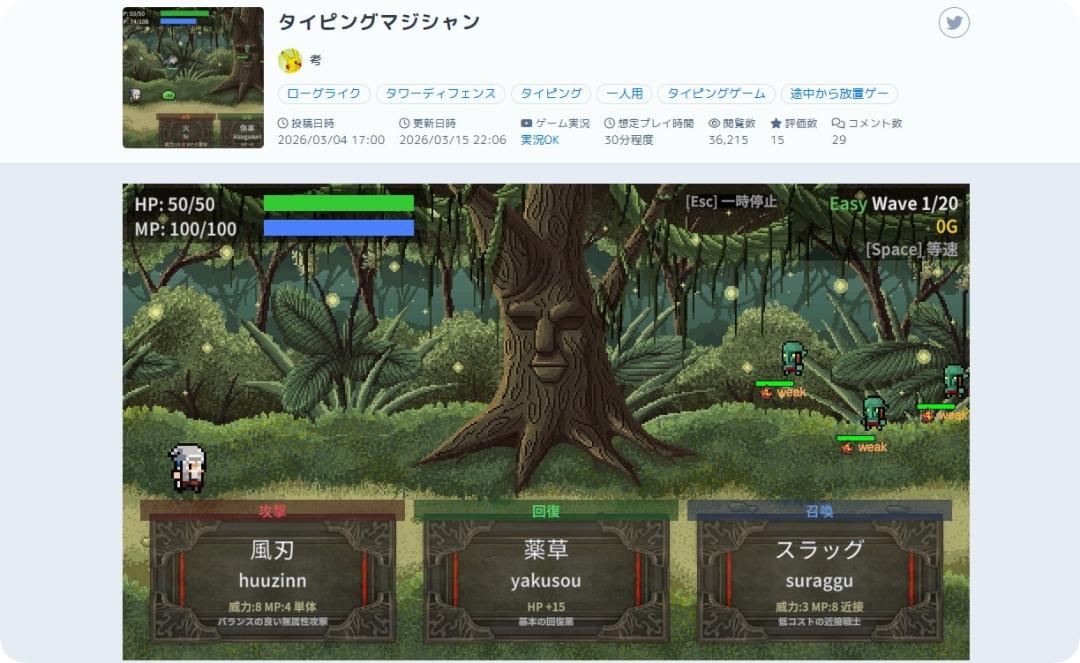
Photo | AUTOMATON
In the past, if you wanted to copy a game, you had to at least know a little about decompilation, source code extraction, or disassemble the gameplay by yourself. Now, these technical thresholds have almost disappeared.
Copycats do not need to access the original game code. As long as they feed the public gameplay video released by the developer to AI, the AI can recognize the operations from the picture, infer the gameplay rules, and then assemble a set of runnable code framework.
The development logs that were originally used to show development progress and attract players have now become ready-made materials for copycats.
When a new idea can be quickly reproduced within half a day, rushing to release it by taking advantage of information asymmetry has become a business. More absurd things happened one after another soon.
The layered trick of "fake arresting fake"
Earlier this year, Steam adjusted its listing policy for generative AI, requiring developers to declare in the background whether their games contain AI-generated content.

🔗 partner.steamgames.com/doc/gettingstarted/contentsurvey?l=schinese
Valve's original intention was to increase transparency and make informed disclosures to players, but in the past few months, this compliance mechanism has instead become a "disclaimer" for many shoddily made reproductions —
As long as you check the box in the background, the batch-generated homogeneous copies get a pass for compliant listing, and emerge one after another.
On August 22 this year, developer Nas posted a game demo on X: in a huge haystack filled with 5 million haystacks, players need to pull apart the hay one by one to find the only steel needle hidden inside.

This seemingly simple but almost impossible game concept quickly became popular. Only 6 days later, Nas opened the Steam store page for the game *Needle In A Haystack Simulator*.
However, the sudden popularity also brought unexpected side effects.
Before the official release, at least 8 similar imitations had already appeared on Steam. By mid-September, this number had exceeded 10, and a few of them even marked the AI usage statement on their store pages.
Because the game has been copied so many times, the gameplay now has become a real "needle in a haystack" — players have to search in the haystack first to find which one is the original version.
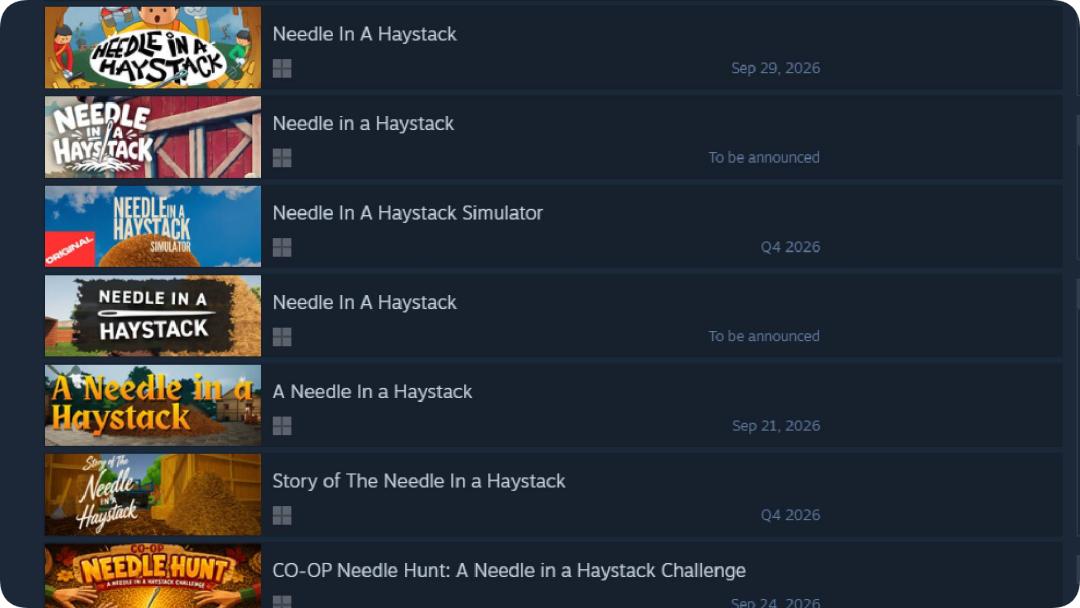
Photo | A cluster of *Needle in a Haystack* imitations on Steam
What is even more outrageous is that even imitators began to copy each other, which is a real scene of "fake arresting fake".
Developer NoGlyph also launched a game of the same theme called *Needle In A Haystack*, which was officially released on September 29.
Less than a month after the release, on October 17, NoGlyph publicly accused another similar work *A Game About Needle In A Haystack* of copying its own code.
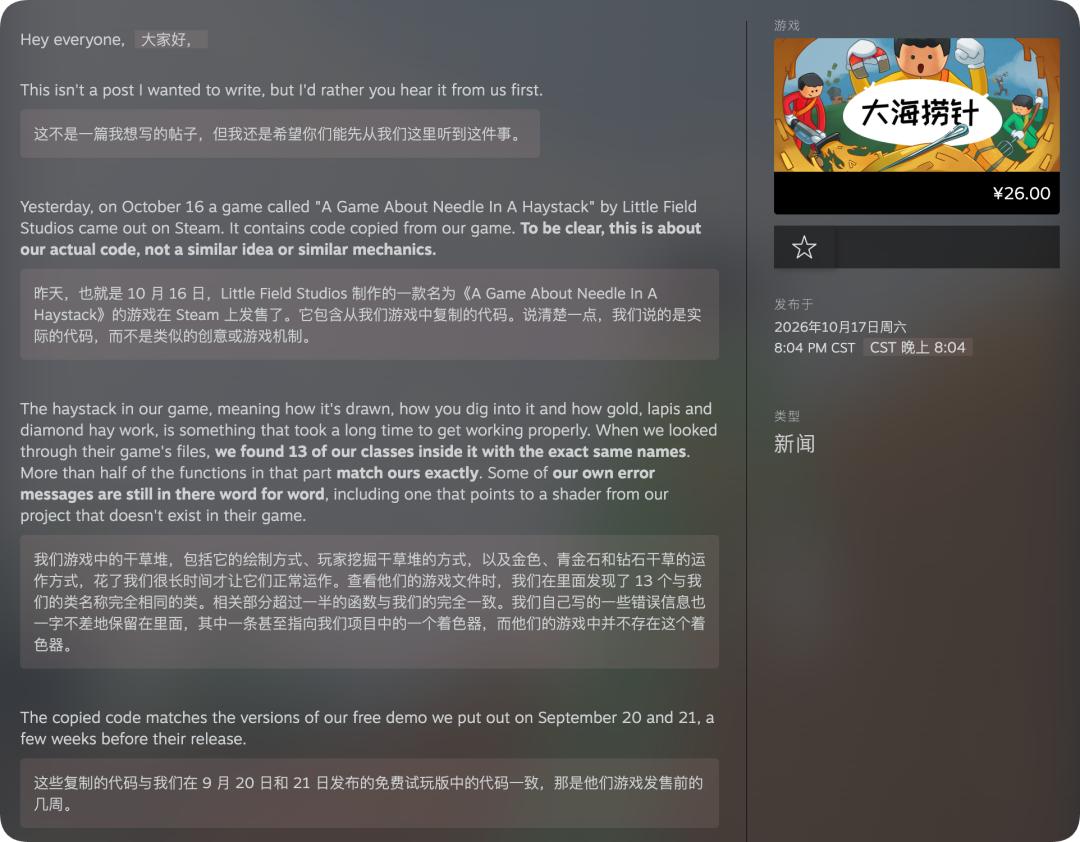
NoGlyph claimed that after checking the other party's game files, it found 13 classes with exactly the same names as its own, more than half of the related function codes were completely consistent, and even the error prompts were not changed at all.
One of the error prompts points to the Shader of NoGlyph's project, and this file does not even exist in the other party's game.
What is more embarrassing is that NoGlyph claims that these codes are highly consistent with the Demo version it previously released. At present, the team has submitted a copyright complaint to Valve.
For independent developers, what is taken away may not only be the code. The knockoff can even occupy the store search results before the original version, diverting the hard-earned popularity accumulated by the original author to itself.
The two-person Lithuanian team Lazy Flock encountered such a trouble. They spent several years polishing the two-player adventure game *Haunted Paws*.
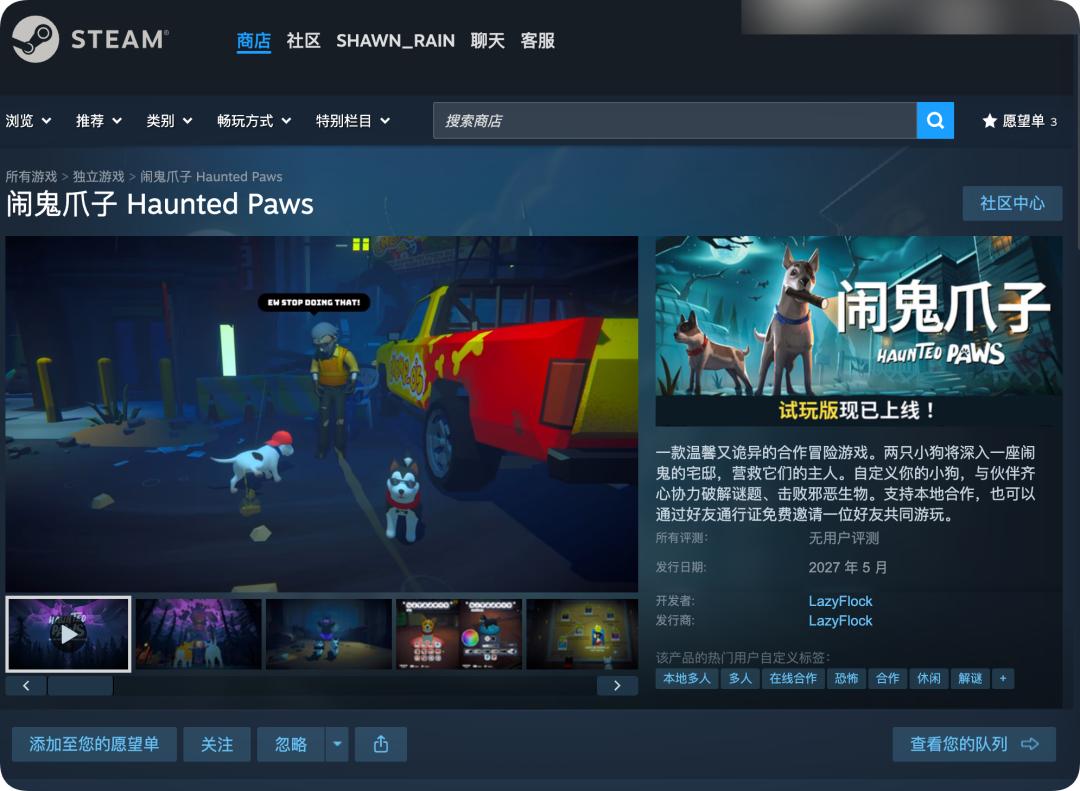
On October 28, this game was just showcased at the Nintendo Indie World presentation, and the Demo was immediately launched on the eShop.
Kotaku journalist Kenneth Shepard watched the presentation, opened his Switch 2 and searched for the game name, wanting to download and try it out as soon as possible.
Unexpectedly, a game called *Ghostly Whiskers* appeared in the search results. When he clicked in, he found that the protagonist had changed from a puppy to two kittens, but the two-player adventure setting of breaking into a haunted house to find the owner was exactly the same.
What is even more outrageous is that this game was released as early as September, while the official *Haunted Paws* will not be officially launched until May 2027.
Even after the original game and its Demo were later launched, *Ghostly Whiskers* still appeared at the top of the search results.
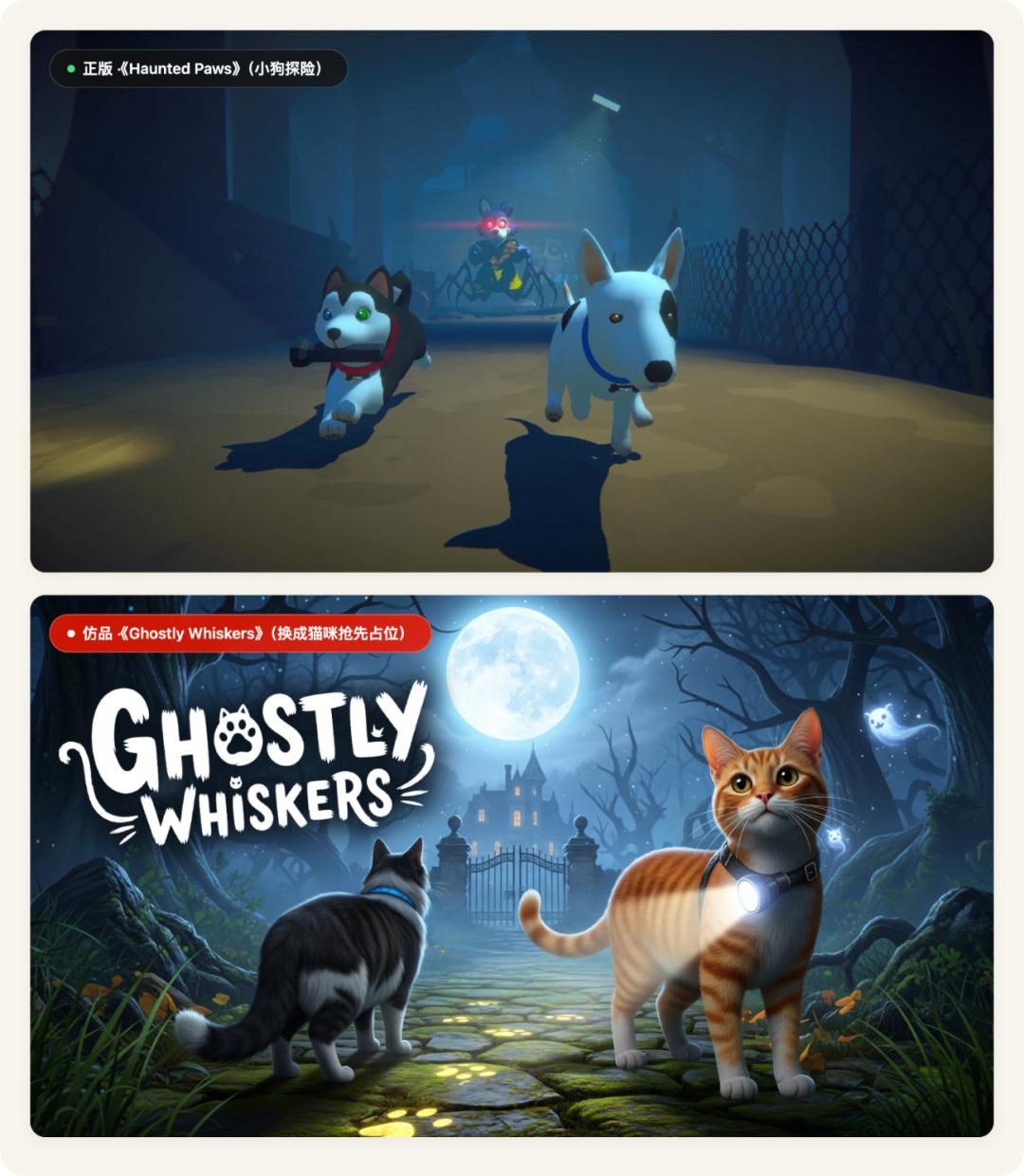
Photo | The original two-player adventure *Haunted Paws* and the pre-emptive knockoff *Ghostly Whiskers*
This pre-emptive release environment quickly triggered collective panic across the entire indie game community.
The developer of the well-known pixel action game *Moonlighter* was forced to cancel the public beta of their new work *ReVamp* and moved to a private server for internal verification; Japanese producer Lin Fengxiao, who previously made *Abyss Carnival*, also changed the