GPT-6.2 Astra is coming, the mysterious "dual-model" briefly appears on the API, and OpenAI swiftly withdraws it.
OpenAI's next ace is already ready.
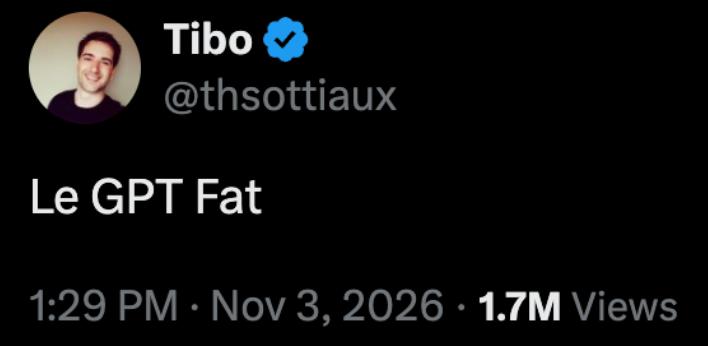
Yesterday, Tibo, head of Codex, dropped a code phrase "Le GPT Fat", and the whole internet is wildly speculating that GPT-6.2 Astra is coming soon.
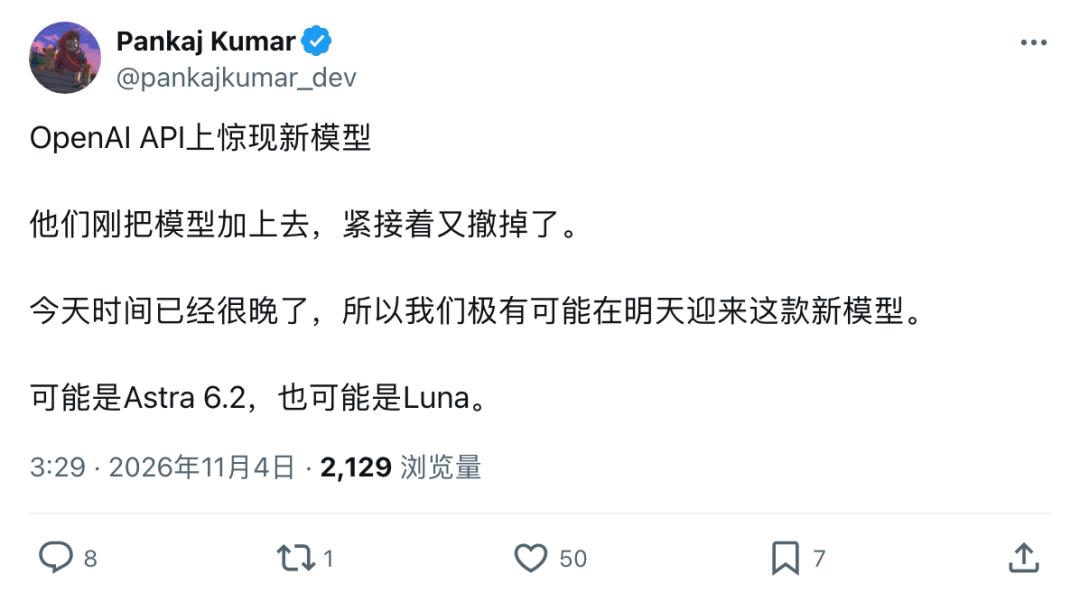
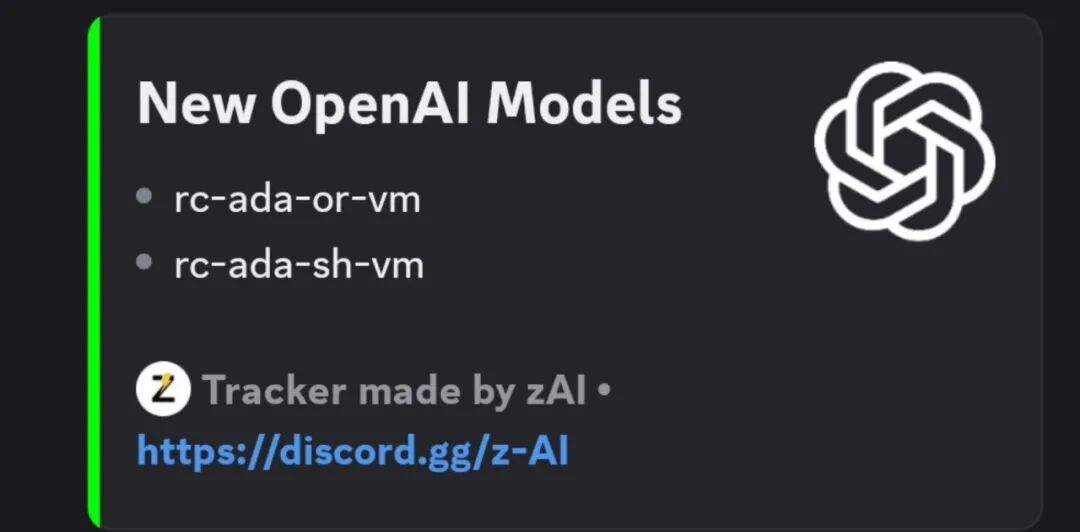
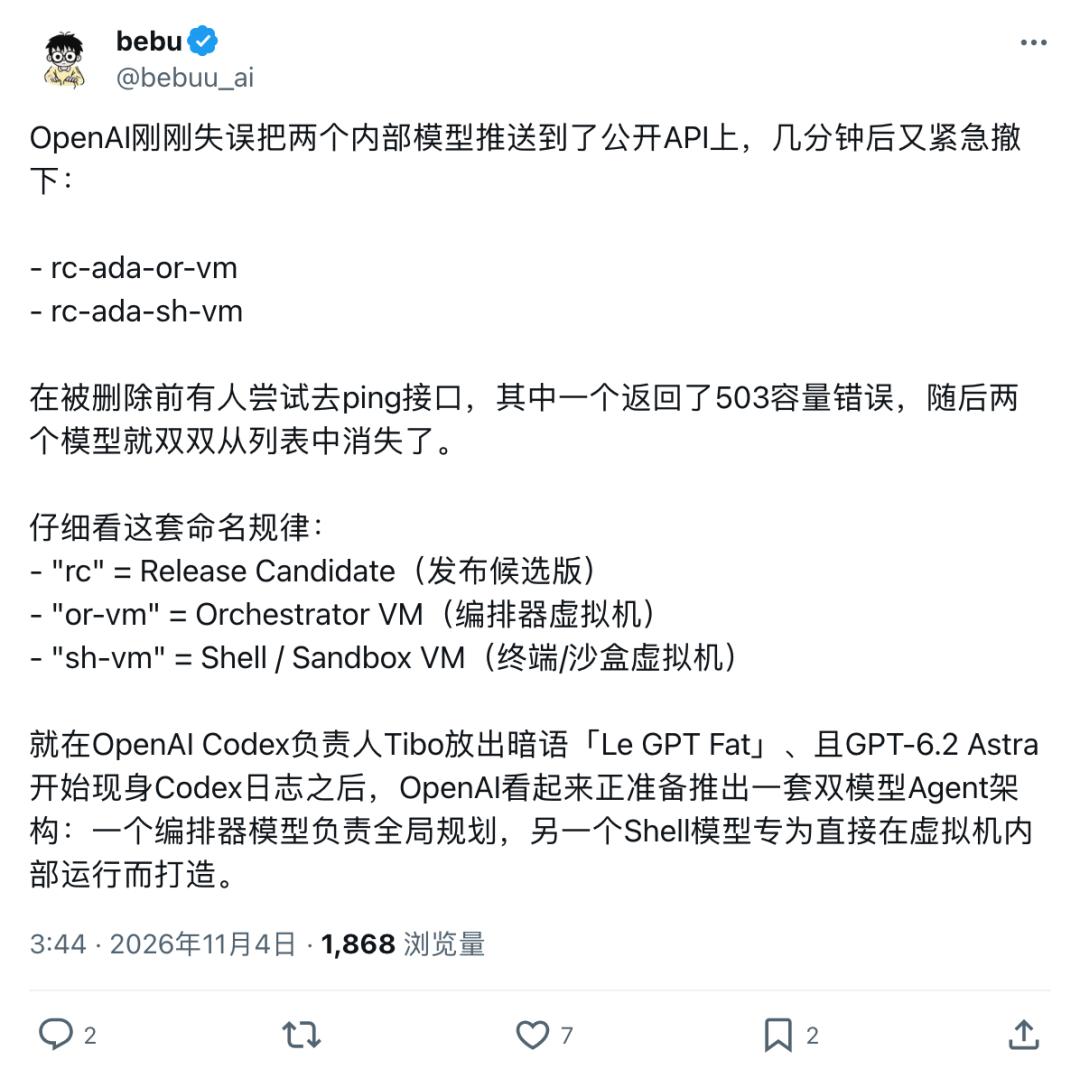
Coincidentally, right today, two never-before-disclosed mysterious model IDs suddenly appeared in OpenAI's official API model list —
rc-ada-or-vm
rc-ada-sh-vm
Just a few minutes later, OpenAI quickly removed these two models from the API list, and all developers who initiated calls fast enough encountered a "503 capacity limit error".
Also today, OpenAI's official blog published a long article on hardware engineering, quietly revealing an unreleased "mysterious new internal model".
Its entry-level score has surpassed the highest full-spec version of GPT-6 Astra, peaking at 87.5%.
OpenAI's next-generation killer feature that it has kept under wraps for months can no longer be hidden.
GPT-6.2 Astra Leaked in Internal Test
Texture is Comparable to Fable 5.5
Almost at the same time, netizens shared a number of test results of GPT-6.2 Astra, directly pushing the expectation of the whole internet to the maximum.
The long time-series demo of "pelican riding a bicycle by the sea" is full of details and stunning texture, and its rendering effect can even rival Fable 5.5.

Moreover, GPT-6.2 Astra can now generate animations purely by writing front-end code manually, which is fully usable.
In the figure below, it completes the animation formation from 0 to 1, but it still lags far behind Fable 5.5 in terms of lens design and detail granularity.
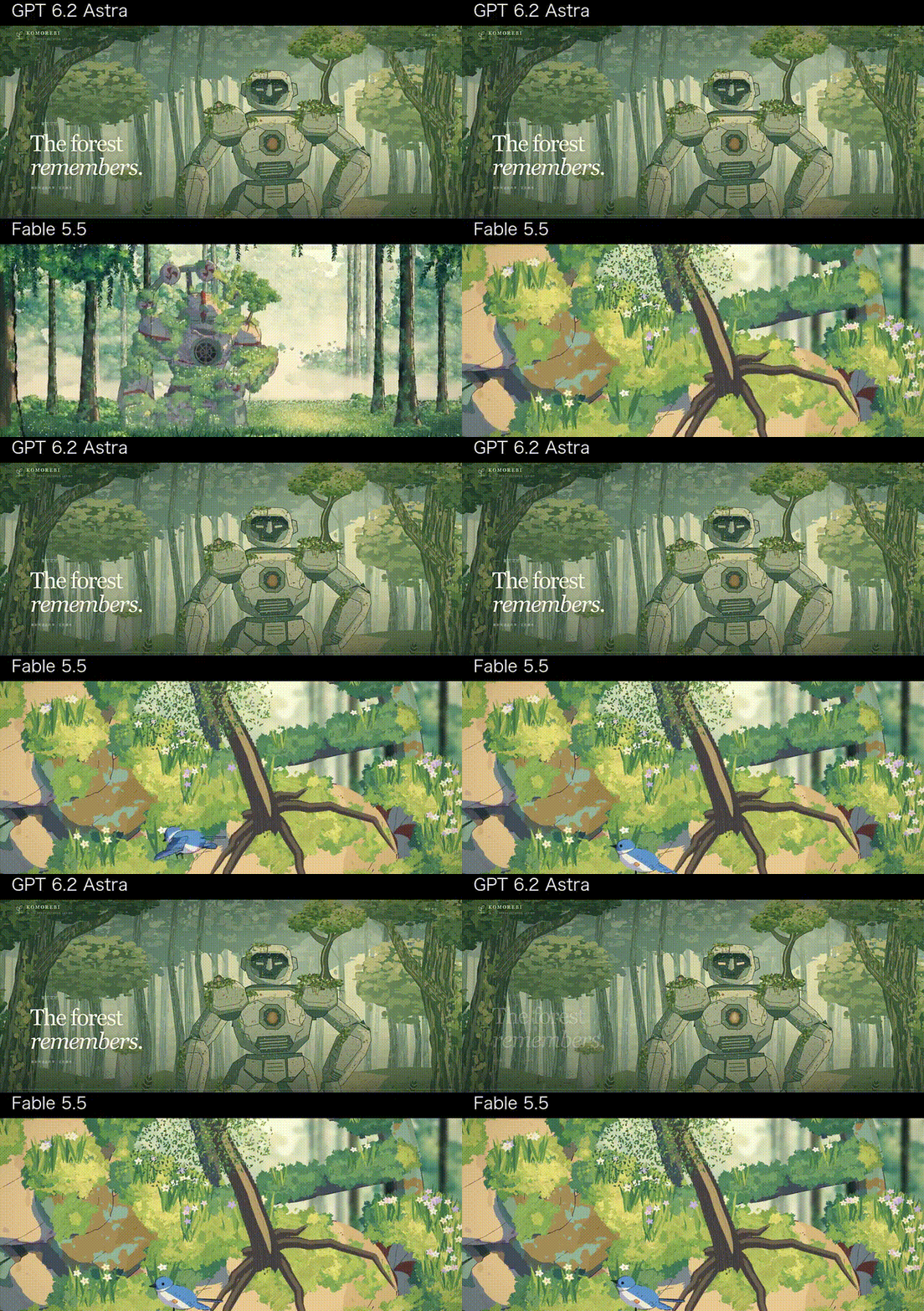
The same animation made by the well-known developer Token Gremlin was generated by GPT-6.2 Astra itself.

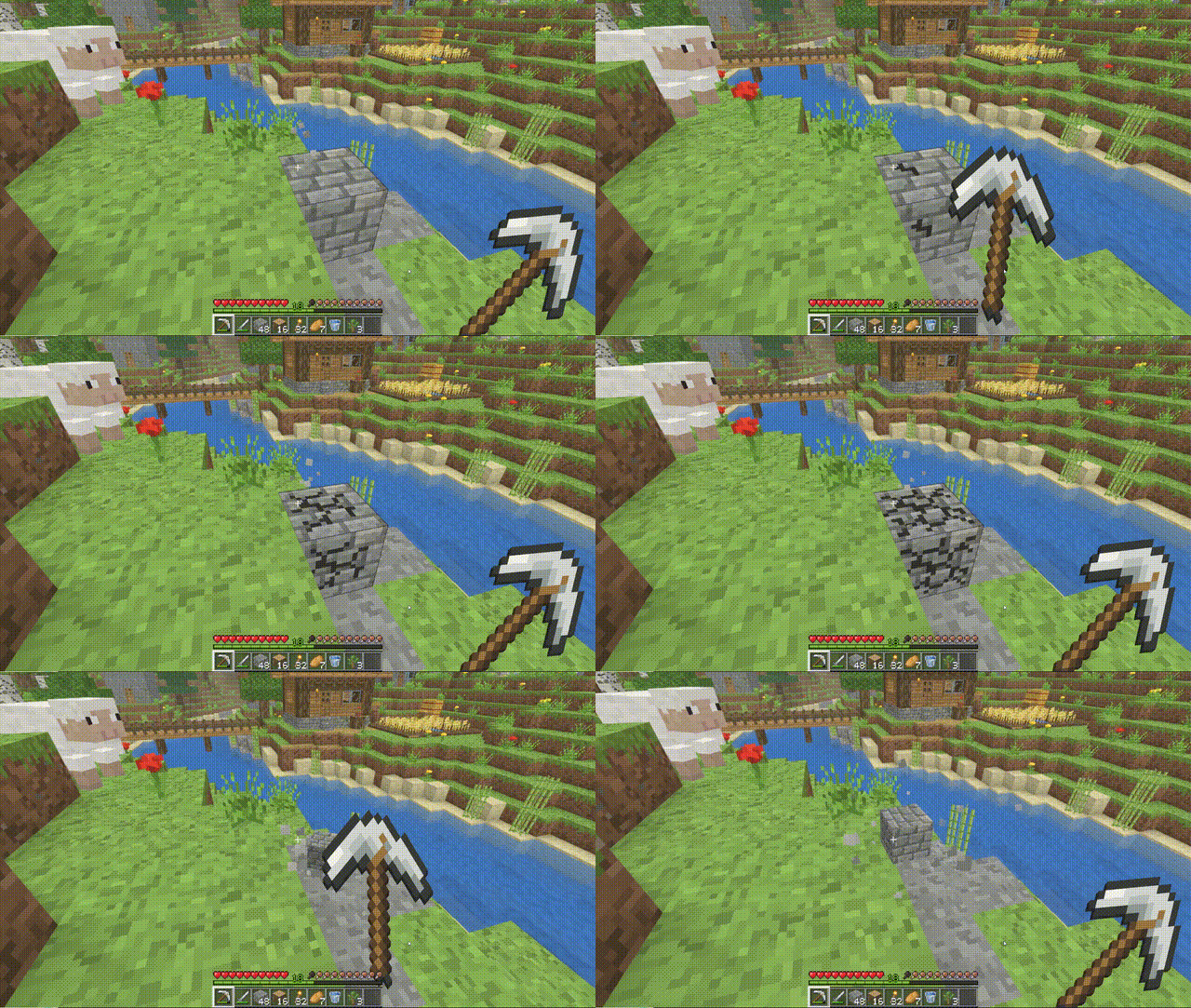
For the classic version of "Minecraft", it first generates an SVG image, and then generates an animation based on it.
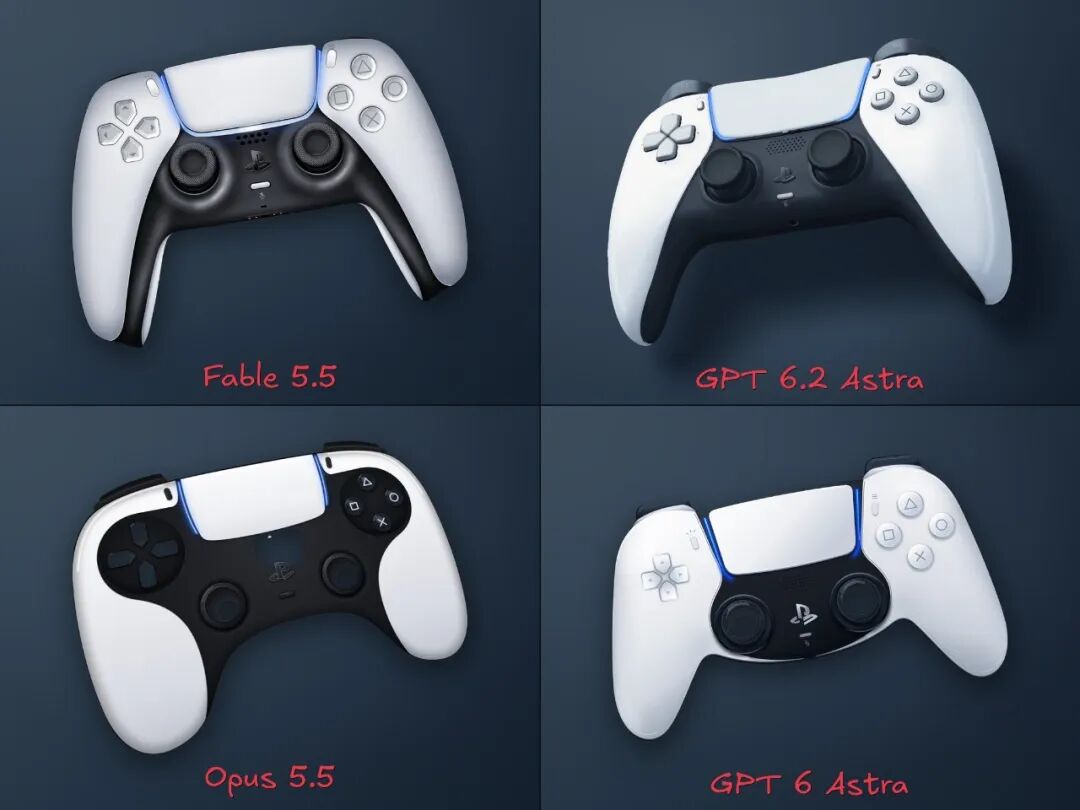
In the SVG test where four large models draw the PS5 controller at the same time, GPT-6.2 Astra and Fable 5.5 are completely the new SOTA.
Removed Quickly After Being Listed for Several Minutes
Dual-VM Architecture and GPT-6.2 Twin Models Emerge
This late-night packet capture was simultaneously caught by developers Pankaj Kumar, Pradeep Kapoor, and the automated tracking sentry AI Tracker Bot.

According to OpenAI's usual release rhythm, new models often go through a short mounting test on the production environment API gateway 24 to 48 hours before the official announcement.
For the two leaked model codenames, the prefix "rc" is the abbreviation of Release Candidate, which means that the models have completed internal training and testing and can be launched online at any time; "ada" is the internal codename of this generation of models.
The real hidden secret is the two "vm" (virtual machines) in the suffix.
or-vm is responsible for task decomposition and global scheduling, which is equivalent to the "brain virtual machine" that issues orders; sh-vm is the "limb virtual machine" that runs command lines, writes codes and launches software in an isolated sandbox.
Embedding the dual virtual machine environment into the bottom layer of the API model indicates that this generation of new models is inherently designed for complex long-link Agent tasks.
Another group of developers pointed the clues to two new models that just leaked from Codex's internal logs, gpt-6.2-astra and gpt-6.2-betelgeuse (abbreviated as Bel) codenamed "Betelgeuse".
The former has quietly taken over nearly 20% of the internal traffic of Codex, while Bel, named after the red supergiant, is an extra-large parent model with a parameter scale of 10 trillion to 12 trillion, which exactly matches the "fat GPT" mentioned by Tibo.
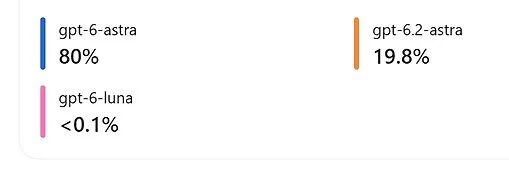
Just two days ago at the Abu Dhabi Summit, Sam Altman personally admitted that the AI behind the scene that mobilized 10,000 Agents to work continuously for 70 hours and successfully solved the millennium problem "NS Equation" some time ago is exactly the upcoming "next-generation GPT".
The two candidate versions that appeared in the API this time are very likely to be the GPT-6.2 "twin stars" models that are ready to be launched.
Mysterious New Model "Entry Level Outperforms Full-Spec Astra"
If the API flash appearance only revealed a name, the blog post "Accelerating Engineering R&D in the Physical World" released by OpenAI almost at the same minute showed the terrifying capabilities of this generation of new models.

The sharp-eyed evaluation agency LuminaBench immediately targeted the first benchmark chart in the blog post.
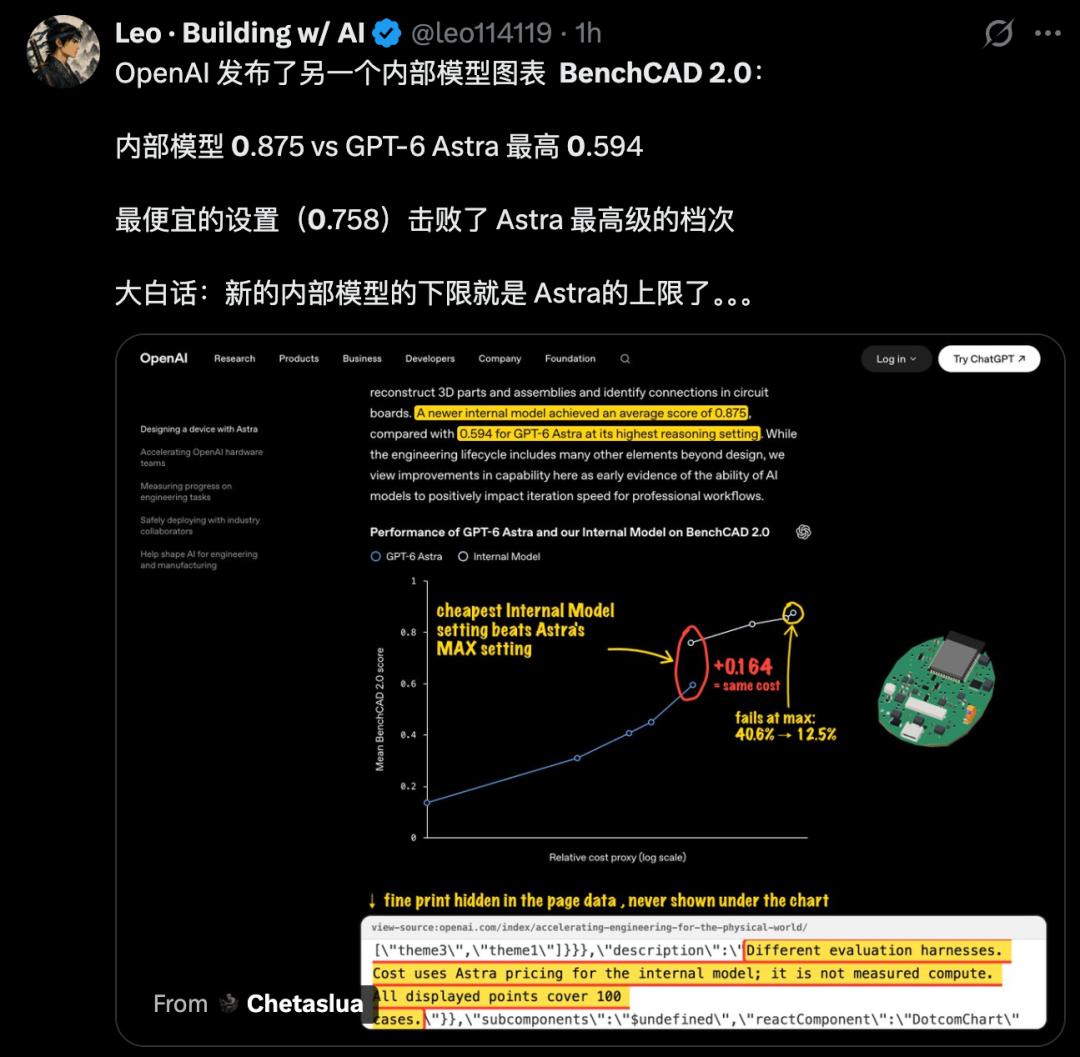
On this evaluation chart named BenchCAD 2.0, OpenAI rarely put its mainstay GPT-6 Astra and a mysterious opponent signed as "Internal Model" in the same table.
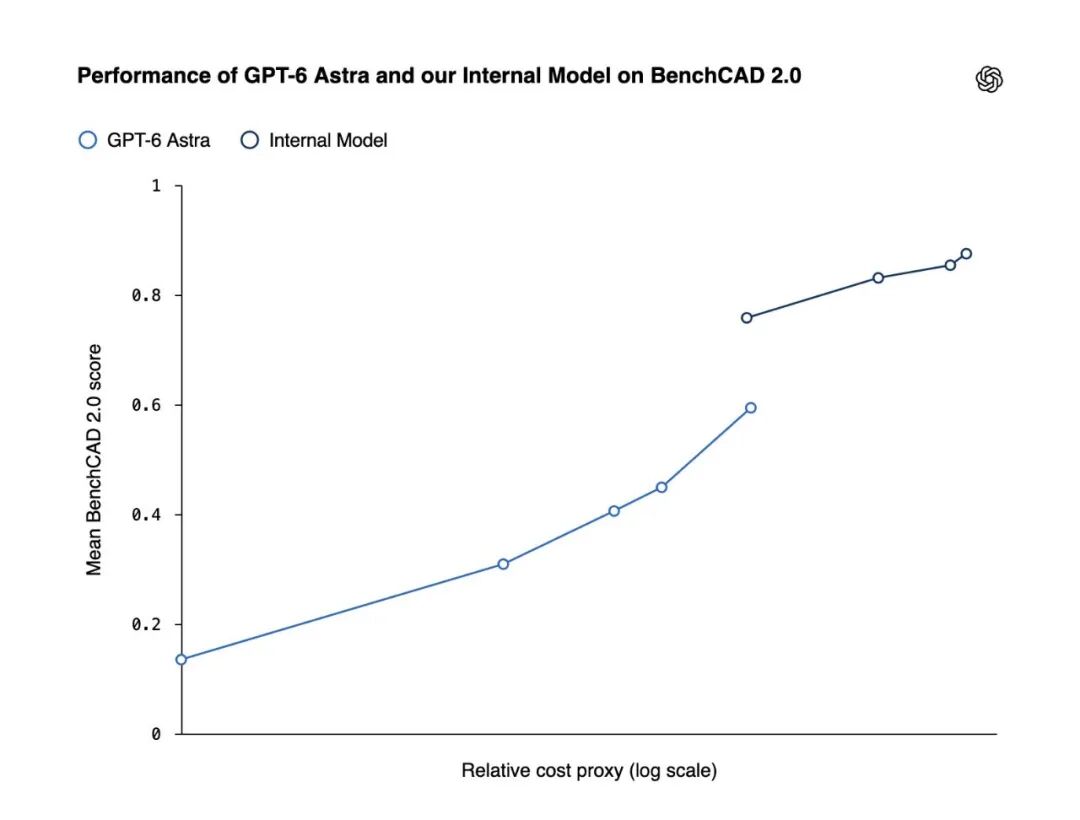
This list is all about hardcore engineering work, with 100 real cases, requiring the model to write code while applying physical engineering knowledge to reconstruct 3D parts and assemblies, and sort out the connection relationship on the PCB circuit board.
Digging into the chart data at the bottom of OpenAI's webpage, the gap between the two generations of models is quite huge.
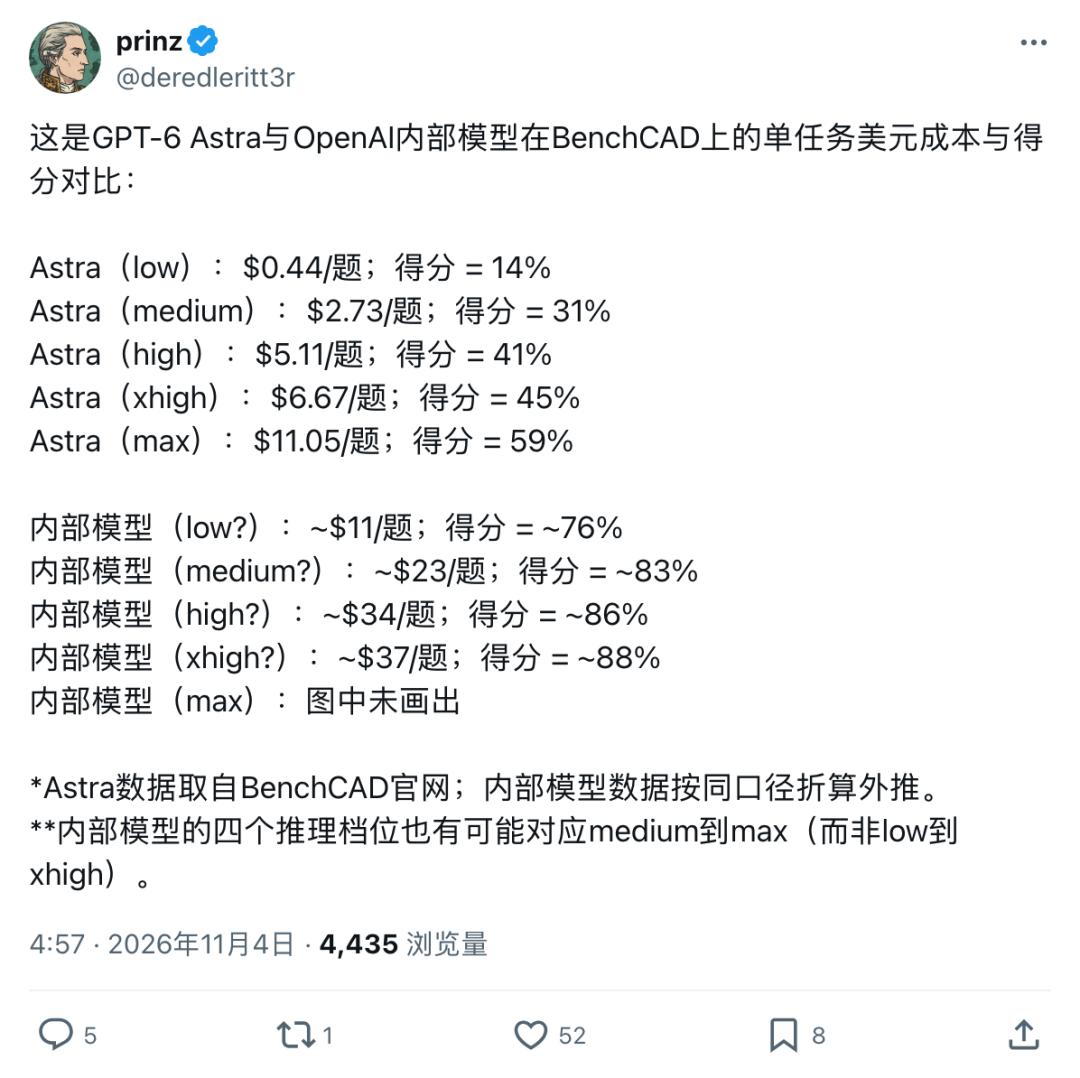
The current mainstay GPT-6 Astra ranges from the lowest gear all the way to the fifth gear, even if the inference computing power is pushed to the limit, the score only stays at 59.4%.
And that mysterious new internal model immediately got 75.8% at the lowest gear, 16 percentage points higher than the full-spec limit of Astra, while the cost per question is even lower; when further increasing the inference computing power, the score soars all the way to 87.5%, raising the ceiling by 28.1 percentage points.
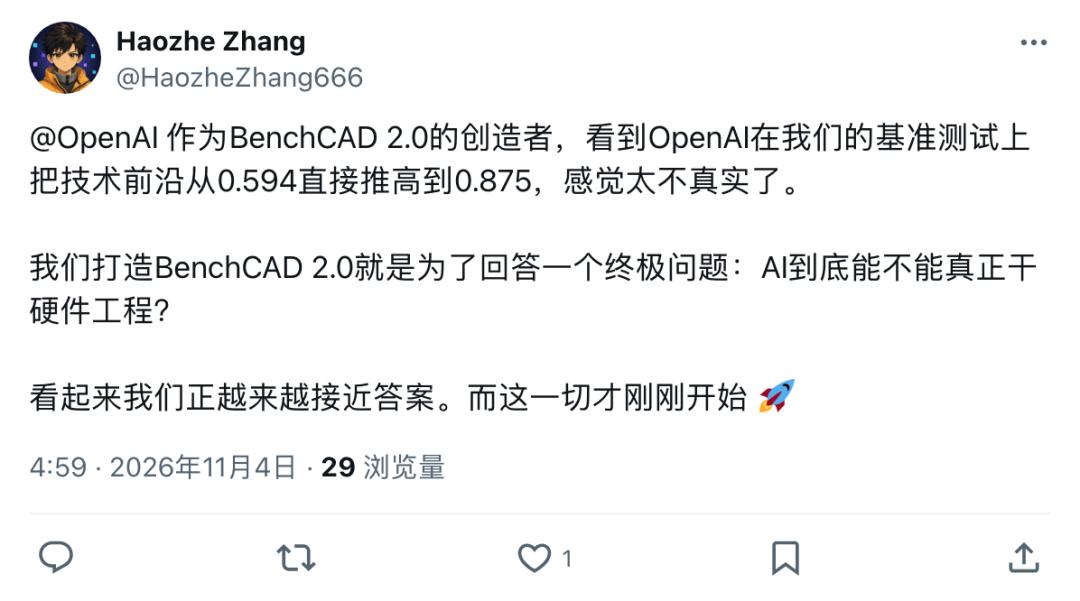
Haozhe Zhang, the first author of the BenchCAD 2.0 benchmark, exclaimed repeatedly, saying that the leap from 0.594 to 0.875 is too shocking.
Netizen Prinz did the math according to Astra's API price: this mysterious internal model can get a high entry score with 11 dollars per question, and can deliver a quasi-industrial-grade answer after 37 dollars of deep thinking.
Looking at it this way, the logic makes perfect sense.
To automatically build 3D assemblies, check tolerances and run PCB wiring in BenchCAD 2.0, the model must be able to adjust CAD scripts and simulation software in the sandbox by itself, which exactly corresponds to the dual virtual machine architecture of rc-ada-or-vm and rc-ada-sh-vm that appeared in the API.
From Tibo's hint of "Le GPT Fat", to the rc-ada dual virtual machine model that appeared in the API backend and was withdrawn immediately, to the 87.5% internal model revealed on the official blog at the same minute, all the pieces of the puzzle are in place.
Now that the Release Candidate (RC) has been mounted on the API gateway, the final countdown to OpenAI officially releasing its big move has begun.
References:
https://x.com/pankajkumar_dev/status/2117700596786778248
This article is from the WeChat official account "AI Era", Author: ASI Revelation, Editor: Moses, Taozi, Published with authorization from 36Kr.