8 new AI terms: Master them and you will stay ahead of 90% of people
Shenyi Translation is a translation and compilation team under 36Kr, focusing on technology, business, workplace, life and other fields, and introducing new foreign technologies, new perspectives and new trends from overseas.
Editor's Note: In the era of large models, people are familiar with basic terms such as prompts and hallucinations, but the AI industry is iterating at a fast pace. New terms including Agents, MCP and GEO are becoming the common language across the sector. Mastering these concepts will not only help you understand industry news, but also allow you to rationally assess the actual capabilities, permissions and risks of all types of AI tools. This article is translated and compiled, and we hope it can bring you valuable insights.

I recently read an article titled *Master These 5 AI Terms and You Will Outperform 90% of People*, which was a very engaging read. As an AI enthusiast and technical writer who has been creating AI-related content for more than 5 years, I am very familiar with all the five terms mentioned in that article. But then I realized there are many more new AI terms worth knowing, some of which emerged only in recent years.
So I wrote this article to share 8 more terms, explaining them in plain language without piling up obscure technical jargon. The next time you read or hear these terms, you will understand what they mean and why people are discussing them.
1. Harness
A native large language model is like a brain in a jar: it has the ability to think, but on its own, it cannot open Slack, send emails for you, or even know when to stop. The Harness is a set of software wrapped around the model to implement all the operations mentioned above. It enables the model to call tools, read information, manage permissions, control retry logic and termination conditions, or ask for your help when needed.
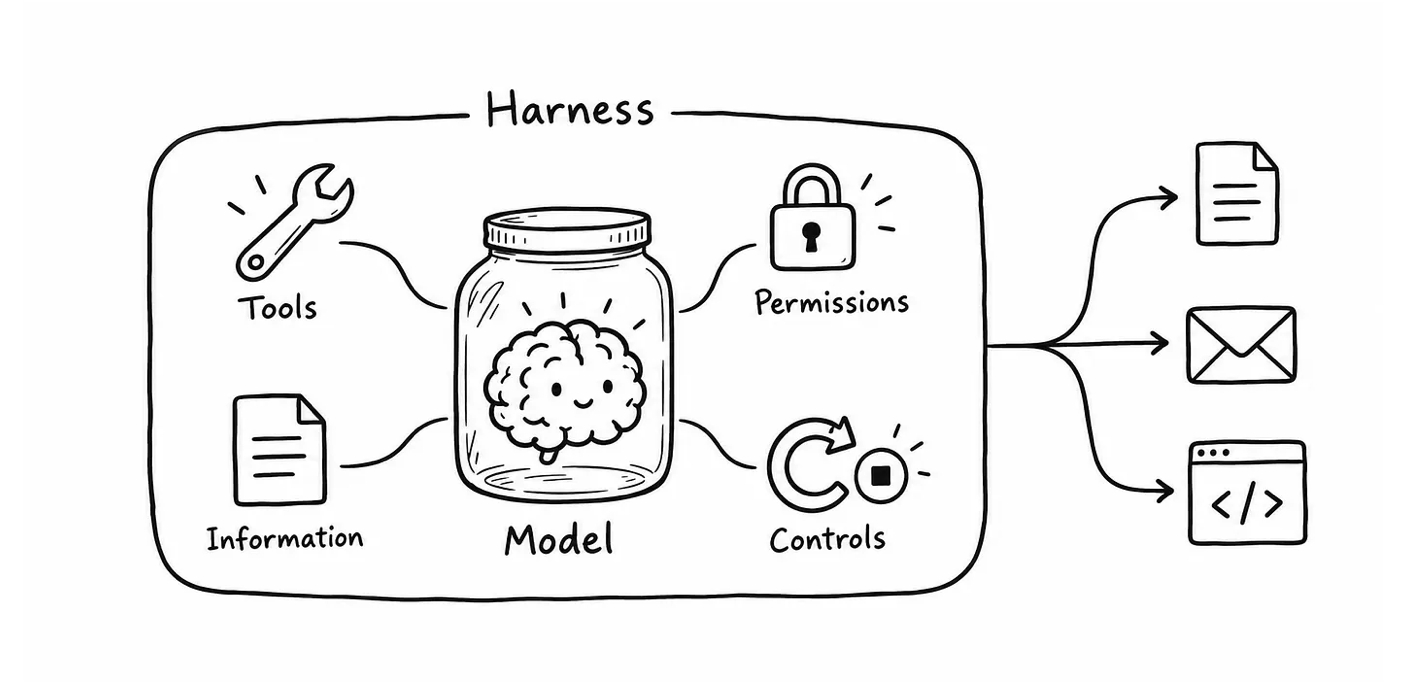
You can easily understand this formula: Agent = Large Language Model + Harness
Take code agents as an example. The Harness provides tools for reading files, editing code and running tests, while managing instructions and feedback delivered to the model. Even if two applications use the same base large model, their final performance can be vastly different, because their supporting Harness opens different tools, instructions and result verification methods to the model. This also proves that the supporting software around the model is of extremely high importance.
When comparing AI tools, you should not only look at what large model they use, but also how they assist the model to complete your tasks.
2. Agents
Agents can perform operations step by step, call tools, and complete a task independently. For example, you can ask it to help you process a refund. After obtaining corresponding permissions, it can find the order, check the refund policy, draft the application, and ask for your approval before submission.
The basic workflow: plan actions → perform operations → verify results → decide what to do next. The figure below shows an autonomous agent that calls tools in cycles based on environmental feedback.
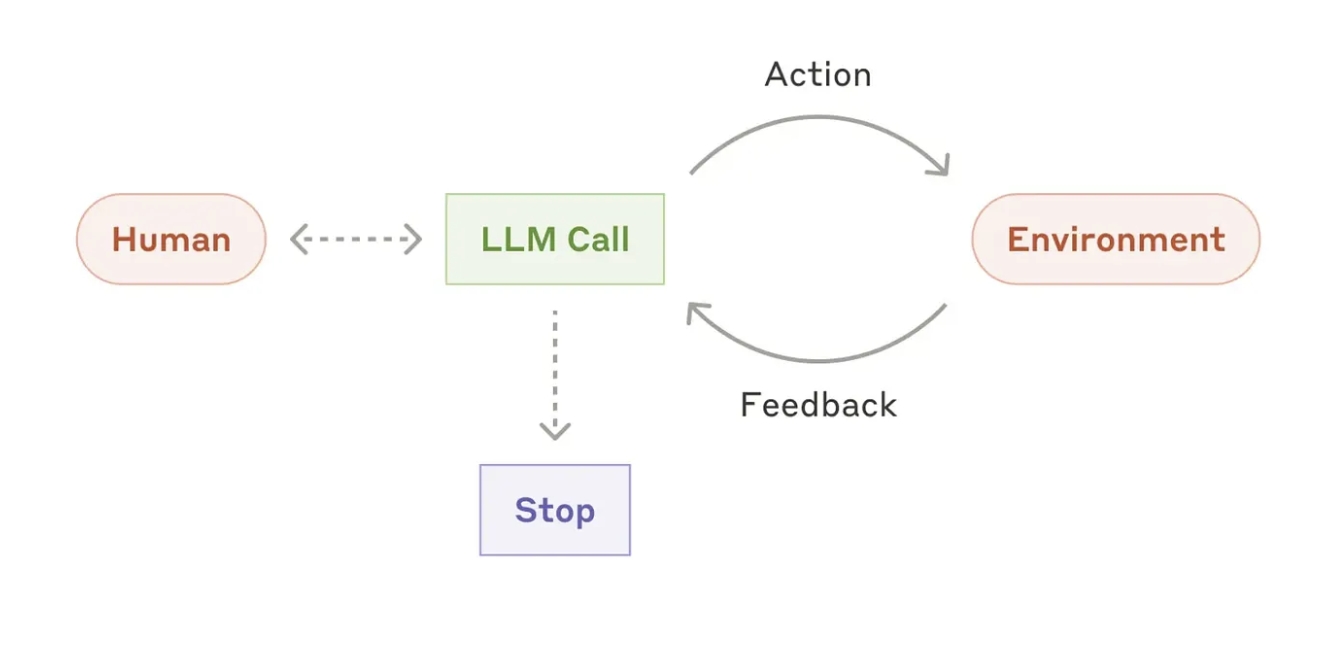
You can think of an agent as an assistant with a to-do list, authorized to use specific software. You set the goal, and it moves forward step by step. The upper limit of tasks it can complete depends on available tools and permissions. An agent that can only browse web pages is completely different from an agent that is connected to your email, files and calendar. Before using an agent, you must confirm what content it can access, what information it can modify, and when it needs to apply for approval from you.
3. MCP (Model Context Protocol)
MCP can basically be understood as the USB-C interface in the AI field. It provides a unified standard for AI applications to connect to various tools and data sources.
Without a unified standard, developers often need to develop separate docking programs for each AI application. But with MCP, you only need to develop one set of connections, which can be reused by multiple compatible applications. The MCP server is responsible for opening specific tools or data to AI applications. For example, it can allow AI assistants to retrieve internal company documents, or create new work orders in project management tools.
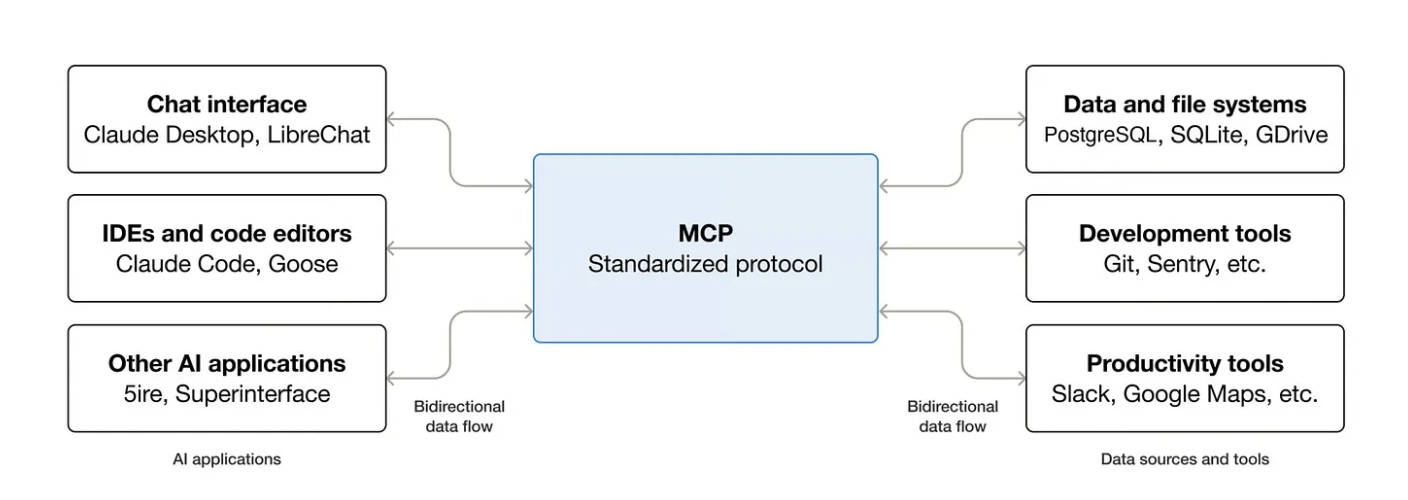
The USB-C analogy makes it easy to understand, but configuration is still required: the AI application itself needs to support this protocol, and you need to grant corresponding access permissions. If a product claims to support MCP, you can pay attention to what services it can connect to, and what operations the AI assistant can perform through the protocol.
4. Loop Engineering
Most of the work of agents follows a loop pattern: select an action, perform the action, check the result, and retry if it fails. A code agent may modify files, run tests, read error messages, and then continue to adjust the code.
But this loop may go wrong: the agent repeatedly performs invalid operations, or stops early before the task is completed. Loop engineering refers to designing the operation rules of this loop, including how the agent receives feedback and judges whether to continue execution. It is an emerging direction in agent development.
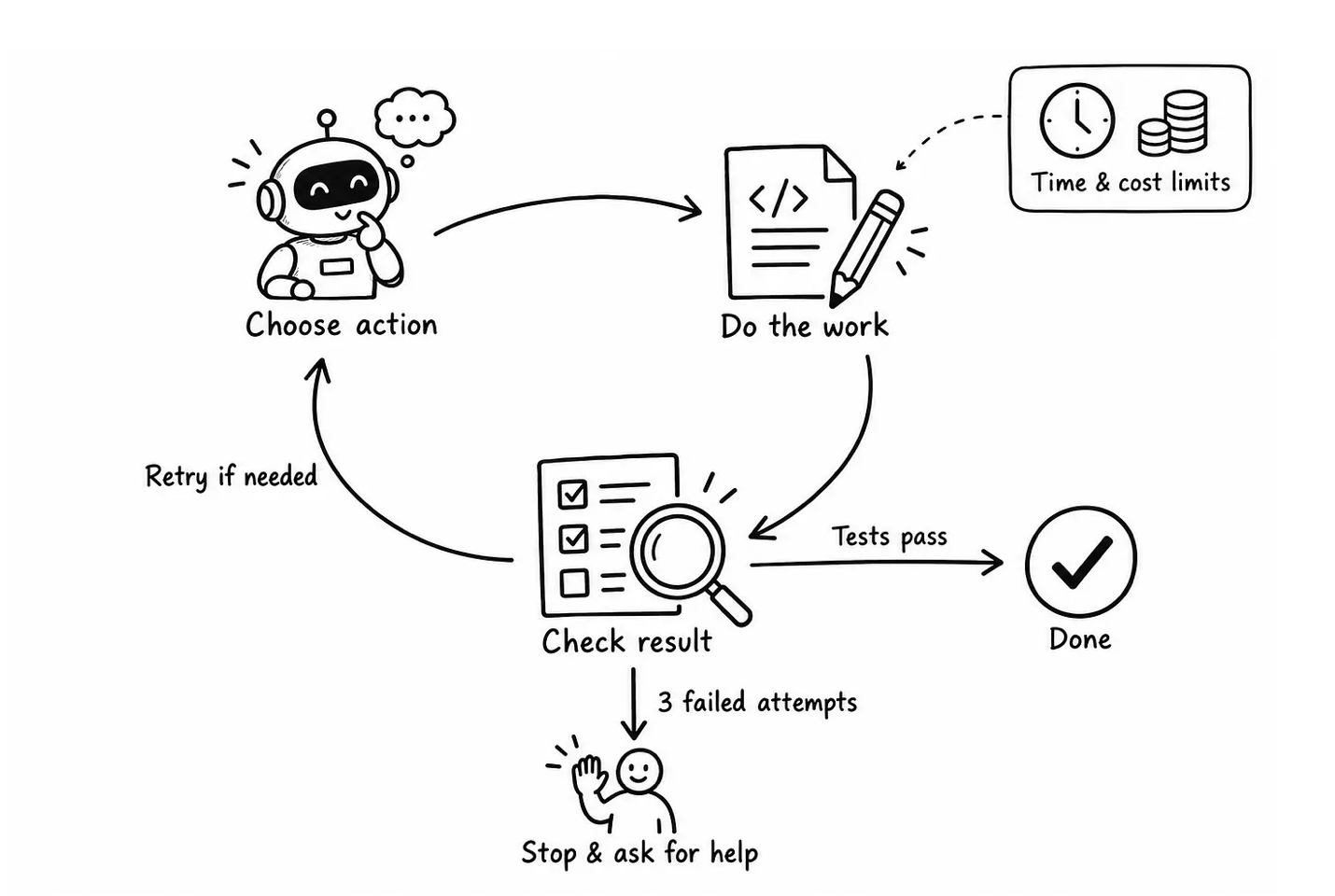
You need to clarify these questions during design:
To what extent is the task considered completed?
What is the maximum number of retries allowed?
What is the maximum time and cost that can be consumed?
When should the agent ask for help from humans?
Who (or what mechanism) will verify the results?
For example, you can require a code agent to pass specified tests before the task is considered successful; you can also set it to stop after three consecutive failures and explain the cause of the failure. The Harness is responsible for providing tools and basic management; loop engineering determines how the agent repeatedly calls tools until the work is completed.
5. Skills
A skill is a pre-saved execution process that the agent can call directly when it encounters a matching task. Take the reimbursement form as an example, this process will specify which fields need to be filled in, how expenses are classified, and what to do when receipts are missing.
In Anthropic's skill specification, instructions are written in the SKILL.md file, and the supporting package can also include scripts, templates and reference documents. In Claude, you can add custom skills or template skills on the skills page; ChatGPT adds skills on the customization page.
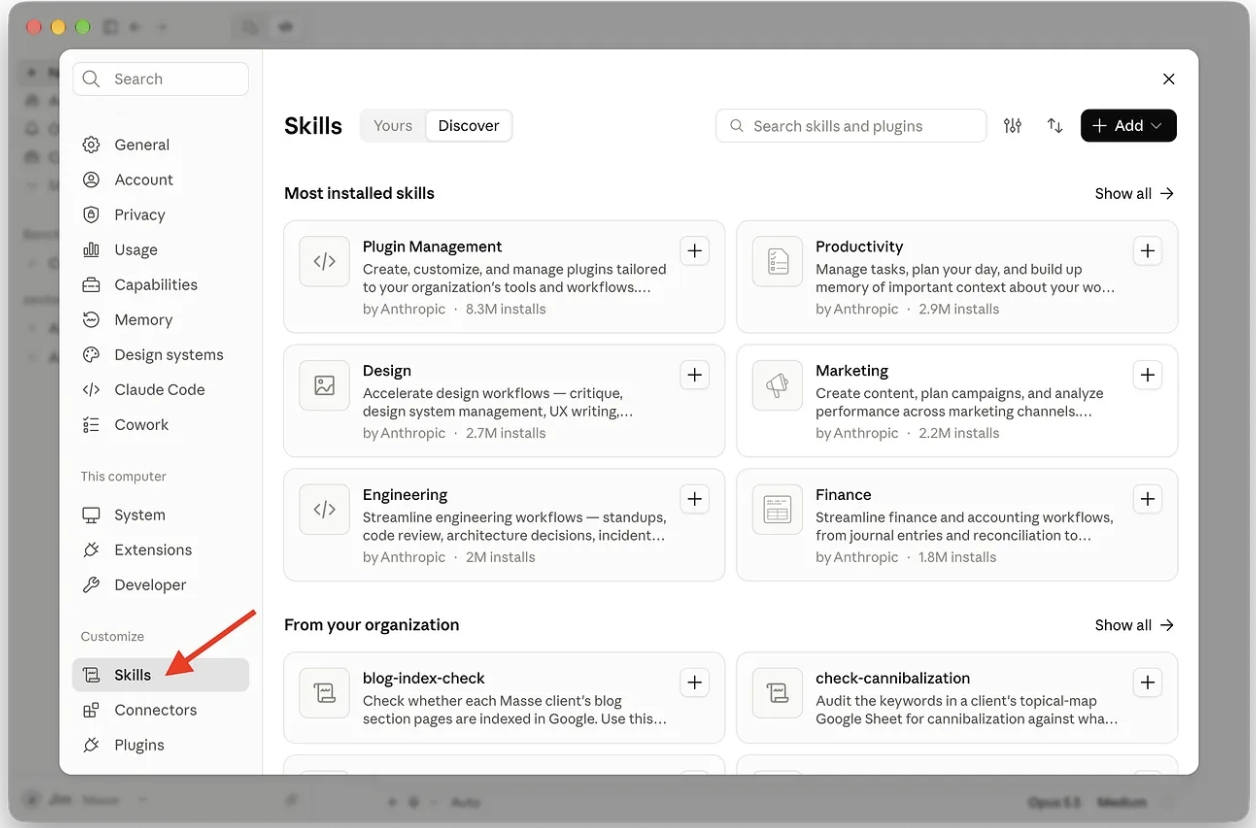
Skill interface in Claude
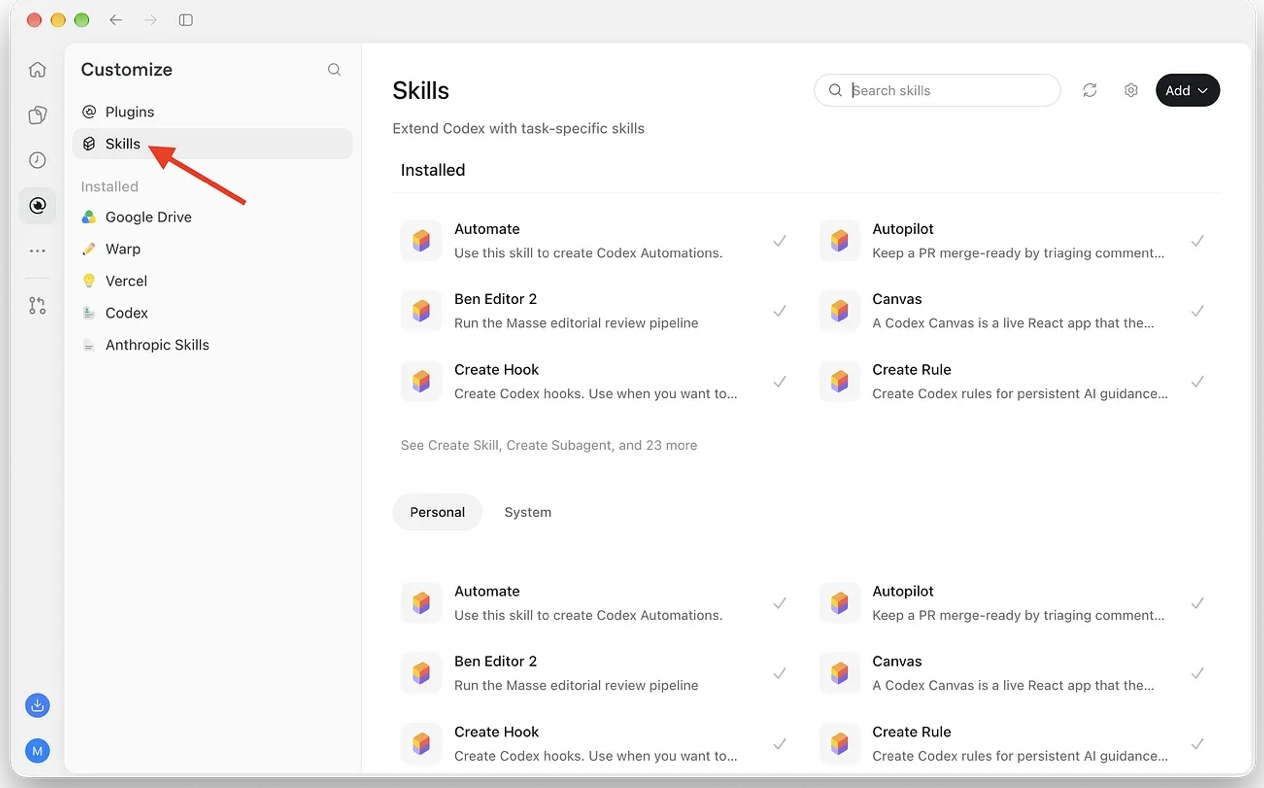
Skill interface in ChatGPT
At the beginning, the agent only sees the name and introduction of the skill; when it judges that this skill is needed, it loads the full detailed instructions. That means it does not need to read through the entire process every time before executing a task.
MCP opens up access to tools and data for agents; skills tell them how to use these tools to complete specific work. For example, if the protocol grants access to your spreadsheets, the skill can specify how to generate the company's monthly sales report. The process only needs to be written once and can be reused repeatedly, so you do not have to explain the entire set of operations in every conversation.
6. GEO/AEO (Generation Engine Optimization / Answer Engine Optimization)
This term has nothing to do with agent development, but relates to how your content can be retrieved and cited by AI agents.
In the past, people used Google Search and clicked through blue links one by one, which is SEO, Search Engine Optimization. Now people directly ask ChatGPT, Claude, Perplexity or Google AI Summaries for answers, read the results directly, and click links far less often.
GEO (Generation Engine Optimization): The goal is to get your brand mentioned, your content cited, and your products recommended when AI generates responses.
AEO (Answer Engine Optimization): The goal is to make your content suitable for direct answer generation, including answer cards on search engines and Q&A content from AI assistants.
A simple distinction:
SEO = Strive to rank on the first page of search results
GEO/AEO = Become the information source cited in AI responses
The two concepts overlap, and different companies do not have completely consistent classification standards for them.
For example: If someone asks an AI assistant "What are the accounting software options for small businesses?", and you are an accounting software vendor, you would want your product to appear in the answer given by the AI. Clear descriptions, accurate product information and reliable sources will all increase the probability of your content being cited. But even if you do all these well, there is no guarantee that the AI will definitely mention you.
If you run a website or a business, in addition to focusing on search rankings and traffic, you can also pay attention to whether your information appears in AI responses.
7. Computer Use
Computer Use refers to the ability of an AI system to interact with the screen: clicking, typing, scrolling pages, and selecting content. The general process is: take a screenshot → determine the next action → click or type → read the screen again.
With this capability, agents can fill out forms and complete tasks on web interfaces. Now mainstream AI conversation products, including ChatGPT, Claude, Perplexity and Grok, all support Computer Use. ChatGPT can enable this function in the integration menu under Settings.
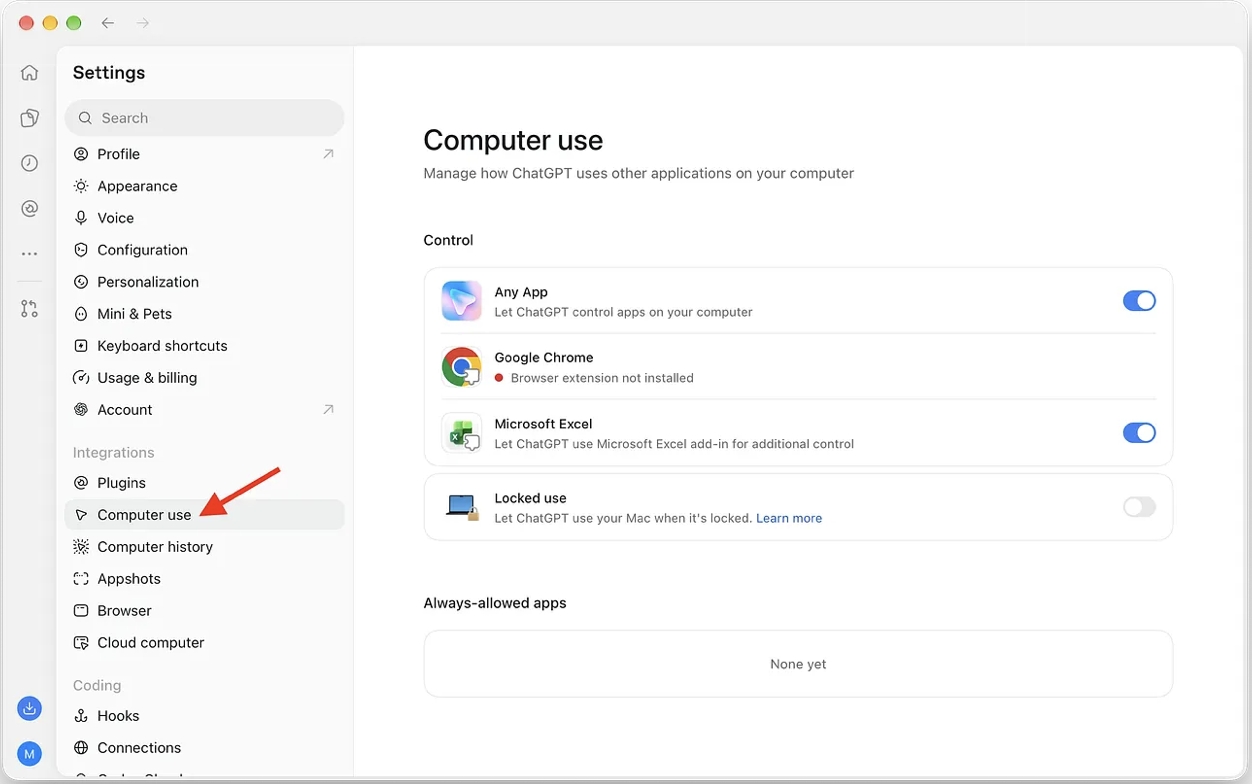
Computer Use interface in ChatGPT
Computer Use is very useful when the application does not open a suitable API interface. API is the channel for software to exchange information and execute instructions directly; while Computer Use allows AI to imitate human operations, click interface buttons and fill in input boxes. For example, even if a booking service does not open a docking interface, the agent can still enter information in the booking form.
But it also has risks: it may click the wrong button, misread the page, or get stuck at a certain step. You must pay close attention to what content it can access, and important operations (order placement, submission, account information modification) must be manually reviewed.
8. AGI / Superintelligence (Artificial General Intelligence / Superintelligence)
AGI, Artificial General Intelligence, generally refers to AI that can reach the same level as humans in a wide range of intellectual tasks, including learning knowledge in unfamiliar fields, solving various different problems, and transferring learned knowledge across domains.
Researchers have not yet reached a consensus on its exact definition and evaluation criteria. Google DeepMind has a paper that proposes a set of judgment ideas from two dimensions: the breadth of system capabilities and task performance.
Superintelligence goes a step further, whose capabilities significantly surpass humans in the vast majority of intellectual tasks.
AGI: Wide range of capabilities, reaching human level
Superintelligence: Wide range of capabilities, and stronger than humans
AI that is only good at a single task cannot be counted as either. Even if a model writes excellent code and can solve complex math problems, it may perform very poorly in other things. When companies mention these two terms in their promotions, you should check their specific definitions and what capabilities the system has verified, instead of only looking at the labels.
We hope you can gain something after reading this article. Next time a vendor says their product is equipped with agents, you can ask what specific tasks it can complete; if it supports MCP, you can check what applications it can connect to; if the agent can control your computer, remember to confirm the access scope and when it needs your permission.
Understanding these terms will make it much easier for you to read AI news. When a news headline mentions AGI or Superintelligence, you can understand what it means, and know why the academic circle has been arguing about its definition. In the future, when you encounter these concepts, you can understand the explanations and judge whether the tool or idea is valuable to you.
That's all for today, and you are welcome to join the top 10% group.
Translator: Teresa