It's 2026, why is there still no app that can help me find a restroom?
140 years ago, the world's first practical dishwasher came into existence.
It was invented by Josephine Cochrane, a woman who often had to wash precious porcelain tableware at home. Turning life experience and daily observations into inventions or patents is something women have been doing all along: windshield wipers, coffee filters, correction fluid... all of them were created this way.
Making up nearly half of the global population, women's unique observational perspectives have created products that benefit all humanity.
In the AI era, this scene is repeating itself: women are leveraging technology to solve the problems that trouble them in daily life.
These problems do not have to be grand, and technical tools do not have to be "high-end", but the products developed are practical and exquisite.

In August, I observed a four-day hackathon where women accounted for 70% of all participants — "SheNicest Fission".
On the first day, when I picked up my entry badge, the staff member held up two lanyards, one pink and one black, and asked me which one I preferred.
It turned out that a badge with a pink lanyard meant the wearer was willing to be photographed, while the black lanyard meant the opposite. If I wore a badge with a black lanyard, my image would be deleted from all photos publicly released after the event.
This is a tiny detail I have never experienced at other events before. The restroom configuration also took the needs of female participants into account, with a 1:2 ratio of male to female restrooms, making female restrooms relatively more sufficient.
An image of a smiling middle-aged and elderly woman with short curly hair appeared on the display board of a project.
Zoe, the project initiator, told me that this was her grandmother, Ms. Weiwei.
In recent years, Ms. Weiwei has started to forget words when speaking, repeat expressions, and cannot remember other people's names clearly. Zoe suspected that Ms. Weiwei had Alzheimer's disease, and wanted to take her for a cognitive check, but Ms. Weiwei just replied: "I'm fine! Don't worry about me unnecessarily."
This sentence "Don't worry about me unnecessarily" became the starting point of the product "Jianwei". Zoe's team developed a family cognitive health observation tool for adult children, which can help children pay attention to the health status of their elders without making the elders feel "pressured".
When users open Jianwei and upload any audio recording of a conversation with their elders, the tool will detect problems in the conversation such as pauses, repetitions, word-finding difficulties, and incoherent information, generate the elder's personal cognitive baseline and long-term change trend, and then judge whether the elder shows "abnormalities" based on relevant medical knowledge.
Ideally, Jianwei will start the analysis only after the elder gives consent, and the elder will not feel that they are being monitored or diagnosed. Obviously, these two needs are not easy to balance.
Getting parents to take their medicine on time is also a big challenge.
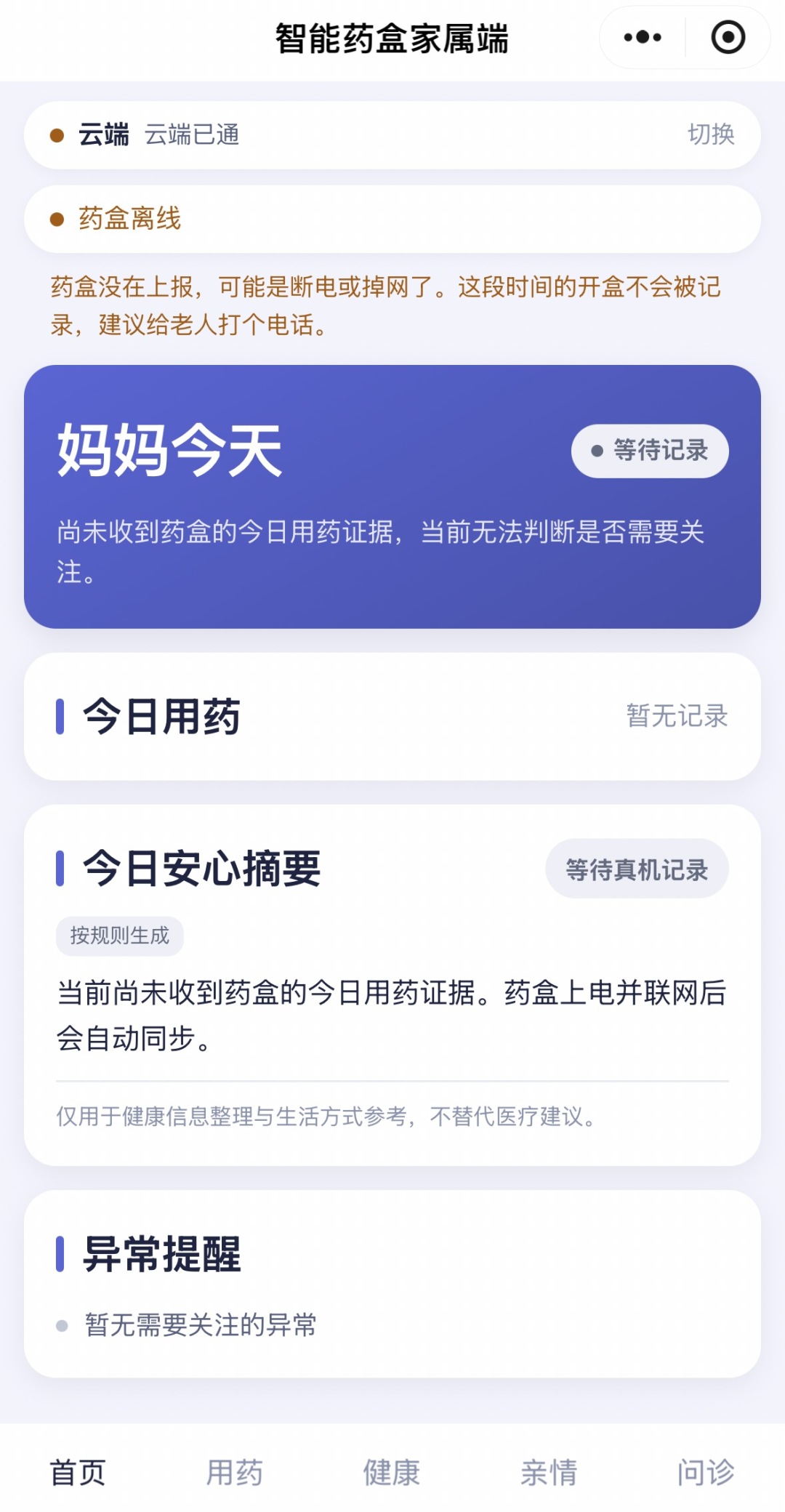
Basic interface of the smart pill box for family use
This product, which looks no different from an ordinary pill box, aims to solve this problem. It is equipped with a photoelectric sensor that can accurately detect whether a family member has opened the box and taken their medicine.
If parents forget to take their medicine, the pill box will play a voice pre-recorded by their children as a reminder.
What can we do for mothers? The mothers who always take care of everyone, what do they need for themselves?
A mattress model shaped like a lotus leaf caught my attention.
The core team "Hemian" (Lotus Sleep) told me that this is a smart mattress designed for mothers in the third trimester of pregnancy, aiming to provide physical support and rollover assistance for expectant mothers with big bellies at night.
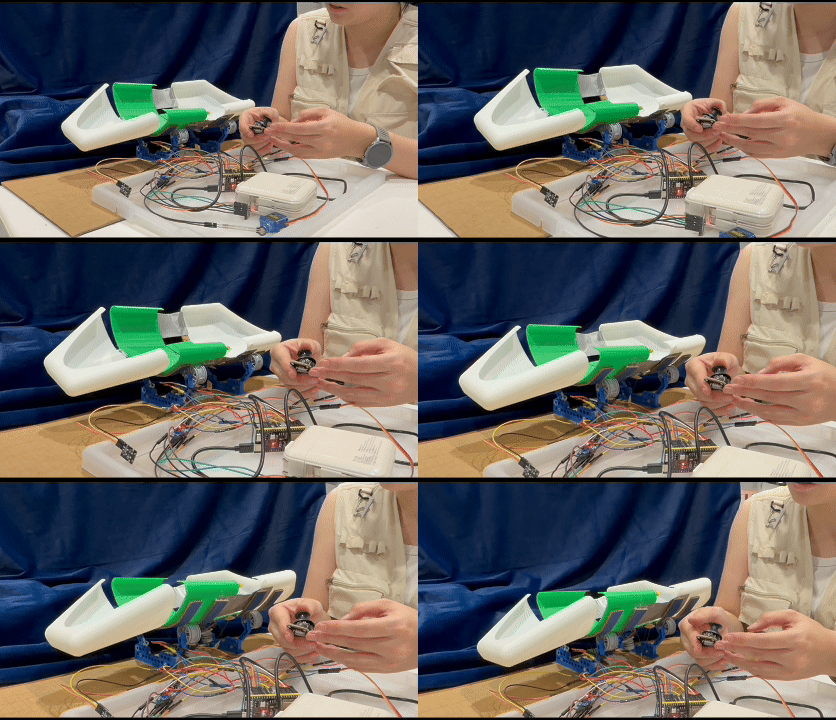
Hemian model demonstration
In the design drawing, the mattress is rolled up around the edges, with several movable hardware modules on it. At night, if the pressure sensor detects that the mother wants to roll over, the mattress will actively make soft adjustments to provide appropriate support according to the sleeper's posture.
Most of the existing smart mattresses on the market assist rollover by lifting one side of the sleeper's body, but pregnant women need to keep intra-abdominal pressure and core stability, and cannot withstand this kind of movement.
"Hemian" adopts an overall rotation method, so that pregnant women sleeping on it feel like they are sleeping in a cradle, with the lotus leaf under them swinging gently with their bodies.
There is also a mattress called "Sleep Well" designed for mothers experiencing menopausal hot flashes. By pairing mothers with wearable devices and combining with sensors on the mattress that collect changes in human body temperature, the mattress can determine whether the user is about to feel hot, and automatically adjust the mattress temperature, so that mothers with hot flashes can sleep well.
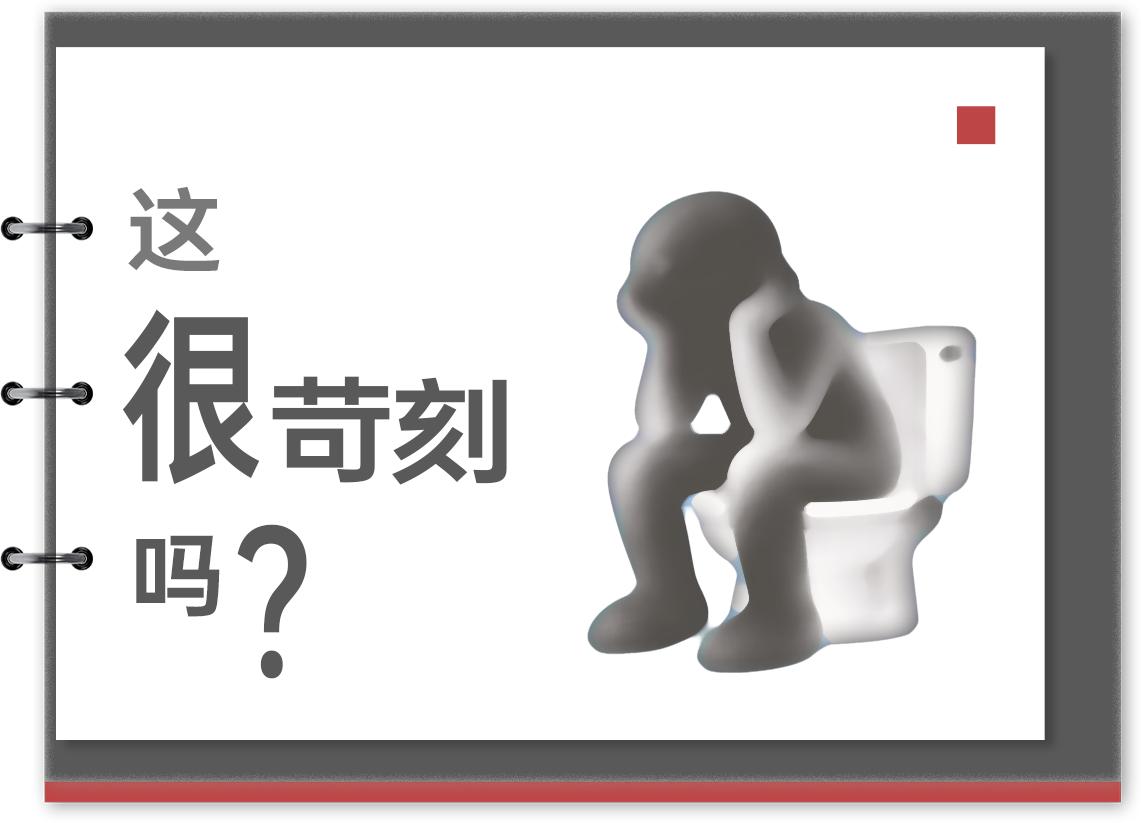
"TOILER", a toilet-finding application, can be said to have taken one of the most common pain points in women's travels into extreme consideration.
It not only wants to help users find a toilet, more importantly, it wants to help users find the ideal toilet they want.
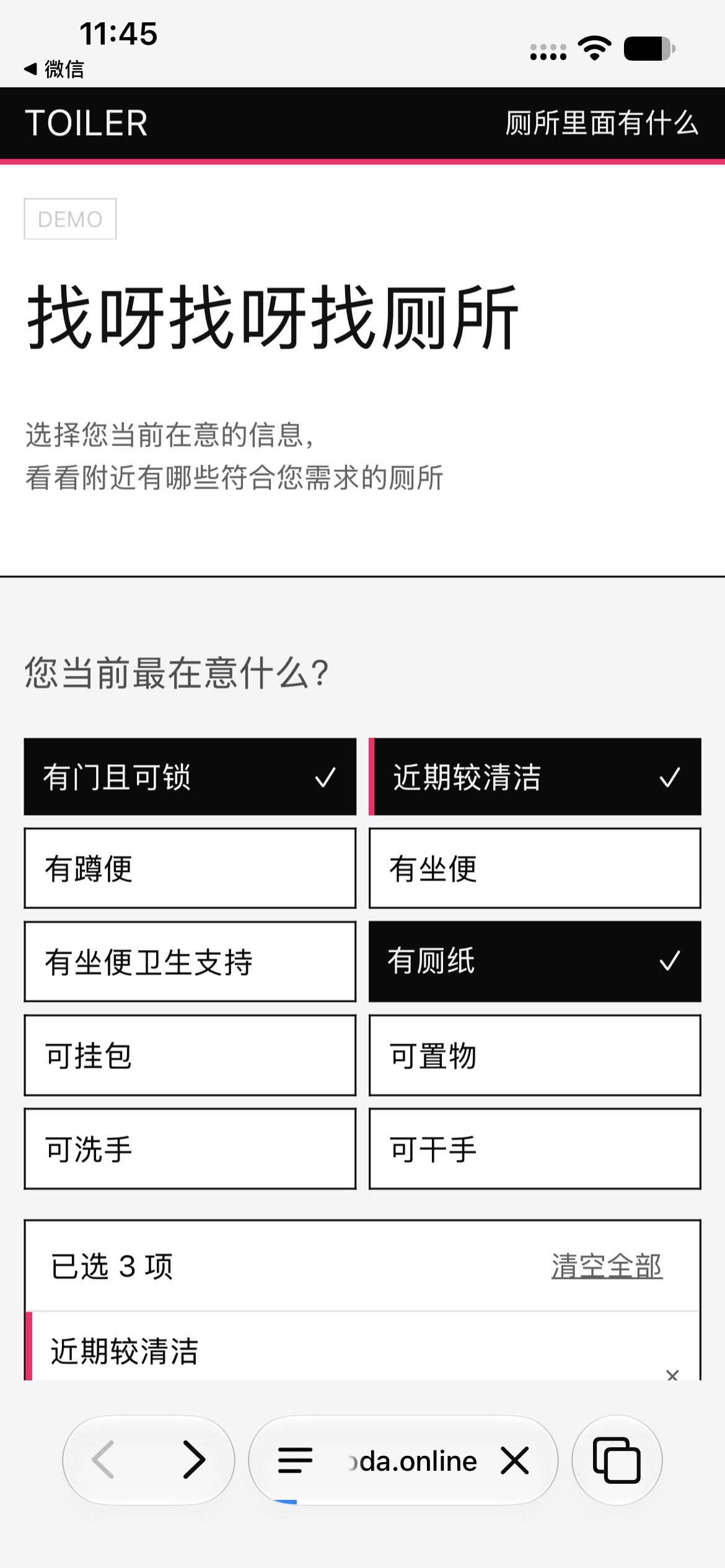
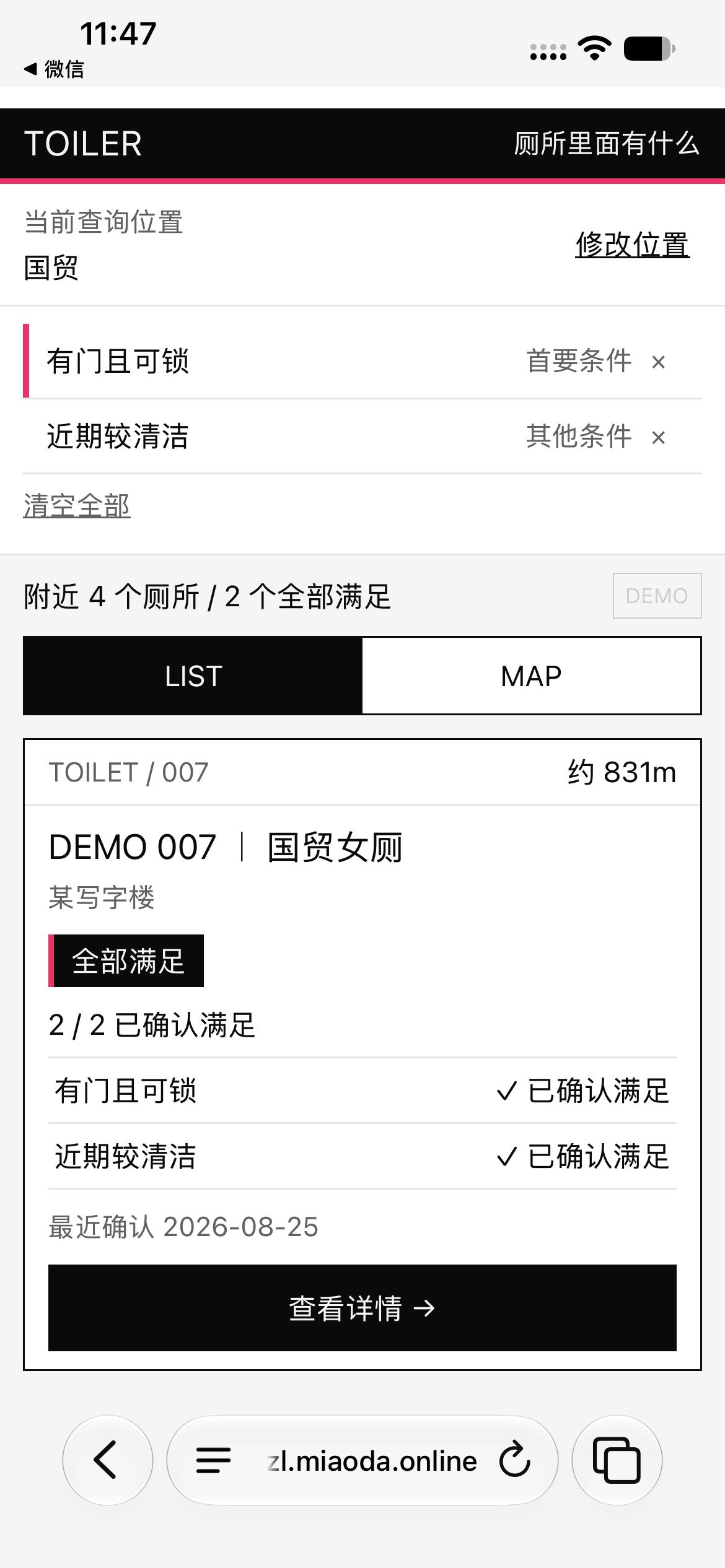
TOILER basic interface
When you open TOILER, it will ask: What do you care most about? It can be said that "TOILER" has broken down the toilet search into the smallest details: whether there is a cubicle, whether the cubicle has a door, whether there is a hook behind the door, and whether you can dry your hands. Users check their needs, and only toilets that fully meet the requirements will be ranked at the top.
Sounds very strict, but Xiaojian doesn't think so.
The creator Xiaojian is a "public toilet struggler". In her own words, she might be a "gold medal bladder holder". If a toilet cubicle has no door, the toilet seat has no disinfection facilities, or there is no sink, she might give up using the toilet.
She doesn't want users to avoid the risk of non-compliant toilets by enduring discomfort. At present, some toilets in areas such as Phase II of the National Convention Center, 798 Art District, China World Mall, and Sanlitun have been included. In the next step, Xiaojian hopes to continue improving the map system, find ways to make TOILER cover more areas, and achieve real-time and accurate updates.

Youyou has short red hair, wears glasses, and wears overalls, always laughing heartily. She is a designer at a private company. I met her at the booth of "She First".
"She First" is an input method that puts Chinese pronouns with the female radical at the top of the suggestion list.
Open "She First", and the input method has three built-in modes: She First, Natural, and Regular. When you input "ta men", in She First mode, the first word that appears is "they" (referring to females). In Natural mode, the gender-neutral "TA men" will appear first.
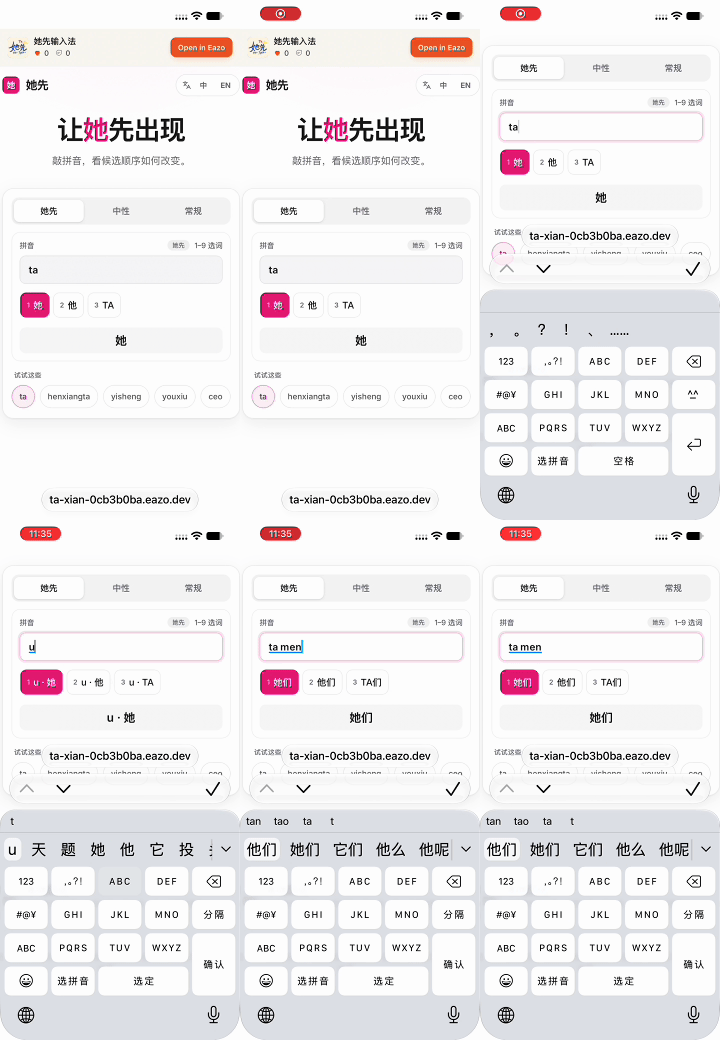
Youyou works in a company where most of her colleagues, bosses and leaders are women. She likes voice input, but when chatting, she always has to manually change the voice recognition result from "he" to "she" one by one.
"I can't stand this stupid input method anymore", so "She First" was born. In the future, when she wants to praise her leader who is on the Fortune list, she will no longer have to change every "he" to "she" manually.

Even with the advanced modern medicine today, there is still a high probability that common gynecological diseases cannot be identified in a timely manner by medical services.
For example, polycystic ovary syndrome. According to relevant data, as many as 70% of patients with polycystic ovary syndrome remain undiagnosed.
Chronic diseases often have hidden onset, with long course of disease, lingering symptoms, and require long-term treatment and management. After diagnosis, closer collaboration between doctors and patients and long-term physical monitoring are needed to achieve more timely disease control.
Claire, a patient with polycystic ovary syndrome, has a deep understanding of this.
First of all, the name "polycystic ovary syndrome" implies excessive attention to the patient's fertility function, while many people ignore the long-term balance of the endocrine system, leading to delayed diagnosis. The good news is that in May this year, an international consensus study published in *The Lancet* proposed that it is recommended to rename polycystic ovary syndrome to polyendocrine metabolic ovarian syndrome.
Secondly, detecting the progression of the disease relies on repeated physical examinations, which are time-consuming and labor-intensive. Even after getting the test reports, communicating with doctors is another challenge.
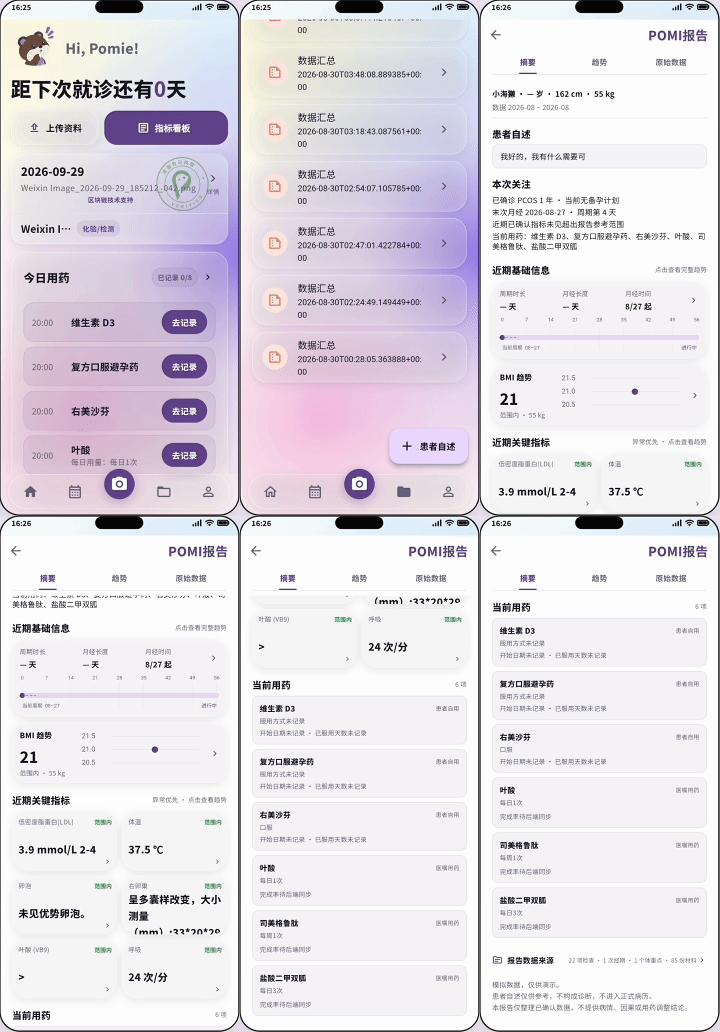
"Pomi" was born as a result. Claire and her team want to use the "Pomi" application to help patients collect and organize test reports, sort scattered disease course data into structured medical reference summaries, and act as a "translator" between doctors and patients.
In the "Indicator Dashboard", changes in the user's physical indicators are clearly visible, and "Today's Medication" shows the medication status. When the scheduled follow-up visit time comes, the system will remind the user to see a doctor, and organize recent medication, exercise and test results into a one-page summary for the user to use in doctor-patient communication.
