30 Years of Taiwan-style Milk Tea: Three Times of Successfully Navigating Industry Cycles, Who Will Survive the Current Round?
An "old menu" of Taiwanese-style bubble tea has once again drawn long lines of young people.
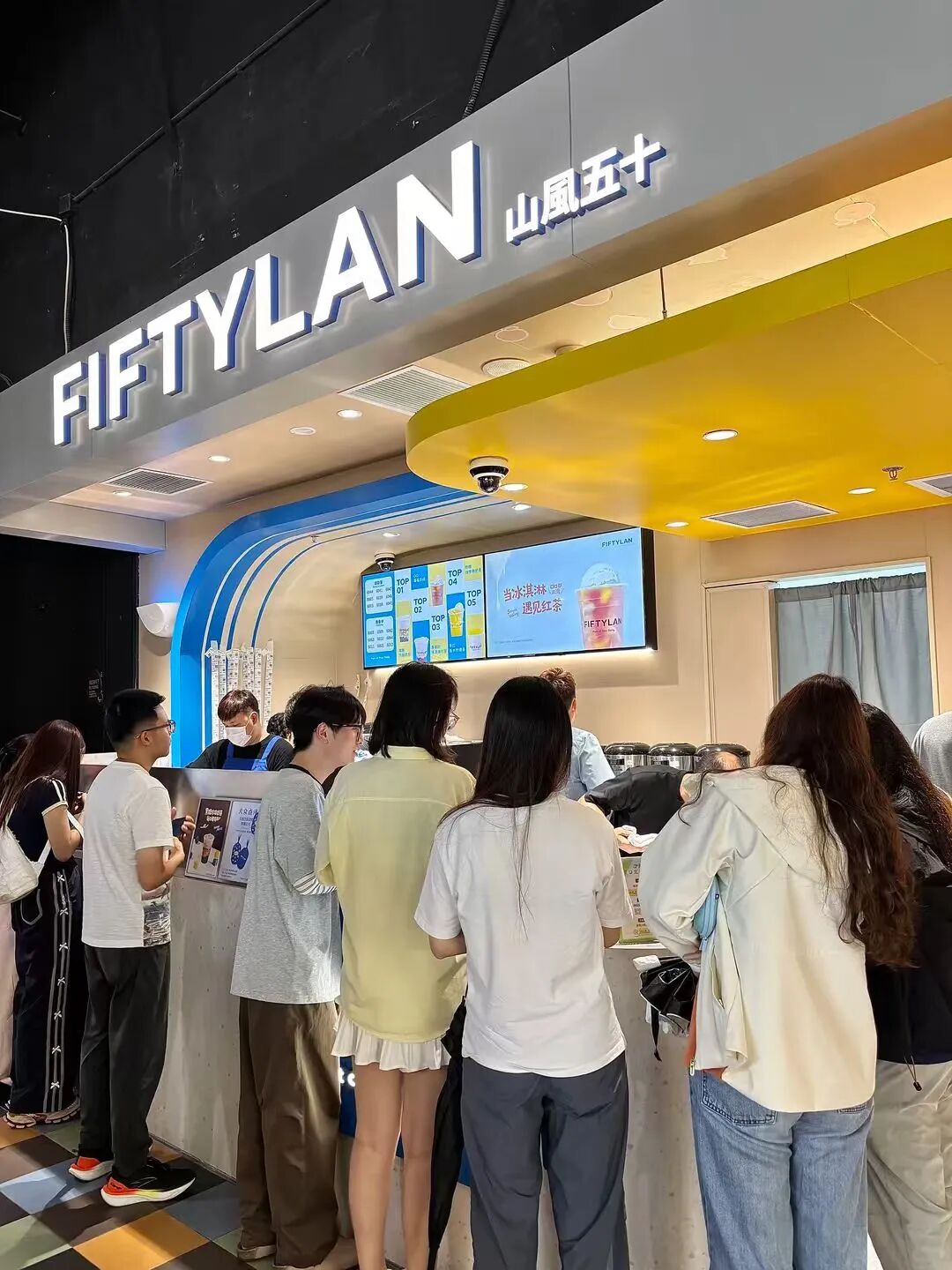
In July this year, FIFTYLAN opened its first mainland store in Shanghai, with familiar products on the menu including pearl milk tea, macchiato, and pure tea. However, during the first week of opening, customers had to wait up to 5 hours to get a cup. In September, it opened its second store in Shanghai.
Not only FIFTYLAN has delivered an outstanding performance, but brands such as Cuonei Xiaojuancun and Alley Tea are also making a comeback. CoCo and 1DIANDIAN are expanding against the trend, and a number of Taiwanese-style bubble tea specialty stores have emerged in cities including Chengdu and Suzhou.
On the other hand, however, early leading Taiwanese-style bubble tea brands such as Happy Lemon are continuing to shrink their footprint.
Some are returning, while others are exiting. The "old-school flavor" is drawing long queues again, but Taiwanese-style bubble tea is not seeing a collective recovery. Instead, it is going through a new round of reshuffling. Who can take advantage of this current popularity to run their business in a more sustainable way?
01
Taiwanese-style bubble tea is making a comeback
This is not the first time Taiwanese-style bubble tea has regained popularity. From the perspective of product iteration and the evolution of business models, its 30-year development in the Chinese mainland can be roughly divided into three stages.
From 1997 to 2007, Taiwanese-style bubble tea entered the mainland market in the form of small street-side shops.
At that time, tea powder and non-dairy creamer paired with tapioca pearls and coconut jelly were the main components of a cup of Taiwanese-style bubble tea, usually priced under 10 yuan. A small street-side shop was enough to support a viable business.
During this period, Taiwanese-style bubble tea brands such as Dakoujiu, Dikas and Kuai Keli expanded rapidly, and a generation of consumers gradually grew fond of the classic chewy toppings and customizable sugar and ice levels.
However, the lower the threshold, the more imitators there are. A series of food safety incidents that broke out around 2008 dealt a heavy blow to the blending-based business model. After that, better tea bases, milk bases and in-store experience gradually became new competitive chips, while the old-style blending stores slowly faded out of consumers' sight.
These pioneering players once reached a scale of thousands of stores in the mainland at their peak. Today, Dakoujiu has 451 remaining stores, Dikas has 37, and Kuai Keli only has 4 left.
From 2008 to 2022, chain operation drove a new round of expansion for Taiwanese-style bubble tea brands.
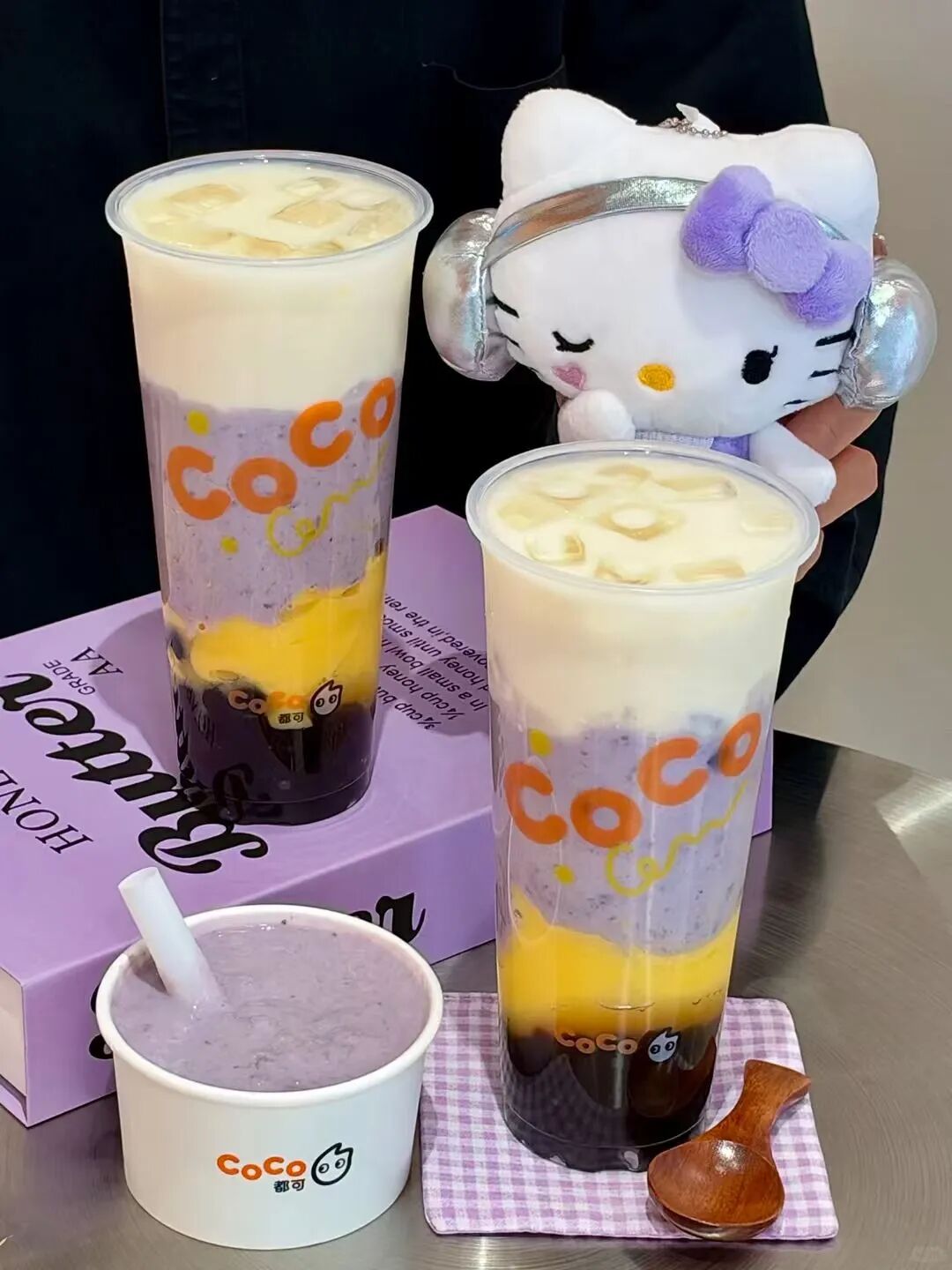
Brands such as CoCo and 1DIANDIAN entered shopping malls with freshly brewed tea, rich toppings and standardized chain models, with the price range rising to more than ten yuan per cup.
Source: Xiaohongshu @Qifen Tian
However, the inflection point emerged around 2020. As categories such as fresh fruit tea and light milk tea became popular one after another, brands began to compete on raw materials, R&D, and continuously increase investment in store space, marketing and other aspects.
The changes of Happy Lemon are quite representative. In 2020, it had 1105 stores worldwide, after which its business in mainland China continued to shrink. From 2022 to 2023, the number of its stores dropped from 690 to 246; now only 45 stores are still in operation.
In the fiercely competitive mainland market, the old method of dominating the market with just a few classic products obviously no longer works.
Since 2024, Taiwanese-style bubble tea has been experiencing the third wave of resurgence. Industry giants are making a comeback, mature chain brands are restarting expansion, and Taiwanese-style bubble tea specialty stores are also emerging. Strong tea, rich milk flavor and tapioca pearls that were once regarded as "outdated" have gained attention again.
Throughout these three cycles, raw materials, store formats and expansion methods have changed many times, but the combination of "tea + milk + chewy toppings + customizable sugar and ice levels" has always remained on the menu. This time, the familiar taste, freely combinable toppings and mass price range still constitute the reasons for consumers to make purchases.
The old-school flavor still has a market, but running a successful Taiwanese-style bubble tea shop today can hardly follow the old strategies of the past.
02
What has returned is not the old business
In this round of Taiwanese-style bubble tea resurgence, classic products have been retained, but the single-store model that supports them is being restructured.
The newly opened stores are significantly smaller in size.
The first mainland store of FIFTYLAN covers an area of only 18 ㎡ with no dine-in service; the store size of Alley Tea has also been reduced from 40~60 ㎡ in the early stage to 20 ㎡. According to public reports, the investment in opening a small kiosk-style store for some Taiwanese-style bubble tea brands is about one third of the cost of the previous large-store model.
Source: Xiaohongshu @FIFTYLAN
In addition, the menu SKUs have also been greatly streamlined.
However, a light store format does not mean light operation.
In addition to retaining the classic menu and traditional flavor, some new brand stores have also added fresh milk, freshly brewed tea, handmade toppings and open-view production areas.
Product upgrades are visible, and the operating cost of the stores has increased accordingly.
Both the brewed tea and the toppings have a limited best-before period. If you prepare too much, you will have to write off the excess; if you prepare too little, you will face stockouts. Details such as sales forecasting, batch preparation, and storage duration all need to be included in the SOP. A single store can handle complex operations with a few skilled employees, but when you expand to dozens or hundreds of stores, you must rely on standardized processes to execute.
At the same time, the price range of more than ten yuan is still the most familiar to consumers.
So apart from reducing the store size, are there any other ways to release the cost pressure brought by quality upgrades?
According to a report by Hongcan.com, FIFTYLAN's products are priced from 9 to 22 yuan, with popular products mostly in the 15~18 yuan range, and toppings such as tapioca pearls, coconut jelly and ice cream cost an extra 3~7 yuan. FIFTYLAN uses basic products to maintain the mass price range, and then leaves room for the customer unit price to rise by charging extra for toppings.
For Taiwanese-style bubble tea brand Oumomo, which originated in Changshu, Jiangsu, some of its products are priced over 20 yuan, and the premium is supported by characteristic tea bases, handmade toppings and in-store experience.
There is no doubt that in the current consumption environment, every step up in product price must give consumers a reason why it is more expensive but still worth buying.
03
Three types of businesses, with different bargaining chips
Facing the squeeze between price and cost, mature chains, returning brands and new regional stores hold different bargaining chips.
Giants such as 1DIANDIAN and CoCo are among the first brands to build large-scale Taiwanese-style bubble tea chains in the Chinese mainland. Their classic flavors and customizable sugar and ice levels have long accumulated a stable group of customers. Today, Four Seasons Green Milk Tea, boba and pearl milk tea are still the main products on their menus, and the customizable sugar and ice levels and rich toppings continue to deliver the familiar purchasing experience.
According to Zhaimen Canyan, 1DIANDIAN has added more than 1,600 new stores on a net basis in the past year. "Long live 1DIANDIAN" is the preference of its fans, and its dense store network turns this preference into daily orders. CoCo has launched new store formats, which helps it expand its stores to more locations.
It can be said that the giants make profits from scale efficiency. Centralized procurement brings bargaining power, and R&D, system and marketing investments can be spread across more stores. Classic products do not necessarily need to have long lines at all times, but they need to be available to consumers at any time.
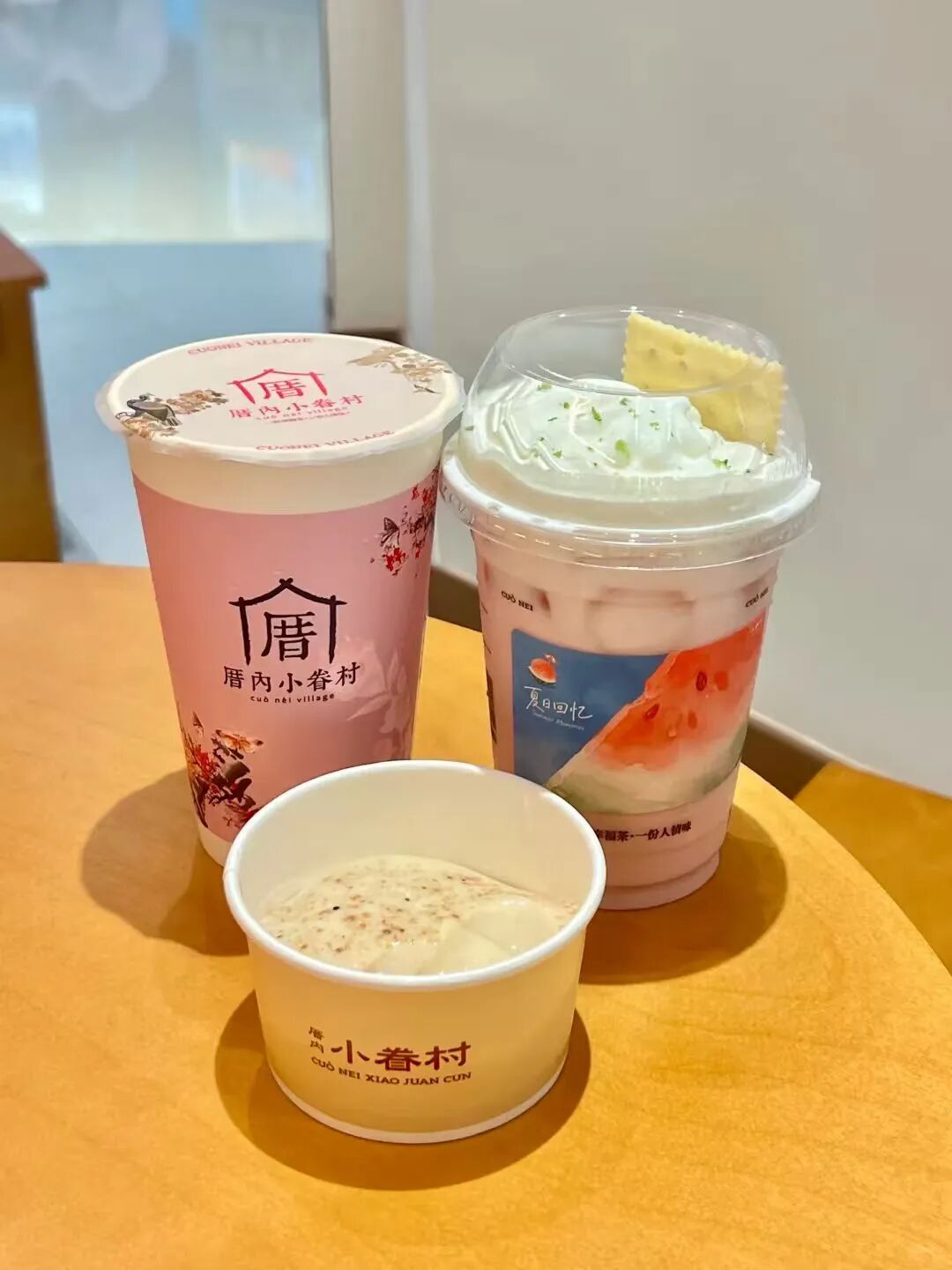
Once wildly popular old brands such as Cuonei Xiaojuancun and Alley Tea have started their "second venture" after a large-scale contraction of their store network.
Source: Xiaohongshu @Yoki To Be Self-Disciplined
The familiar old-school flavor for consumers is still retained: Cuonei Xiaojuancun keeps its signature silky tofu pudding and sesame taro balls; Alley Tea refocuses on its brown sugar deer pill fresh milk, streamlining its menu to highlight signature products, and adjusting its raw materials and store formats as well.
These returning players profit from their brand assets. The cup of milk tea that old customers have been thinking about gives new stores the opportunity to win back regular customers.
However, after old customers finish their first cup, they will still re-compare the price, taste and convenience. If the brand enters a new market, the nostalgia card will no longer work. Nostalgic products can be the entry point for a restart, but they cannot be a protective amulet.
This round of Taiwanese-style bubble tea resurgence has also attracted a group of regional entrepreneurs. Chengdu's Li Shanshan Tea House has incubated the brand toti, and Oumomo, which originated in Changshu, Jiangsu, has successively entered cities including Suzhou, Hangzhou and Wuhan. Taiwanese-style bubble tea specialty stores have become the entry point for this group of entrepreneurs.
Compared with old brands, this group of new players still lacks brand awareness, and they rely more on products and store design to create memorable highlights. toti puts the tea boiling and topping making process in an open-view area, turning the production process itself into an experience; Oumomo emphasizes Taiwanese-style handmade production, and links its Alishan tea base, Taiwan tea culture and retro store space together.
This group of new players makes profits from the value of specialty stores.
However, for these new players, it is obviously difficult to build the store network and brand mindshare that old brands have in a short period of time. Perhaps the more worthy reference is the expansion logic of old brands: first create a signature product, then use directly-operated stores to test regular repurchase and single-store profitability, and only then open up franchising.
The most worrying scenario is to invest the resources of a specialty store, but end up running a daily business that lacks unique features, resulting in high product prices and no reason for customers to make a special trip to buy.
04
Conclusion
Fresh milk, handmade production and on-site preparation have allowed Taiwanese-style bubble tea to keep up with today's consumer demands. However, peers can also quickly catch up. For example, Luckin Coffee has launched a pearl milk tea series in its 36,000 stores across the country.
The fact that Taiwanese-style bubble tea can go through three cycles shows that the old-school flavor still has a market. But this sense of nostalgia belongs to the entire category, and brands still need to find their own unique position.
Next, it is up to the brands to prove why they deserve to stay in the game for the long term.
This article is from the WeChat official account "BrandPrism", written by Zhang Lingling, edited by Tian Tian, and published with authorization from 36Kr.