More and more young people are falling in love with making handicrafts.
In an era where AI accelerates everything, handicrafts that operate on a "slow" rhythm are unlocking diverse business possibilities.
On the content side, handicrafts have become a key vertical category prioritized by platforms, which plan a series of online and offline activities to enrich community culture; on the supply side, many individual studios are evolving into independent brands, and consumer experiences are in turn feeding back into production; on the content category side, perler bead crafting has reached a leading scale, driving the development of the entire industrial chain covering materials, tools, patterns and offline experience stores.
On weekday evenings, the dormitory building falls quiet after work. Zhiling sits down at a 1.2-meter-wide table, on which lie velvet threads, cardboard, copper wires, scissors, white glue and scattered decorative flower pieces.
She works as a gardener by day, growing flowers at work; at night, she "grows" another kind of flower at this very table. Twisted silk flowers, or chan hua, originated in the Song Dynasty: the skeleton is made of cardboard and copper wire, and flower petals, leaves and branches are wrapped around layer by layer with silk threads. Making a simple flower takes a whole night; for a more complex one, such as that chrysanthemum, she spent more than half a month working on it intermittently.
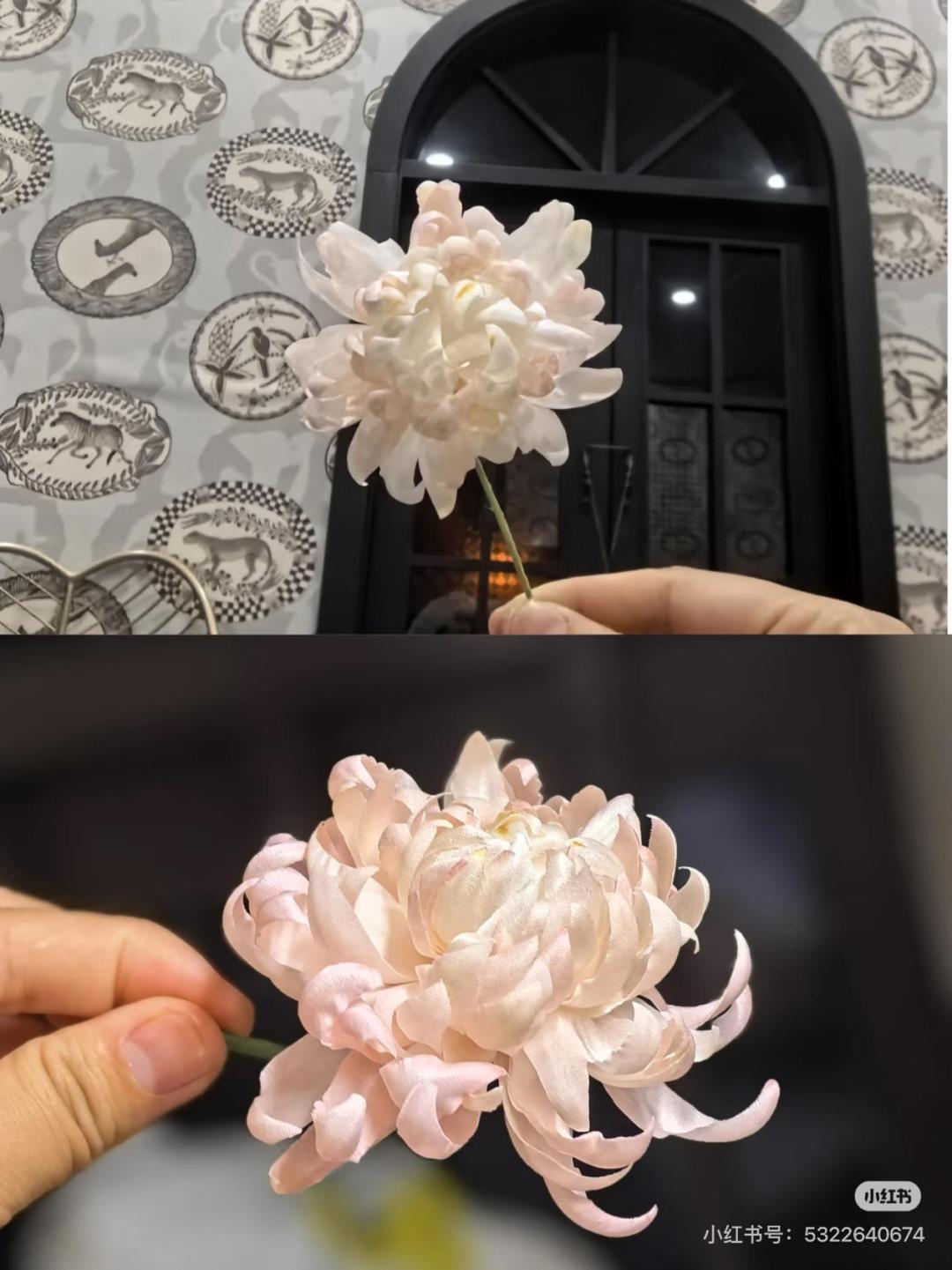
None of these things are related to her career or income — they are her own creative output. Nowadays, every app on the mobile phone is competing for users' time and attention, and algorithms cut the day into countless seconds-long fragments. Handicraft making is almost the exact opposite of all this: it is inefficient, slow, and cannot be fast-forwarded, yet it allows people to regain the right to choose how to spend their time and what to create.
This kind of "choice" is forming a thriving handicraft economy landscape. On the content side, handicrafts have become a key vertical category prioritized by platforms, which plan a series of online and offline activities to enrich community culture; on the supply side, many individual studios are evolving into independent brands, and consumer experiences are in turn feeding back into production; on the content category side, perler bead crafting has reached a leading scale, driving the development of the entire industrial chain covering materials, tools, patterns and offline experience stores.
Handicrafts are no longer just about sharing hobbies — clear business opportunities are emerging across content, branding and supply chains.
In an era where AI accelerates everything, handicrafts that operate on a "slow" rhythm are unlocking diverse business possibilities. Stories often start at a single table, then spread to countless more tables.
1
Recreating the World on the Desktop
Many handicraft lovers are drawn into this hobby by a short video.
Content creator @Feizhai886 got into making "liusha majiang" (quicksand acrylic ornaments) after watching a video by well-known creator @Shuangcha in 2023. "Liusha majiang" refers to placing quicksand sequins in the acrylic interlayer of a mahjong-shaped ornament, which creates a flowing and sparkling effect when flipped. Leveraging the light and shadow effects of short videos, quicksand acrylic ornaments can often better present unique scene atmospheres, allowing many ACG enthusiasts to find a way to accurately restore specific story plots and characters they love.
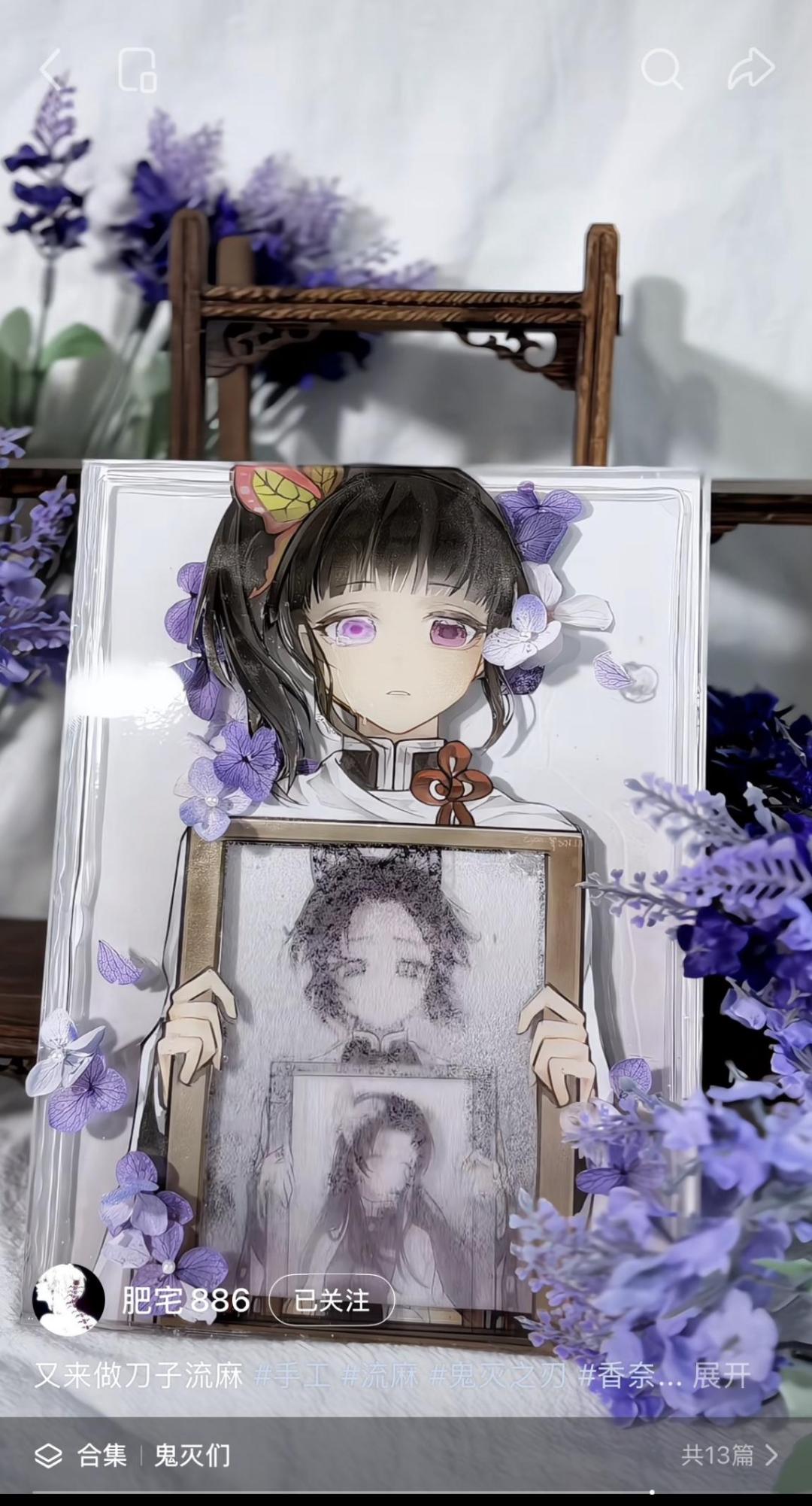
The top pinned *Demon Slayer* themed quicksand acrylic work by @Feizhai886
After watching the quicksand acrylic videos posted by @Shuangcha, @Feizhai886 tried to make a quicksand ornament for the game character "Sun Ce". Behind "Sun Ce", there are not only flowing fine powder, but also a hand-made glazed petal she tied herself as decoration.
Some other lovers extend the hobby from their original interest circles. Su, who has been doing cross-stitch for a long time, found that "crocheting is not as difficult as I imagined" when she wanted to make a special gift for someone she likes. After that, balls of wool slowly turned into bags, scarves and small ornaments in her hands.
Zhiling got to know twisted silk flowers because of her interest in Hanfu, and she began to learn it systematically after switching to a job with more flexible working hours the year before last. Once when browsing Xiaohongshu, she found that a twisted silk flower work posted by a creator was quite simple but got good engagement data, and she thought she could also try to post her own works. That was when she registered her social media account @Zhiling (Hairpin Maker) to share her works and tutorials.
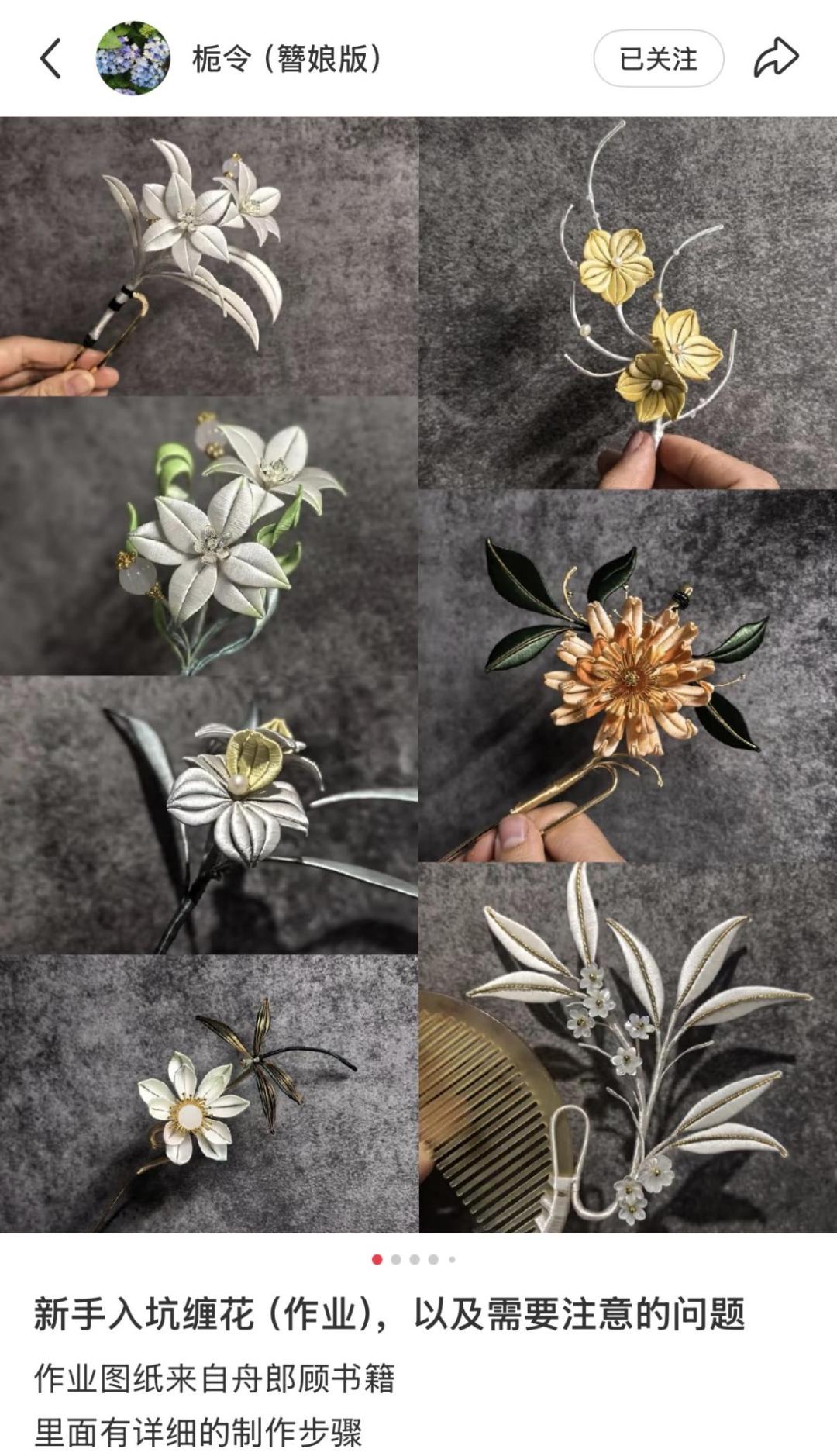
Her first post on Xiaohongshu
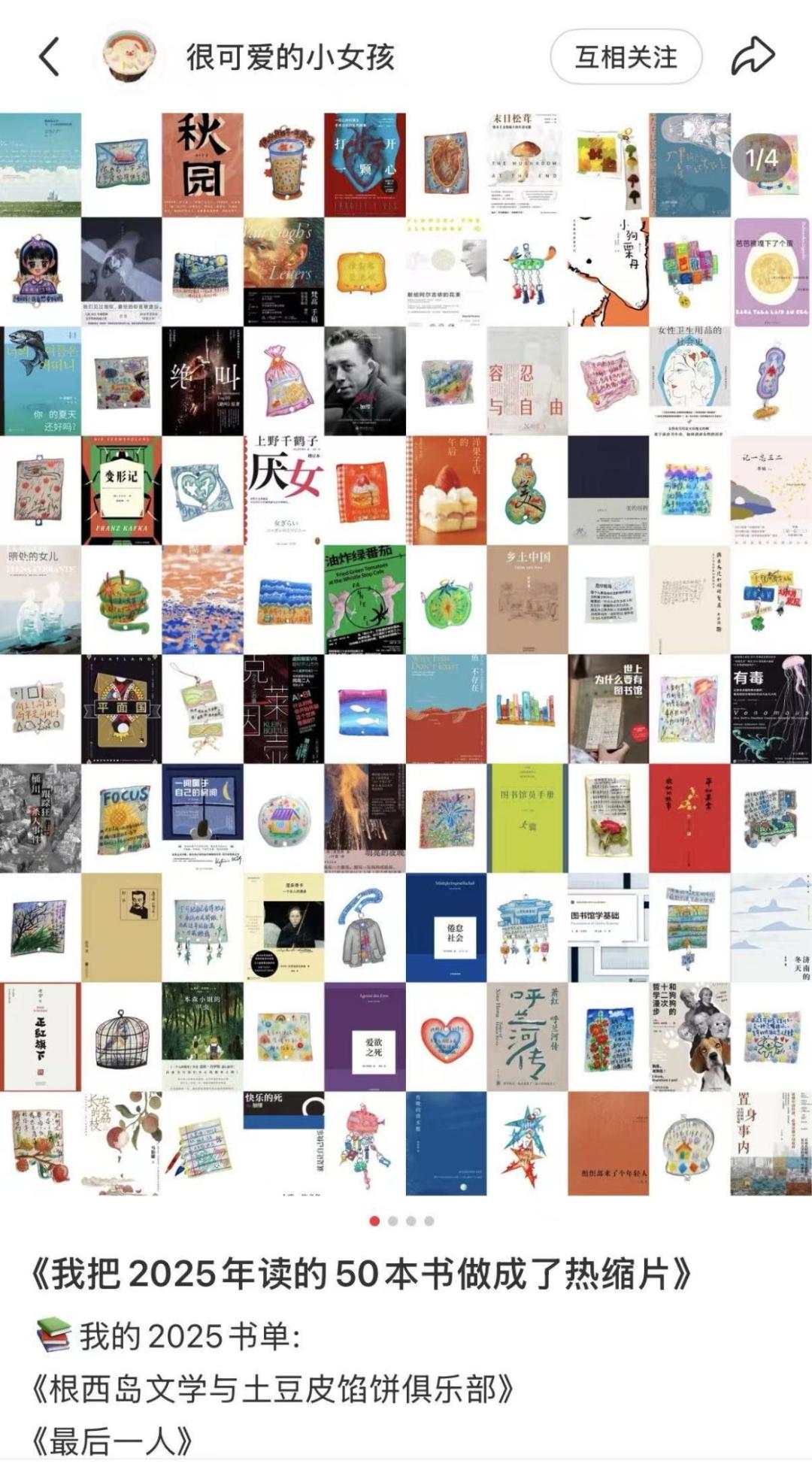
Social interaction is also a key channel for people to get into handicrafts. Creator @VeryCuteLittleGirl got into shrink plastic craft during the 2025 Spring Festival, when her cousin who also loves handicrafts brought shrink plastic tools to her home and made crafts with her. Shrink plastic shrinks when heated: you can draw patterns on the plastic sheet and heat it to make ornaments.
Half a year after that experience, @VeryCuteLittleGirl saw a shrink plastic desk lamp on social media and was deeply attracted. She bought the tools, combined shrink plastic craft with her wish of "reading more books", and started posting a series of posts on Xiaohongshu titled "Turning books I have read into shrink plastic works". She hopes that when she finishes reading 100 books, all the content needed for the shrink plastic desk lamp will be completed.
Compared with perler bead crafting, the most popular and accessible handicraft category nowadays, the above-mentioned vertical handicraft categories all have relatively higher entry barriers.
After mastering the basic skills of making quicksand acrylic ornaments, @Feizhai886 found it hard to find corresponding tutorials for subsequent creation. "Everyone wants to create a different atmosphere, and a slightly larger proportion of the powder used in quicksand acrylic will lead to a completely different effect, so I can only try and make mistakes by myself and sum up experience."
When Zhiling wanted to learn velvet flower making, she chose to find a professional teacher. "Velvet flower making has multiple schools of its own, and the cost of tools and silk fabric is quite high. Learning from a teacher can help me learn systematically, for example, how to composite materials, how to paste the fabric without causing snags or making the fabric frizzy."
The process may be tedious, but this kind of exploration forms the meaning of handicrafts. A handmade product embodies the creator's aesthetic taste, interest, skills, as well as the time and experience they have invested in it.
After making twisted silk flowers for several years, Zhiling is no longer satisfied with the pre-cut paper templates on the market. "Those pre-cut and pre-designed templates get boring after you use them many times, so you will start to draw patterns by yourself." Now she also makes her own patterns when making velvet flowers, figuring out how to adjust the flower shapes.
Su used to hide her favorite "inside jokes" in the text when writing articles in the past, and now she integrates these jokes into her crocheted works. When the movie *Lychees in Chang'an* was released, she gave a string of crocheted lychees to her friends who watched the movie with her. Her friend would show the lychees to her foreign boyfriend and introduce: "Look, this is a half-peeled lychee, this is an unripe lychee, and this is a fully ripe lychee."
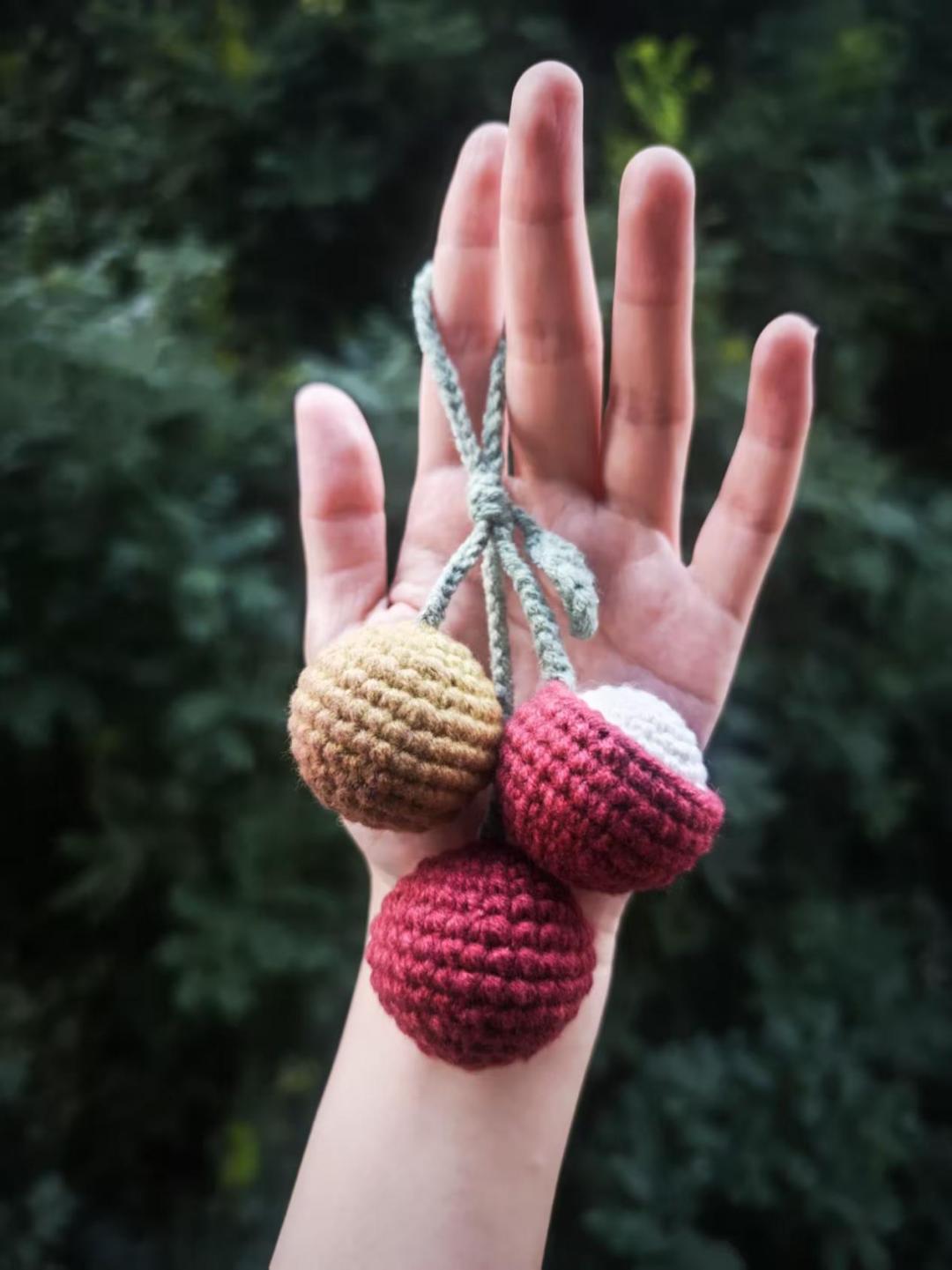
These handmade products also leave unique personal traces in the real world. @Feizhai886 found that her quicksand acrylic works have a strong personal style in the later stage, "you can tell at a glance who made it".
Large-scale factory production can hardly replicate the creative ideas of these creators, and enthusiasts can fully understand the creativity of quicksand acrylic creators. And @VeryCuteLittleGirl will soon own a one-of-a-kind, unreplicable desk lamp in the whole world.
In this era when many things can be done by technology instead, the sense of confirmation that "I can make something myself" has become precious. Zhiling says the most attractive part of handicrafts for her is the immediate positive feedback. "When you learn a new skill, it often takes a long time to see the results, but the immediate positive feedback of making handicrafts is very strong."
As psychologist B.J. Fogg said, "Celebrate your tiny successes. Even if you feel you can't get out of the woods right away, small changes in life can make a huge difference."
Some media previously wrote that in an environment where technology changes rapidly and life is full of great uncertainty, "seeking inner stability" has become a common choice for a group of young people.
This sense of confirmation will also quietly change a person's attitude towards "consumption". Now when Su sees something she wants to buy, her first reaction is "can I make it by myself"; after making quicksand acrylic ornaments, @Feizhai886's enthusiasm for buying anime peripherals has dropped a lot, "I will only consider buying one when I see a really beautiful illustration design".
When an object can be created by yourself, consumption is no longer the only option.
2
When an Enthusiast Starts to Build Their Own Brand
The finished handmade products are highly related to creativity, with strong subjectivity. As a result, many enthusiasts can smoothly transition from being pure consumers to producers quickly in this process.
In some handicraft fields, the tools, materials required for each link and the final circulation link are not standardized. Unlike perler bead crafting, where there are dedicated brands for both the beads and the ironing machines, @Feizhai886 told us that many tools for making quicksand acrylic ornaments are originally designed for other purposes, such as manicure. She once tried to sell handmade products through group purchases, but now she chooses to monetize by taking orders through self-media content, and the income is not enough for her to do handicrafts full-time.
In some other handicraft fields, whether it is tools, materials or circulation links, the system is quite mature, such as perler bead crafting and crocheting. But there are still many creators who can monetize with their creativity: illustrators in the perler bead circle sell pixel patterns, while crocheting creators sell their own diagram videos for crocheted works.
Wang Haha, the founder of @ZhiYuChai, wants to build her own brand in the crocheting field.
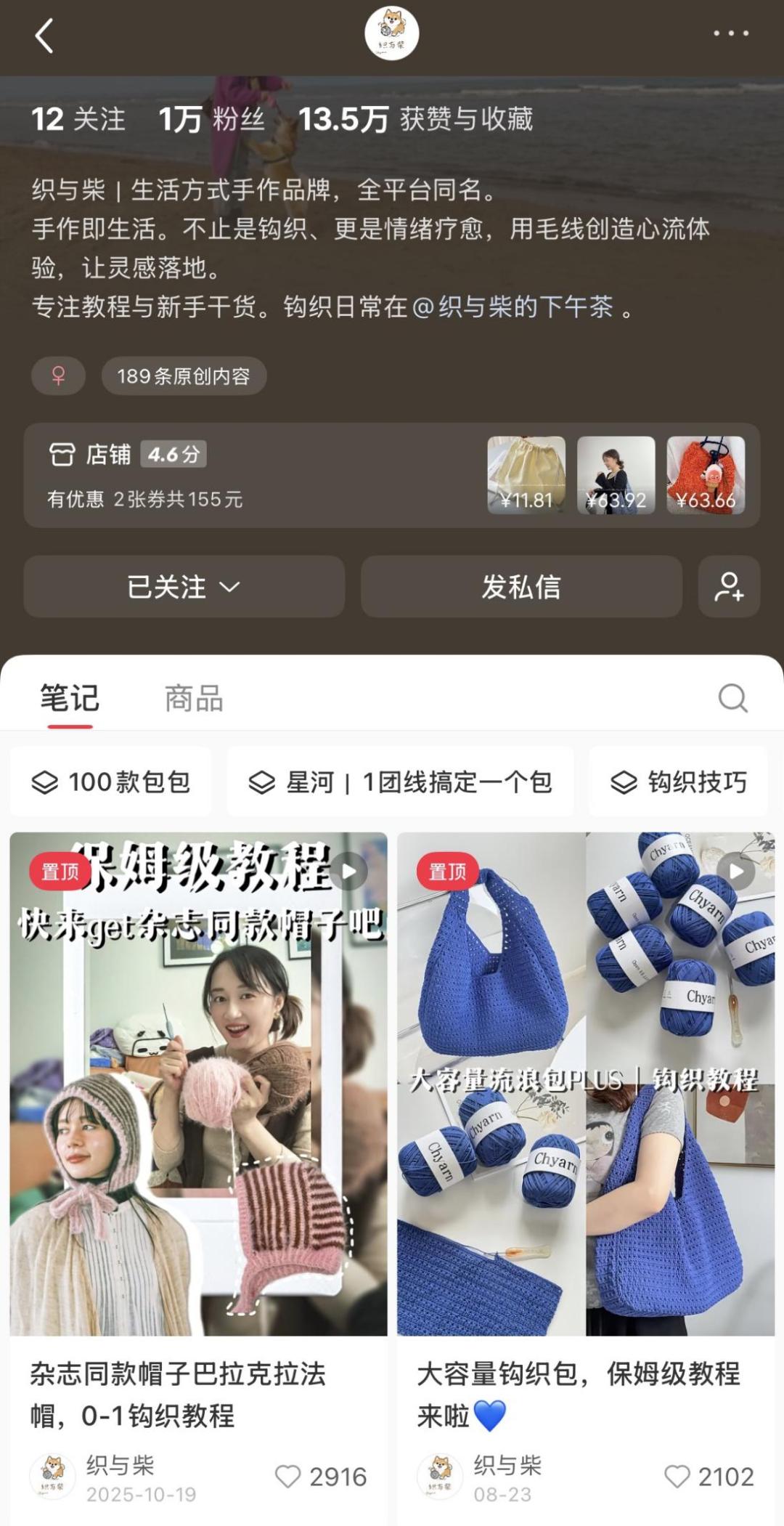
Two top pinned notes on @ZhiYuChai's account
During the 2025 Spring Festival, Wang Haha wanted to buy a neckerchief for her Shiba Inu, but found that most of the ones sold online were for cats, and the few nice ones were not the right size. So she decided to learn to crochet one by herself, and then she got completely hooked, making many neckerchiefs for her Shiba Inu and herself. Crocheting has integrated into her life, and she has been used to "crocheting something in my hands every day".
Later, she posted crocheting videos on Xiaohongshu one after another, and many people kept asking her for tutorials and material kits. Having worked as a business reporter and also served as a PR specialist in a company, she came up with the idea of founding a brand.
"Crocheting and pets are the two things that make me feel the happiest in my life, they are a kind of healing," Wang Haha said when talking about the original intention of founding "ZhiYuChai". "Chai (Shiba Inu) can also represent a down-to-earth life. I hope when people buy or experience crocheting, they can take it as a lifestyle and integrate it into our daily life."
In this way, Wang Haha launched the lifestyle handmade brand "ZhiYuChai Chyarn". But the standards for selling wool are much stricter than those for selecting wool as a consumer.
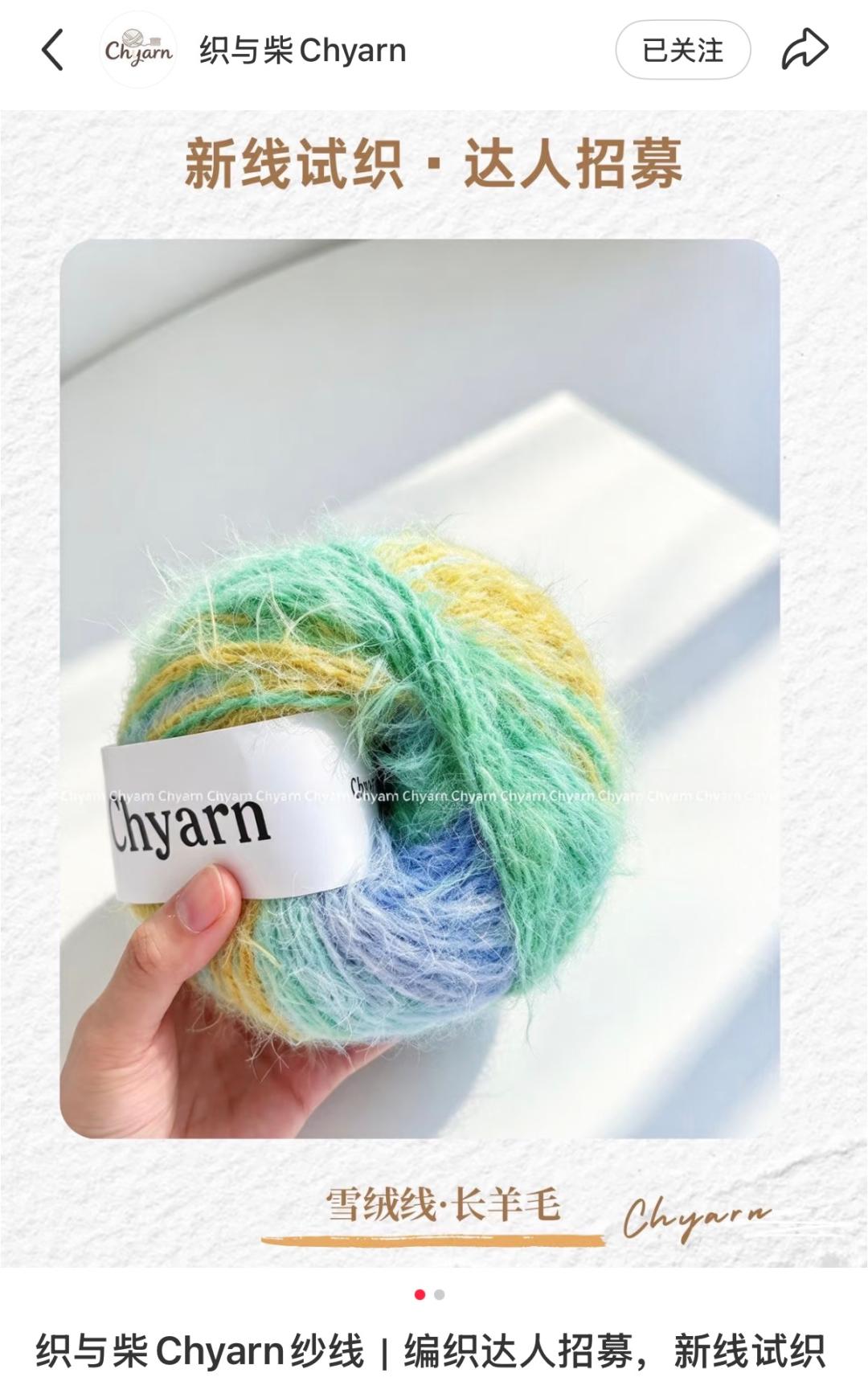
She usually communicates with more than a dozen manufacturers at the same time, buys back wool samples to observe their color and smell, crochets finished products by herself to carry out combustion tests and washing tests, and only puts the products on the shelves after comprehensive evaluation. At the same time, she also plays the role of a "producer", integrating the first-hand experience as a consumer and user feedback she receives into product development. The best-selling "cat belly" wool in her store now, with young color matching and soft texture, was co-developed by her and the factory.
The original intention of Wang Haha's brand building is to let handicrafts integrate into daily life with low barriers. Therefore, although she pays close attention to the crocheting trends in Europe, America, Japan and South Korea, the material kits she sells are more simple and practical in style.
Wang Haha built a mini-program, where users who buy products can unlock detailed diagram videos, and directly ask customer service for help when they get stuck. "Otherwise, users have to go back to social media to search for videos, drag the progress bar back and forth, and it's easy to switch to other apps, the whole process is too long."
In addition, Wang Haha also wants to lower the threshold for consumers who have entrepreneurial ideas. At present, she is also doing brand consulting business, trying to help more people like her in the past, who want to transform from enthusiasts to entrepreneurs, to build their own brands. She wants to set up an industry alliance, so that everyone can give full play to their own advantages such as creativity, supply chain resources and skills, "to make the whole handicraft economy bigger together".
3
The Possibility of Large-scale Supply
Standardized and large-scale supply is becoming the key to meet the growing demand for handicraft experiences. After the materials and gameplay are standardized, non-professional users can also get the handicraft experience at a very low threshold.
The