What about your old clothes that you no longer wear? Sell them on the "AI version of Zhuanzhuan", with a gross profit margin of 80%.
What do you do with your old clothes?
I of course recycle them on Zhuanzhuan, which is an official second-hand platform, more formal than most ordinary second-hand platforms...

What we are going to introduce today is the "AI version of Zhuanzhuan".
It uses AI to automatically identify the color, category and size of clothing, and sets prices by combining product quality and market demand, reducing the difficulty of processing non-standardized goods.
Every year, about 17 million pieces of old clothes start from strangers' wardrobes, pass through it, and walk into another stranger's wardrobe.
From Shopkeeper's Experience to AI Valuation
There is a definite stock keeping unit behind every new piece of clothing. Thousands of identical shirts of the same style, same color and same size look exactly the same. Warehousing, pricing and listing are not complicated for the system to process.
However, ThredUp's processing center receives millions of pieces of consigned clothing every year, and each piece is a unique item. This plaid shirt has been washed twenty times and its collar is slightly curled; that pair of jeans is marked size 32 but actually has a larger waist; another sweater feels brand new but its tag has fallen off.
So how does the platform evaluate the price? The staff of the consignment store usually accepts goods based on experience, touches the fabric, glances at the brand, estimates a price in mind, reduces the price if it cannot be sold for several months, or returns it to the consignor.
Many charity second-hand stores set a unified price by category: a few dollars for a shirt, more than ten dollars for a pair of jeans. Good goods and bad goods are mixed under the same price tag. People who pick up bargains get benefits, but the store can hardly know how much a good item is worth. This method works on a small scale, but once the volume increases, manpower can hardly support it.
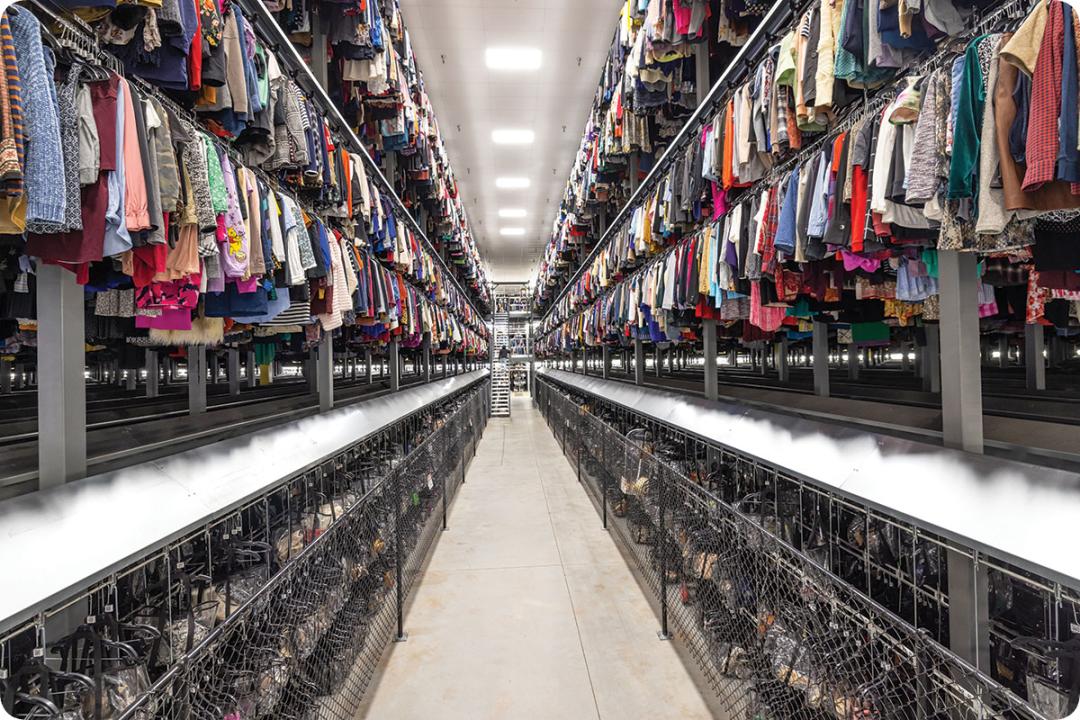
ThredUp is a company in this industry that has completely industrialized the process. According to a 2023 report on its distribution center by *Modern Materials Handling*, incoming clothes first go through 12 quality checks. Qualified ones are hung on hangers with QR codes, and staff enter the category, brand, color, size, fabric and washing method, while the price is determined by proprietary machine learning software. High-priced clothes are shot on mannequins, low-priced ones are shot flat, and they are listed only after the photos are checked.
Later, AI took over more links, which can automatically identify color, category and size, and then put the condition and market demand into the algorithm for pricing. According to a report by PYMNTS in April this year, the platform has more than 4 million products on sale all year round, and tens of thousands of new products are added every day. A set of reinforcement learning models monitors real-time demand and automatically reduces the price of clothes that sell slowly.
The company has also invested more than 400 million US dollars in supply chain automation, covering product identification, size measurement and shooting.
The result of these investments is that ThredUp can sell about 17 million pieces of clothing every year. In the second quarter of 2025, its gross profit margin reached 79.5%, while traditional clothing retailers rarely exceed 30%.
For consumers, ThredUp opened three AI functions in August 2024: upgraded search, image-based search, and Style Chat.
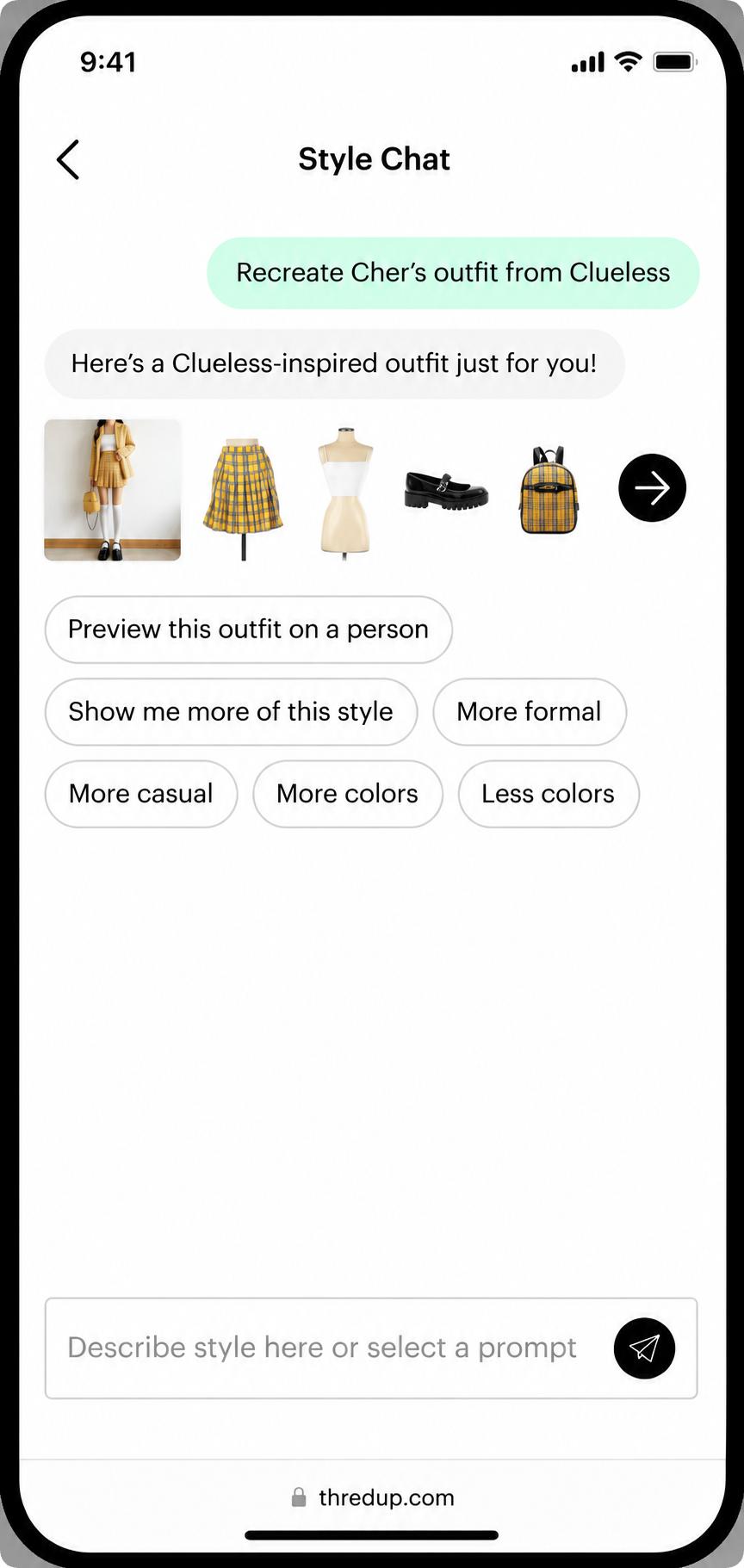
Style Chat is like a conversational stylist. If you enter "what to wear to an autumn wedding", it will give you a full set of matching, and if you enter more requirements, it will adjust accordingly.
Image-based search allows users to upload photos or share an Instagram post to find similar styles in the inventory. Data disclosed by the company shows that consumers who use image search are 85% more likely to place an order than ordinary browsers.
People who use this function come with specific needs, and AI helps them lock in the target. The clearer the intention, the smoother the conversion. Because the products on the second-hand platform are too scattered, being able to help people find the "right" one among millions of old clothes is the core threshold.
Why are people brought by AI more willing to place orders
The latest data from Adobe shows that compared with ordinary shoppers from other traffic sources, shoppers who access retailer websites through AI channels such as ChatGPT are more likely to extend their browsing time, add products to their shopping carts, and most importantly, more likely to complete conversions.
In July this year, the conversion rate of shopping users from AI channels was 60% higher than that of shopping users from other channels, the revenue per visit was 53% higher, the bounce rate was 34% lower, the stay time was 59% longer, and the number of pages browsed was 22% more.
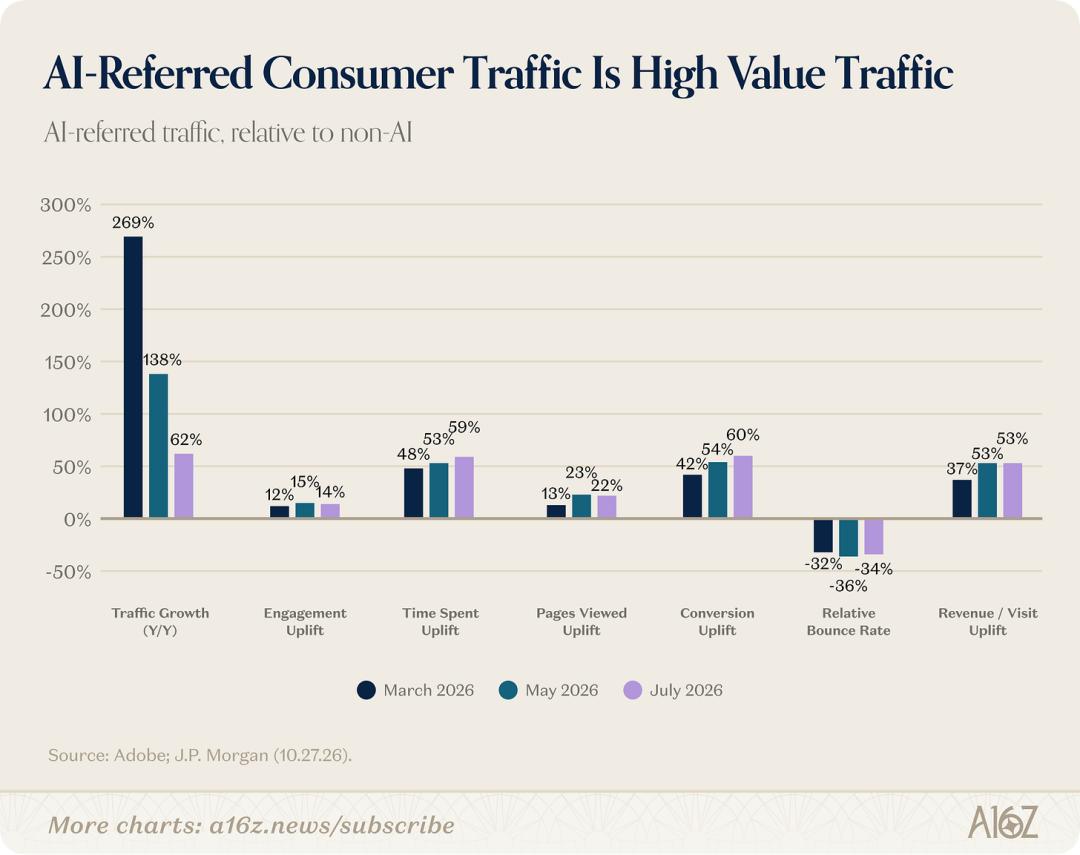
This conversion rate advantage has been maintained for 11 consecutive months. The situation was the opposite a year ago, when customers brought in by non-AI recommendations spent more per visit. This means that AI assistants are getting better and better at showing relevant products to customers with higher purchase intentions.
Back to the scenario of second-hand clothes, the goods on the second-hand platform are massive. ThredUp alone has more than 4 million items on sale, each of which is different, and there are no hit products that people can follow blindly. It is easy for people to get tired when browsing such shelves.
There is a famous jam experiment in psychology. In 2000, Iyengar and Lepper set up a stall in a supermarket. When 24 kinds of jams were displayed, 60% of passersby would stop to taste, but only about 3% ended up buying. When 6 kinds of jams were displayed, only 40% of passersby stopped, but about 30% of them bought.
The saying that too many options make it harder for people to make decisions spread from this experiment.
Later, some people put forward different opinions. A meta-analysis summarizing dozens of experiments in 2010 found that choice overload is more likely to occur when the options are complex and people do not have clear preferences.
People who browse second-hand goods often have no specific goals, what they want is "suitable, good-looking and cheap", which is exactly a situation where overload is easy to occur. AI shrinks millions of items into a dozen for people, using a sentence or a screenshot to get a much smaller range.
According to ThredUp's survey, 48% of second-hand shoppers have used AI tools when shopping. People whose selection range has been narrowed down have already completed half of the decision when they arrive at the product page, and the rest is just to confirm the size and price, so it is not surprising that the conversion rate is high.
Of course, the users brought by AI are not a monolith. They also have high requirements brought by high expectations. If the recommendation is inaccurate, it will instead strengthen the sense of disappointment — after all, "recommended by AI" implies a kind of endorsement. Once the accuracy fails, the loss of trust will be greater than that of random browsing.
This explains why all platforms are making their recommendation models more and more detailed. Knowing the brand you like is just the beginning, they also need to know that your last return was because the size was too large, that you prefer matte rather than glossy, and that you usually scroll through your mobile phone on Friday nights.
ThredUp disclosed that the number of new customers brought by AI in the whole year of 2024 increased by 32% year-on-year. The second-hand clothing category originally had thresholds, and the sense of uncertainty about texture and condition made many people hesitate. The intervention of AI is eliminating this hesitation.
From Helping You Pick to Buying for You
Identification, pricing, recommendation, the function of "helping you pick" is mature, and there are already successful samples like ThredUp. The next step is "buying for you", letting AI take your authorization to place orders and pay by itself.
In September 2025, OpenAI and Stripe teamed up to launch the instant checkout function within ChatGPT. The initial partners included some merchants on Etsy and Shopify. After users find a certain item they like in the conversation, they can complete the payment directly in the interface without jumping. This is the first time a mainstream AI conversation platform has tried to open up the last distance between "discovery" and "purchase".
However, by March 2026, OpenAI adjusted its direction, shifting the focus back to "product discovery", allowing merchants to use their own original checkout processes to receive orders, instead of uniformly following the payment closed loop within ChatGPT.
Media quoted analysts' views pointing out that Instant Checkout did not get many users, the reasons include the trouble for merchants to access, the difficulty of keeping product data accurate, and the difficulty of handling shopping carts with multiple products and member points. OpenAI itself believes that the initial version "did not provide the flexibility we expected".
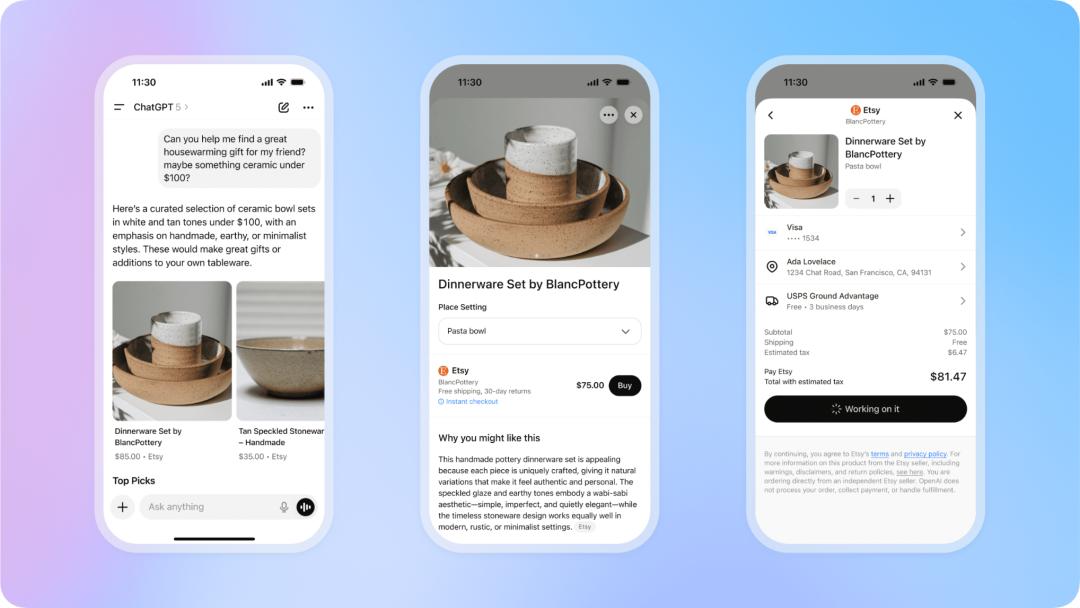
Morgan Stanley estimated in its December 2025 report that by 2030, AI shopping assistants may account for 10% to 20% of US e-commerce, corresponding to sales of 190 billion to 385 billion US dollars. The report also mentioned that about 23% of people in the United States bought things through AI last month, and groceries and daily consumer goods are the first categories to gain volume.
At present, the problems brought by "buying for you" have surfaced. Who is responsible for return disputes? Where is the authorization boundary of AI purchasing agents? In case of misunderstanding, you get something you don't want at all, who will bear the loss?
Users usually give the Agent a commission with scope, budget and time limit, instead of nodding for every transaction. The amount cap can stop expensive wrong purchases, but cannot stop cheap wrong purchases. There are no public rules to deal with "the Agent goes beyond your original intention", and merchants often have to bear the loss by themselves.
People will look at pictures, size charts and return policies before buying clothes, while Agents mostly only read data, which makes the return rate rise. ecommerceguide points out that clothing, shoes and furniture are the categories with the highest risk.
If it is second-hand clothes, there is only one piece of old clothes, once sold out, it is gone. If it is returned, it needs to be re-inspected, re-photographed and re-priced. The unit processing cost that ThredUp has reduced by scale may be increased here.
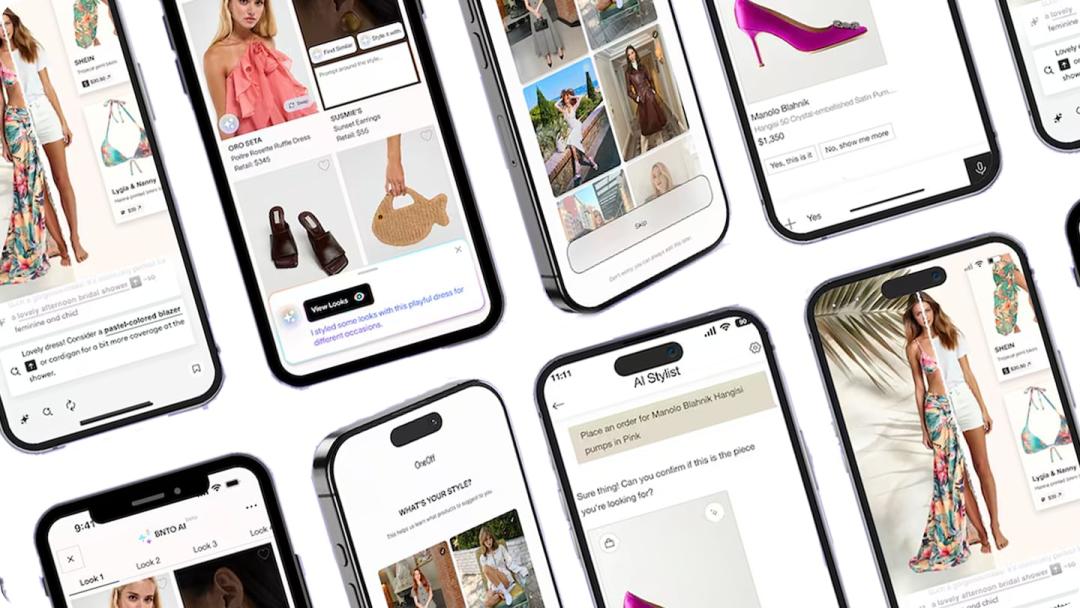
Agents look at prices and specifications, not layouts and matching recommendations. The displays that merchants have put effort into will become invalid, and second-hand products with insufficient status description will be ranked behind in the eyes of Agents.
ThredUp has long turned non-standard products into structured data. These efforts originally prepared for manual operations may become its advantages in the Personal Agent era.
This article comes from the WeChat Official Account "APPSO", the author is APPSO that discovers tomorrow's products, and 36Kr publishes it with authorization.