Alibaba has finally secured the deal with Apple
After two years of twists and turns, Alibaba has finally secured the long-coveted partnership with Apple!
On October 31, Apple and Alibaba announced a cooperation agreement to integrate Qwen into Apple Intelligence.
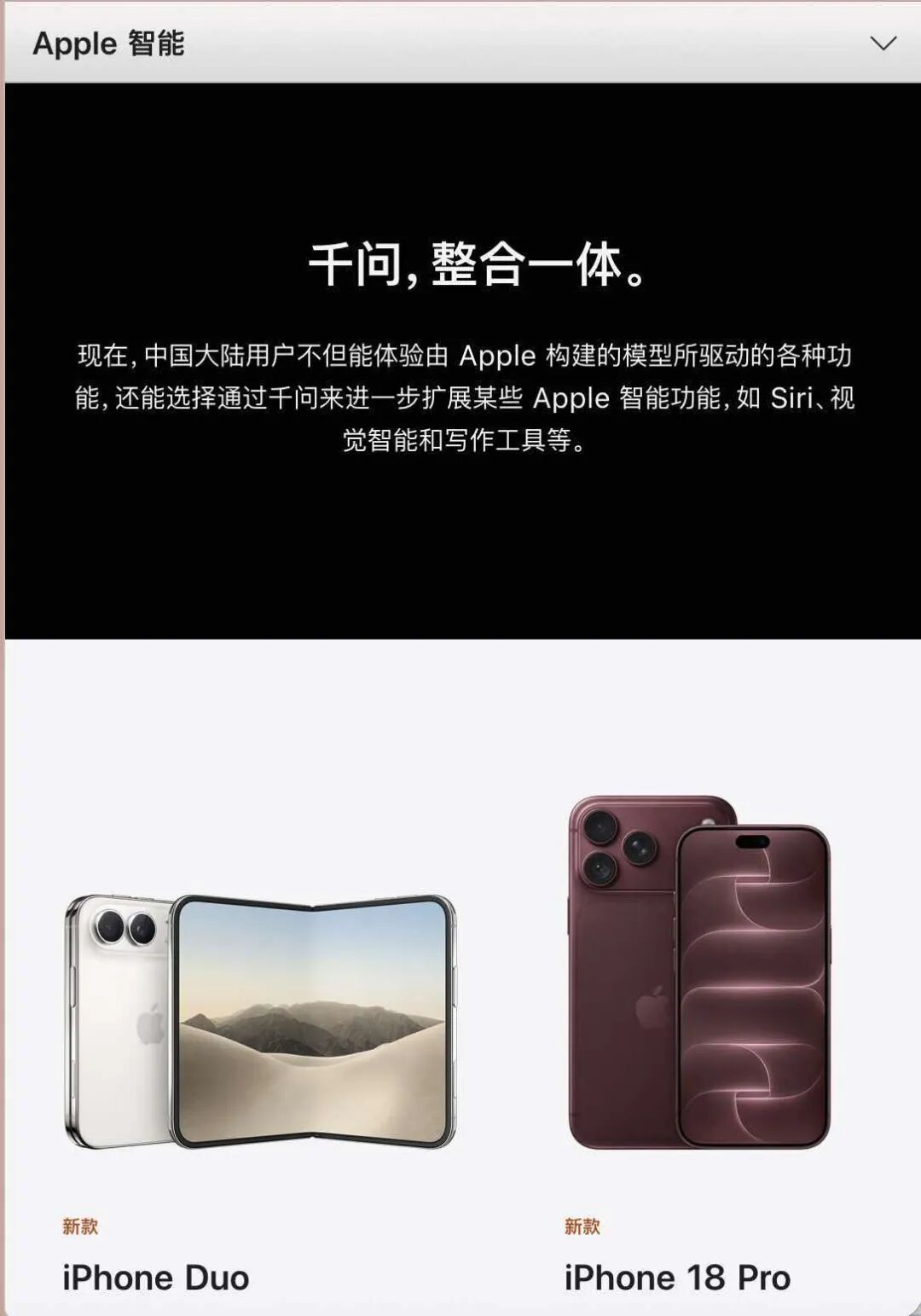
When Tim Cook finally gave the nod to allow Qwen's code to run on the China-market iPhone models, this is far more than the conclusion of a business partnership, but rather a metaphor for an era.
In smartphones, the most intimate terminal for human beings, China's large model has finally obtained a ticket to the future.
But on the back of this ticket lies a footnote that few people dare to face directly: the road to Artificial Super Intelligence (ASI) is a one-way tunnel paved with trillions of capital and massive computing power.
Over a month ago, Wu Yongming proposed the "20GW" figure at the Yunqi Conference; Zhang Yiming made unrestrained, cost-agnostic bets within ByteDance; Liang Wenfeng was advancing silently at full speed behind DeepSeek. They seem to be telling different stories, but in essence, they are all heading for the same destiny.
This is not only a battle of faith around the Scaling Law, but also a brutal capital war.
When the former king of e-commerce tries to forge a new king in the silicon-based wasteland, a new Alibaba with a 2-trillion-yuan scale is gradually taking shape in this high-stakes gamble.
1、
Qwen's integration into Apple has been officially confirmed. Starting from November 4, these features will be open for testing with the latest iOS developer Beta version, and will be launched for Chinese users when the official iOS 27.3 is released in December.
At that time, Chinese users can directly call Qwen's capabilities including text and image understanding, content generation in Siri, writing tools and visual intelligence.
After a full year of anxiety at the application layer, this is probably the most exciting moment for Alibaba's AI business this year. It means that Alibaba's intelligence has finally truly entered the pockets of countless people.
Why Qwen? In this two-year-long "eight-select-one" selection process, Apple had many alternatives, including DeepSeek, Doubao, Baidu, Kimi... and finally, Apple chose Alibaba.
What Apple values far more than Qwen's ranking on the benchmark leaderboards is the unfathomable hidden card behind it — the full-stack AI infrastructure that integrates large models, chips and cloud computing as a whole.
The open-source family of Qwen large models has accumulated billions of downloads, growing into one of the world's largest open-source communities. The team is advancing recursive self-improvement, with the parameter scale expanding to 5 trillion to 10 trillion.
T-Head released its AI chip Zhenwu V900 in September, whose computing power is three times that of the previous generation. It will go into mass production in the first quarter of 2027, and the cumulative shipment of the Zhenwu series has reached 470,000 units. Deutsche Bank estimates that its material cost is about 40% lower than that of NVIDIA H20.
What connects all these parts is cloud computing. At the Yunqi Conference on September 22, Wu Yongming announced that by 2032, the total computing power of data centers operated by Alibaba Cloud will exceed 20 gigawatts, equivalent to a quarter of the total global computing power today. According to Gartner's statistics, Alibaba Cloud has already captured 32.8% of China's cloud market share, ranking first.
However, amid the hustle and bustle since the beginning of this year, Alibaba's AI seems to have been relatively low-key. While ByteDance's Doubao has set off wave after wave of popularity on short video and social platforms, and native AI companies such as Kimi have updated their large models time and again, Alibaba rarely competes for attention in the C-end traffic field.
The implementation of the cooperation between Apple and Qwen has finally let the market see Alibaba's strength. Wu Yongming's "20 gigawatts" figure further declares Alibaba's ambition: to move towards ASI.
20GW is equivalent to the power generation capacity of 10 Three Gorges Dams, or a super brain that can support the computing power demand at the level of human civilization.
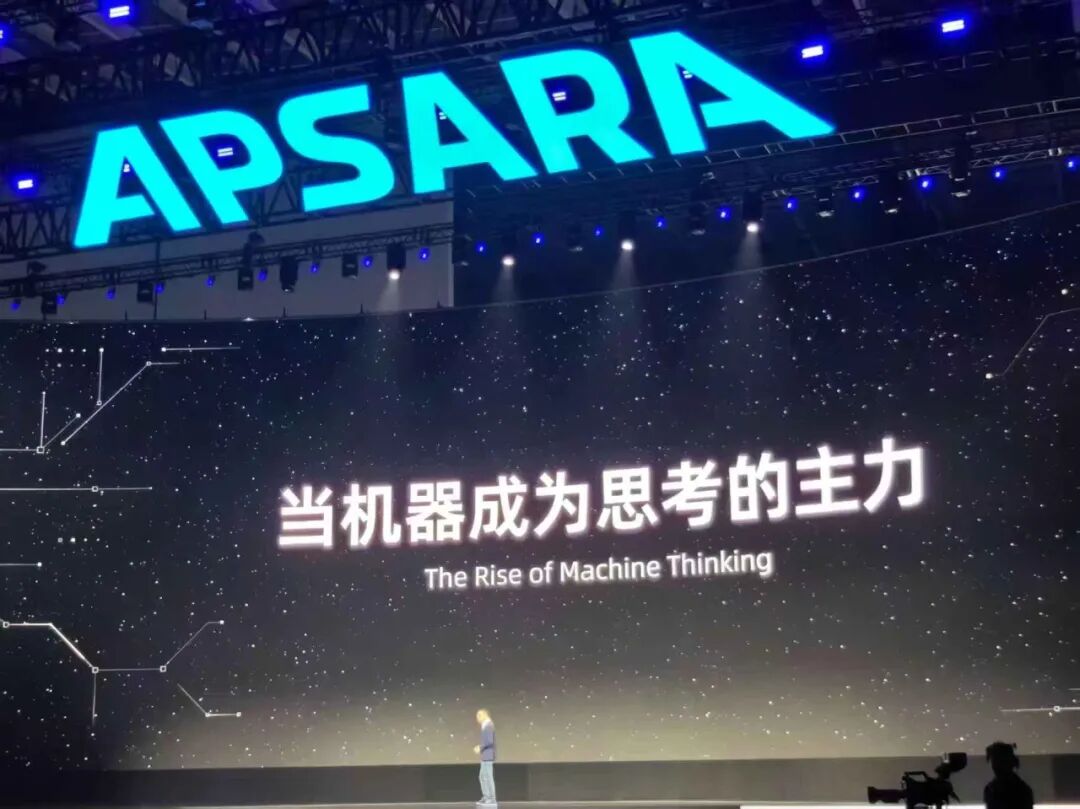
Among the players pursuing ASI (Artificial Super Intelligence), Alibaba, ByteDance and DeepSeek, the three most determined players, have almost unanimously chosen the same path: fully committed to the Scaling Law.
Zhang Yiming has long calculated the accounts clearly inside ByteDance. The Seed team does not need to explain ROI to business departments. ByteDance's annual 200-billion-yuan investment in computing power is buying the ticket to "recursive self-improvement".
Liang Wenfeng and DeepSeek have pushed all their chips to the deep water zone at the bottom of the model. The 105.5 billion yuan of financing is not spent on PPTs, but on real parameters and computing power clusters.
These three paths all lead to the same destination: heavy assets.
There are no shortcuts in this logic. It means 5 to 10 years of continuous operation and maintenance in the future, which is a trillion-yuan level long march.
They are all betting that the Scaling Law curve will not break suddenly at a certain inflection point, and that when the computing power reaches the critical point, intelligence will gush out from the crevices of the rocks by itself, just like water.
2、
On the other side of this story, it is also a capital war that no one can quit. What it competes for is not whose PPT is more attractive, but who has thicker cash flow and more sophisticated capital operation capabilities.
Alibaba is obviously the most well-equipped heavy armored knight in this war.
Many people have forgotten that Alibaba is first and foremost a money printing machine.
Even in today's fiercely competitive e-commerce industry, Alibaba can still generate hundreds of billions of yuan in free cash flow every year.
This is the confidence for it to dare to write the 20GW target into its strategic plan. When others are still running around for the next round of financing, Alibaba can directly draw funds from its e-commerce profit pool to nourish the roots of AI.
But profits alone are not enough, the capital market needs to see determination. That's why we saw the HKD 80 billion share placement. Alibaba's largest capital operation in seven years!
This is not a simple loan, it is a signal flare jointly sent to the market by Joseph Tsai and Wu Yongming.
They are telling everyone: we are willing to dilute our current equity in exchange for a ticket to the future.
What is more subtle is that while Joseph Tsai and Wu Yongming carried out the share placement, they also made real-money increases in their holdings on the secondary market.
The implication of this combination of moves is crystal clear: we are determined to win this war.
In comparison, although DeepSeek has the financing capability supported by national-level platforms, policy backing and long-term capital, it is more like a special forces soldier carrying out targeted blasting on a specific highland.
Alibaba, on the other hand, aims to fight a full-scale war, advancing simultaneously on all battlefields of e-commerce, cloud, AI, logistics and local life services.
This is extremely difficult.
From the king of e-commerce to the standard-bearer of AI, there is huge organizational inertia, countless people's doubts, and the risk that the technical route may collapse at any time.
But Wu Yongming and Joseph Tsai seem to be fully prepared.
They are well aware that the road to ASI is destined to be lonely. At this stage, there are no applauses, only the roaring noise of servers; there are no flowers, only the constantly jumping electricity bills.
But they still move forward without hesitation.
Because in that 20GW blueprint, there hides another new Alibaba with a trillion-yuan scale.
3、
From the king of e-commerce to the heavyweight AI asset giant, Alibaba is undergoing a fateful transformation. The old Alibaba with trillion-yuan revenue is still there, and another new Alibaba with trillion-yuan revenue is growing up.
In March this year, Wu Yongming revealed at the earnings call that in the next five years, the commercial revenue of cloud and AI including MaaS will exceed 100 billion US dollars.
If the 20GW computing power is fully put into operation, according to the current pricing and call volume of MaaS (Model as a Service), it will be able to generate trillions of yuan in external commercial revenue.
When this 1-trillion-yuan AI increment is superimposed on Alibaba's originally stable trillion-yuan e-commerce basic market, a super species with annual revenue exceeding 2 trillion yuan will have a clear outline.
In China's current technology landscape, no company has yet crossed the threshold of 2 trillion yuan in annual revenue.
Even ByteDance, which is extremely prominent at the moment, recorded total annual revenue of about 1.3 trillion to 1.4 trillion yuan in 2025; the three giants of JD, Alibaba and Tencent have annual revenue of 1.3 trillion yuan, 1 trillion yuan and 750 billion yuan respectively; as for rising stars such as Meituan and Pinduoduo, they are still fighting in the 300 billion to 400 billion yuan range.
On the global stage, there are only three or four technology companies with annual revenue exceeding 2 trillion yuan, including Amazon, Apple, Google, and Microsoft has just crossed the line.
In the past, Alibaba relied on GMV to support its trillion-yuan market value, and defined itself as the king of e-commerce with a transaction volume of 8 trillion yuan. That was the glory of the last era.
But now, Alibaba is trying to use computing power, models and intelligence to build another trillion-yuan skeleton in the silicon-based world.
The cooperation between Qwen and Apple is just a newly grown finger on this new skeleton.
This cooperation with Apple has just kicked off this heavy-asset war in a good way. When Qwen answers the first question in the iPhone, what it answers is actually Alibaba's own destiny.
In 1999, Jack Ma said in his Lakeside Garden apartment that he wanted to build a company that could survive for 102 years. Alibaba became the king of e-commerce in the past 20 years, and now it also wants to reach new heights in the AI era.
Alibaba is recreating Alibaba.
(This article is for commercial analysis only and does not constitute investment advice.)
This article is from the WeChat Official Account "Future Land", written by Zhai Zong, authorized for release by 36Kr.