When Agents start building the world, the value of this track is still being underestimated.
In August 2026, Greg Brockman, co-founder and President of OpenAI, shared an interactive 3D web work themed "Human Anatomy for Teaching" on X.
The developer behind the work, @thebuggeddev, combined the 3D modeling capabilities of the large AI 3D model Tripo P1.0 with the programming capabilities of GPT 5.6 Sol to quickly polish an exquisite interactive webpage. Before that, he had no knowledge of professional 3D modeling tools such as Blender, nor had he systematically learned programming. After the work was released, the number of views on X quickly exceeded 2.1 million.
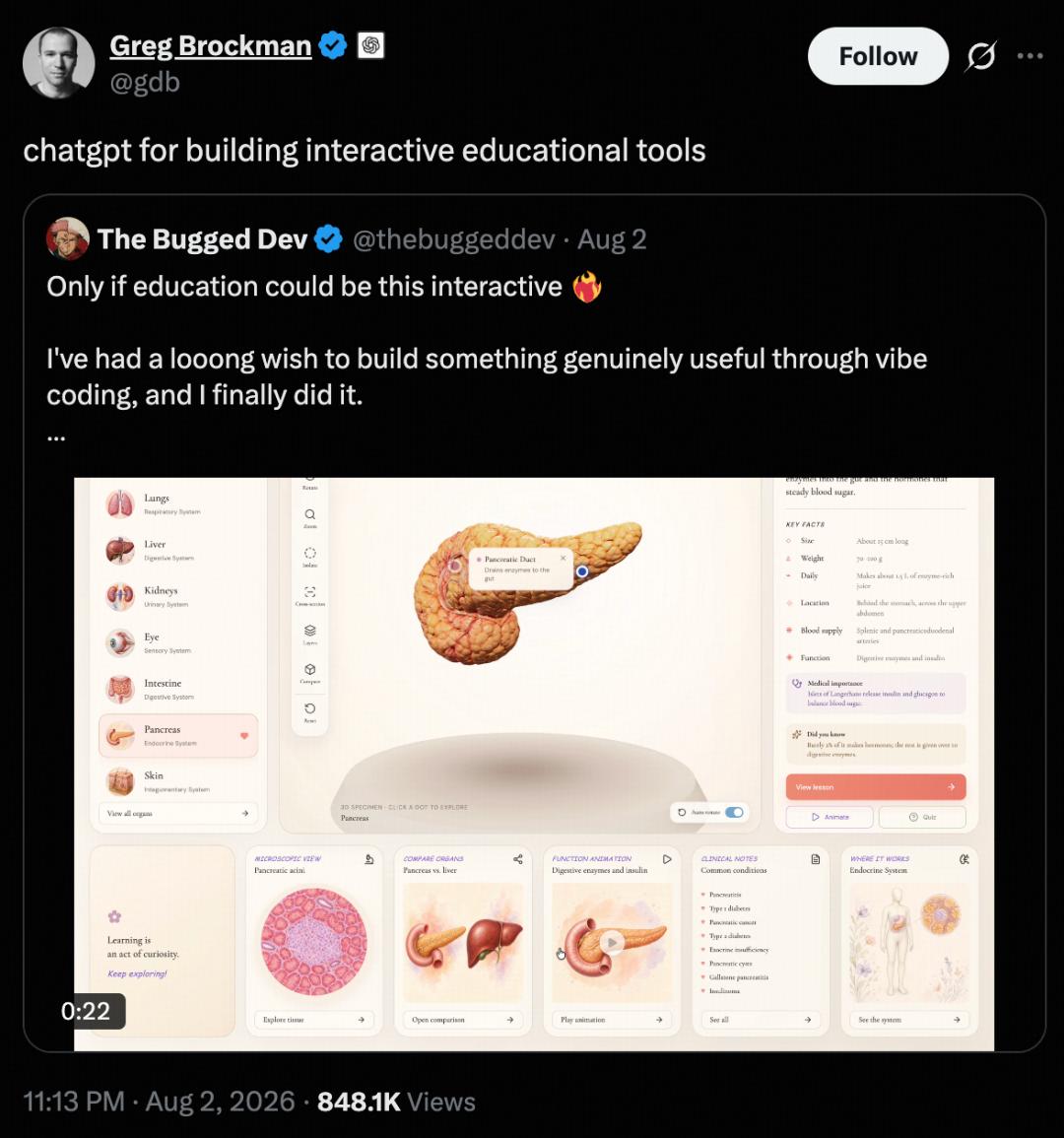
This was a career highlight for @thebuggeddev. At the same time, a group of native "AI+3D" creators began to emerge.
Creators Haixin and Arvin used Nano Banana to generate reference images, called Tripo P2.0 to complete 3D modeling, and then handed the results to GPT-6 Astra to arrange scenes, special effects and interaction logic, turning the chapter "A Conversation with a Caterpillar" from *Alice's Adventures in Wonderland* into an exquisite interactive game. The production tutorial even made it to the trending list on Bilibili;
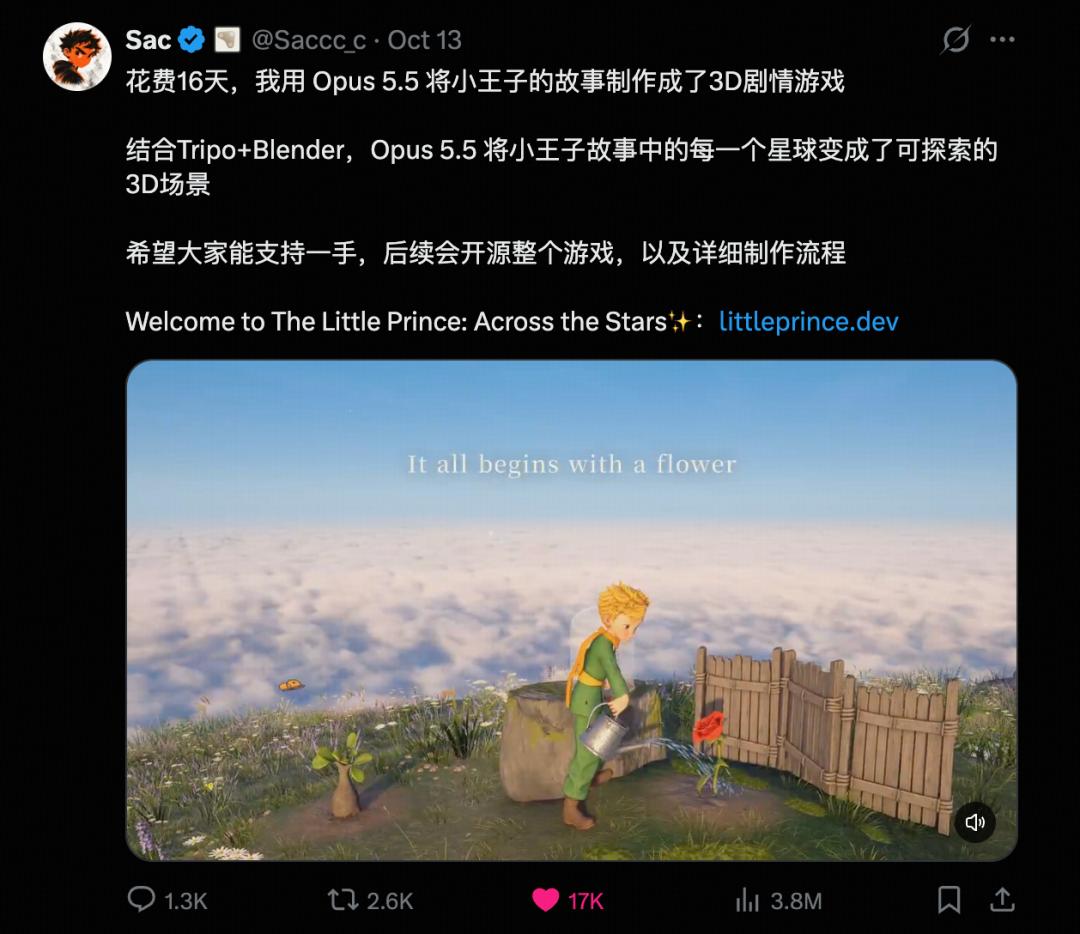
Independent developer Sac used the workflow of Claude Opus 5.5 + Tripo + Blender to turn every planet in *The Little Prince* into an explorable 3D scene in only 16 days. The work received tens of thousands of likes on X, and was reposted by technology institutions and KOLs such as a16z and Marc Lou.
3D creation has begun to become a new form of expression, and even a new way of life. It is no longer exclusive to professional modelers, game developers and animators. Anyone with an idea can try to build their own world; a scene that originally only existed in the mind also has the opportunity to turn into an accessible, interactive work.
The main force driving this change is a group of young people who are trying to redefine the boundaries of 3D creation.
The core developer of the Tripo P series models used by @thebuggeddev, Haixin and Arvin is Ronnie, who just graduated with a doctorate from Tsinghua University;
As one of the world's first world models to propose the layered route of "Coding Agent + real-time generative renderer" in the industry, the core researcher of Project Eden is Zion, a postgraduate student born in 2002.
Among them, some participated in core model training before they officially graduated, and some started from a seemingly marginal interest, gradually promoting a new product and technology route.
All these young people gather at VAST (3Qi Universe), a general artificial intelligence company founded in 2023.
Three years ago, VAST started in an era when AI 3D exploration was almost barren; today, tens of millions of users around the world express themselves through its AI 3D model Tripo. From making models generate 3D assets faster and better, to enabling Agents to understand, call and edit 3D content, and further exploring how to build a continuously running, real-time interactive world, VAST is extending its research tentacles to a broader space.
Team member R compares this process to "conducting scientific expeditions in Antarctica": during the process, everyone may fall into an Antarctic ice cave, or face Antarctic beasts, but the most important thing is to "put up a ladder" and "build an elite exploration team" - eventually the team will feel that "Antarctica is not that cold".
01
Why do we need to re-understand 3D?
For a long time, 3D creation has been tied to the labels of "professional, niche, high threshold". In the public imagination, this creation process that requires a long learning cycle and complex software belongs to a small number of professional practitioners such as game developers, animators and industrial designers.
The market response is also indirectly reflected in the overall investment of the technology industry in 3D. Before graduation, Ronnie had interned in many large tech companies. But he found that for the 3D industry, which is younger and landed later than LLM, the resources that large companies are willing to invest are not as many as expected.
R has a different side of experience. Before joining VAST, he had deeply participated in cooperation with many large tech companies. But he found that large companies do not necessarily have a winner mindset. "Many researches in startups are more cutting-edge than those in large companies, because everyone has the courage to define problems by themselves and the determination to win."
These people who joined VAST all adhered to the belief that was not mainstream at that time: 3D is the "native language" of the world, and the original expression of all things in the digital space. The shape, structure, position of objects, and the spatial relationships between them can all be expressed through 3D.
Zion said frankly: "3D is underestimated." He cited several examples: in the code world model route that is receiving much attention at present, the upstream engine maintains the evolution of 3D content. Similarly, in the simulation training environment of embodied intelligence, 3D content will still be the basis for building the environment for a long time. In the future, 3D will not only serve games, film and television and industrial design, but also have the opportunity to become the basis for AI to understand the environment, operate objects and build interactive worlds.
In just 2 years, this judgment has gradually precipitated into two model routes of Tripo: The P series is committed to making the generated 3D assets have production-level topology and availability, while the H series constantly challenges the capability boundary of high-precision geometry generation.
Since 2026, with the unprecedented enhancement of LLM's capabilities in understanding, planning and coding, the industry has begun to re-evaluate the creation threshold and landing prospect of 3D - when the upstream Agent is powerful enough, it can replace ordinary people to take over more and more 3D professional tools and creation processes.
However, although Coding Agent has been able to generate Three.js pages, write part of the interaction and animation logic, and continuously debug according to the running results, there is still a key missing link from "Agent can write code" to "Agent can develop interactive 3D applications": 3D assets that can be quickly understood, edited and driven by the Agent.
It is not easy to fill this link. On the one hand, to make 3D enter more diverse creation processes and tasks, it means that the 3D assets generated by AI must meet the requirement of "generated and ready to use", and even be easy to use; on the other hand, when AI Agent takes over more creation processes, the assets created by AI 3D models also need to be directly edited and bound by AI, and enter the real-time environment.
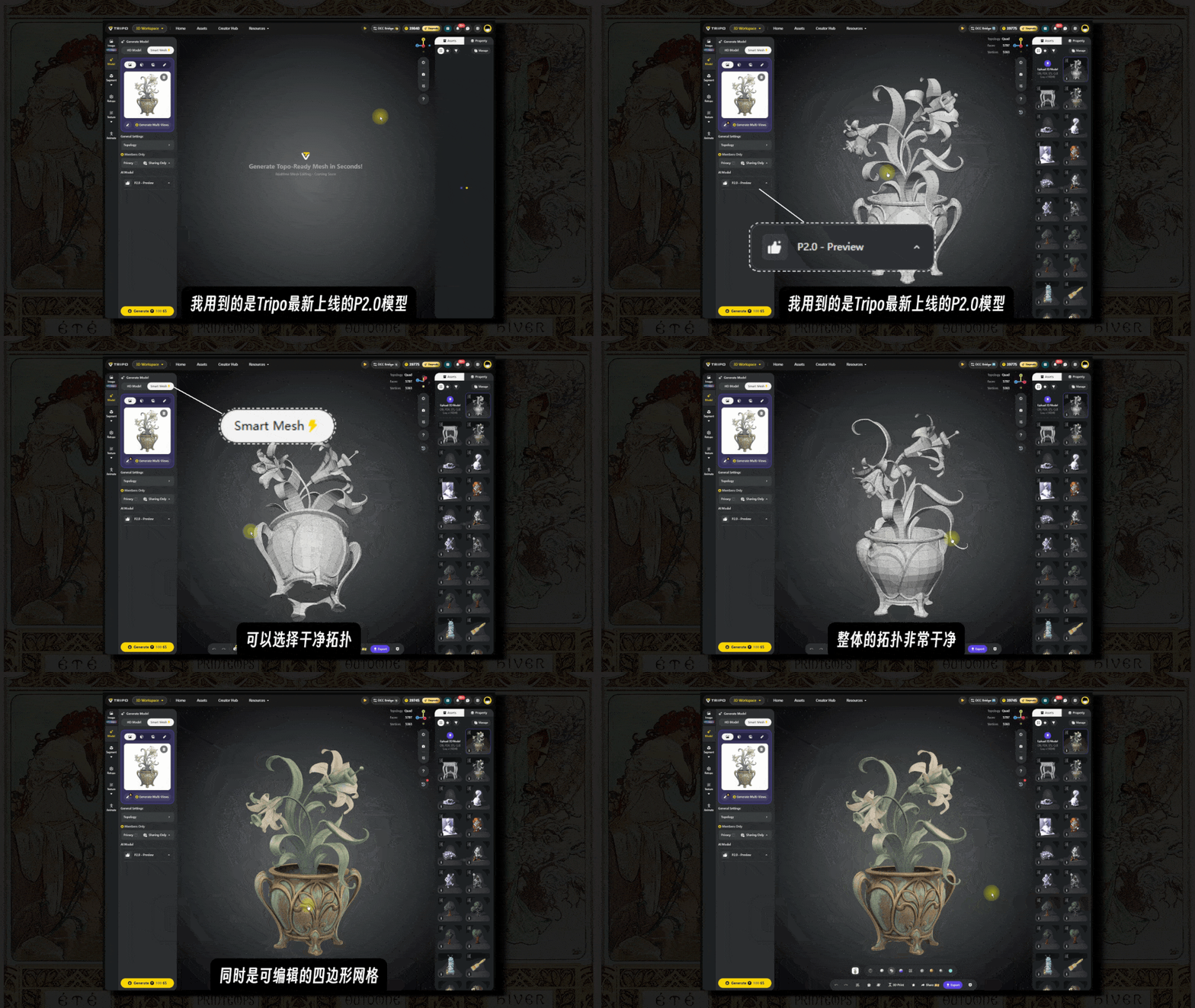
Now, the evolution of Tripo and the development of Agent have formed a clever intertext. The Tripo H series models continuously improve the restoration degree of complex shapes and details; the Tripo P series directly generates production-level meshes in seconds - among them, P2.0 released in August 2026 supports native quadrilateral topology, more regular wiring, and supports natural part splitting that is more in line with structural semantics, with unprecedented pipeline compatibility. These features also make P2.0 naturally suitable for being understood and driven by Agents.
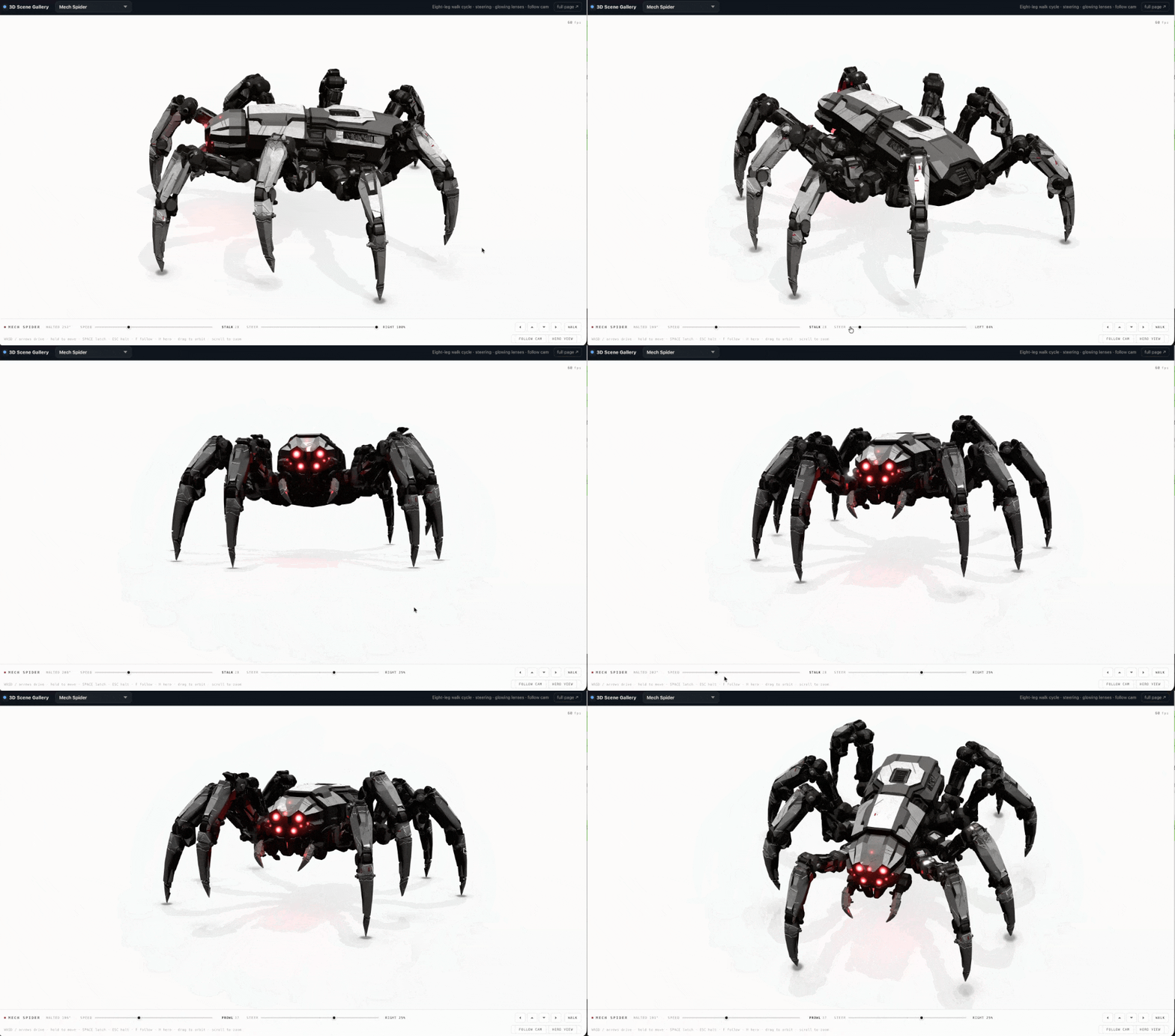
"Tripo's technical philosophy is 'production-ready'." Cao Yanpei, chief scientist of VAST, has mentioned many times. He is not only the developer of P2.0, but also one of the first creators. He made P2.0 generate a 3D mechanical spider composed of independent parts, and then let Claude Opus write the motion logic, successfully making the spider move.
Only 2 weeks after the release of P2.0, GPT-6 Astra made a stunning debut - this model known as "the smartest in the world" brought the AI 3D industry its strongest publicity period.
Overseas creator Nano added dynamic expressions to the 2D characters generated by Tripo based on Astra, which received 1400 likes on X; @luccacerf, who has no experience in modeling and game development, based on the workflow of Astra-Tripo P2.0-Blender-Unity, created a *World of Warcraft* fan game with only 3 prompts and a 90-minute production cycle - in just one week, the call volume of Tripo API increased rapidly, and hundreds of members spontaneously formed an Astra+3D creation group within VAST.
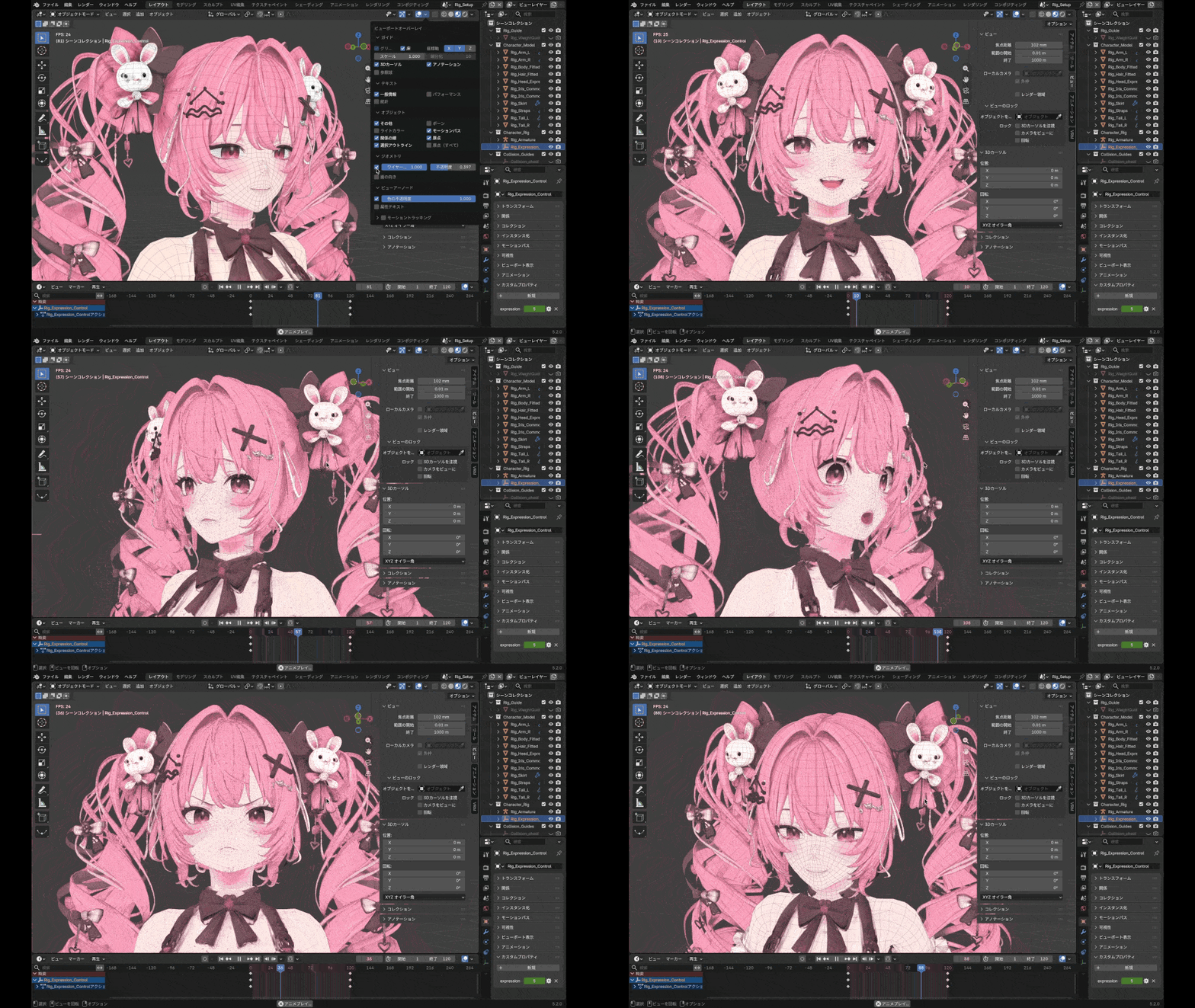
△ Creator Nano (@Dstudio_ai) added dynamic expressions to the 2D characters generated by Tripo based on Astra.
This also gives a new realistic footnote to the judgment that VAST has adhered to since its establishment: 3D is not just a content production category, but will also become a "universal interface between humans and machines" as Fei-Fei Li judged.
As Agents gradually become new creators, the boundary of 3D has just begun to open.
02
From non-consensus to consensus
"I have never seen such an AI 3D model before!"
March 2026, San Francisco, USA. At GDC, the world's top game developer event, a Demo of the AI 3D model called "Tripo P" attracted the attention of many participants. An overseas game creator praised Ronnie, the core developer of the P series, repeatedly: "This is absolutely amazing!"
In the AI 3D field at that time, Tripo P was an amazing "new species". In the past, 3D assets generated by AI not only took minutes to generate, but also had topology wiring quality far below production requirements, which often relied heavily on human rework. But on the AI 3D model Tripo P series, the traditional impossible triangle of AI 3D in "quality, speed and pipeline availability" has disappeared.
For Ronnie, the story of the P series is like a success story. In July, at SIGGRAPH 2026, the top international conference on computer graphics held in Los Angeles, USA, the real-time demonstration based on Tripo P1.0 won the highest award Best in Show in the Real-Time Live! session; 5 papers from VAST were selected into Technical Papers, including the paper related to Nexus, the underlying algorithm of the Tripo P series. In August, P2.0, the latest achievement of the P series, became the world's first AI 3D foundation model that realizes end-to-end generation of native quadrilateral topological meshes on the diffusion model.
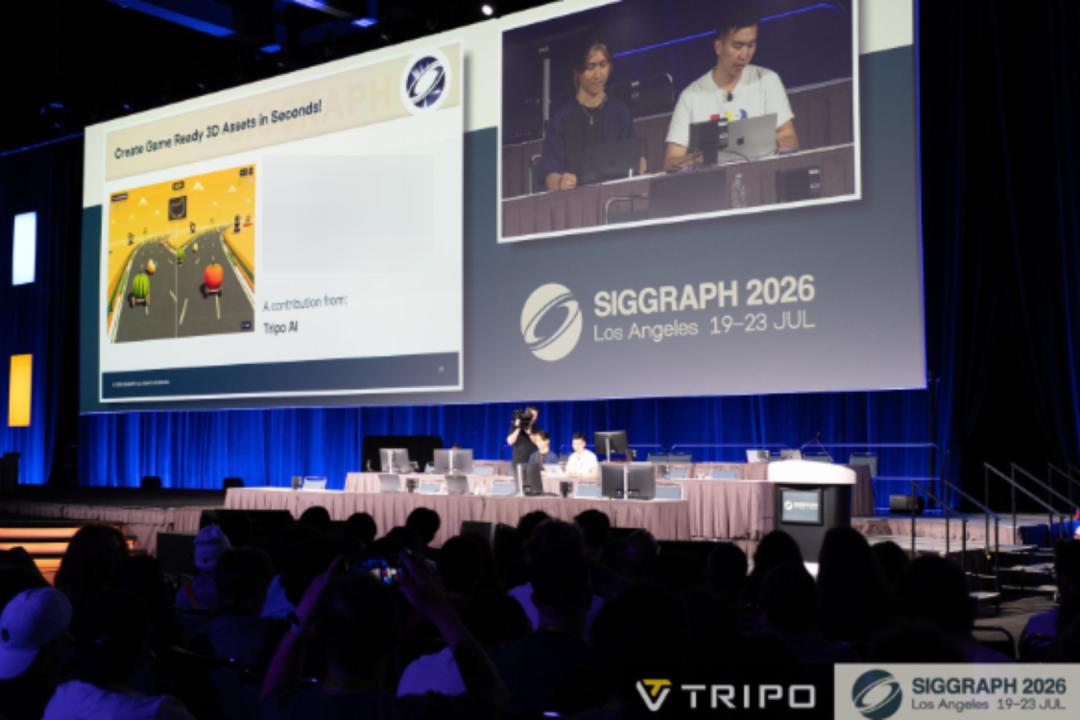
Spotlights, honors, applause - behind all this is the lonely exploration in the non-consensus stage.
Ronnie remembers that when the P series was first established within VAST, few people in the industry talked about using diffusion models to achieve mesh generation. At that time, the great success of the autoregressive paradigm in large language models deeply influenced the 3D field. Many researchers tried to copy the serialization method to 3D representation - this route did quickly let the industry taste the "sweetness": based on the autoregressive route, 3D models can generate native meshes with low polygon count, compact structure and certain production value.
But Ronnie realized very early that what the autoregressive route brought to native mesh generation was a "false prosperity". He mentioned that forcing meshes into serialized representation will cause information loss, and once a higher upper limit is pursued, problems such as error accumulation will break out in a concentrated manner.
The idea of realizing mesh generation based on diffusion model quickly got internal support - even though it was a river that no one had successfully crossed, even though Ronnie was still an intern at that time. "We have a lot of opportunities for trial and error and growth," he recalled, "We can do some out of the box explorations by ourselves."
VAST's exploration of world models also started on a path that was almost deserted.
Zion remembers that when he first joined the Project Eden project team, the mainstream world model solution on the market was the interactive video real-time generation route led by Genie 3. But the team members realized that the input method based on pure keyboard and mouse actions can hardly produce content that users are willing to keep playing and that has real commercial value. More importantly, although the action-conditioned video model can generate film-level pictures, the underlying state is difficult to maintain.
A brand new "layered" interaction paradigm soon emerged: The upstream Coding Agent and interaction engine maintain the state and rules of the world; the downstream real-time video generation model renders high-fidelity visual presentation.
As the first person to eat crabs, the difficulty of research is imaginable. At that time, there were not many mature open source codes for reference. The research team tested multiple versions of configurations and spent nearly half a year to get the effect running smoothly.
In June 2026, Project Eden attracted attention at home and abroad as soon as it was released. KOLs in the technology circle such as Nataniel Ruiz (Google DeepMind researcher) and Matt Workman (Fal creative technologist) reposted it one after another.
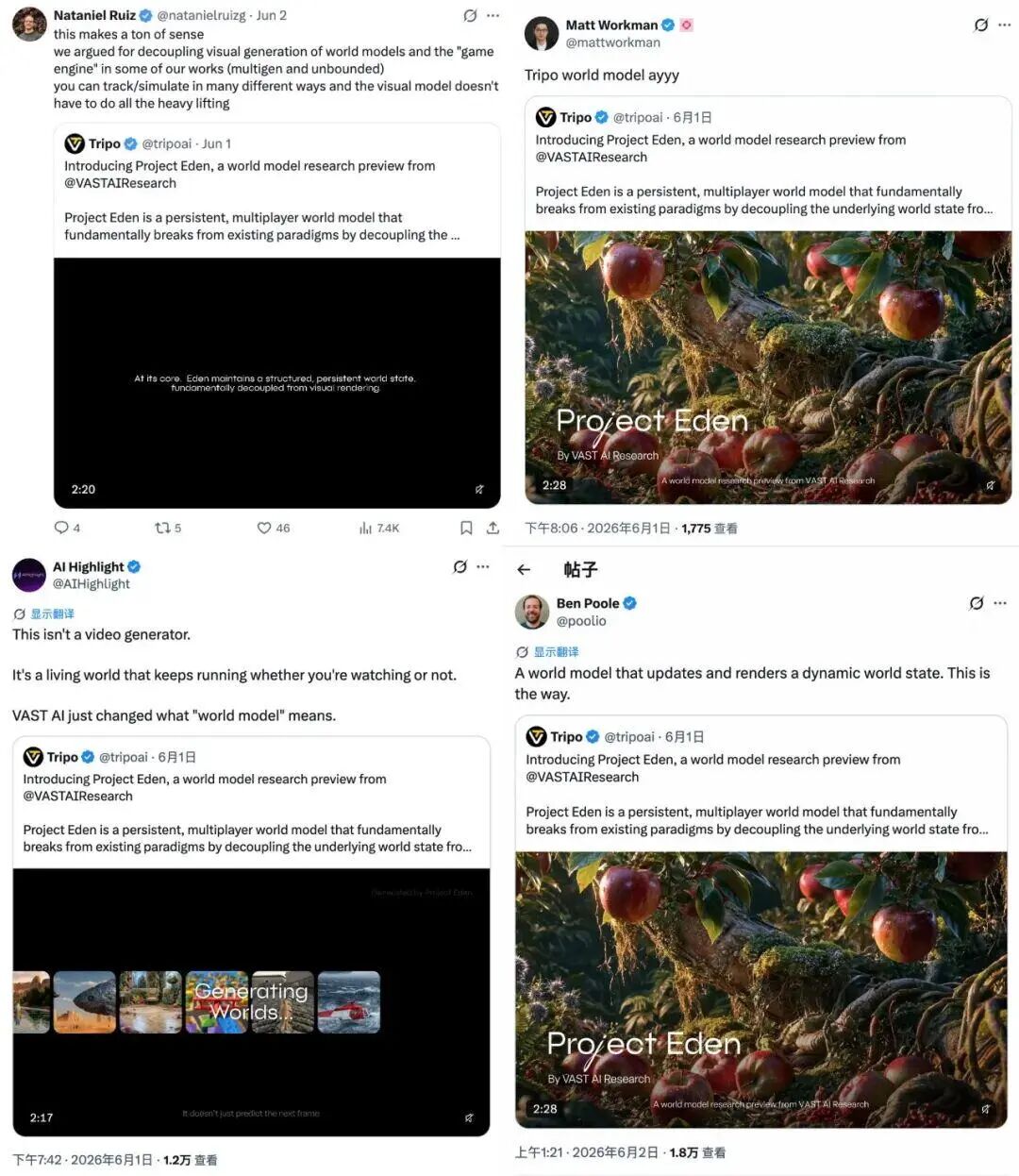
Later, more and more world model researches with "layered" as the philosophy appeared in the industry: shortly after the release of Project Eden, Fei-Fei Li's team proposed a world model framework composed of a planner, a simulator and a renderer; Genie 4 released at the end of October also pointed out in its blog that the hybrid world model may be the key path in the next stage: integrating the structured reasoning of code and language models, and the rich perception capability of pixel-level simulation.
Opportunities for technological innovation are often hidden where consensus has not yet arrived. From the Tripo P series to Project Eden, VAST chose the path that few people took at that time.
This courage has gradually been transformed into VAST's technological competitiveness. Since its establishment, VAST has open sourced more than 50 projects, and has published more than 60 top conference papers in the 3D field, making it one of the teams with the largest reserve of top conference papers in the global 3D field. In a blind test conducted by a third-party independent evaluation agency based on more than 200,000 users, the comprehensive performance of the Tripo series