Mark Zuckerberg is secretly "creating people" in China
Mark Zuckerberg's secretly advanced robot program has finally come to light.
On October 31, according to foreign media reports, Meta collaborated with Chinese robotics company Fourier Intelligence to develop a humanoid robot prototype codenamed Max in only about three months. Currently, the second-generation product has also entered the R&D phase.
This little-known project was advancing in the factory of Shanghai Fourier Intelligence this summer.
Li-Chen Miller, Vice President of Robotics Products at Meta, stayed here for nearly two months, working with Fourier's engineers to turn Meta's vision for robots into reality.
Max is about 1.5 meters tall, weighs 48 kilograms, is equipped with the NVIDIA Jetson Thor chip, has five-finger dexterous hands, and a display screen on its face that can simulate human expressions. Per Meta's requirements, it also needs to recognize human voices and gestures, and maintain eye contact with people.
After the news came out, what surprised us is how these two companies that seemed to have little intersection on weekdays came together?
After all, there are many humanoid robot companies in China, and Fourier is not the most eye-catching one. On the other hand, Fourier already has its own robot brand, so why is it willing to develop products for Meta?
01
Why Did Meta Choose Fourier?
In February 2025, Andrew Bosworth, Chief Technology Officer of Meta, outlined the company's robot plan in an internal memo.
Meta will not only develop its own consumer-grade humanoid robots, but also research and develop AI, sensor and software technologies that can be provided to other robot manufacturers to maximize the platform capabilities of Llama.
To put it bluntly, Mark Zuckerberg wants to be the Android of the robotics industry.
Google does not need to manufacture all mobile phones itself, yet Android can be installed on devices of different brands. Meta also hopes that robots from different manufacturers in the future will be able to use its own AI and software.
But unlike mobile phones, there is no unified hardware standard for robots. The joints, sensors, dexterous hands and control systems of different manufacturers vary from each other, and the same set of AI models may not work properly when transferred to a different robot body.
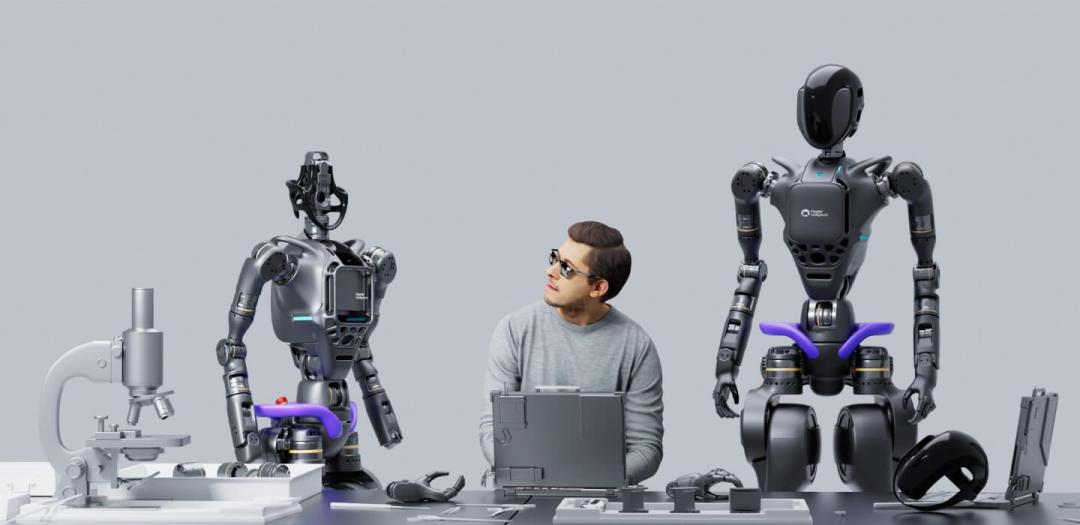
Meta must first prove that its technology can truly control a robot.
In September 2025, Bosworth said in an interview with *The Verge* that the real difficulty in the robotics industry lies in software, especially dexterous manipulation. Making robots walk and run is just the beginning; picking up a cup and tidying up the table are still complex challenges for robots.
After that, Meta continued to expand its technical strength in the robotics field. In May 2026, the company acquired Assured Robot Intelligence, a robotics AI startup. By the end of October, *The Information* further disclosed that Meta hopes to make humanoid robots the physical carrier of the AI agent Muse, helping users complete housework in the future.
Max was born under this background. It is first and foremost a R&D prototype, and Meta needs to verify the AI's perception, decision-making and operation capabilities through real hardware.
So why choose Fourier?
A key detail is that Max is not a ready-made product directly purchased from Fourier.
According to *The Information*, the two sides used the R&D experience of Fourier's first three generations of humanoid robots to re-adjust the design of body proportions, head structure, cameras and dexterous hands. Li-Chen Miller, Vice President of Robotics Products at Meta, also stayed on site in Shanghai for nearly two months to participate in the project advancement.
This means that Meta was involved from the hardware design stage, rather than simply installing its own software into an off-the-shelf robot.
The value of Fourier lies in that it already has multi-generation complete machine R&D experience. Starting from rehabilitation robots, to GR-1, GR-2, and then to GR-3 which emphasizes companionship and interaction, it has the hardware foundation that Meta can continue to modify.
For Meta, this is faster than building a complete robot R&D system from scratch, and it is more in line with its current need to verify AI technology.
Completing Max in three months reflects the efficiency of this cooperation model.
Meta is also recruiting supplier development engineers in Shanghai, and product design and technical project management personnel in Shenzhen, with relevant positions involving prototype development, manufacturing and mass production preparation. This shows that it is further building its robot hardware R&D and supply chain capabilities.
Of course, Max currently cannot prove that Meta's software has been able to adapt to robots of different brands. But it has taken an important step: first verify its technology on a deeply customized robot, and then explore the possibility of extending to more hardware platforms.
Meta wants to be the Android of the robotics industry, but before becoming a platform, it must first prove that its technology can truly control a robot.
For Fourier, what does it mean to help Meta take this step?
02
Another Account of Fourier?
For Fourier, cooperating with Meta is not a sudden change of direction.
In an interview with TMTPost in 2024, Gu Jie, the founder, once used three words to summarize the company's product philosophy: Made for AI.
His explanation is that Fourier prefers to perfect the robot's body itself, and lay a solid foundation for its mobility, motion performance and hardware. As for more cutting-edge algorithms, they will be developed through cooperation with universities and AI companies.
This idea gradually emerged in Fourier's subsequent products and cooperations.
In May 2025, Gu Jie said in an interview that embodied intelligence cannot be completed by a single enterprise alone. Fourier will cooperate with large model companies according to scenario requirements, and continue to build stable and reliable robot bodies at the same time.
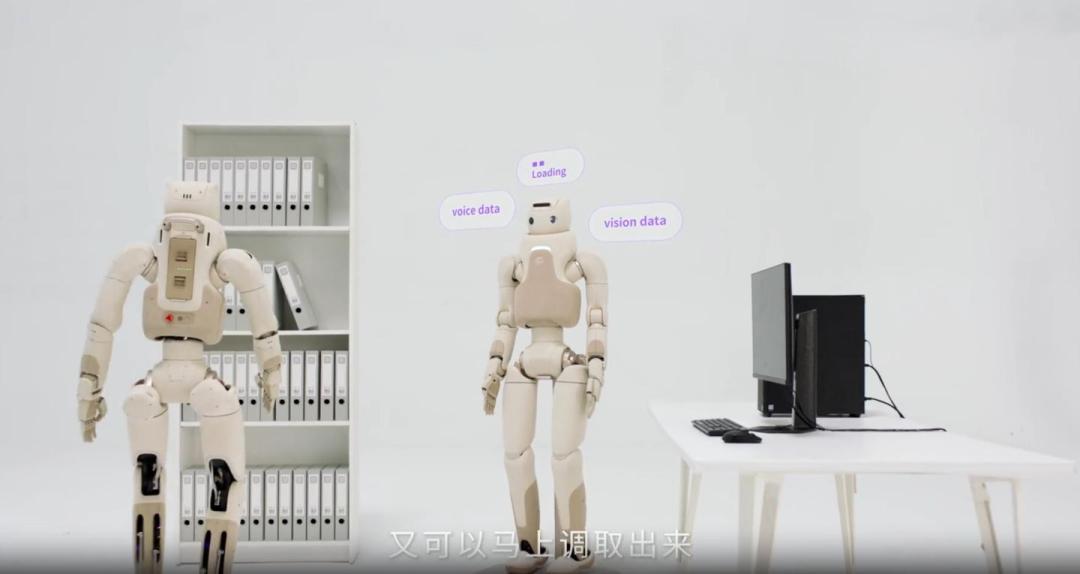
By the beginning of 2026, he put forward the "1+3+X" ecological strategy: Fourier focuses on health care and companionship, while tour guide interaction, industrial empowerment and scientific research innovation are jointly developed through ecological partners. At the same time, Fourier has adapted the GR series robots to mainstream large models and opened the ActionNet dataset, hoping to promote joint R&D across the industry.
From these actions, we can see that Fourier does not intend to cover the development of robots from hardware to algorithms, and then to all application scenarios. It prefers to perfect the robot body, so that different models and development teams can work on it.
Meta happens to be a special partner. It has its own large model, AI research team and product ecosystem, but lacks mature humanoid robot hardware foundation. Fourier has multi-generation complete machine R&D experience and hopes its robots can adapt to more models. The two sides have formed a relatively clear division of labor on the Max project.
But this does not mean that Fourier has no consideration for its own interests. Cooperating with Meta allows it to access the product requirements and R&D standards of a global tech giant, and also gives it the opportunity to bring its hardware capabilities into a wider range of international cooperation. As for the specific R&D revenue, technology sharing and intellectual property arrangements, the two sides have not made them public, so this cooperation cannot be simply regarded as an ordinary order.
There is also a noteworthy contradiction here: Gu Jie has always emphasized perfecting the robot's body, while what Meta wants to master is precisely the AI and software of the robot. The two sides can complement each other today, but when Meta gradually masters more complete machine R&D capabilities in the future, will the boundary between partner and competitor change?
This is also a question left by the Max project: when the robotics industry begins to divide labor, how can companies that provide the robot body avoid ending up with nothing but a mere body?
03
Conclusion
The emergence of Max has let the outside world see Meta's ambition to enter the robotics industry, and also made people re-notice the value of China's robot supply chain.
From motors and reducers to dexterous hands and complete machine manufacturing, China has formed a relatively complete robot industrial chain. For humanoid robots that are still in the stage of rapid iteration, the ability to quickly proof, modify and deliver is sometimes more important than leading in individual technologies.
Meta brings AI and product definition, Fourier provides complete machine R&D capabilities, and the supply chain supports rapid implementation.
Building a Max in three months reflects that the two companies get what they need, and also reflects the new division of labor that is taking shape in the global robotics industry.
This article is from the WeChat official account "Unbounded UnKnown", written by Han Lin, edited by Shan Cha, and published with authorization from 36Kr.