"If you can't even hear the truth, how can you possibly solve problems?" The Dario siblings reveal the inside story of their departure from OpenAI five years ago, that they founded Anthropic with a total of 7 co-founders, and promised that no advertisements will be embedded in Claude.
Without a doubt, Anthropic has already become one of the most high-profile companies in the AI industry. The recent news of its IPO filing has pushed the firm even further into the spotlight. Few would have imagined that 5 years ago, Dario Amodei and his sister Daniela Amodei still held key positions at OpenAI, before choosing to leave and co-found a new venture with five other co-founders.
One focused on technical research, the other excelled at management and operations, and the seven people came together to start the company. Back then, not everyone was optimistic about such a founding team. But they not only built Anthropic into a thriving enterprise, all seven co-founders have remained at the company ever since, right up to the present day.
Why did they leave an already influential AI company? In his latest conversation with biographer Walter Isaacson, Dario gave a straightforward answer. He said: "Honesty itself is one of our core values! If a person does not even possess the basic quality of honesty, you can never figure out what their true values really are."
Talking about the reasons for leaving OpenAI, he added: "If you work in an organization and cannot trust that internal disagreements are rooted in good faith, and cannot trust that what you are being told is the truth, how can you possibly expect to resolve these problems?"
Trust and honesty are also a key to understanding Anthropic's AI safety philosophy. For Dario and Daniela, the question is not just what models can do, but what risks they might pose, and what responsibilities developers should take on. They worry that AI will lie to please users, and are unwilling to see models used for mass surveillance or fully autonomous weapons.
They also discussed several more thought-provoking questions: How did Claude learn to judge right from wrong? What exactly allows the seven founders to make decisions together without falling apart over disagreements? If one day AI really can take over the vast majority of jobs, what do humans still need to strive for, and how can we find meaning in life?
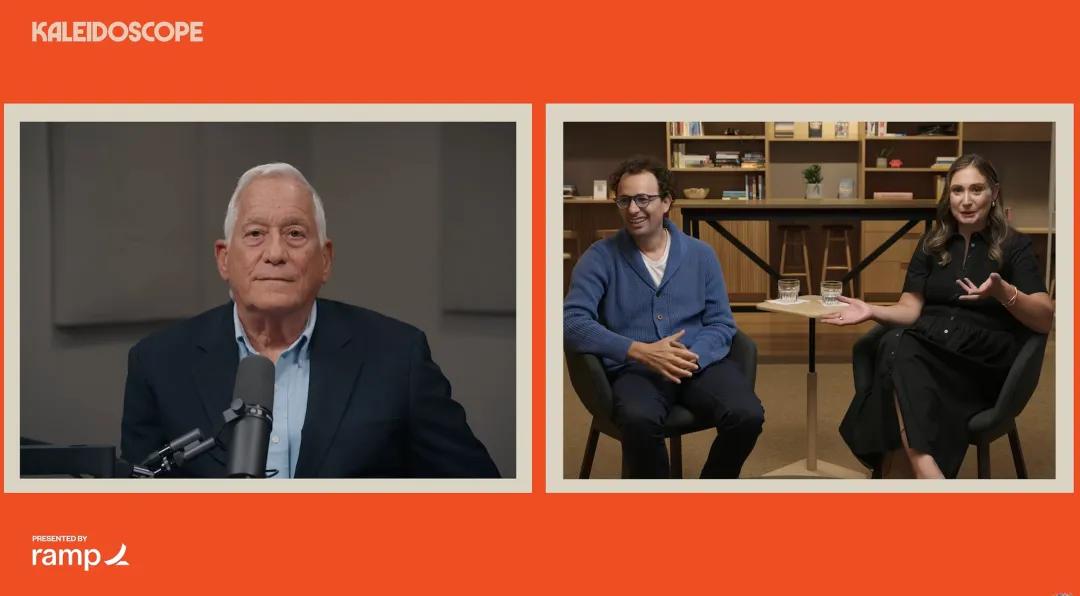
The following is the edited content of this interview.
01
"Seven people starting a business together" is the key to Anthropic's success
Walter Isaacson: I am Walter Isaacson. Welcome to *The Builders*, my brand-new interview series that hosts in-depth conversations with key thinkers shaping our future. Today, my guests are Dario Amodei and Daniela Amodei.
I once thought some of the public's concerns about AI were overblown. But when certain new models broke out of sandbox testing, I realized that the people building these systems must ensure they stay safe and always align with human values. What I want to understand about Anthropic is: Are they sincere? When faced with competition — for example, when OpenAI says "we are willing to do the things that Anthropic refuses to do" — will they compromise and back down, or will they stick to their principles? Welcome both of you to *The Builders*.
Daniela Amodei: Thank you very much for inviting us.
Walter Isaacson: Every time Steve Jobs launched a product, he would always show that street sign standing at the crossroads of "liberal arts and technology" or "art and science". Daniela, while you were growing up, you were a flutist who loved art; and Dario has always been a scientist. Did this difference help you two work well together? Do you think this combination is important for the company?
Dario Amodei: Yes, I think this combination is exactly one of the core strengths that underpins the company. I hold the view that running a company is too big a task for any single person, and the range of skills it requires cannot be fully possessed by one individual. You must build a complete, complementary skill set at the core of the company, say among the top 10 to 15 people. Every successful company splits responsibilities and solves problems in different ways. When it comes to the integration of science and humanities, Daniela and I exactly embody that, and we have divided the work accordingly.
Daniela Amodei: That's right. Interestingly, we held a strategic workshop back in 2023, discussing what it is really like to work at Anthropic, and how we should embody our corporate culture. Back then we defined it as: a rare fusion of science and humanism. Later I realized that this is actually also a description of the relationship between Dario and me.
Walter Isaacson: Did you two know when you were little that you would work together when you grew up?
Daniela Amodei: Yes.
Dario Amodei: Yes. I don't think either of us imagined we would start a company, that was never how we planned our lives or set our ambitions. I always wanted to be a scientist, and Daniela can talk about her aspirations. But I used to have zero interest in business or running a company.
Daniela Amodei: From a very young age, Dario and I were special — we genuinely loved each other, and were best friends from childhood. I agree with Dario, starting a business was never on our life plan list. Neither of us is the type of person who is obsessed with business.
I have always been a typical "altruistic idealist", and used to work in the field of international development. I was very determined to help people around the world get equal development opportunities and rights. I became a vegetarian when I was very young, that's the only thing I did before him — because Dario is older, he was always the first to try things, but I was the one who started being a vegetarian first, and then he became a vegetarian too.
Dario Amodei: Yeah, I was about three years behind you.
Daniela Amodei: Not that long really, you got convinced pretty quickly.
Dario Amodei: Because it sounded really convincing.
Daniela Amodei: Exactly.
Walter Isaacson: People often ask me questions about my biographies: How do you become an exceptional leader or a highly creative person? Dario, you just made a very profound point — the key is not just about being a great leader, but about building an excellent team. Talk to us about how you and Daniela divide responsibilities, and how you brought in other people to complete the team?
Dario Amodei: The most effective way we split work between the two of us is that I perform best when I focus on macro strategy and the cutting edge of research. I am best at mapping out the vision, anticipating the next step of technological evolution. It turns out that when I can fully devote myself to this, I can create the most value for the company.
And Daniela is mostly responsible for day-to-day operations, talent recruitment, and making sure the whole machine runs smoothly (making sure the wheels don't fall off while it's moving). This division of labor allows both jobs to be done to an extremely high standard, far better than if we distracted ourselves by taking on each other's tasks.
Daniela Amodei: Our Chief People Officer (CPO) knows both of us very well and communicates with us all the time. She once summed it up: "Dario gives us our ambition, and Daniela makes us successful." I think that summary is extremely accurate. Without Dario, Anthropic might be a pretty good, successful company, but it wouldn't change the world. Without Dario though, we would have the perfect vision, but execution would become incredibly complicated.
What makes our relationship special is that first, we know each other extremely well; second, our skills complement each other almost perfectly. Not to mention the other five co-founders besides the two of us, each of whom controls a critical part of the company's business, organization and culture. It's hard to imagine how such a huge business could ever be built by just the two of us or any single individual alone.
Dario Amodei: I think that's a huge advantage. We have seven co-founders with equal equity in the company, all carrying this shared vision. We have absolute trust in each other.
When we first founded Anthropic, a lot of people warned us: "Seven co-founders? That's definitely going to be a disaster." The general public consensus was that a company needs a single top authority core. That's true at some levels, but we managed to make this model work efficiently.
Up to today, all seven co-founders are still working at the company, which is extremely rare for a startup with so many co-founders.
Walter Isaacson: Going back to your upbringing. You had extraordinary parents who taught you to distinguish right from wrong. How exactly did they guide you?
Daniela Amodei: I don't think it was deliberate preaching. Sometimes I hear people say they discuss different schools of ethical philosophy over dinner, but that was not at all the case in our family. Although my mother does have a philosophy degree, she never forced us to discuss theories like Kant.
This kind of education was more reflected in the values that seeped in subtly, such as the firm belief that everyone in the world deserves equal opportunities, dignity, rights and respect.
There was also a special kind of trust: as long as you keep good intentions in your heart, treat others well, and understand that this is the essence of being a successful person, we were free to choose to become anyone we wanted to be.
Dario Amodei: Yeah, all of that was implicit, very understated and natural. There was never rigid dogma that said "you must do this" or "you must live your life this way".
02
Learn to teach Claude the way you teach people
Walter Isaacson: As you expected, I asked this question because you have now nurtured a very important "child" — Claude. To what extent did the way you grew up influence how you teach Claude to tell right from wrong?
Dario Amodei: We released Claude's "Constitutional AI" a few months ago. It contains some very interesting lessons we summed up from years of training practice across different versions.
Early on, we imagined setting all kinds of specific rules for Claude, such as "do not assist in crimes", "do not assist in the manufacturing of biological weapons" and so on. But later we found that when you list a long string of discrete rules — here I use a metaphor that is very technically accurate — the model's cognitive boundaries become very "spiky", as if you are trying to force-feed 170 isolated, slightly subjective rigid rules.
We found a better approach is to teach the model basic principles: what it should prioritize, and how it should reason to judge what is the right thing to do. That's actually the right way to educate humans too.
If you just give someone a list of bans — "you must do this, you must not do that" — the moral framework that forms is often not very stable. Instead, if you guide it: "This is how you should think about problems, you need to learn to think independently and act based on these basic principles — for example, the principles of open inquiry, caring for others, fairness and justice." All codes of conduct are derived from these core principles.
That's exactly how Claude learns. It turns out this approach is extremely effective, because it gives Claude the generalization ability to apply what it has learned to unexpected new situations it has never encountered before.
Walter Isaacson: Daniela, you said earlier your mother is a Kant scholar. Have you done in-depth research on philosophy and moral philosophy?
Daniela Amodei: Interestingly, the person in charge of training Claude's personality traits at Anthropic, Amanda (Amanda Askell), herself holds a PhD in philosophy. This is a bit counterintuitive to most people, who would assume that the person responsible for shaping a large model's personality must be a computer scientist, or an expert who has studied machine learning for decades. Amanda is also highly proficient in technology and does the technical training herself, but when you communicate with Claude, you can truly feel its personality traits: an intelligent experience that draws on "the better side of human nature" to answer questions.
You can especially feel Amanda's influence when you ask Claude questions in complex, thorny areas where different philosophical schools conflict. Claude will objectively present: "You can look at things from this perspective, but you can also consider them from another point of view at the same time."
This is very critical. As the world becomes more and more dependent on these models, you must never be trapped by a single school of philosophy. Ethics and morality are extremely complex, and different cultural backgrounds and groups have completely different understandings and demands for "decent and moral behavior".
03
From joining OpenAI to parting ways: The reason is "OpenAI is not honest"
Walter Isaacson: Dario, you personally experienced one of the most important milestone moments in modern tech history, the debut of GPT-1 and GPT-2, which caught many people by surprise, probably even you. You were OpenAI's Vice President of Research at the time. What was that moment really like?
Dario Amodei: GPT-2 was arguably the first real empirical verification of the Scaling Laws. I wasn't deeply involved in GPT-1, but I led the vision of scaling it up further — getting more data sources, putting in more computing power, running a larger, more expensive, more ambitious experiment. The core hypothesis was: if we run these language models on a larger scale, there will be a leap forward in their language expression and logical coherence.
It was like those defining moments in scientific history where you come up with a decisive experiment: you make a seemingly strange prediction, and once that prediction is confirmed, you exclaim, "Oh my god, we really stumbled on a major discovery." I see GPT-2 as the first real touchstone for the Scaling Laws hypothesis.
What fascinated me most back then was that the public reaction to it was extremely polarized.
Walter Isaacson: Were you surprised at the time?
Dario Amodei: I was personally deeply shocked. I looked at it and thought, "My god, as long as we scale this thing up a million times, it will outperform humans in every field." This is the most decisive economic and scientific node in modern society, even if the world hasn't realized it yet. It will shape the direction of countries, economies, and the future fate of humanity. Through it, you could see a whole future unfolding, and it really filled me with awe and fear.
I kept asking myself back then: What does this mean? Is this the right place to develop it? What will happen next? How should we handle this technology? Who should we tell about all this?
Only about 10% of the people around me at the time had the exact same reaction, and those people tended to be the most perceptive. As for the other 90% of people, because GPT-2's performance on specific single tasks wasn't that impressive back then — it could do translation, summarize abstracts, write a few lines of code — the key was its breadth and versatility, but people only focused on the limitations in individual areas and thought "this doesn't look that smart", so most people just shrugged it off and dismissed it.
It's like when we recently announced we would use AI to develop drugs for rare diseases, we still hear the same clichéd skepticism from the traditional biomedical sector: "The tech industry tried this before", "The models don't work", "The models have all kinds of flaws".
Every time I see that, I feel like history is repeating itself. The current limitations of the models are only temporary — six months from now, things that seem hard now will become easy; 12 months from now, things that seem impossible to complete now will be handled easily by the model as part of daily routine. Everything we saw with GPT-2 is playing out in more areas of the world, and the world is gradually being convinced.
Daniela Amodei: I think Dario put it very politely. I clearly remember that some highly prestigious computer scientists, leading figures in AI and machine learning, even cyberbullied the researchers involved in that study on Twitter, sneering and saying: "This is so stupid, I really don't understand why you are even talking about this, this model has no capabilities at all." If you firmly believed this was a major moment back then, you would even be treated like a "charlatan".
Dario Amodei: All those remarks have now been selectively forgotten. The researchers who claimed back then that "this is pseudoscience and meaningless" are all sending resumes to large model companies now. We never called them out publicly, but when we look at them we know exactly: we clearly remember what you said in 2019, you have zero