36Kr Exclusive | The Fudan-Donghua team develops "ionic skin" and has obtained financing of over 10 million RMB from Yuanhe and Huawei Hubble.
Author | Qiao Yujie
Editor | Yuan Silai
This article is approximately 1500 words, with an estimated reading time of 4 minutes
Hard Krypton learned that Shanghai Lingzhi Intelligent Skin Electronic Technology Co., Ltd. (hereinafter referred to as "Lingzhi Intelligent Skin") has recently completed two consecutive rounds of financing. The seed round was co-invested by Yuanhe Holdings and Huawei Hubble, and the angel round's old shareholder Yuanhe Holdings continued to follow on investment. The total financing of the two rounds exceeded 10 million yuan, with Linglu Capital acting as the exclusive financial advisor.
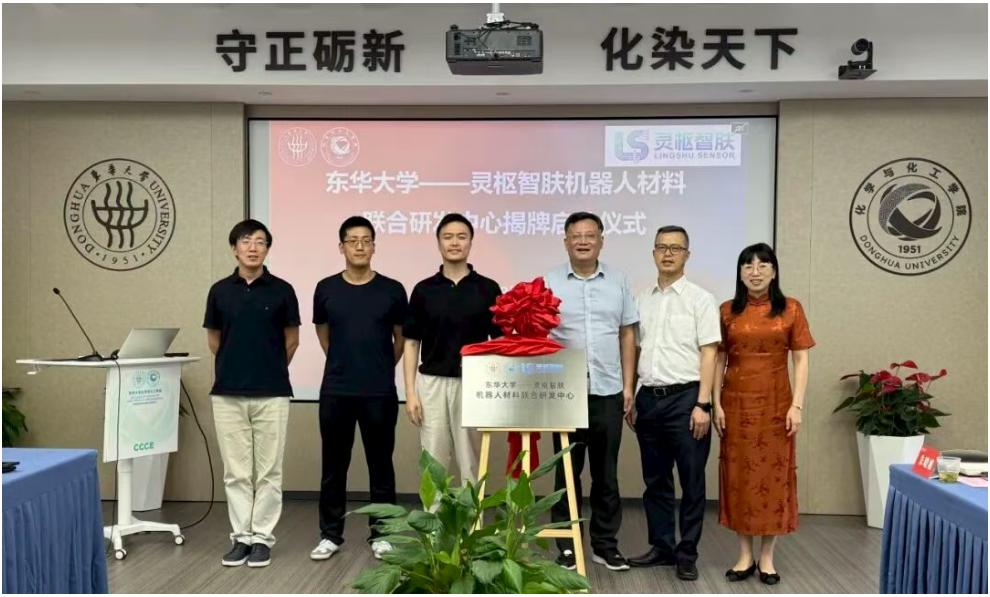
Lingzhi Intelligent Skin was founded in April 2025, focusing on the R&D, production and sales of flexible tactile sensing materials and devices. Founder Jia Wei graduated from the Department of Macromolecular Science of Fudan University, completing his continuous bachelor's, master's and doctoral programs. The company's core team mainly comes from the Department of Macromolecular Science of Fudan University, with full capabilities in materials, processes, circuits, management and other aspects. The company's scientific advisor is Professor Wu Peiyi, Dean of the College of Chemistry and Chemical Engineering of Donghua University, and it has jointly established a joint R&D center for robot materials with Donghua University.
(Source / Enterprise)
As robots rapidly enter the physical world, tactile perception, known as "the last puzzle piece of embodied intelligence", is moving from the laboratory to industrialization. Data from Zhiyan Consulting shows that the global flexible tactile sensor market size was approximately 2.67 billion US dollars in 2024, and is expected to reach 5 billion US dollars by 2029.
The first threshold of tactile perception is material, which is also the entry point of Lingzhi Intelligent Skin.
Lingzhi Intelligent Skin focuses on the ionic skin technology route. The so-called "ionic skin" refers to adding ions to the polymer substrate to generate electrical signals through the change of ions. Compared with other technical routes, one of the advantages of ionic skin is that the chemical system has a richer selection space. From ion selection to organic chemical modification, it can bring more possibilities for material design, thus further expanding the upper limit of material performance.
Secondly, the ionic skin itself conducts ions but does not conduct electricity, making it more suitable for capacitive devices. Piezocapacitive devices perform well in terms of sensitivity, baseline stability and signal linearity. At the same time, in terms of functional design, based on the rich selection of salt and polymer systems in the ionic skin, functions such as self-healing and thermosetting hardening can be superimposed through different intermolecular interactions, providing more performance combinations for materials.
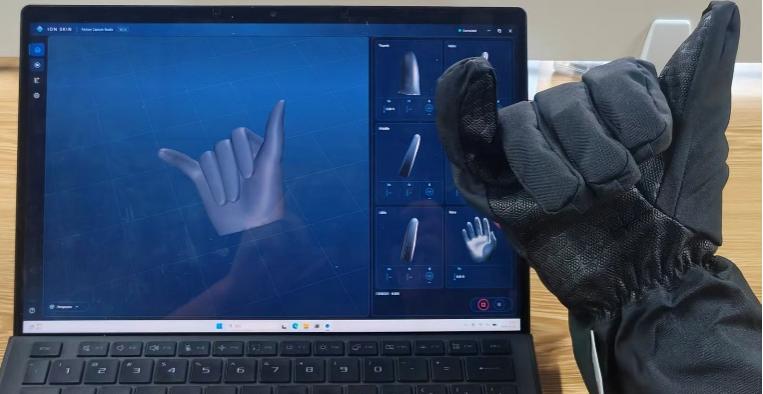
Lingzhi Intelligent Skin's current product matrix is mainly oriented to two fields: embodied intelligence and consumer electronics. In the field of embodied intelligence, it mainly includes tactile sensors in data acquisition gloves and tactile sensors assembled on the dexterous hand body; in the field of consumer electronics, it mainly targets touch interaction sensors for wearable and intelligent terminal devices such as earphones, mobile phones and smart watches.
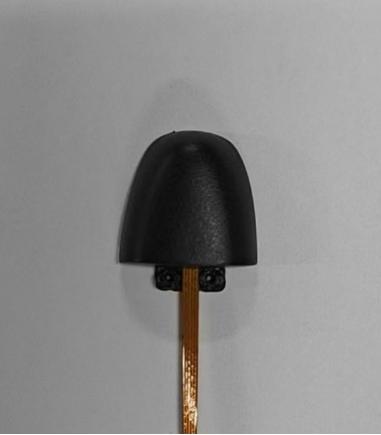
The company's materials have been specially optimized in terms of reliability, sensitivity and weather resistance, and have completed reliability verifications such as double 85 test and more than 10 million repeated mechanical tests, with certain advantages in service life. The launched finger tactile sensor and fingertip + palm sensor module can be used for dexterous hands and tactile acquisition gloves, with multi-point pressure perception capability, supporting functions such as touch, long press, sliding, and tangential force sensing.
(Source / Enterprise)
At present, Lingzhi Intelligent Skin has completed multiple rounds of material formula optimization and Demo sample preparation, is building a material pilot production line, and is sending samples to customers in many fields such as humanoid robots, companion robots, soft robots, smart toys, smart wearables, and smart cars to promote product implementation and verification.
(Source / Enterprise)
The following is an excerpt from the communication between founder Jia Wei and Hard Krypton:
Hard Krypton: The current application of ionic skin is still in the early stage. What specific problems can the company's customized material technology platform solve for the commercialization of this technical route?
Jia Wei: In the early stage when we were developing customers, customers in different directions had different needs. The requirements for material performance vary greatly between different application scenarios.
Based on the designability of the ionic route, we have built a customized material technology platform. The first is molecular-level functional design, which can be designed from the source molecular structure according to the performance requirements of specific applications, fully master the material formula, and achieve precise regulation of performance. The second is material property matching, which designs the physical and chemical properties of the material according to application requirements, so that the material performance can be better adapted to specific application scenarios.
In addition, the company will provide low-cost processing schemes around materials and specific application requirements, and design and optimize the production and processing flow. At the same time, we will conduct a full set of reliability tests on the materials to ensure the stability of the materials in practical applications and meet the requirements of industrial-grade applications.
At present, starting from material design, we have developed two ionic skin materials with leading performance, which are applied to two types of flexible ultra-thin tactile sensing devices: piezoelectric and piezocapacitive. At the same time, we are still continuously optimizing and iterating the sensing materials to better meet the new needs of customers.