Why can some people build a company valued at 1.25 billion after struggling while living in a basement, while others with a personal fortune of tens of billions cannot hold onto their wealth? The number one iron law of entrepreneurship consists of only two words.
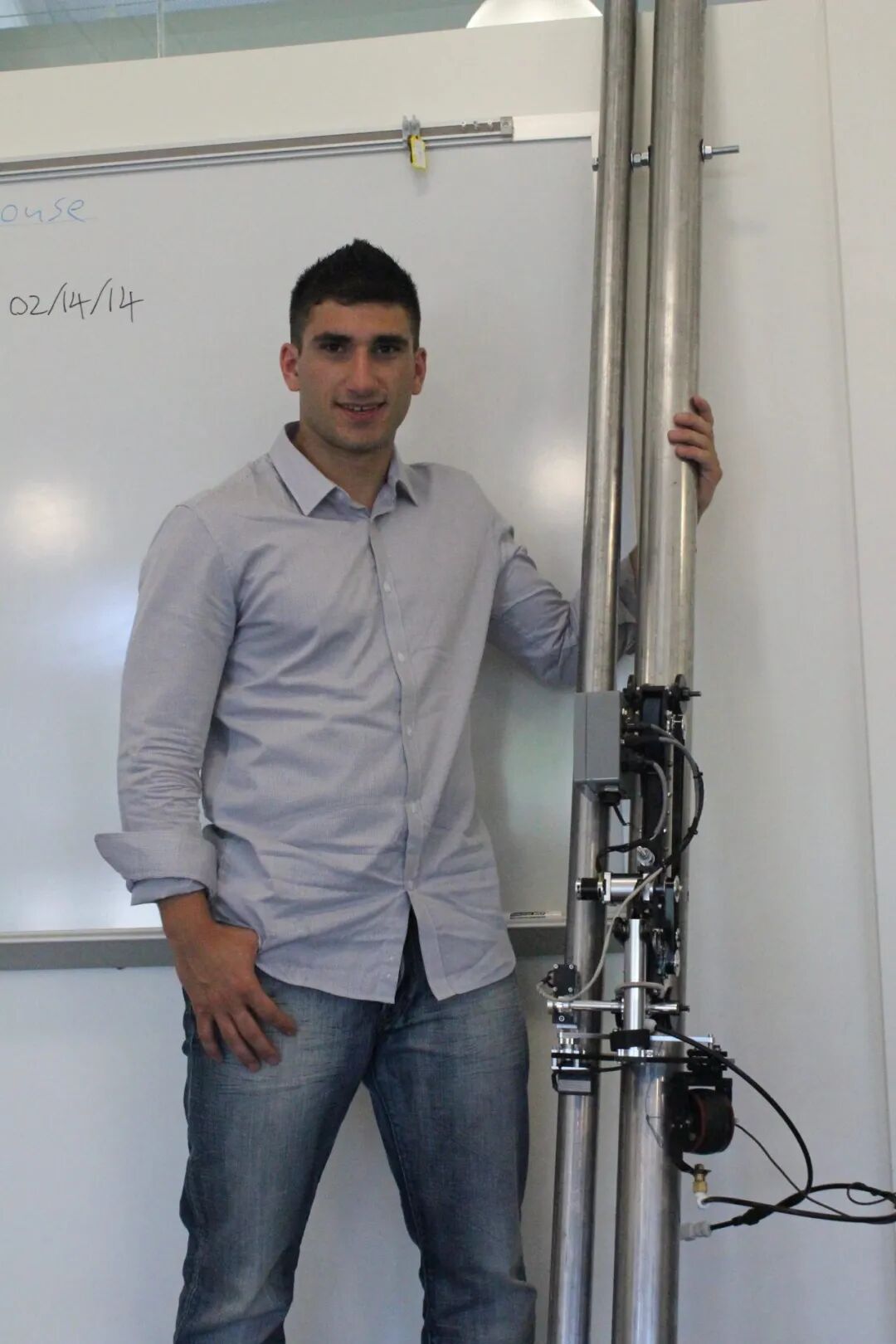
In 2013, Jake Loosararian graduated from university, rejected the advice of his family and teachers, and founded Gecko Robotics without external funding. Three years passed, the company made no progress. He spent his last dollar, slept behind the sofa in his best friend's shabby basement apartment, spread the mattress on the floor, and lived that way for two and a half years. He worked 100 hours a week, the robot prototypes he made broke down frequently, and the working environment was extremely harsh. In 2016, Gecko was admitted to YC and finally received its first decent round of financing. Ten years later, the company was valued at 1.25 billion US dollars.
In the same era, another story went in the opposite direction. Wu Changjiang, the founder of NVC Lighting, landed on the Forbes Rich List with a net worth of 2.9 billion yuan in 2010, when his company went public and its performance bucked the trend to grow. Then he got addicted to gambling. "At my peak, I played the 'one drag fifteen' game, where 10,000 yuan underlay 150,000 yuan, and 1 million yuan underlay 15 million yuan, and I lost roughly a billion yuan," he later said in a video, "What I lost was not wealth, but my entire first half of life." To win back his losses, he introduced capital, his equity was diluted, and he was eventually sentenced for embezzlement, losing the company he founded from scratch.

One man got up from behind the sofa and spent ten years building a billion-dollar company. The other fell off the Forbes list for no more than the single word "gambling". The two incidents together exactly form the proposition Morgan Housel repeatedly demonstrated in *The Psychology of Money*: Getting rich and staying rich are two completely different sets of skills.
Survival First: Why "Staying at the Table" Matters More Than "Scoring a Big Win Once"
Housel wrote an almost ruthless line in the book: "If I had to summarize financial success in one word, I would choose 'survival'." The evidence he gave is that 40% of once-successful listed companies have lost all their value over time. The Russell 3000 Index grew 73 times from 1980 to 2020, but 40% of the companies in it ended up failing, and all the returns came from the top 7% of performers.
The direct implication of this set of figures for entrepreneurs and investors is: You don't have to get everything right every time, but you must make sure you are still in the game. Jake's Gecko showed almost no "right" signs in the first three years: product failures, capital depletion, sleeping on the sofa. But he survived. He made it to Y Combinator, to the first round of financing, and to the moment when that "tail event" happened.
Wu Changjiang's problem was exactly the opposite. He did not lack the ability to get rich, as the success of NVC Lighting proved. But he failed to hold the bottom line: No return is worth the risk of losing everything. The "one drag fifteen" at the gambling table and high leverage in entrepreneurship are essentially the same thing in psychological structure: the belief that you can turn the tables on the next try. Housel put it bluntly: "Getting rich requires a spirit of adventure, optimism, and the courage to go all in. But staying rich requires humility and awe, and the recognition that part of the wealth you earned comes from luck."
The Luxury Car Paradox: You Think You Are Showing Off Success, While Others Only See a Car
Wu Changjiang's gambling addiction is an extreme case, but *The Psychology of Money* mentions a more hidden and more common trap called the "luxury car paradox". Housel writes: You think driving a luxury car and wearing a famous watch is showing your success to others, but others only see the car and the watch, and then think to themselves "how nice it would be if I owned it" — they will not care more about you as a person because of it.
Dylan Field, CEO of Figma, showed rare sobriety on this point. In 2025, Figma went public, its stock price tripled on the first day of trading, and the shares he held were worth about 6.6 billion US dollars. But what he said to the team was: "We must always remind the team that the stock price is just a snapshot, and the situation may change completely the next second." His peers call him "the most down-to-earth billionaire", not because he deliberately keeps a low profile, but because he always focuses on the product, not on "what others think of me".
Following the trend in investment is essentially a luxury car paradox. You think you are chasing returns, but you are actually just sending a signal to the market that "I don't want to fall behind". The most expensive cost in a bull market is often not choosing the wrong stock, but buying things you don't really understand at a higher price and with a larger position under the comparison of "everyone else is making money".
Margin of Safety: What Did the Young Man With Only 300,000 Yuan Left in His Account Do Right
The story of Chinese entrepreneur Jiang Zheyuan provides a more specific footnote for "survival". He dropped out of Tsinghua University after pursuing his doctorate, and founded Songyan Dynamics in 2023 to develop humanoid robots. He raised more than 30 million yuan in the first round of financing, then "got complacent", expanded the team rapidly, and burned money too fast. Before the Spring Festival in 2024, there was only 300,000 yuan left in the account, not enough to pay salaries, the first prototype failed frequently, and investors began to waver. He later described the state of the company during that period as "multiple organ failure".
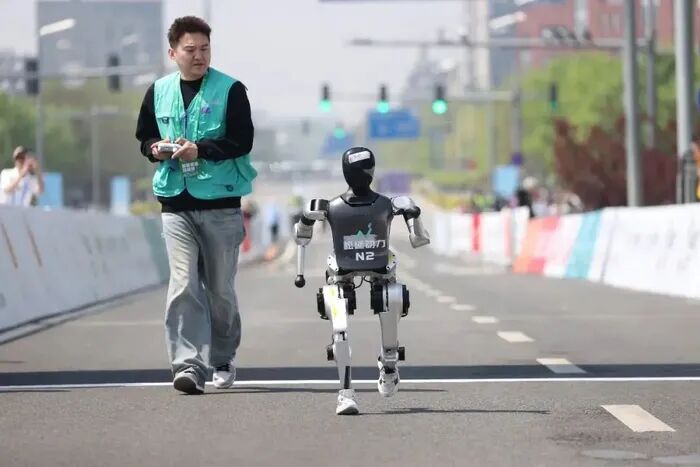
But he did one thing: return to the essence of the problem, build a reinforcement learning team from scratch, re-screen talents, and allocate resources to the technical direction that he judged to be correct. A year later, Songyan Dynamics' valuation exceeded 2 billion yuan, and its robot beat Boston Dynamics in international competitions.
The principle Housel puts forward in the chapter of "margin of safety" is: Planning is important, but the most important part of every plan is to prepare for the unexpected. A good plan does not deny the existence of risks, but actively embraces uncertainty and leaves a buffer. Jiang Zheyuan's "300,000-yuan crisis" did not happen because he had no plan, but because his plan did not leave enough margin of safety. His subsequent adjustments were essentially rebuilding this margin.
Six Judgment Lines for Entrepreneurs and Investors
The following six judgment lines each correspond to a pitfall that entrepreneurs or investors are most likely to step into.
First: Examine every decision with the "survival test" — ask "can I afford to lose" before asking "how much can I earn".
Housel's original words are: "If I had to summarize financial success in one word, I would choose 'survival'." The data he gives is that the Russell 3000 Index grew 73 times from 1980 to 2020, but 40% of the companies in it ended up failing, and all the returns came from the top 7% of performers. This means that you don't have to get everything right every time, but you must make sure you are still in the game.
For entrepreneurs, the specific operation of this line is: before signing any valuation adjustment agreement, pulling up any leverage, or compressing the cash flow to less than three months, conduct a "zero reset deduction" — if the financing environment freezes for six months, if the largest customer leaves suddenly, if the core product is delayed by two quarters, can the company still pay salaries? If the answer is no, this decision should not be made. Jake Loosararian slept behind the sofa for two and a half years, but he made it to Y Combinator; when Wu Changjiang played "one drag fifteen" at the gambling table, he had already lost no matter how high his winning odds were — because he bet on the qualification to "leave the table". For investors, this line also applies: The essence of position management is not to maximize returns, but to ensure that no single wrong judgment will force you to leave the market.

Second: Treat "staying rich" as an independent skill that requires deliberate practice — it is not an automatic continuation of getting rich.
Most people focus all their attention on "how to make money", and default to "you can naturally keep it after you make it". Wu Changjiang's story proves that this default assumption is wrong. The success of NVC Lighting proved that he had the ability to get rich, but gambling addiction destroyed his ability to stay rich. The formula Housel gives for staying rich is simple but counterintuitive: Frugality, being overly cautious, acknowledging the role of luck, and not infinitely replicating past success.
For entrepreneurs, staying rich is not something you need to consider only when the company goes public. It should be reflected in: always keeping a sum of "untouchable" cash reserve in the company's account; the founder not completely tying personal assets to the fate of the company; not pushing the expansion speed to the limit when the industry is booming. For investors, staying rich means: The most important thing to do in a bull market is not to add positions, but to check whether your position logic still holds — because "past success" most easily makes people mistakenly think that "the next time will be the same".
Third: Identify "tail events" — most of your decisions will not produce results, but a few will determine everything.
Housel repeatedly emphasizes a counterintuitive fact in the book: Almost all the returns you get from investment or entrepreneurship may come from only a very small number of decisions. This is not to encourage you to bet randomly, but to ask you to redistribute your attention: don't spend equal effort optimizing every detail, but make sure you have enough "time at the table" to wait for that tail event to happen.
Gecko Robotics showed no "right" signs in the first three years, but Jake survived to Y Combinator and reached that turning point. When there was only 300,000 yuan left in Songyan Dynamics' account, what Jiang Zheyuan did was not to put out fires everywhere, but to return to the essence of the problem and re-bet on the technical direction — he kept himself at the table and waited for the tail event of "beating Boston Dynamics". The guidance for entrepreneurs is: Don't change direction just because there is no positive feedback in the short term, but make sure you are not forced to change direction due to cash flow breakdown in the short term. For investors: Portfolio thinking is more important than stock picking thinking — you don't have to make money on every single trade, you need a few big wins to cover all small losses, and make sure small losses do not accumulate into fatal injuries.
Fourth: Beware of the "luxury car paradox" — you think you are showing off success, while others only see a car.
Housel writes: You think driving a luxury car and wearing a famous watch is showing your success to others, but others only see the car and the watch, and then think to themselves "how nice it would be if I owned it" — they will not care more about you as a person because of it.
Dylan Field of Figma said to the team in 2025 when the company went public and his net worth reached 6.6 billion US dollars: "We must always remind the team that the stock price is just a snapshot, and the situation may change completely the next second." This is not a deliberate act of keeping a low profile, but he is well aware that the external evaluation system and the internal decision-making system must be separated. The guidance for entrepreneurs is: don't change the product rhythm just because the media praises you as the "next unicorn", and don't rush to transform just because investors question you. The guidance for investors is more straightforward: The most expensive cost in a bull market is often not choosing the wrong stock, but buying things you don't really understand at a higher price and with a larger position under the comparison of "everyone else is making money". The essence of trend-following investment is a luxury car paradox — you think you are chasing returns, but you are actually just sending a signal that "I don't want to fall behind".
Fifth: Reserve budget for "margin of safety" — the most important part of planning is to prepare for the unexpected.
The principle Housel puts forward in the chapter of "margin of safety" is: A good plan does not deny the existence of risks, but actively embraces uncertainty and leaves a buffer. Jiang Zheyuan's "300,000-yuan crisis" did not happen because he had no plan, but because his plan did not leave enough margin of safety. His subsequent adjustments — returning to the essence of technology, re-screening talents, and concentrating resources on the direction judged to be correct — are essentially rebuilding this margin.
The specific advice for entrepreneurs is: Always reserve at least 6 months of "no-income survival line" in the cash flow budget; don't have only one person in core positions, have backup plans for key systems; don't set the financing pace at the node where "the next round of financing must arrive". For investors, margin of safety means: Don't put all your funds into one time window, because you can't predict whether the window will close early or open later. Housel made it very clear: Compared with huge returns, the safety of wealth is more important. As long as your wealth is safe and you persist long enough, compound interest will work wonders.
Sixth: Take "freedom" as the final return indicator, rather than taking "numbers" as the only success criterion.
The most easily ignored but most important chapter for entrepreneurs in *The Psychology of Money* is about "freedom". Housel writes: The greatest intrinsic value of money is the ability it gives you to take control of your own time. Those who have stayed in their fields for a long time are often not the people who pursue digital growth the most, but the people who care the most about "whether I can work at my own pace".
The guidance for entrepreneurs is: Don't give up control over your own time for a higher valuation — including control over the board structure, the final decision-making power over the company's direction, and the reservation of your personal life rhythm. For investors, the guidance is: The real fuel of compound interest is not the rate of return, but time; and the premise of time is that you can stay calm in any market environment, not be forced to liquidate your positions, and not make hasty decisions driven by emotions. Housel quotes a line from an investor in the book: "I have been investing for decades, and my biggest advantage is not what I picked correctly, but that I was never forced to do anything at the wrong time."
The six judgment lines essentially point to the same underlying logic: *The Psychology of Money* is not a book teaching you "how to make more money", but a book teaching you "how not to do wrong things at critical moments". For entrepreneurs and investors, the latter often determines the final outcome