New smartphones will see another launch boom in November, with imaging capability remaining the core focus, and mid-range phones no longer competing for performance.
The fierce battle of flagship new smartphones in September and October has just ended, and unexpectedly, the new device boom in November is coming again.
In the past two months, manufacturers including Xiaomi, OPPO, vivo, Huawei, Apple, Honor and others have successively launched their annual flagships. The launch of this batch of flagships means that the mid-range product lines of various brands will be unveiled next.
According to current official previews and related leaks, series including OPPO Reno17, vivo S70, Honor 700 and Huawei nova17 are expected to make their official debut in November. In addition, Huawei's long-rumored new sub-brand "Starlight" may also usher in its first product.
However, Lei Technology found that the situation in the mobile phone industry this year is somewhat special. As the cost of components such as memory continues to rise, mobile phone manufacturers are facing increasing cost pressure. Judging from the currently exposed information, this batch of new mid-range phones seems to have adjusted their strategy, placing more upgrade focus on imaging, battery life and appearance design. So under the background of rising costs, what new offerings are various manufacturers preparing to launch?
New Phones Flood the Market in November, Imaging Remains the Top Priority
Let's start with OPPO. As OPPO's product line targeted at young user groups, the Reno series has always been positioned for outstanding appearance, portrait shooting and comfortable hand feel, and even outperforms the Find series in some imaging functions.
The upcoming Reno17 series is set to further strengthen this advantage.
According to current leaks, the OPPO Reno17 series is expected to provide two different product solutions with large and small screens. Among them, the Reno17 Pro may continue the design of a small straight screen of about 6.32 inches, supporting 1.5K resolution, which further improves imaging configuration while maintaining a relatively compact body.

(Image source: OPPO Official)
In terms of imaging, it will adopt a 200-megapixel large-base main camera supporting gimbal stabilization technology, and will even be equipped with a 50-megapixel periscope telephoto lens. In addition, OPPO is also evaluating an independent AI button, and will launch more new functions around live photos, video shooting and AI photo editing.
If these leaks are true, the imaging upgrades of the Reno17 series are indeed worth looking forward to. After all, for users in this price segment, mobile phone photography is far more than just recording daily life. Whether it is travel shooting, daily selfies, or sharing live photos on social platforms, imaging functions are used very frequently.
Especially for the periscope telephoto lens, Lei Jun thinks this is the most anticipated configuration of the Reno17 series. In the past, many mid-range phones were equipped with high-megapixel main cameras, but the telephoto lens was often the first configuration to be cut. Even if there was a telephoto lens, the actual imaging effect was difficult to compare with that of flagship phones. If the Reno17 series can fit a high-quality periscope telephoto lens into a relatively slim body, its shooting experience will indeed meet the needs of more users.
Of course, the trade-off is the compromise on performance. Current leaks say that the Reno17 Pro may be equipped with the Dimensity 8550 SUPER processor (the same model used in the Reno16 series). This processor is not particularly powerful in 2026, and its performance in some high-load scenarios may not be very good. Instead of blindly pursuing flagship-level performance, OPPO obviously prefers to invest costs in imaging, battery life and body design.
Lei thinks this idea is totally reasonable. After all, the main users of the Reno series do not choose this line for extreme gaming performance. As long as daily smoothness is guaranteed, better camera performance and longer battery life can meet the needs of the target group.
Compared with OPPO, the imaging upgrade of the vivo S70 series is much more aggressive.
According to existing leaks, the vivo S70 series is expected to adopt a 1.5K straight screen of about 6.59 inches, be equipped with the Snapdragon 8s series mobile platform, and focus its imaging upgrades on the periscope telephoto lens. According to relevant sources, the vivo S70 series may be equipped with a 64-megapixel periscope telephoto lens. Lei speculates that it may use the same sensor as the vivo X100 Ultra, which has outstanding analytical power and image quality.

(Image source: vivo Official)
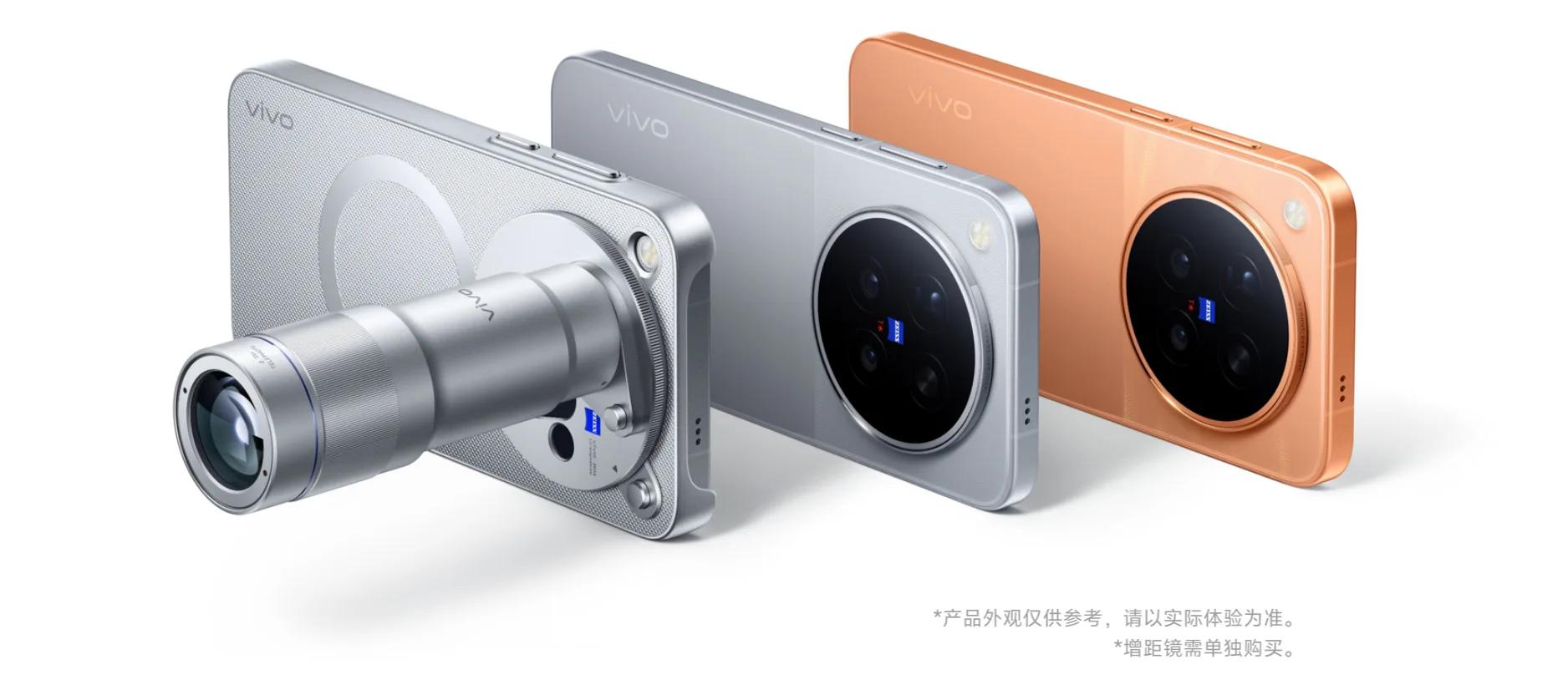
Interestingly, the vivo S70 series may also support an external teleconverter. The external teleconverter is one of the imaging gameplay that vivo promoted heavily on the X series flagships this year: with an additional optical lens group, the mobile phone can get a longer equivalent focal length, and achieve compositing capabilities that ordinary mobile phone telephoto lenses cannot achieve when shooting concerts, sports events and long-distance landscapes.
However, such accessories usually only appear on flagship and top-tier models. A full set of accessories costs at least 7,000 to 8,000 yuan, if not 10,000 yuan, and the usage threshold is quite high. If vivo really brings this solution down to the S70 series, it will indeed be very attractive for young users who like to shoot concerts and stage performances.
(Image source: vivo Official)
More importantly, the vivo S series has always been focused on portrait shooting, and the telephoto lens is also very suitable for shooting half-body portraits and close-ups. If combined with a teleconverter, the playability of the entire imaging system will undoubtedly be further improved.
Of course, Lei also has some doubts about this strategy. First of all, although the external teleconverter can bring a longer focal length, it also means that users need to carry additional accessories, and the installation and disassembly process is not as convenient as directly using the mobile phone. Secondly, the teleconverter itself is not cheap. If a full set of accessories costs more than 1,000 yuan, how many users who buy mid-range phones are willing to pay extra for this?
As for the Honor 700 series, it may be the most heavily specced model among this batch of new phones. According to current leaks, the Honor 700 series is expected to provide three versions, all equipped with a 6.57-inch 1.5K straight screen with an extremely narrow four-sided equal bezel design. The Pro version is also expected to add a 1.72-inch native back screen. In terms of imaging, the Honor 700 series is expected to adopt a 200-megapixel large-base main camera, and the Pro version may also be equipped with a 50-megapixel periscope telephoto lens. What's more exaggerated is that the version with the largest battery capacity in the series may even reach more than 9000mAh.
For users, the improvement in battery capacity is often more perceptible than a 10-odd percent increase in processor performance. Especially for users who often go out to take photos, watch videos or use navigation for a long time, the sense of security brought by a large battery is difficult to be replaced by other configurations.
However, the most interesting part of the Honor 700 series may be the newly added back screen. This year, the Xiaomi 18 Pro series has taken the back screen as one of its important product selling points, and now Honor seems to be ready to bring a similar design to its own digital series. From Lei's actual usage experience, the back screen can undertake functions such as notification display, selfie preview and quick operations. For users who like to use the rear main camera to take selfies, this design does have certain practical value.
But Lei thinks that whether the back screen can become one of the key selling points of the Honor 700 series depends on how well the system adaptation is done. If it can only display time, notifications or simple animations, users' sense of novelty may disappear quickly. On the contrary, if Honor can develop more interactions around selfies, live photos and daily quick operations, the back screen will have the opportunity to truly integrate into users' usage habits.
After all, for mid-range mobile phones, every additional configuration means extra cost. Whether users are willing to pay for this back screen depends on how many practical functions Honor can provide.
Huawei to Bring the Ultra-wide Aspect Ratio Screen to the Nova Lineup?
As for the Huawei nova17 series, very little information has been revealed so far. It can basically only be confirmed that it will be released in November, and
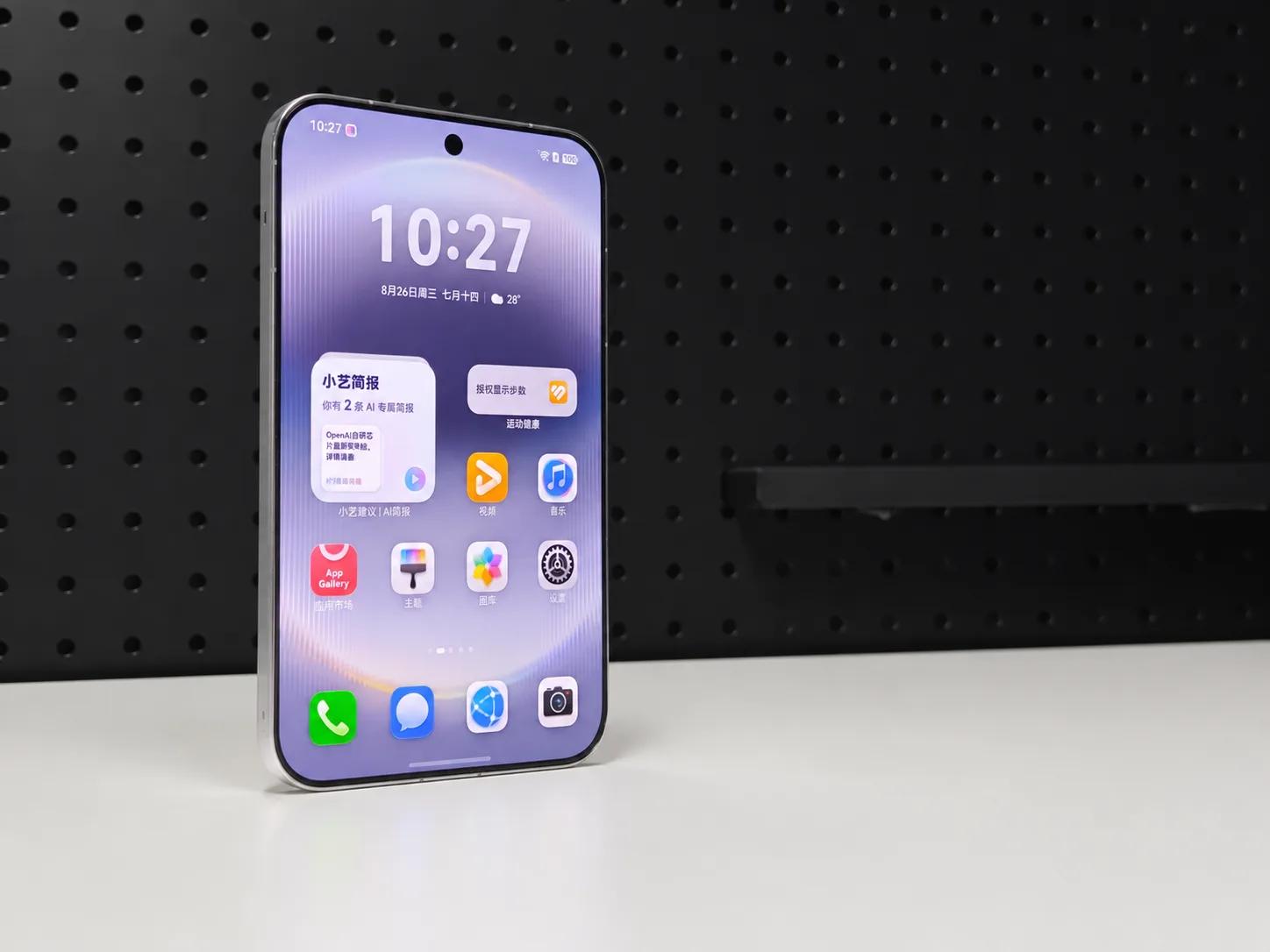
continue to upgrade around imaging, appearance design and the usage needs of young users. There was also a previous leak saying that Huawei is evaluating screen solutions of different sizes and proportions for the nova product line, including the recently popular ultra-wide aspect ratio screen design. Considering that Huawei has previously tried new screen proportions on the Pura series, it is not impossible for the nova series to adopt a similar design in the future.
(Image source: Shot by Lei Technology)
In contrast, Lei is more concerned about whether Huawei will continue to bring the imaging capabilities of the Mate and Pura series down to the nova series. For example, the Red Maple Original Color Imaging, live photos, and AI photo editing functions built around the HarmonyOS are all directions that Huawei has attached great importance to in the past two years. Especially for the Red Maple Original Color Imaging, for users who often shoot portraits, accurate skin tone restoration, stable white balance and color consistency under different light conditions are often more important than simply stacking hardware configurations.
If the nova17 series can further improve performance in these aspects, even without particularly exaggerated hardware configurations, it will still have the opportunity to attract many users. Moreover, Huawei has another advantage, which is that it can combine imaging functions with the AI capabilities of HarmonyOS to make the operations between shooting, editing and sharing smoother.
In addition to the four products mentioned above, there is another brand worth paying attention to in November, which is Huawei's possible new sub-brand "Starlight".
Recently, a digital blogger revealed that Huawei is planning a new mobile phone brand, which may be more positioned for the online market and focus on cost performance. There are already multiple product plans for related products, including models equipped with an active cooling fan. However, as of now, Huawei has not officially confirmed the existence of this mobile phone sub-brand, and the specific product positioning and release time are still to be announced by the official.
Mid-range Phones Are Adopting a New Strategy
In the past few years, competition in the mid-range mobile phone market has often revolved around processor performance. Especially in the 2000-3000 yuan price segment, manufacturers like to promote how powerful chips they are equipped with, how many points the AnTuTu score has broken through, and how much the game frame rate has improved. But judging from the exposed new phones in November, the situation seems to have changed a little. The common point of these products is that they are all working hard to find new selling points beyond performance.
Why does such a change happen? Lei thinks the most direct reason is cost. Since the beginning of this year, the price of components such as memory chips has continued to rise, which has brought considerable pressure to mobile phone manufacturers. Especially for mid-range products, the profit margin is relatively limited, so it is difficult for manufacturers to continue to upgrade configurations such as processors, screens, imaging and batteries while maintaining the original selling price.
If we continue to follow the old idea of pursuing stronger processors, larger memory and higher scores for each generation, in the end we will probably have to raise prices to absorb the rising costs.

(Image source: Lei Technology)
But the problem is that mid-range mobile phone users are often more price-sensitive. For a mobile phone that originally sold for 2000-3000 yuan, if the new generation suddenly increases in price by several hundred yuan, even if the configuration is indeed upgraded, it may not be recognized by consumers.
Therefore, manufacturers have begun to pay more attention to product differentiation. For example, OPPO and vivo have accumulated a lot of technology and user recognition in the imaging field, so continuing to strengthen the camera experience is obviously more reasonable than blindly pursuing flagship-level performance. Honor chooses to take configurations such as back screen and large battery as new selling points, hoping to further improve product attractiveness through more perceptible hardware upgrades.
However, this strategy also has an obvious problem, that is, mid-range mobile phones may become more and more "unbalanced in strengths".
The imaging system is upgraded, but the processor has no obvious progress; the battery capacity becomes larger, and the body weight and thickness may also increase. Especially under the background of rising memory costs, if manufacturers invest more budget in imaging or appearance design, other configurations will naturally be affected.
Lei does not think this change is necessarily a bad thing. After all, the current mobile phone market is quite mature, and the performance of most mid-range processors is enough to meet daily use. For users who do not often play large-scale games, a 20% improvement in processor performance may not be as practical as a telephoto lens and a large battery. Moreover, the needs of different users are obviously different: some people like light and small screens, some care more about telephoto shooting, and some just want to buy a mobile phone with long enough battery life.
If manufacturers can launch more distinctive products for these demands, they can also avoid the entire mid-range market from falling into pure competition of scores and parameters.
But differentiation cannot be an excuse for cutting configurations. If a mobile phone drastically reduces the configuration of other lenses just to add a 200-megapixel main camera; or sacrifices body weight, heat dissipation and charging experience just to pursue an extra-large battery, then it is still questionable whether such an upgrade is worth it.
Summary: November New Phones Are Very Busy, Price Becomes the Core Competitive Advantage
Overall, in the upcoming November, although there are not as many annual flagships as in September and October, the competition in the mid-range mobile phone market may not be easy at all. Judging from current leaks, OPPO, vivo, Honor and Huawei are all preparing to launch new offerings, especially in imaging and battery life, many configurations that were previously only heavily promoted on flagship phones have appeared.
But Lei thinks that whether this batch of new phones can finally gain market recognition depends on the selling price. After all, 200-megapixel lens, periscope telephoto