Can Agent Rewrite the Computing Power Ledger, Making CPUs No Longer a Supporting Role in AI Servers?
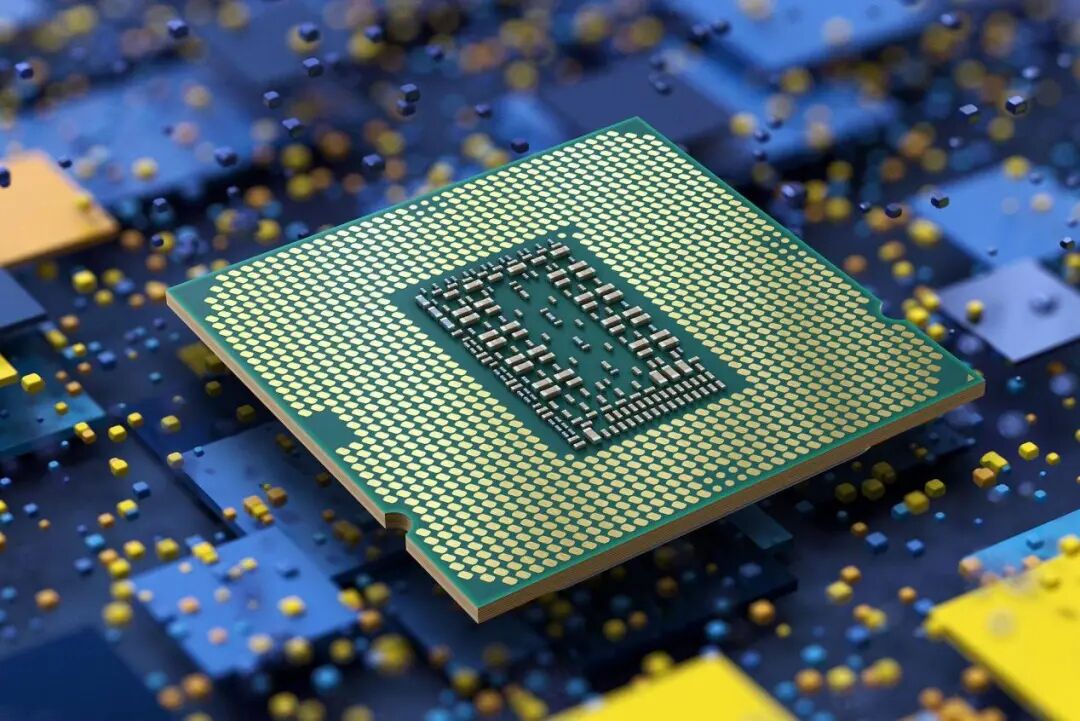
According to the latest research on the AI server industry from TrendForce, as various AI service vendors actively launch AI Agent related applications, the demand for server CPUs has grown steadily since the second half of 2025, and the annual shipment growth rate is estimated to reach 31% in 2026.
In 2027, driven by the continuous growth of AI inference demand and the rising penetration rate of Agentic AI services, server CPU shipments are expected to record a year-on-year increase of over 40% again, yet the market pattern dominated by the x86 camp may change.
In a market where GPU narratives dominate the headlines, this piece of news did not cause much of a stir.
However, re-reading this forecast from the perspective of procurement and capital expenditure, it points to another layer of change: the budget structure of AI infrastructure is shifting from only purchasing acceleration cards to deploying a complete set of cabinet computing power, and the weight of CPUs in this new ledger is rising significantly.
One Account, Transformed from One Line to Three Lists
In the stage dominated by large model pre-training, when purchasing a training server, the focus of budget and review almost falls on GPUs. CPUs, memory, storage and networks are more regarded as supporting foundations, deployed in accordance with established topological specifications, and there is rarely separate demonstration on whether to add a few more CPUs.
The classic ratio of 1 CPU carrying 8 GPUs has been widely adopted in the industry for a long time. In the ledger that takes floating-point computing power as the measurement standard, the computing capability of CPUs can almost be ignored.
But Agent workloads have rewritten this arithmetic problem.
TrendForce released a blog post on April 24, reporting that at the Q1 2026 earnings call, Pat Gelsinger, CEO of Intel, stated that as the focus of AI workloads shifts from training to inference, the proportional relationship between CPUs and GPUs is pushed to balance, changing from 1:8 to 1:1, which drives a surge in CPU demand.
Industry data shows that in the era of AI agents, the number of CPU cores required per gigawatt may surge from 30 million to 120 million, a 4-fold increase.
This does not mean that the floating-point computing power of CPUs has caught up with GPUs. Essentially, the workload structure has migrated: dense matrix calculations such as model token generation are still more suitable for GPUs; while logical work with a large number of branch judgments and external interactions, such as task planning, request routing, tool calling, and coordinated scheduling among multi-agents, is currently mostly carried by CPUs.
Of course, the industry is also trying to sink part of the lightweight orchestration logic to the acceleration card side, but this has not yet become the mainstream.
Analysts from investment bank KeyBanc stated that the full-year 2026 production capacity of AMD EPYC server CPUs is almost sold out, and the delivery lead time for high-end models has been extended to 8–10 weeks.
The specifications of NVIDIA's own rack products also indirectly confirm that the logic of computing power ratio is shifting: both GB200 NVL72 and Vera Rubin NVL72 for Agent scenarios have a standard configuration of 36 CPUs corresponding to 72 GPUs.
Of course, these are Grace/Vera Arm cores deeply bound to GPUs, which cannot be directly equated with independent x86 host CPUs on the procurement list, but they represent a shift in platform design ideas: in Agent and long-context inference scenarios, control and orchestration resources are no longer accessories.
The scale of CPU configuration in a single cabinet has increased significantly, and the memory of the whole system has been expanded accordingly; to support the network interaction of multi-node concurrent scheduling and tool calling, high-speed network ports must be increased synchronously; the power consumption of the whole machine continues to rise, so the power supply capacity and liquid cooling heat dissipation solutions need to be recalculated.
When it comes to the procurement link of cloud vendors, the changes are already very clear: in the early days of building training clusters, procurement was basically equivalent to determining how many GPUs to purchase, which was a single-choice question with a single core variable.
But for Agent-oriented inference clusters, the procurement list has been extended to a complete set of system solutions: GPU computing power, CPU cores, system DRAM, KV cache SSD, high-speed switches, cabinet power distribution and heat dissipation capacity, all links must be matched as a whole and planned uniformly, and a single hardware indicator can no longer determine the cluster delivery capability.
In the past, when calculating the TCO of AI infrastructure, the budget focus was almost anchored on GPUs, and CPUs were more of an auxiliary item that followed the whole machine solution and could be moderately compressed. Under the new Agent-driven workload, CPUs have been upgraded to procurement items that require independent specification evaluation, separate production scheduling, and separate business negotiation.
For chip and server suppliers, this is a clear incremental market; for purchasers such as cloud vendors and large model enterprises, it means an additional cost variable that needs to be weighed, as well as a new bargaining leverage.
A Sub-line Underestimated by the Market
Beneath the incremental demand for CPUs, three types of buyers with completely different demands have been differentiated.
The first type is cloud vendors that are deeply bound to their own software stacks and self-developed Arm computing power adapted to Agent workloads; the second type is general-purpose computing power for AI-native startups and model customers with flexibly adjustable CPU-GPU ratios; the third type is x86 computing power for traditional enterprise customers that prioritizes ecological compatibility.
The workload demands, migration costs and bargaining space corresponding to different routes vary greatly, which will also affect who the incremental dividends will eventually flow to.
Previously, the valuation and pricing of the AI track were basically anchored in the GPU industrial chain: HBM, advanced packaging, optical modules, liquid cooling, and cabinet integration, and high-valuation targets emerged in each link. CPUs have long been outside the main narrative of AI, and the stock price elasticity of Intel and AMD is generally lower than that of the targets in the upstream and downstream of the GPU industry.
This set of pricing logic is gradually shifting along with the reconstruction of the computing power ratio brought by Agent workloads.
If TrendForce's prediction comes true, the server CPU industrial chain is expected to usher in a long-lost growth curve. Which players this round of incremental dividends will eventually flow to will be the core proposition that the capital market continues to study and judge.
One possible allocation path is that the Arm camp takes the majority of this round of increments. Cloud vendor self-developed CPUs such as AWS Graviton, Alibaba Cloud Yitian, and Google Axion, together with Grace and Vera in NVIDIA's cabinet platforms, jointly push up the shipment scale of Arm architecture server CPUs, and drive the demand for supporting OEM, advanced packaging and memory.
For TSMC and packaging and testing manufacturers, this is a new demand curve independent of GPU orders, but the process and packaging resources it consumes do not fully overlap with high-end acceleration cards.
Another allocation path is that the x86 camp relies on its solid existing installed base to maintain its share for a longer time in general-purpose inference and enterprise hybrid cloud scenarios. Intel Xeon 6 and AMD's 6th generation EPYC have both been specifically optimized for Agent workloads.
The mature software ecosystem, industry-wide distribution networks and long-accumulated enterprise customer service links are shortcomings that Arm solutions are difficult to make up for in the short term. In this scenario, even if Agent-related workloads are deployed on a large scale, x86 will not necessarily lose ground quickly.
There is another easily ignored supply chain transmission effect: the rise in CPU demand may reshape the pattern of discourse power in the server whole machine track.
In the stage dominated by AI training clusters, whether you can get GPU quotas is often the core premise for whole machine manufacturers to win orders. As the priority of CPUs, memory, power supplies and heat dissipation in the procurement list rises synchronously, the roles of whole machine manufacturers and system integrators have the opportunity to return from the assembly plants that are simply labeled by the outside world to solution designers.
The customized requirements of mixed Agent workloads for whole machine topology, resource ratio and power consumption balance will amplify the design value at the system level.
Of course, there is another risk worth noting: if the capital market prices related targets in advance according to the CPU super cycle, but the commercialization landing pace of Agent falls short of expectations, the valuation pullback may be as fast as the previous rise.
This growth sub-line is still at the expected level at this stage, and has not been fully reflected in the performance. Relevant pricing needs to be anchored on verifiable shipment and landing data, rather than pure narratives.
The Rent of X86, the Increment of Arm
The pattern of the server CPU market for more than ten years is largely built on a certain ecological rent.
A large number of databases, middleware, and industry business systems have been developed around this architecture for a long time, and the high migration cost for customers to switch architectures constitutes a long-term and stable barrier. Of course, the premise of rent is that manufacturers continue to invest in the iteration of chip architecture and platform capabilities, rather than simply relying on historical accumulation to enjoy dividends passively.
Intel and AMD have long captured nearly 90% of the market share, which does not come from the absolute crushing of chip performance. The real barrier is the complete software ecosystem that has grown around x86: the vast majority of enterprise software, databases, middleware and operation and maintenance tool chains around the world have long taken x86 as the default adaptation benchmark, and cross-architecture migration requires considerable transformation and verification costs.
Once customers switch the chip architecture, they will face the pressure of compatibility transformation of the entire software stack. The high migration cost constitutes the moat of x86, and is also the underlying support for this ecological rent.
Arm has not launched challenges before. From the early Calxeda to the later Ampere, Arm server chips have been tested for more than ten years, but it has always been difficult to achieve large-scale deployment in the traditional enterprise market. The core obstacle is the high software ecosystem wall built by x86.
Of course, the early attempts were also superimposed with multiple constraints such as hardware, capital, and customer landing rhythm, and the ecological migration cost is still the most difficult part to overcome.
But the path of this round of breakthrough is different: instead of directly impacting the traditional enterprise market with a large stock of existing applications, it cuts into scenarios such as cloud vendors or AI-native customers who can independently control the entire software stack. Such entities are in a position to adapt based on Arm at the initial stage of business, without having to pry the solidified stock application ecosystem.
For example, cloud vendors carry out in-depth customization of operating systems, scheduling components and runtime environments at the bottom layer, digesting the costs of architecture adaptation and compatibility verification internally within the system, so as to bypass the external ecosystem shortcomings that Arm has faced for a long time.
NVIDIA has taken another path: it does not completely refuse to provide independent Arm CPUs externally, but in full-rack solutions such as GB200 and Vera Rubin NVL72, Grace, Vera and GPUs are deeply coupled and delivered in the form of Superchips.
What customers purchase is a complete set of full AI racks optimized for Agent workloads. The shipment scale of this part of Arm CPUs is directly bound to the delivery volume of GPUs in the cabinet. The process of iteration and order volume increase of the two generations of racks from GB200 to Vera Rubin also drives the synchronized growth of shipments of supporting Arm CPUs.
It can be seen that the market is moving towards differentiation: x86 holds the base of the stock ecosystem, and Arm opens up new growth space by leveraging the incremental market brought by Agent.
The growth rates of 31% and 40% look very attractive, but it is not difficult to find by disassembling this forecast that it is based on three sets of assumptions that have not been verified by actual deployment.
The first assumption is that Agent can achieve large-scale commercial deployment. At present, cloud vendors and large model enterprises are intensively launching Agent-related products, but users' willingness to pay, the end-to-end completion rate of tasks, and the long-term call scale of enterprise customers have not yet been tested through a complete business cycle.
If Agent stays in a state where the demonstration effect is bright but the paid conversion is weak for a long time, the incremental space for server CPUs will shrink accordingly, and the narrative of Arm expanding relying on this track will also come under pressure.
The second assumption is that the resource ratio of CPUs and GPUs will stabilize at a high CPU consumption interval. At this stage, Agent workloads do bring significant host-side overhead, but the iteration of inference frameworks and underlying architectures may reshape the workload distribution at any time.
The third assumption is that the fragmentation problem of the Arm ecosystem will not drag down the expansion pace. Different Arm platforms such as Graviton, Axion, Ampere, and Grace/Vera cannot be fully compatible with each other, and software often needs to be adapted and tuned separately for different platforms.
In the closed self-owned ecosystem of cloud vendors, such adaptation costs can be digested internally; but when Arm solutions go out of the closed loop and are promoted to external ISVs and traditional enterprise customers, fragmentation will be converted into clear migration and maintenance costs.
For industrial investors, a more valuable approach is to focus on three sets of leading high-frequency indicators: the change of the ratio of CPUs to GPUs in the hardware procurement lists of cloud vendors, the real call volume and paid conversion efficiency of Agent products, and the change in the proportion of Arm architecture server CPUs in quarterly shipments.
Frontline order and business operation data are far closer to the real industry prosperity than any institution's long-term forecast.
Putting TrendForce's forecast back into the business context, it essentially points to a plain change: the investment logic of AI computing power is shifting from only purchasing acceleration cards to matching a complete set of balanced computing power cabinets.
GPUs are still the largest expenditure item in computing power procurement, but CPUs, memory, networks, power supplies and other links that were previously regarded as supporting components have begun to obtain independent weight in budget allocation.
This article is from the WeChat official account "Silicon Carbon Variable", author: Shen Lang, published with authorization from 36Kr.