After Tibo completed 28 consecutive updates, OpenAI merged the quota pool and launched the metered billing chat service.
Over the past four weeks, OpenAI's Codex users have had their quota reset almost every other day. In the final few days of the benefit period, the ledger has been tightened.
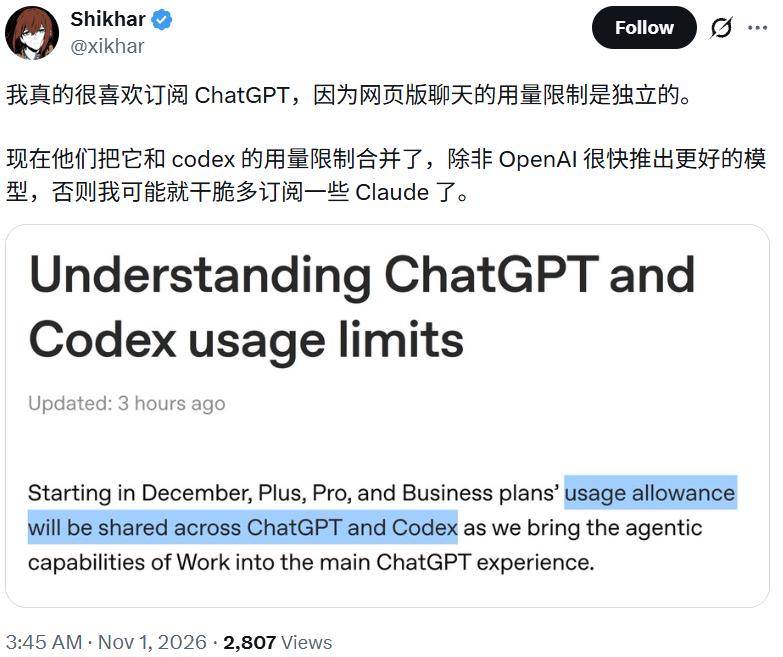
OpenAI Help Center has just published a new document titled Understanding ChatGPT and Codex usage limits, the first sentence of which clearly states the change: Starting from December, the usage quotas for the three paid plans, Plus, Pro and Business, will be shared between ChatGPT and Codex. The reason OpenAI gives is that they are integrating the agent capabilities of ChatGPT Work into the main ChatGPT experience.
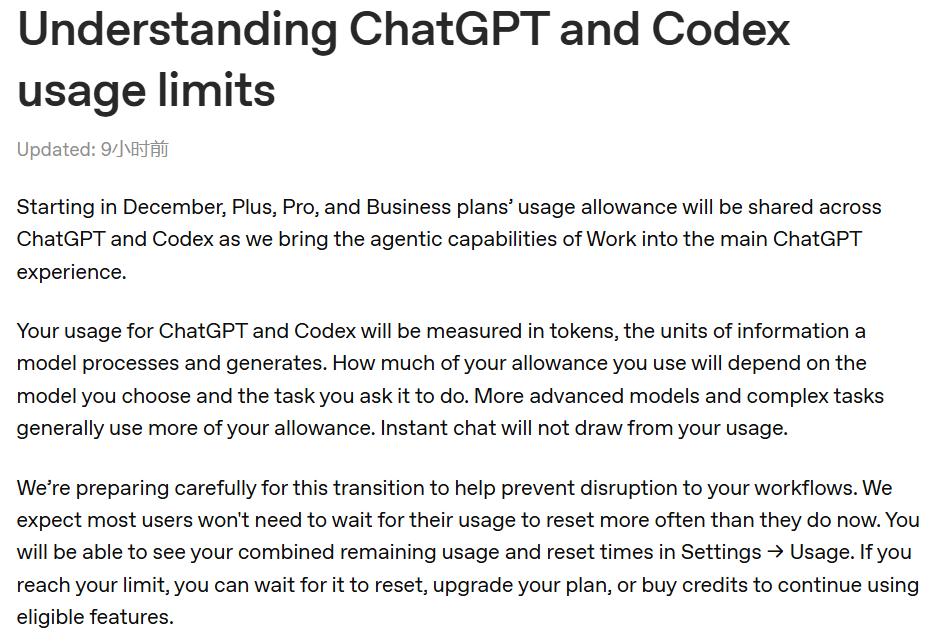
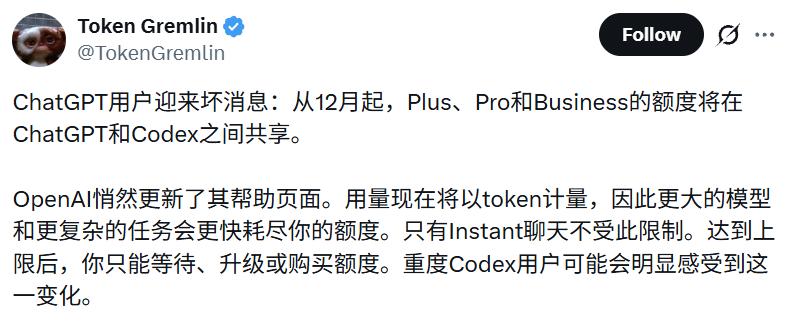
To put it in plain terms: Previously, when you subscribed to ChatGPT, the chat function on the web page and the code writing function in Codex had separate quotas that did not interfere with each other; after December, both will draw from the same shared pool. A bigger change lies in the measurement method: the quota will be uniformly calculated in tokens instead of by the number of messages. The only function that remains unaffected is Instant chat.
Billing by token, Instant chat is the only exception
According to the help document, all usage of users in ChatGPT and Codex will be measured in tokens. The amount of quota consumed depends on the model the user selects and the task assigned to it: the more advanced the model and the more complex the task, the more quota will be deducted. Instant chat does not count towards the quota at all.
OpenAI also included a reassuring note in the document, stating that they are preparing carefully for this transition, and most users are expected to not be significantly affected — the frequency of waiting for quota resets will not be higher than it is now. After the integration, users can check their remaining total quota and reset time in Settings → Usage.
When the quota is exhausted, there are three options available: wait for reset, upgrade your plan, or purchase credits to continue using eligible features.
However, the document does not specify the exact launch date, nor does it announce how many tokens each tier of the plan can use.
This change was actually foreshadowed earlier. On the morning of the 30th, Tibor Blaho, who has long tracked OpenAI product updates, found a new prompt on the checkout page of the ChatGPT web version: "Starting from December, plan usage will share the same cap across all features of ChatGPT and Codex." He judged that this is related to the ongoing integration of Chat and Work that OpenAI is promoting.
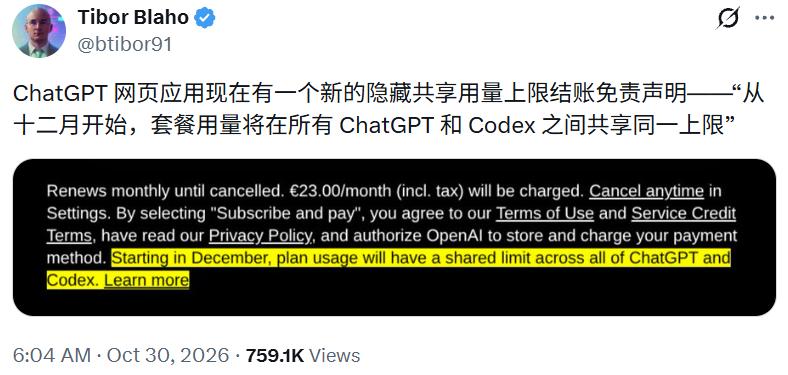
Just the day before, Tibo (Thibault Sottiaux), head of Codex, responded to users saying that the team is working on this, but the rollout has not yet started.
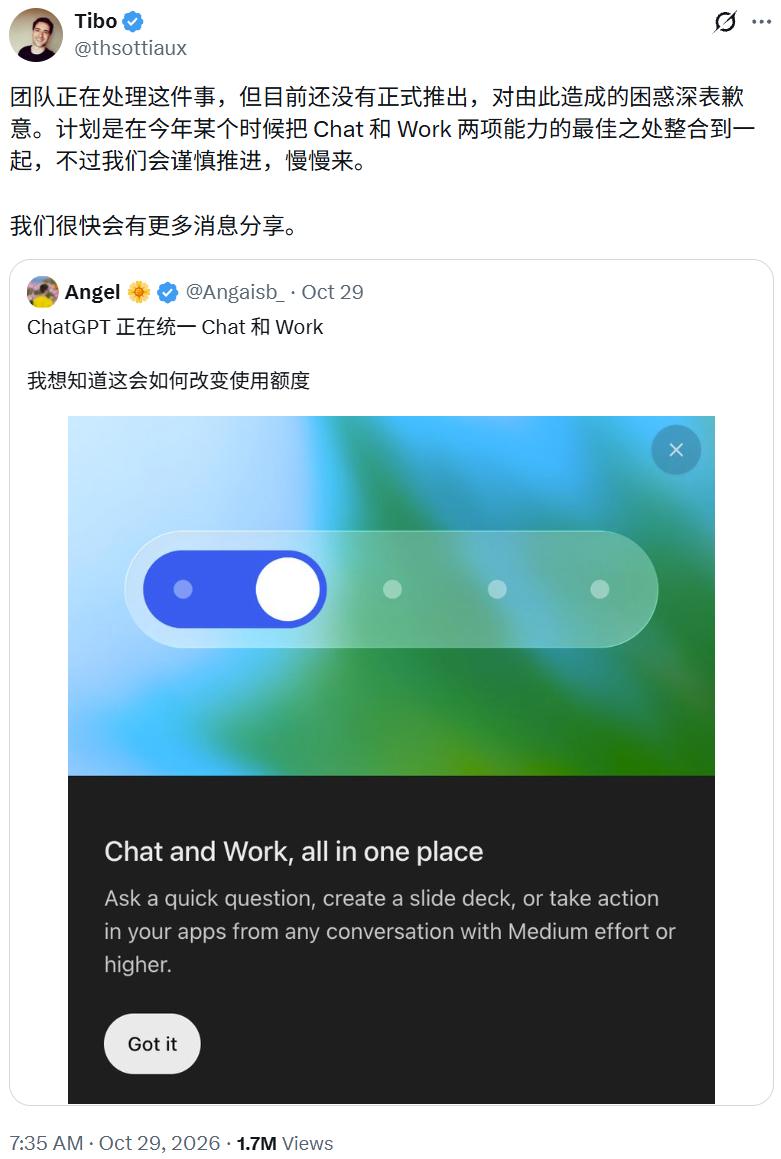
It is worth noting that according to OpenAI's previous statement, Work and Codex already shared the same quota. Therefore, this adjustment does not create a brand new quota pool out of nowhere, but adds the daily ChatGPT chat function into the existing shared pool.
Logging into multiple accounts on one device may lead to account lockout
Beyond the quota integration, another rule is being tightened at the same time.
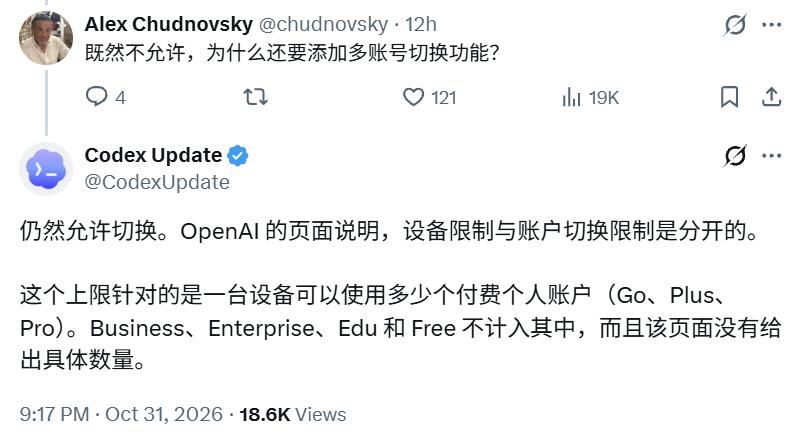
According to collation from the Codex Update account, OpenAI has newly released a help page about bank card and device limits. There is a cap on the number of paid accounts that can be used on one device, covering all tiers of Go, Plus, and Pro 100/200/500. When the cap is exceeded, users will see a "Device limit reached" prompt when logging in, or be logged out during use even if the payment has been successful. Logging out of another account will not free up a slot. Business, Enterprise, Edu and free accounts are not subject to this restriction.
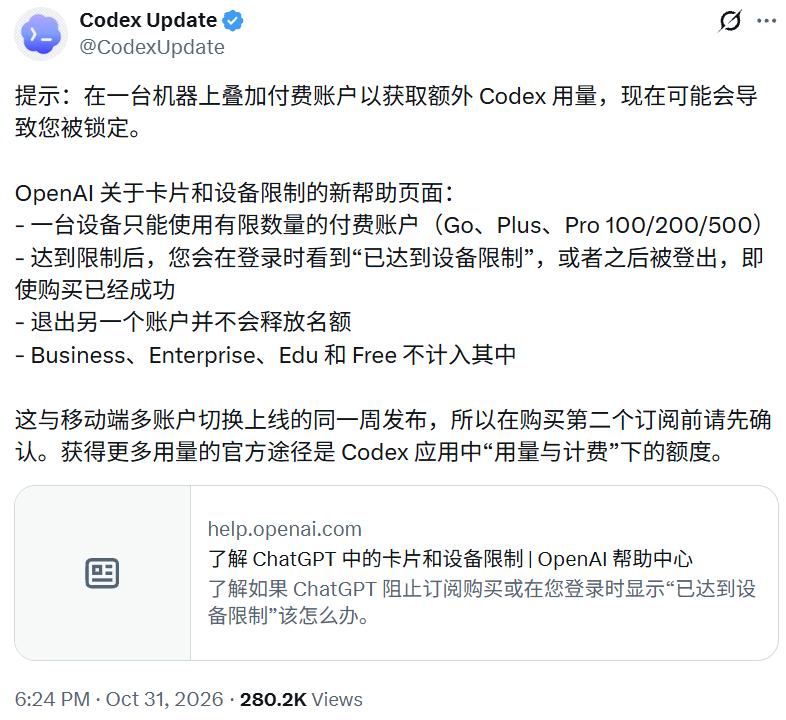
The timing of this rule is quite subtle. In the same week this rule took effect, Codex just launched the multi-account switching function on mobile terminals. Many heavy users previously used the workaround of purchasing multiple subscriptions to use them in rotation, and now this path is explicitly blocked. Codex Update also reminds users that the officially recognized way to expand capacity is to purchase credits in "Usage & Billing" of the Codex app.
"I might buy more Claude subscriptions"
After the news spread, the community's reaction was not optimistic.
For many Plus users, the most appealing part of a ChatGPT subscription is exactly that the web chat has an independent, nearly unlimited quota. X user xikhar said bluntly that the reason he likes the ChatGPT subscription is that the chat quota is independent. Now that it will be merged with Codex, unless OpenAI launches a much better model soon, he may turn to purchasing more Claude subscriptions.
Some people also noticed a detail: just a few days ago, OpenAI doubled the quota for Pro and Business Premium plans, but the Plus plan was not included. Under Tibor Blaho's post, some netizens complained that the only exclusive benefit for Plus users is about to disappear, while the quota for Plus did not get doubled along with Pro.
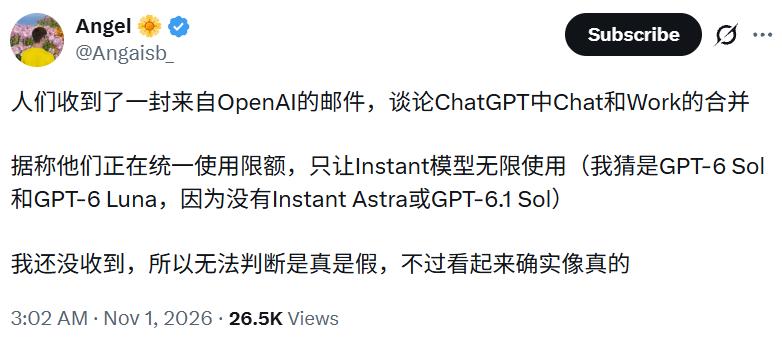
As for which models belong to the unrestricted Instant category, there are only speculations for now. Netizen Angaisb_ speculates that only models like GPT-6 Sol and GPT-6 Luna will remain unlimited. There is no official response to this claim yet.
Some users did the math: with only Instant chat unrestricted, users can only wait for reset, upgrade plan or buy credits once they hit the cap, and heavy Codex users will feel the pressure first.
Tibo's 28 days: from "The Reset Company" to "The Token Company"
To understand the community's emotional gap, we have to look back at what happened in the Codex community over the past four weeks.
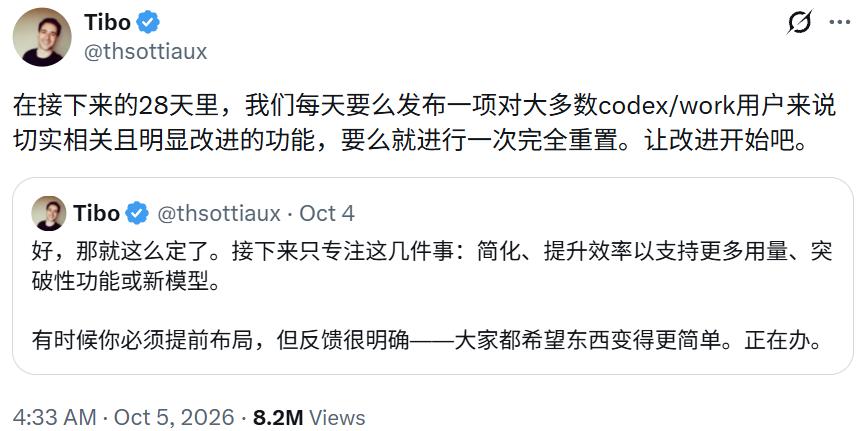
On October 4, Tibo set a goal on X: For the next 28 days, I will either release an improvement that is clearly useful to most Codex/Work users, or perform a full quota reset every day. The challenge ran from October 5 to November 1, and a number of websites dedicated to tracking his daily updates popped up in the community, some of which even launched polls to let users guess whether the day was an "improvement day" or a "reset day".
A lot of outputs were delivered in these 28 days. On the first day, the default speed of GPT-6 Astra and GPT-6.1 Sol in subscription products was increased by about 50%; on the 7th day, the default context of GPT-6.1 Sol was expanded from 272k to 500k; on the 12th and 16th day, caching and request routing were optimized consecutively, which indirectly allowed the same quota to handle more workloads; on the 22nd day, GPT-6.1 Terra returned, and Tibo said it performed significantly better in writing, personality alignment and understanding the nuances of requests, with only half the token consumption of 6.1 Sol; on the 24th day, users could send messages and leave voice notes to their own Dots just like texting a friend.
Of course, there were also a lot of resets. According to statistics from community tracking sites, the total number of global resets and banked resets (resets saved for later use) reached more than ten times throughout the cycle. Tibo's announcements also became more and more casual: on the 10th day he said "The rumors that I lost my reset button are greatly exaggerated"; on the 23rd day, he first announced that the highly anticipated iCloud plugin was launched, and then immediately added "Just kidding, today is a reset day".
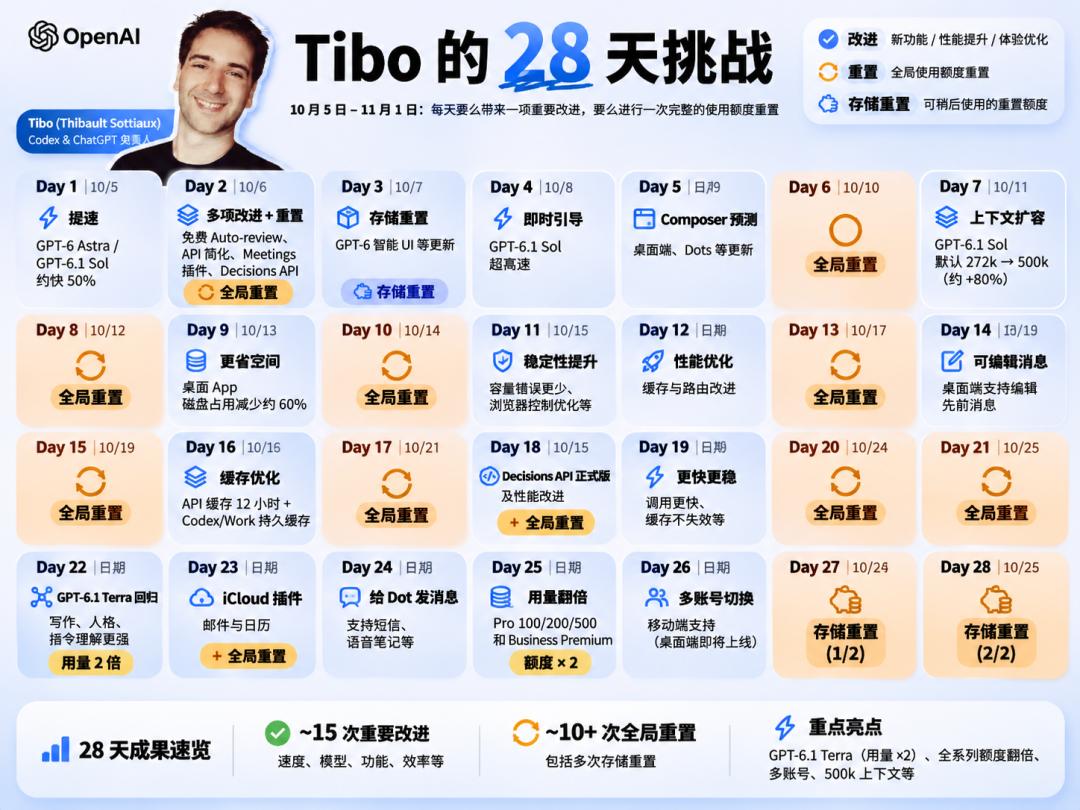
Image generated by ChatGPT
Not everyone is satisfied with this. Some paid users complained that while global reset sounds great, it will clear the user's remaining quota and restart the 7-day timing, which actually disrupts the rhythm for users who carefully plan their weekly quota.
The climax came on the 25th day. Tibo announced that all quotas for Pro 100/200/500 tiers and Business Premium would be doubled with immediate effect, and said that after listening to user feedback, the quota for Pro 200 will not be cut anymore.
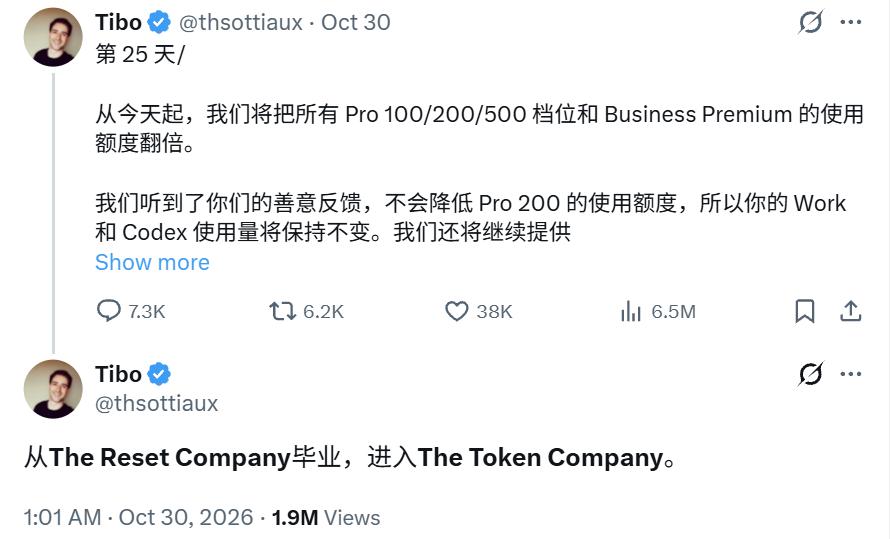
The background here is that OpenAI had previously notified that starting from October 30, the quota of Pro 200 in Work and Codex would be reduced from 20 times that of Plus to 10 times. Jiqizhixin previously reported on the controversy caused by this round of adjustment, refer to the article "OpenAI will Reopen the $200 Plan, but Tibo Got Heavily Criticized". Then Tibo added a line: "We have graduated from The Reset Company and entered The Token Company."
On the 26th day, mobile multi-account switching was launched, and Tibo previewed that the next two days would both be banked reset days; on the 27th day, he posted "Banked 1/2".
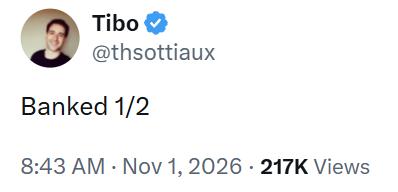
Looking back now, the joke of "The Token Company" was almost a preview of the quota integration.
"Unlimited" was essentially a kind of subsidy
Putting the two things together, OpenAI's logic is not hard to understand.
Limiting quota by the number of messages essentially makes the cost of each query invisible to users. Asking about the weather and letting an advanced model reason for half an hour may be treated equally in terms of quota, and OpenAI absorbs the cost difference itself. After switching to token-based calculation, the subscription is more like a bundled API prepaid quota, where you get deducted for exactly what you use, and you can make up for the excess part with credits. The computing power cost is explicitly priced and transferred into users' perception.
Behind this is the continuous computing power pressure. After the release of GPT-6 Astra in September, demand surged, and OpenAI once suspended new subscriptions for the $200 Pro plan; when it was reopened, Tibo admitted that the new plan's equivalent API cost was only half of the old version. Frequent global resets, to some extent, also show that the quota itself is an adjustable valve in OpenAI's hands. This time, the way to adjust the valve has changed from "giving one extra reset" to "unified pricing".
For light users, the impact may indeed be limited, and Instant chat is still completely unrestricted. But for heavy users who use advanced models to discuss problems on the web during the day and run long tasks in Codex at night, chat and programming will now compete for quota from the same shared pool. The so-called "unlimited queries" will only remain for the Instant tier in the future.