Embodied intelligence funding is flowing to the "skin" of robots.
In 2026, the financing trend in the embodied intelligence track is undergoing changes.
Statistics from IT Juzi show that 33 financing deals totaling 10.105 billion yuan were closed in the embodied intelligence track in October 2026, while the number stood at 60 deals totaling 11.028 billion yuan in September, marking a notable downward trend.
Nevertheless, while the previous bustling scenario where capital chased ontology manufacturing and large models has cooled down, a number of investors have begun to shift their focus to the upstream sector. Core components that determine robots' "physical capabilities", such as dexterous hands, tactile sensors and electronic skins, have become a small number of links that still attract capital against the general trend.
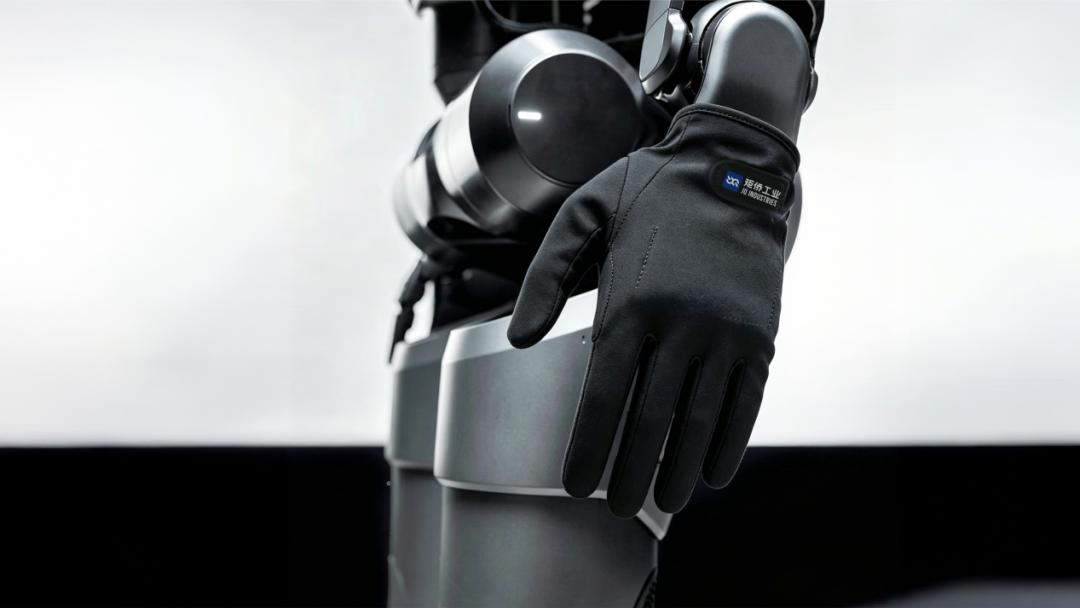
(Source: Official website of Jooch Industries)
On October 29, Shandong-based flexible fabric tactile sensing enterprise Jooch Industries announced the completion of a 100-million-yuan Series A financing round, led by Ant Group, with participation from existing shareholders Zero One Venture Capital, Weihai Gangrong and Qingdao Hexin. This marks Ant's second move in the tactile track: two months ago, it just led the investment in Damo Robotics, a player taking the visual-tactile technical route.
However, it is worth noting that the technical routes in the tactile track are highly fragmented. For a company established for less than three years to secure a 100-million-yuan level financing, is it a signal of the industry's inflection point, or a phased capital stake placement?
01
The financing logic of embodied intelligence has changed
The financing logic of embodied intelligence seems to be shifting from "building a smart body" to "enabling the body to perceive the world".
After all, vision can be trained with internet videos, and language can be trained with text. But tactile data can hardly be obtained from existing corpora. Physical quantities such as tangential force and material texture can hardly be generated with high fidelity by simulation engines, and must be collected frame by frame through real operations.
Industry data shows that in terms of price, tactile data is about three times more expensive than visual data: the price of visual and other video data may be several hundred yuan per hour, while the price of tactile data reaches over 1000 yuan per hour.
This difference is directly reflected in the financing data. In the first seven months of 2026, nearly 20 financing deals were closed in China's humanoid robot sensor sector, totaling more than 3.1 billion yuan, of which about 1.56 billion yuan was recorded in July alone. To a certain extent, this also means that the party that can provide high-efficiency, low-cost and scalable tactile data collection entrances will seize the "data pass" of embodied intelligence at the current stage.
However, there is no single unified technical route in China's domestic tactile track at this stage. The Hall magnetic sensing scheme represented by Pacini focuses on high-precision multi-dimensional force detection at the fingertip of dexterous hands; the visual-tactile route represented by Damo Robotics delivers higher resolution, with a tactile resolution of tens of thousands of sensing points per square centimeter, outputting image data that naturally adapts to end-to-end networks.

There is also the fabric route represented by Jooch Industries. Its technical logic is to break down the conductive and piezoresistive structure down to the fiber level, and weave functional fibers directly into a sensing network. When external force touches the fibers, the conductive paths inside the fibers deform, the collection system reads signals, and the algorithm converts the signals into tactile data.
These three routes are not mutually substitutable, but rather correspond to different respective tasks. For example, for fingertips and dexterous hands that require high resolution, multi-dimensional force and fast response, the visual-tactile and Hall magnetic sensing schemes have more advantages at this stage; for large curved surfaces such as torsos, robotic arms and soles of feet that require large-area, bendable, breathable and cost-controllable coverage, the fabric route is easier to deploy at scale.
Therefore, it is difficult for one single route to dominate the market in the short term, and the industry is more likely to move towards a hybrid solution layered by different parts. For this reason, the capital's betting logic is not to bet on the final victory of a certain technology. Ant's two investments just correspond to this differentiation: Damo Robotics represents the high-precision direction of visual-tactile technology, and Jooch Industries represents the large-area coverage capability of the fabric route. This also explains why against the background of cooling financing in the embodied intelligence track, a 100-million-yuan level fund still flows to a "piece of fabric".
02
The "counterintuitive" technical path
Capital betting on two routes at the same time does not mean that both routes have been fully proven feasible. To judge whether this 100-million-yuan financing is a signal of the industry's inflection point or a phased capital stake placement, we need to go back to Jooch Industries itself.
The company was established at the end of 2023. Its founder Zhang Jingqi graduated from the Department of Electronic Engineering, the University of York in the UK, once served as CTO of a Xiaomi ecological chain enterprise, and holds a number of related invention patents. Its core team mainly comes from the Chinese Academy of Sciences and leading smart hardware manufacturers, with profound technical accumulation and rich experience in smart hardware product definition and mass production.

The company's technical path is quite "counterintuitive". The structure of traditional piezoresistive films is to stack the flexible substrate, pressure-sensitive layer and conductive layer layer by layer, but Jooch Industries chooses to use nylon as the fiber core, and make the piezoresistive material and electrodes into independent functional fibers respectively.
The advantage of this solution is that the woven sensing fabric is cuttable, foldable and can be revised quickly, which can fit the complex curved surfaces of robots. This innovation has successfully promoted the fabric-form electronic skin to truly move towards large-scale mass production. In May 2025, the company disclosed that its roll-to-roll production line has an annual capacity of 200,000 pieces with a yield rate of 95%; in July, the Lin'gang District of Weihai reported that the company's orders had been scheduled to October, and its output value in the first year of production was nearly 10 million yuan; in September, the 1000th set of humanoid robot fabric electronic skin rolled off the production line. The company said that less than half a year after its products were launched, nearly a hundred customers at home and abroad had placed orders and made repeat purchases, including but not limited to Unitree, Songyan Power, and Zero Zero Robotics.
However, the shortcomings of the fabric route are also obvious: its single-point accuracy is lower than that of the visual-tactile scheme, which determines that it is more suitable for large-area coverage scenarios such as torsos, soles of feet and robotic arms, rather than high-precision fingertip operations. Therefore, the company is also extending to fine interaction, and has launched Tactile Skin 2.0, which further expands the perception capabilities for force direction, sliding trend and tangential force by adjusting the weaving structure and combining with model training. But whether it can meet the high-end demands of dexterous hands in terms of accuracy remains to be verified.
The deeper challenge lies in the business model. It is reported that Jooch Industries' current product matrix spans three tracks, among which the robot electronic skin serves as the valuation anchor to establish the company's technical benchmark status. But at this stage, its business is highly dependent on a few leading customers such as Unitree, and the sustainability of orders remains to be observed.
Smart elderly care serves as the cash flow business, whose orders exceeded 10 million yuan in 2024, and has been deployed in well-known institutions such as Taikang Community, SDIC Health and China Resources Runjia. As for the automotive smart cockpit business, it acts as a growth lever to support performance growth.
Therefore, the more accurate meaning of this 100-million-yuan financing is not that capital has cast a "confirmation vote" for Jooch Industries' fabric route, but to pre-occupy a differentiated player with mass production and delivery capabilities during the window period when the tactile technical routes have not converged and the data entrances have not been finalized.
What it really needs to verify is whether the company can convert its early process advantages into stable delivery, standardized modules and model-ready tactile data. If this step is achieved, the fabric route has the opportunity to become the infrastructure for full-body robot tactile perception. If it fails, the capital window may be quickly compressed by latecomers.
03
Who can seize the perception high ground of humanoid robots?
The reason why Jooch's financing has attracted industry attention actually reflects the ongoing changes in the robot skin sector.
In the past, when robots were "clothed" or covered with soft skins, it was mostly understood as an issue of appearance and protection. Now, this outer covering is carrying four functions at the same time: safety, affinity, scenario adaptation and tactile perception.
In near-human scenarios such as shopping malls, elderly care facilities and homes, whether the user touches hard metal or flexible covering directly determines the human-robot coexistence experience; in industrial scenarios, high temperature resistance, corrosion resistance, dust prevention and static prevention are rigid demands...
This also makes the track grow at a particularly significant rate. According to industry forecasts, China's market demand for humanoid robot electronic skins will reach 1.525 million square meters in 2030, corresponding to an overall market size of about 27.4 billion yuan. Traditional textile enterprises, professional sensor enterprises and material enterprises are accelerating their entry into this sector, and the linkage effect between upstream and downstream of the industrial chain is obvious.
However, behind the boom, industrial development is still in the early stage. The lack of standardization is one of the most prominent pain points. Robots of different brands and different models have different structures, and most electronic skins need to be customized and developed for each specific robot model, so that molds and versions cannot be reused in batches, resulting in high costs and long cycles.
High-end electronic skin modules are restricted by packaging processes, sensing chips and material costs, and the full set of carrying price is still unaffordable for complete machine manufacturers that focus on cost performance. In addition, flexible sensing products are prone to problems such as signal drift, reduced sensitivity and shortened service life under long-term high-frequency bending, complex industrial dust and temperature change working conditions, and product stability and consistency need to be improved. For robot skin to truly change from an optional accessory to a rigid demand, it still needs to cross three thresholds: consistency, reliability and cost.
All in all, when a machine enters human living spaces, what people perceive first is often not its algorithms and parameters, but whether it is hard or soft, cold or warm when it touches a person. This is exactly where the value of tactile perception lies.
But the sign of maturity of this track will not be a single financing deal or a new product, but that the skin becomes an inconspicuous yet indispensable common component. By then, the focus of discussion will no longer be which technical route is more advanced, but who can supply stably under real working conditions, control costs and cooperate with the iteration of the complete robot machine. What capital is betting on today is exactly this certainty. As for which route will win in the end, the answer may not come out until robots truly walk into people's daily lives.
This article is from the WeChat official account "Robot Frontline", written by Robot Frontline, and published by 36Kr with authorization.