From natural movements to operation instructions, MythLink explores fingertip interaction | Geespace Portfolio Updates
To operate various smart terminals, people keep learning to use keyboards, mice and touchscreens. As device forms continue to evolve, a question has emerged: can we make devices adapt more to human users, so that users can express their operation intentions through familiar natural movements?
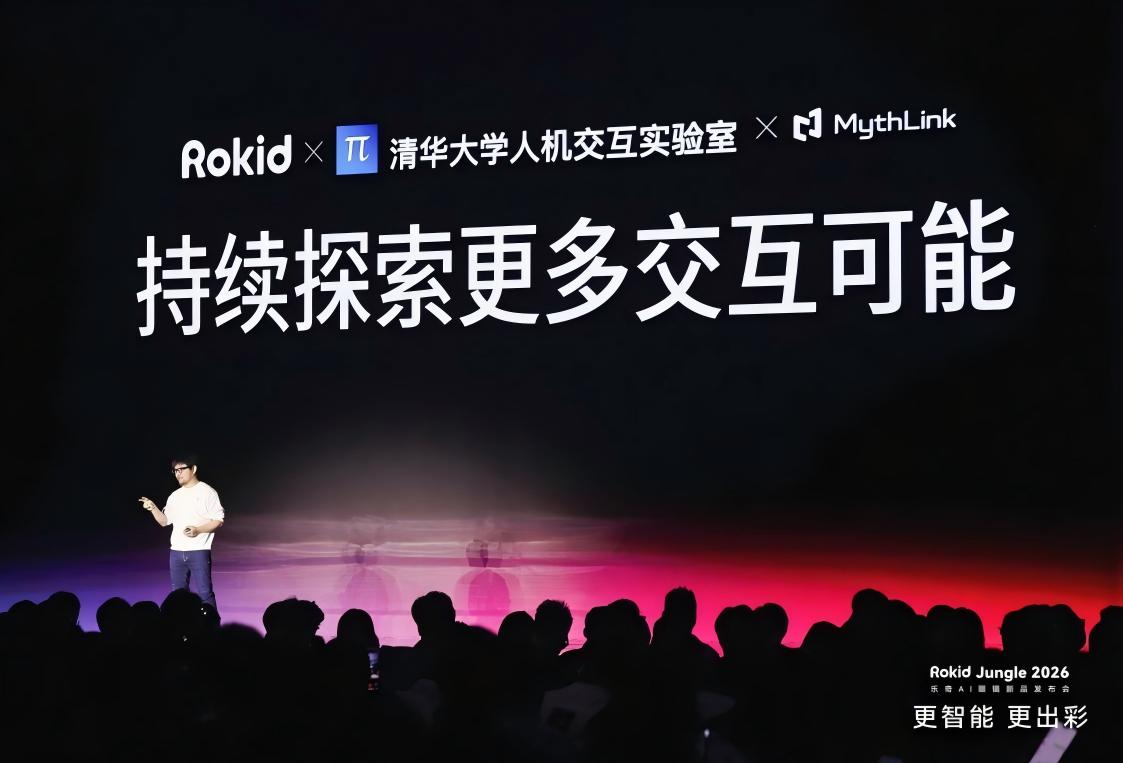
The Rokid Jungle 2026 new product launch event for Rokid AI Glasses, held in Hangzhou on October 27, provides a specific case for this vision. As a partner, MythLink Technology (Beijing) Co., Ltd. (hereinafter referred to as "MythLink") provides interaction and health monitoring solutions for the Rokid Ring launched at the event, striving to convert subtle fingertip movements into operation instructions understandable by the glasses, so that the interaction between humans and smart devices can be integrated into natural movements.
Prompting, navigation and translation are common use cases for smart glasses. When photos, videos, web pages and documents enter the field of view of the glasses, the operations users need to complete become more complex: they not only need to find content in the list, but also scroll continuously, switch options, and confirm at the appropriate position.
Both temple touch control and voice control have their own applicable scenarios, but the former requires the user to raise their hand to operate, while the latter has limitations when it is inconvenient to speak or when continuous and precise control is required. Gesture interaction attempts to transfer part of the operations to the fingers, allowing users to complete input with small-range movements.
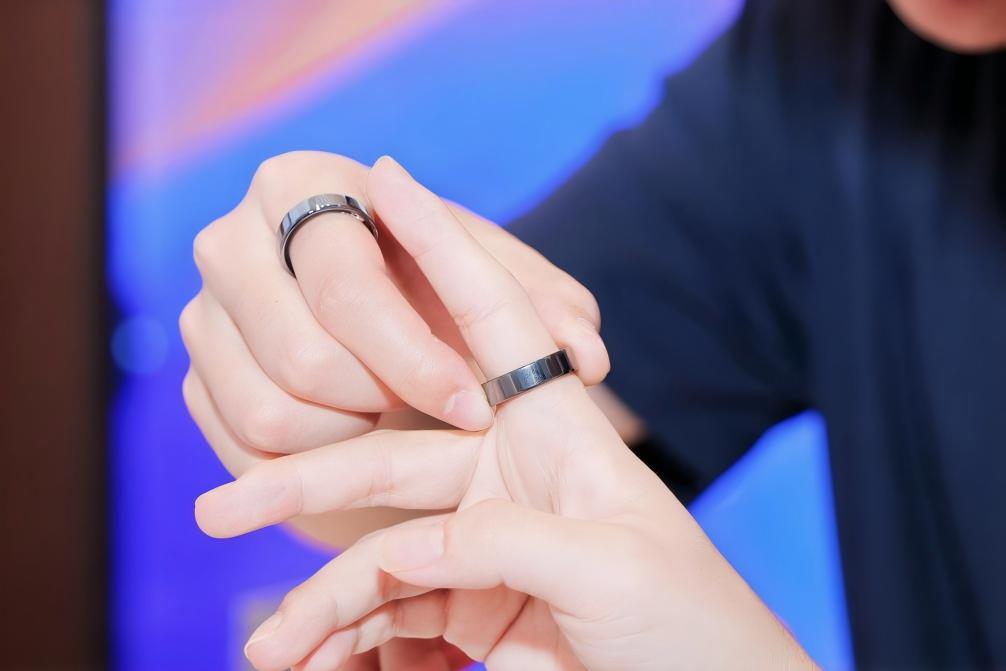
The direction key function demonstrated at this launch event allows users to swipe on the inner side of the finger wearing the ring to complete direction selection and option switching. Different from the operation of directly touching the surface of the ring, this method extends the operable area to the finger. Micro-gestures are used to trigger quick operations. For example, users can trigger photo taking by snapping their fingers, and rotate their fingers to scroll through content, providing an alternative operation method for long documents, photo lists and other content.
The launch event also demonstrated cutting-edge exploration directions: plane touch input, which can use the surfaces of objects such as desktops and armrests, as well as body surfaces such as the back of the hand and thighs as input areas; meanwhile, the capability of a single ring to recognize two-finger scrolling was showcased, enabling some computer trackpad operations to be implemented in a new form.
MythLink's core R&D team originates from the Key Laboratory of Pervasive Computing of the Ministry of Education of Tsinghua University. The team started research on ring-form interaction at a very early stage during the laboratory phase, and took AR glasses as the application direction at the initial stage of the research, exploring how to complete input and control through hand movements.
Turning a light tap or a finger snap into an operation instruction requires capturing subtle movement changes, and distinguishing active operations from unintentional movements in daily activities. To this end, the research needs to cover algorithm design, behavior data collection and actual wearing tests, to verify whether the movements can be accurately recognized under different conditions.
In terms of technical implementation, MythLink combines multi-modal perception and motion recognition algorithms, makes comprehensive judgments based on movement characteristics such as rhythm, amplitude and trajectory, and analyzes the continuous changes before and after the movement occurs combined with temporal behavior understanding. Information from multiple dimensions complements each other to provide a basis for operation recognition.
Through behavior sample accumulation, wearing tests and personalized learning, the team continuously adjusts the gesture recognition method, studying how to adapt to individual differences and reduce the need for users to deliberately adjust their movements to get a response. When different users can complete operations in a way close to their own habits, the adaptation of devices to humans is truly meaningful.
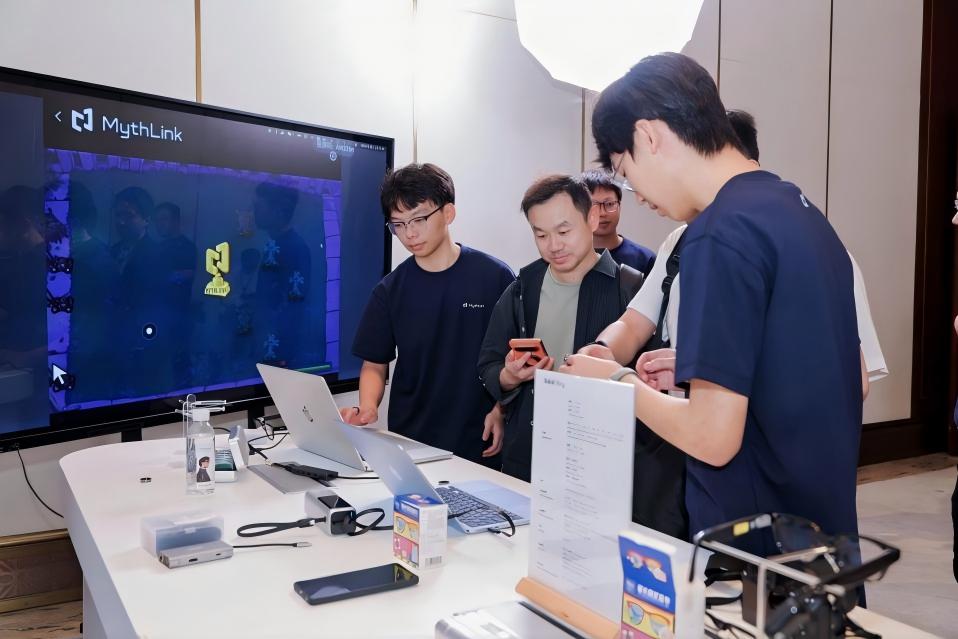
In the future experience zone set up at the Rokid AI Glasses new product launch event, audiences and media can experience the plane touchpad. When familiar touch operations can be performed on surrounding surfaces, terminal input will have the opportunity to get rid of the restrictions of the device's own buttons and screens. When facing different devices, users can use familiar movements to complete operations, reducing the burden of finding operation entrances and adapting to different interfaces, opening up new space for usage scenarios such as office work and creation.
As a result, the value of interaction extends from completing a single operation to collaboration between different devices. When users switch terminals and enter different scenarios, their behaviors, intentions and operation contexts can be carried over accordingly, allowing smart services to combine the user's current status and needs to provide a more coherent experience.
From recognizing a single gesture to understanding the demand behind an operation, the next generation of interaction still has many problems to be answered in real usage scenarios. MythLink hopes to promote the construction of the interaction ecosystem together with more partners, so that relevant capabilities can be verified in more devices and applications, and the connection between humans and the smart world can start with a natural movement.