A model that converts the AI transformation level of enterprises into a clearly calculated and fully transparent account.
Enterprises cannot build human-AI collaborative teams overnight. The transition from traditional human-only teams to human-AI collaboration is bound to go through an evolutionary process. Based on the theoretical deduction of Musheng Consulting and the practical feedback collected so far, we attempt to propose Moo Human-AI Collaboration Maturity Model (MHCM, Moo Human-AI Collaboration Maturity).
Given our judgment that human-AI collaborative teams will evolve into platform-based organizations (or agentic organizations), their organizational design will naturally adopt the three-architecture framework of platform-based organizations (or agentic organizations). We refer to the four-level maturity model targeting the three-architecture framework (as shown in Figure 1-1). In HACM, we also divide the evolution of enterprises into four levels, matching the maturity classification of platform-based organizations. This model can be directly applied to enterprises' self-assessment and path planning in the process of building human-AI collaborative teams.
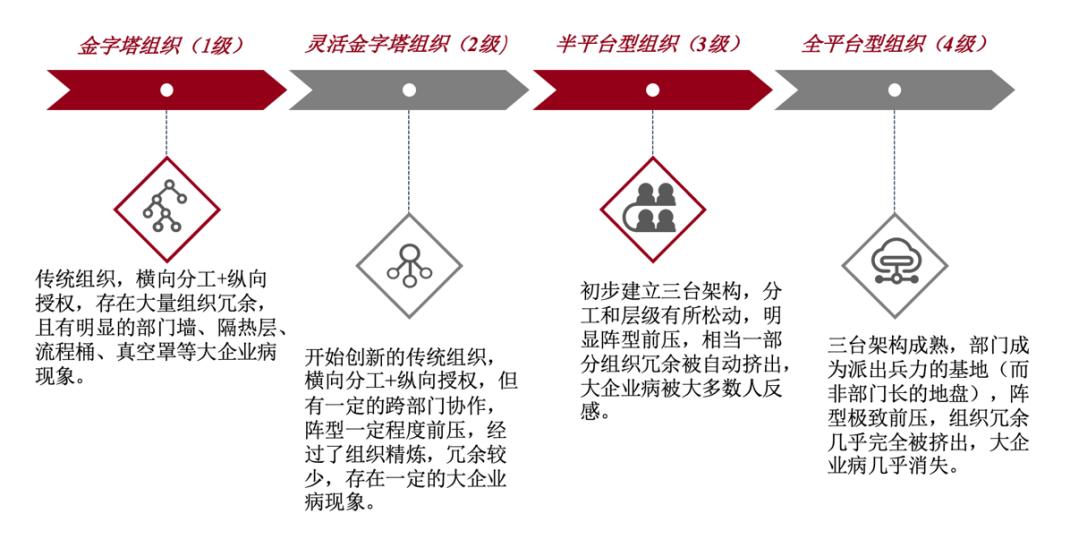
Figure 1-1: Platform-based Organization Maturity Model, Source: Musheng Consulting
01 Level 1 — Tool Level
In this type of organization, AI exists in the form of a "tool", used by individual employees out of personal interest without unified governance from the organization. Naturally, the output of AI is also the sole responsibility of individuals, with no tracking by the organization.
The typical manifestations are that employees privately use AI to write emails, revise copywriting and make spreadsheets; the enterprise has no AI usage specifications, and "Shadow AI" emerges. This state will inevitably lead to various risks, such as data leakage, content distortion, algorithm bias and unclear responsibility attribution.
For example, in 2023, after Samsung allowed employees in its semiconductor division to use ChatGPT, three consecutive leakage incidents occurred within 20 days. Employees pasted core source code into the tool for code debugging, entered full product data to optimize yield, and even uploaded transcribed meeting recordings to sort out meeting minutes. Once this information enters the public model, it cannot be retrieved and may be used for subsequent training, which will naturally pose risks to Samsung.
Another example: In 2025, Deloitte Australia's 237-page welfare review report written for an Australian government department contained fabricated court precedents, non-existent academic papers, and expert opinions that could not be found in public databases. After the incident was exposed, Deloitte was forced to refund about 440,000 Australian dollars (about 2.06 million RMB) in remuneration, and admitted in the revised version that it used generative models such as Azure OpenAI. The particularity of this case is that Deloitte was then high-profilely announcing the promotion of AI tools to 500,000 employees worldwide, while at the same time, major problems appeared in the deliverables to its clients.
This level corresponds to the pyramid organization. Since employees are confined in small independent positions, they have a large amount of space to act on their own, and naturally they will take risks to use AI to save effort, save time and deliver results. In this type of organization, without unified and detailed supervision, the above risks will inevitably break out. To cross this stage, enterprises need to establish formal AI usage specifications and data boundaries, shift from "tolerance by default" to "explicit governance", and at least introduce an "AI Constitution" within the organization.
But unfortunately, the business owners at this stage have not formed systematic thinking about AI as a new productive force. They will call on employees on various occasions: "The future is the era of AI, we need to keep up", "You young people should try more AI". But these are only verbal appeals, and they are calling on others rather than taking actions themselves. They will not make project-level investments for "AI transformation" (at most, they will make a token gesture to buy some tokens), and hold a "let it be" attitude towards returns. To put it bluntly, the business owners at this stage see themselves as "outsiders" at heart.
According to our definition of human-AI collaborative teams, this type of team obviously does not meet the standards. To be precise, it is the "shallow water trial" of traditional human-only teams before moving towards human-AI collaborative teams. At this stage, enterprises and human employees begin to understand new technologies, just like primitive humans who obtained fire: there are new possibilities as well as new risks.
02 Level 2 — Assistant Level
In this type of organization, AI is systematically incorporated as an "assistant". Everyone in the enterprise has an account, receives relevant training and follows specifications. However, at this stage, AI as an assistant still does not undertake independent responsibilities and is not integrated into the core workflow.
The typical manifestations are that all employees are equipped with tools such as Copilot and work buddy; the enterprise has established an AI training system to popularize usage skills and specifications to employees, and even takes post-training certification as the access standard for AI usage. But at this stage, "AI efficiency improvement" is still a phenomenon at the individual level, and organizational efficiency has not been improved synchronously.
At this stage, business owners begin to take the lead in using AI, enterprises begin to assess token consumption, and try to use AI for all work that can be done by AI. They even launch large-scale layoffs to show their determination of "transformation", but the expected "efficiency explosion" will not come as scheduled. Compared with the "Tool Level" stage, individual efficiency improvement at this stage is obviously more significant. However, under the pressure of aggressive assessment, tokens are consumed wildly. If individual efficiency improvement cannot be converted into organizational efficiency improvement, the cost spent on tokens cannot be recovered.
The case of Amazon can well illustrate this problem. It once launched an internal AI ranking list named Kirorank, which scored employees based on their Token consumption, with the original intention of promoting AI application. But employees soon found loopholes, and began to let AI perform a large number of meaningless tasks (such as repeatedly processing trivial instructions) to boost Token consumption and improve their rankings. This led to a sharp rise in the company's computing power cost, but no actual business value was generated. Eventually, Amazon shut down the Kirorank ranking list, and Senior Vice President Dave Treadwell also warned employees "don't use AI just for the sake of using AI".
The bigger embarrassment at this stage is that although the risks of using AI are reduced to a certain extent and individual efficiency improvement is achieved in some parts, the organizational model has not changed, so AI can easily cause "internal misalignment" in pyramid organizations. There will be collaboration conflicts between individuals whose efficiency is improved and those whose efficiency is not improved. Eventually, the short board determines the overall performance, and organizational efficiency remains low. Moreover, when the use of AI takes individual interests as the primary consideration, conflicts between individuals and between departments will break out rapidly, and the big enterprise disease will even become more prominent in some parts. Therefore, for enterprises that stay at Level 2, the marginal return of their AI investment will decrease rapidly, tokens are consumed faster and faster, while returns get smaller and smaller.
But the advantage of this stage is that due to the extensive use of AI tools, a considerable number of human employees who do "ineffective running around" begin to be replaced, organizational redundancy is squeezed out, and the organization becomes streamlined. At the same time, a group of elite high-performers realize that AI tools can bring infinite possibilities, and begin to spontaneously optimize work units, promote cross-departmental collaboration, and actively smooth workflows, which objectively creates incremental customer value. Business owners, aware of the benefits brought by this spontaneous state, will adopt a acquiescent attitude, provide partial support, and even set up "test zones". Compared with the Level 2 state in platform-based organizations, that is, the "flexible pyramid organization", AI assistants act as an amplifier, making the pyramid more flexible. From the perspective of traditional human efficiency, redundant employees are replaced by AI, and elites make breakthroughs in the "test zone", which will naturally bring about the improvement of human efficiency data. In addition, since human employees can use AI assistants, the marginal return of human input will show an increasing trend. However, enterprises are unlikely to choose to hire more employees at this stage.
This leads to a very paradoxical scenario: AI-augmented bureaucracy coexists with elite-driven human-AI collaboration; traditional human efficiency rises while token efficiency declines; the marginal return of traditional human efficiency increases while the marginal return of token efficiency decreases, forming what Musheng Consulting calls the "marginal scissor gap".
But business owners are more willing to see the bright side. Precisely because of the state where elites stand out and human efficiency continues to rise, they may be misled into thinking that the enterprise is operating well, and there is no need to continue to promote organizational upgrading, just wait for the seeds in the "test zone" to blossom and bear fruit automatically. But this idea is extremely irrational. The improvement of human efficiency is at the cost of sacrificing token efficiency. It is not that human input is reduced, but that human input is transformed into computing power input. Moreover, if bureaucracy is not curbed, the "internal misalignment" of the pyramid organization will become more and more obvious, and gradually eat up the partial efforts of elite high-performers. The unnecessary consumption of tokens will also make the enterprise's investment get no return. In reality, the vast majority of enterprises will be stuck at this level.
According to our definition of human-AI collaborative teams, this type of team still does not meet the standards. AI is only a tool, has no autonomous consciousness, and has not taken over some functional fields. It can be said that this is the "deep water exploration" of traditional human-only teams before moving towards human-AI collaborative teams. At this stage, enterprises and human employees begin to gradually master new technologies and integrate new technologies into production.
03 Level 3 — Team Level
In this type of organization, AI agents become "regular members" of the team, with clear responsibilities, permission boundaries and human owners. Through organizational reform, enterprises unleash the power of AI agents. As a result, after a certain degree of upgrading, a large number of work units in the organization increasingly rely on AI support, and enterprises begin to connect work units around "human-AI collaboration" and design customer-oriented workflows.
At this stage, since the three-architecture framework has been established, cross-departmental collaboration has become the norm. And since AI agents join cross-departmental collaboration, collaboration can be connected in a standardized way via APIs, which greatly improves efficiency, makes mutual contributions clearer, and makes incentive feedback more direct. At this time, departments in the organization are increasingly virtual, more like "bases" rather than the "territory" of department heads. Department heads are more like business people rather than administrative executives. They begin to focus on forming more competitive work units and try their best to connect them to the workflows that create customer value, so as to pursue the monetized return of professional capabilities. Because of this concept, a stable "1 human + multiple AI agents" structure appears in scenarios such as customer service, recruitment, and R&D. At the same time, enterprises have also established identity and permission management for AI agents, and the output of AI agents is included in quality monitoring. In other words, under the enterprise's "AI Constitution", various supporting rules are more complete and implementation is more in place.
There are two main contradictions at this stage:
The first is the contradiction between the rapidly growing number of AI agents and the governance level. A 2026 study by Strata Identity shows that only 18% of security leaders believe that their identity and access management system permissions can effectively manage AI agent identities, and nearly 80% cannot track agent activities in real time (Strata Identity, 2026). Pandora's box has been opened, and various AI agents are launched rapidly, but the enterprise's governance level has not matched as expected. "Not knowing how many AI employees you have hired" is the most common cause of failure at the Team Level.
The second is the contradiction between the rapidly exploding human-AI collaborative productivity and the organizational model. As the organization has begun to evolve, human employees can build AI agents to upgrade work units and integrate them into workflows. On the one hand, they see greater possibilities, but organizational upgrading has not been completed. The progress of productivity still has a huge gap from their expectations, and the flexibility of the organization and the enabling capacity of the enterprise still lag behind. On the other hand, their value creation capacity has been greatly improved, but they have not obtained returns through a sufficiently market-oriented incentive mechanism.
At the same time, enterprises begin to popularize management concepts such as "human-AI ratio" and "token efficiency", form a new understanding of the "human efficiency" of human-AI collaborative teams (or agentic organizations), gradually abandon traditional human efficiency indicators (or only regard such indicators as "auxiliary indicators"), and form new human efficiency management concepts and methods. When enterprises pay attention to "human-AI ratio" and "token efficiency", they will find that the organizational model is the biggest obstacle restricting these two indicators. Therefore, enterprises at this stage will not get stuck like those at the Assistant Level (Level 2). They will most likely choose to continue to promote organizational reform, and their human-AI collaborative teams will have the hope of advancing to a higher level.
According to our definition of human-AI collaborative teams, this type of team has met the standards. AI is not only a tool, but also has autonomous consciousness and begins to take over a large number of functional fields. It can be said that human-AI collaborative teams at this stage are already carrying out "deep water treasure hunting". At this stage, enterprises and human employees begin to get familiar with new technologies, integrate new technologies into production on a large scale, enter a brand new era, and embrace broad prospects. Naturally, this type of "to-be-booming" enterprise will also become the favorite of the capital market, as investors are looking forward to their "visible future".
04 Level 4 — Agentic Organization Level
Human-AI collaboration has become the mainstream form of mainstream work units in the enterprise. The organization presents the characteristics of "a small number of humans, a large number of AIs; multi-center dynamic network; customer-centric infinite fractal", and the enterprise is upgraded to an agentic organization. In terms of organizational structure, the three-architecture framework is fully mature. The "human employee + AI agent" work units are called on demand, connected in a standardized form via APIs to form a smooth workflow, which can penetrate business scenarios and achieve "exponential explosion" of customer value for different vertical markets.
At this stage, the middle and back offices provide services through APIs, and send the combination of "human BP + AI agents (such as procurement agent, performance management agent)" to the front office. The front office is connected by core human employees to form business units, which control the customer-oriented workflow. In form, the front office is composed of small human-AI collaboration teams. At the same time, the business units in the front office will make follow-up investments, claim performance, and share profits through performance bets. Human employees participating in the business units obtain profit sharing by claiming performance with follow-up investment, while the middle and back offices that send AI agents obtain standardized fees or profit sharing through service agreements.
This type of enterprise has formed a purely market-oriented incentive mechanism, and fully popularized the new generation of human efficiency management model based on "human-AI ratio" and "token efficiency". The measurement of this type of human efficiency penetrates into every workflow and work unit. The enterprise becomes an investment platform. Based on the logic of human-AI ratio and token efficiency, it invests resources to support all functions to build and run AI agents, and guide them to the workflows that can generate the most economic benefits, so as to maximize efficiency, operating income and profit. Moreover, the governance level of the enterprise is more mature. Since the organizational model simplifies governance, they only need to focus on basic terms and monitor core indicators. They do not manage in more detail, but manage in a smarter way.
At this time, the enterprise enters a virtuous cycle of exponential growth, and no longer suffers from the big enterprise disease. In other words, in this organizational model, both humans and machines will automatically improve efficiency. They begin to aim at market feedback: humans strive to be high-performers, and machines, driven by humans, will work hard for their own survival. For machines, if they have no performance or their efficiency is below the threshold, they will be abandoned because they cannot obtain token investment.
According to our definition of human-AI collaborative teams, this type of team has fully met the standards. AI not only has autonomous consciousness, but also begins to become the core pillar in various functional fields. It can be said that the human-AI collaborative teams at this stage are fully carrying out "marine resource development". At this stage, enterprises and human employees are proficient in new technologies and act freely in the brand new era. Of course, no enterprise is currently recognized as having fully reached Level 4. The value of this level lies not in "whether it has been realized", but in that it provides a clear "North Star" for enterprises.
05 The Evolution Context of Mature Human-AI Collaborative Teams
By summarizing the above four stages, we can clearly discover the evolution process of human-AI collaborative teams:
