36Kr Exclusive | The "shovel seller" in the solid-state battery industry has secured investments from Hongrong Capital, Matrix Partners China and other institutions, and has completed deliveries of dozens of tons.
Source / Enterprise
This article contains approximately 3500 words, with an estimated reading time of 9 minutes
Author | Ou Xue
Editor | Yuan Silai
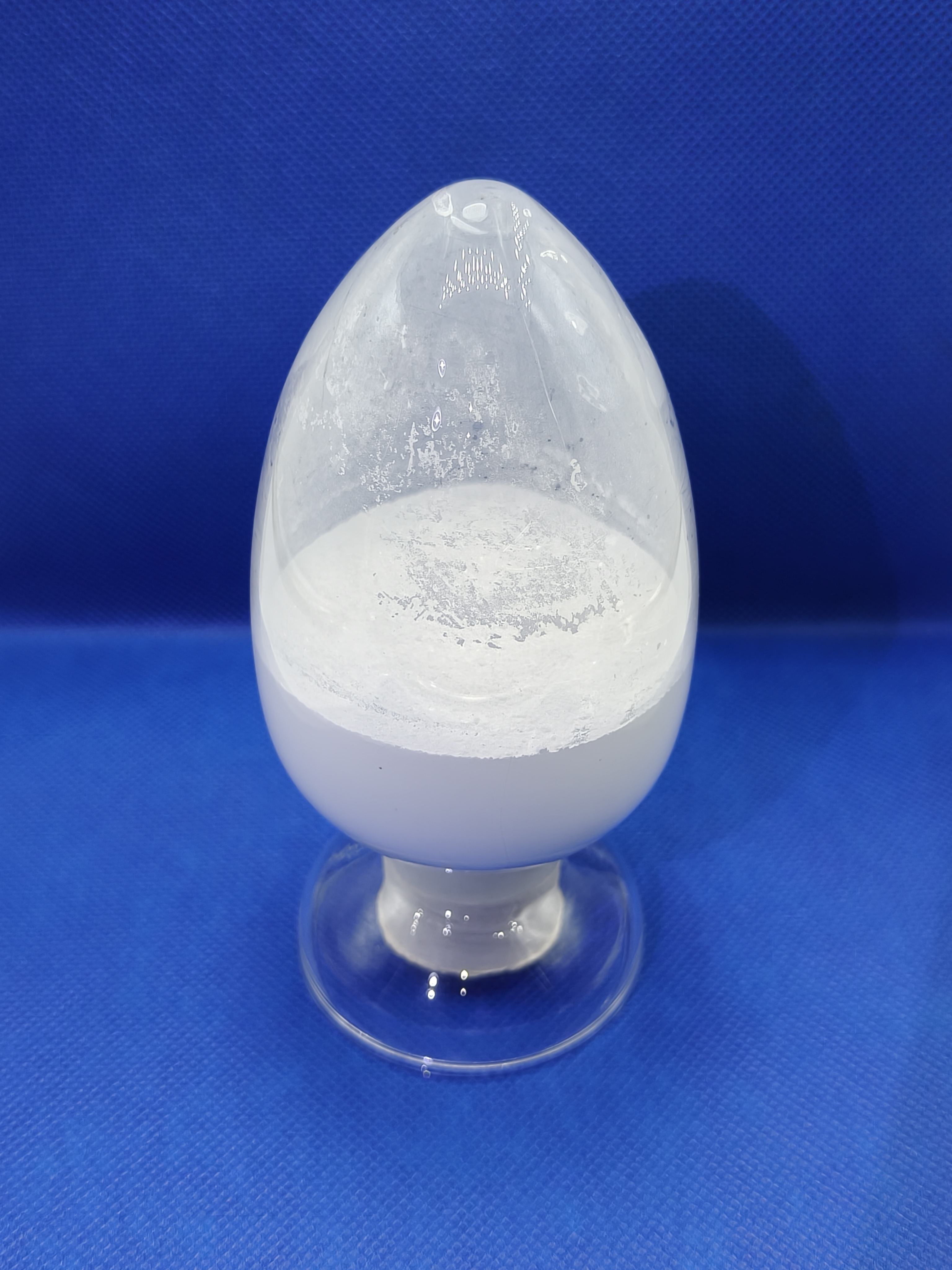
Hard Krypton learned that Sichuan All-Solid New Materials Co., Ltd. (hereinafter referred to as "Sichuan All-Solid"), a manufacturer of lithium sulfide which is the key raw material for all-solid-state batteries, has completed tens of millions of yuan in Series A financing. This round of financing is led by Hongrong Capital and Mingshi Venture Capital, with follow-on investment from Tianhong Investment, Xingxiang Kechuang, and existing shareholder Inno Angel. Tuoshen Capital and Qichen Capital served as financial advisors, and Beijing Zhuohui Law Firm served as legal counsel. The funds will be mainly used for equipment upgrading and production capacity expansion of the hundred-ton-level production line, construction of the Changsha R&D center, and team building.
On the eve of the industrialization of all-solid-state batteries, this startup founded in 2024 is trying to break through the top end of the lithium battery industry chain where giants gather.
Lithium sulfide is not a new substance. As early as 2015, Yu Qingyan, the founder of Sichuan All-Solid, first came into contact with this material at the commission of a Japanese client. At that time, domestic all-solid-state batteries were still in the basic physical and chemical property research stage in laboratories, with very little market demand. But what Yu Qingyan valued was the early layout value of cutting-edge materials. Years of experience in market work gave him a systematic understanding of the applications and solutions of materials such as infrared optics, photovoltaics, semiconductor doping, and optical communications, and he gradually accumulated resources of early domestic scholars engaged in material R&D and electrolyte enterprises — which laid the groundwork for entering the lithium sulfide track in the future.
The reason why lithium sulfide is so critical is that it is an indispensable raw material for sulfide solid electrolytes. Whether it is the Li₂S-P₂S₅ binary system, or the Li₁₀GeP₂S₁₂ and Li₆PS₅X ternary systems, lithium sulfide is the core prerequisite material. According to the calculation of the Orient Securities Research Institute, lithium sulfide accounts for as high as 60% of the cost of sulfide electrolytes.
"Some people have tried to technically bypass lithium sulfide and replace it with other raw materials, but after more than ten years of verification, it is basically not feasible in academia," Huang Xiao, CTO of Sichuan All-Solid, told Hard Krypton.
Different from materials such as phosphorus pentasulfide and lithium chloride that already have ten-thousand-ton-level industrial applications, lithium sulfide has almost no other industrial uses in history, and its supply chain has been missing for a long time — which just gives startups the tolerance space to build a process system from 0 to 1.
At present, the preparation process route of lithium sulfide has not been completely finalized. The mainstream path in the industry mostly takes lithium hydroxide as the anchor point. To produce one kilogram of lithium sulfide, about two kilograms of lithium hydroxide are consumed, and the long-term cost is about twice the price of lithium hydroxide, which is not competitive compared with liquid battery materials.
Sichuan All-Solid chose to bypass this path. The company has independently developed a variety of lithium sulfide preparation processes, among which the "one-step synthesis method" has achieved a breakthrough — solving the problem of disordered exothermic reaction, the reaction conversion rate is nearly 100%, and the energy-intensive and high fixed-asset investment purification link is eliminated. According to the company's disclosure, its mass production process has room to further reduce the cost to less than 100,000 yuan per ton in the long run.
"The core reason why we choose this current technical route is to support the long-term realization of the same cost for solid-state and liquid-state all-solid-state batteries," Huang Xiao said. At present, the price of sulfide electrolyte is as high as several million yuan per ton. If the cost of lithium sulfide cannot be greatly reduced, the price competitiveness of all-solid-state batteries at the cell level will be out of the question.
In terms of intellectual property rights, the company has published 10 patents, with more than ten other patents under review, and has simultaneously deployed a complete set of solutions for solid electrolyte precursor materials such as sulfides, oxides, selenides, and iodides. Among them, selenides are regarded as the next-generation potential material within the company because they do not generate gas on the positive electrode side and can significantly improve safety performance. At present, the laboratory development has been completed, and the construction of the pilot production line is nearly completed.
In terms of commercial progress, Sichuan All-Solid has delivered dozens of tons of lithium sulfide so far. Its customers cover leading domestic sulfide electrolyte enterprises and some OEMs, and it has also established cooperation with overseas customers in South Korea, Japan, the United States and other countries.
According to the company, the delivery volume in the first three quarters of 2026 has reached three times that of the whole of last year, and the annual revenue is expected to exceed 20 million yuan. In addition, according to statistics from Pursuit New Energy, Sichuan All-Solid ranked second among lithium sulfide suppliers in 2025.
The following is an excerpt of the interview between Hard Krypton and the founding team of Sichuan All-Solid (edited):
Hard Krypton: All-solid-state batteries are often regarded as a supplement to liquid batteries. How do you judge their final form?
Sichuan All-Solid: To see the final form of all-solid-state batteries clearly, we must first jump out of the old perspective of "material substitution". The iteration of liquid batteries in the past is essentially the replacement of the chemical systems of positive and negative electrodes, while all-solid-state batteries are a leap at the morphological level — it is not an upgrade of a certain system, but a brand new technical platform. Its corresponding positive and negative electrode systems can not only be compatible with all existing liquid battery systems, but also further open up the space for special systems, covering consumer electronics, and extending to all scenarios such as deep sea and deep space, power, and energy storage. In other words, it can do everything that liquid batteries can do, and it can also do what liquid batteries cannot do. All-solid-state batteries are the most difficult peak in the energy storage field, but on the other side of the peak is the overall reconstruction of the current liquid battery system — its benchmark is the iterative relationship of lithium-ion batteries to lead-acid batteries in the 1990s, not a simple supplement.
Hard Krypton: What is the biggest uncertainty in the lithium sulfide industry at present?
Sichuan All-Solid: Any cutting-edge industry in the process of growing from 0 to 1 must go through the relay from policy-driven to market-driven, and all-solid-state batteries are at the key node of this relay. In the past two or three years, demand has evolved from the laboratory level to the thousand-ton level. A thousand-ton level of lithium sulfide roughly corresponds to 5 to 10 GWh of all-solid-state cells — which means that the demand for upstream materials is resonating with the industrialization process. The biggest uncertainty at present lies in the pace of technological breakthroughs of all-solid-state cells. Every breakthrough at the cell end will be transmitted to the lithium sulfide demand end in real time.
But one thing is certain: the materials we make do not exist in the liquid battery industry chain, they are the inherent "infrastructure" of the all-solid-state industry. So our choice is — not to bet on the short-term fluctuation of the rhythm, but to bet on the direction of the entire industry.
Hard Krypton: Startups have limited resources. What is your coping strategy when listed companies and leading enterprises enter the track?
Sichuan All-Solid: In the field of upstream materials, scale is never the only winning factor. The timing of layout and technical depth are equally critical. On the one hand, the lithium sulfide market is still small, and the resources and energy invested by listed companies are seriously insufficient, which gives us a time window. On the other hand, technical problems are the first threshold that stumps most entrepreneurs, and the second is capital. The funds invested in the new energy direction in the past two years are limited, and we have basically occupied most of the resources in the track.
More importantly, the competitive logic of the two sides is completely different: listed companies pursue the large-scale replication of standard products, while we focus on solid electrolyte precursor materials, competing on the speed of technology iteration and customer customized response speed — which is precisely difficult for large enterprises with long decision-making chains to match. The competition in this track is not "big fish eat small fish", but "fast fish eat slow fish". Our strategy is very clear: to consolidate the technical depth and customer stickiness within the window period.
Investor's View:
The lead investor Hongrong Capital said: The transformation of the lithium battery industry has entered a deep water area. Under the performance ceiling of liquid batteries, all-solid-state is the next mountain that must be crossed, and the maturity progress of solid materials determines the timetable of the entire track. Sichuan All-Solid New Materials is based on the southwest lithium battery cluster, directly facing the common industry problems such as interface, purity and large-scale production, and adheres to long-termism to invest in basic innovation. There are no shortcuts for basic materials, and barriers come from day after day of process iteration. We look forward to the company working with upstream and downstream partners to build a domestic solid-state ecology, continuously output stable and high-performance core raw materials, and support China's power battery to leap to an era of higher safety and higher energy density with the power of local materials.
The lead investor Mingshi Venture Capital said: The winning factor of the next-generation battery system starts with the industrialization breakthrough of core chemical raw materials. Lithium sulfide, for sulfide solid-state batteries, is not only the cost center that determines the economy, but also the quality key that affects the electrochemical performance. Sichuan All-Solid New Materials breaks away from the traditional path dependence, overcomes the engineering challenge of large-scale preparation of high-purity raw materials with the world's exclusive improved solid/solid synthesis process, and establishes its shipment advantage in the strict verification of downstream leading customers. Mingshi Venture Capital firmly believes that teams with underlying innovation and engineering delivery capabilities can lead the industry to break through, and we look forward to the company accelerating the release of mass production potential and building a solid material cornerstone for the new generation of energy transformation.
Existing shareholder Inno Angel said: Sichuan All-Solid focuses on the lithium sulfide track, the core raw material of sulfide all-solid-state batteries. Relying on the east wind of the major national R&D special policy for domestic solid-state batteries, the long-term market space of the industry can reach hundreds of billions of yuan, which is a key upstream link of the next-generation power battery industry. The company's lithium sulfide products are in the first echelon of the industry, have achieved stable ton-level shipment, and have become the first supplier of many leading electrolyte enterprises, with high-quality downstream customer resources. The core team has more than ten years of experience in lithium battery material R&D, production and market expansion. The company's technical and customer barriers have taken initial shape, and its growth logic is clear. We look forward to the company continuing to contribute value to the domestic all-solid-state battery industry.