The head of ByteDance's GenAI R&D team has joined the embodied intelligence sector, and all three core members have resigned within four months.
The last core leader of ByteDance's commercial generative AI division has left the company.
Recently, Wen Shilei, head of commercial GenAI R&D at ByteDance, was exposed to have completed all resignation procedures recently, and his next stop is Octopus Dynamics, an embodied intelligence company, where he will join as a partner.
So far, this business line, which was once integrated into an independent R&D unit dedicated to monetizing ByteDance's advertising and marketing AI, has lost all three core leaders within four months.
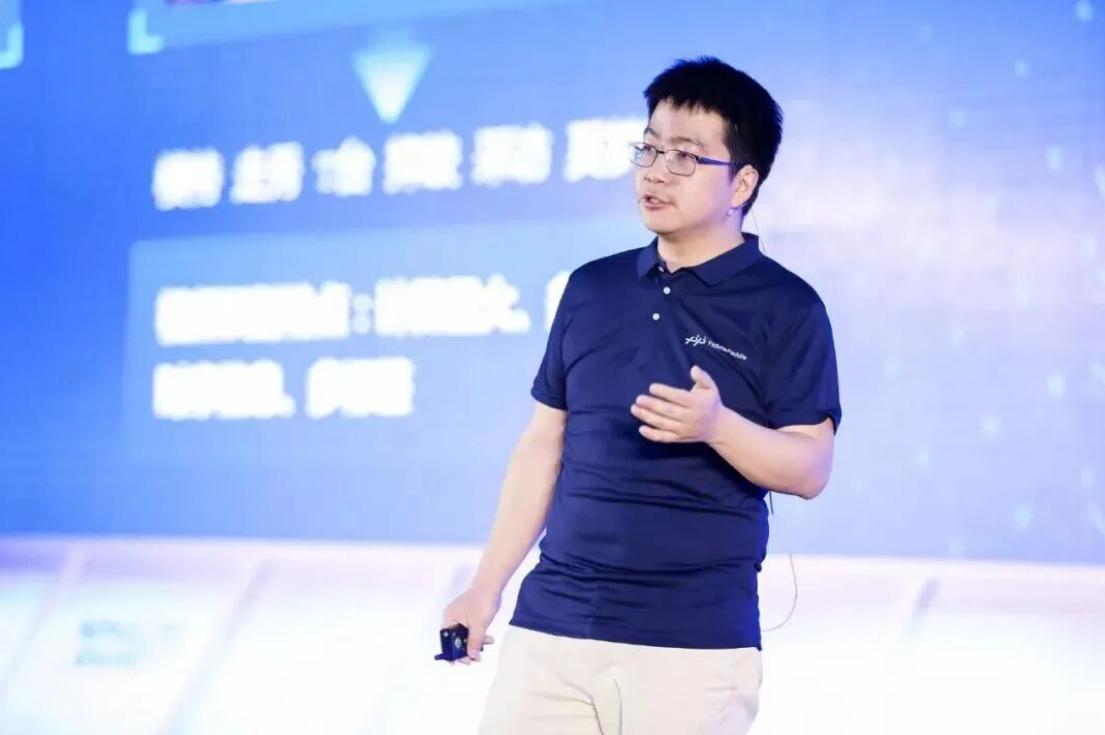
Wen Shilei's technical foundation was laid during his ten-year tenure at Baidu.
He obtained both his bachelor's and master's degrees from Huazhong University of Science and Technology. He joined Baidu through campus recruitment in 2011, starting as a search R&D engineer, and gradually grew into a key figure in Baidu's computer vision technology system. During his time at Baidu, he successively served as head of image and video technology in the Visual Technology Department, chairman of Baidu Video Understanding Technology Committee, and chief architect of the Smart City Business Unit, reaching the T9 rank, one of the highest technical ranks at Baidu.
He led his team to win more than 20 championships in international image and video recognition competitions, published over 30 papers in top conferences and journals including CVPR, ICCV, ECCV and IEEE TPAMI, and won Baidu's highest award twice. In the stage when visual AI moved from the laboratory to industrial-grade applications, Wen Shilei was one of the few technical leaders within Baidu who had both cutting-edge research judgment and large-scale engineering implementation experience.
After joining ByteDance in 2021, Wen Shilei's responsibility track highly coincided with several shifts of ByteDance's AI strategy.
He initially served as head of intelligent creation XR technology, leading the large-scale implementation of technologies such as digital humans and AR/VR in businesses including Douyin, PICO and Volcano Engine. As ByteDance integrated AI capabilities for commercial scenarios into an independent R&D unit, Wen Shilei was transferred to serve as the R&D head of this GenAI team, reporting to Peng Bingyue, head of the commercial business line, and was fully responsible for the engineering architecture design and technical productization of generative AI in high-value scenarios such as ad delivery and intelligent marketing. In the words of people close to the team, his role was to "embed" generative AI into ByteDance's core advertising machine, so that model capabilities can directly act on commercial efficiency.
However, the organizational carrier of this monetization path has undergone a complete dismantling in the past four months.
In July 2026, Peng Bingyue, head of the commercial GenAI department, resigned and later joined Google; in the same month, Yuan Zehuan, head of the China region, left ByteDance to start a business in the direction of world models. In October, Wen Shilei completed the resignation procedures, becoming the third core leader to leave. With his departure, the remaining members of the team have been transferred to other departments, and the original independent establishment has essentially come to an end within ByteDance.
The direction of this shift can be traced in ByteDance's recent organizational moves.
On July 30, 2026, ByteDance launched an adjustment to the organizational structure of its AI business, integrating the Feishu GTM team with the corresponding team of Volcano Engine to establish the "Creativity Service Platform" To B GTM organization, which is overall responsible for the marketing, sales and customer service of ByteDance's cloud services such as MaaS and SaaS.
Liang Rubo, CEO of ByteDance, stated at the Volcano Engine Conference in June that "climbing the peak of AI is ByteDance's most important task at present", and Volcano Engine's MaaS business is "becoming ByteDance's basic business". The focus of commercial AI is shifting from the internal efficiency proposition of "using generative AI to optimize ad delivery" to the external growth proposition of "selling model capabilities as cloud services". When MaaS and API calls become the narrative center, the organizational necessity of an independent GenAI R&D team built around the advertising and marketing scenario naturally dissolves.
Wen Shilei's next stop is exactly at the other end of this shift.
Octopus Dynamics was founded in January 2026, focusing on underlying embodied intelligence models and robot products. Its founder Du Dalong once served as a core researcher at Baidu IDL Deep Learning Laboratory and an early technical backbone of Horizon Robotics. Less than two months after its establishment, the company completed a seed round financing of nearly 50 million US dollars, with investors including Horizon Robotics, GL Ventures, Xiaomi Strategic Investment and Shunwei Capital. The total financing has reached nearly 1 billion yuan, and its valuation has reached the unicorn level.
Shifting from the engineering architecture of commercial advertising to the perception-decision-execution closed loop in the physical world, Wen Shilei's choice echoes the destinations of the other two leaders of ByteDance's commercial GenAI team — the commercial video foundation model at Google, and world model entrepreneurship: the next stage of generative AI is moving from content and delivery inside the screen to model capabilities and physical interaction outside the screen.
And the advertising AI monetization line left by ByteDance, whose mission has been reassigned to Volcano Engine's MaaS ledger along with the disappearance of its organizational designation.