Time is running out for embodied intelligence.
Nowadays, embodied intelligence has long ceased to be a fertile ground for the AI revolution in the physical world, but a Shura field of vicious capital involution. The feature of "prioritizing financing, prioritizing demonstrations, serving narratives rather than real implementation" has become increasingly prominent.
Countless startup teams burn through all their financing, countless engineers overdraw their youth, and countless large enterprises pour huge sums of money to bet on the track, yet they cannot obtain real large-scale implementation or a closed loop of innovative industries. The track seems to iterate and optimize layer by layer every year, but in fact its underlying logic is completely rigid, core ills are deeply entrenched, and reforms only address symptoms rather than root causes.
When a technical track has to maintain its popularity at the cost of continuous cash burn, overdrawn R&D manpower, and huge internal industry friction, it has long reached a dead end.
Narrative-driven involution has become an unsolvable deadlock
The greatest tragedy of embodied intelligence is not that algorithm and hardware talents do not work hard enough, but that the entire track has been thoroughly narrativized and demonstration-oriented from the root, making it extremely difficult for ordinary people and industry players to see real value in this technology system.
From connecting large models to robots, to dexterous hands, mobile bases, and complete humanoid robots, the only consistent evaluation criteria throughout the whole process are press conference effects, financing amount, media exposure, and sample demonstration videos. Whether the robot can perform smoothly on stage, complete specified demo tasks, and tell grand stories of general-purpose robots is the only performance achievement of the team, the only assessment standard for investors, and the only way out for projects on this track.
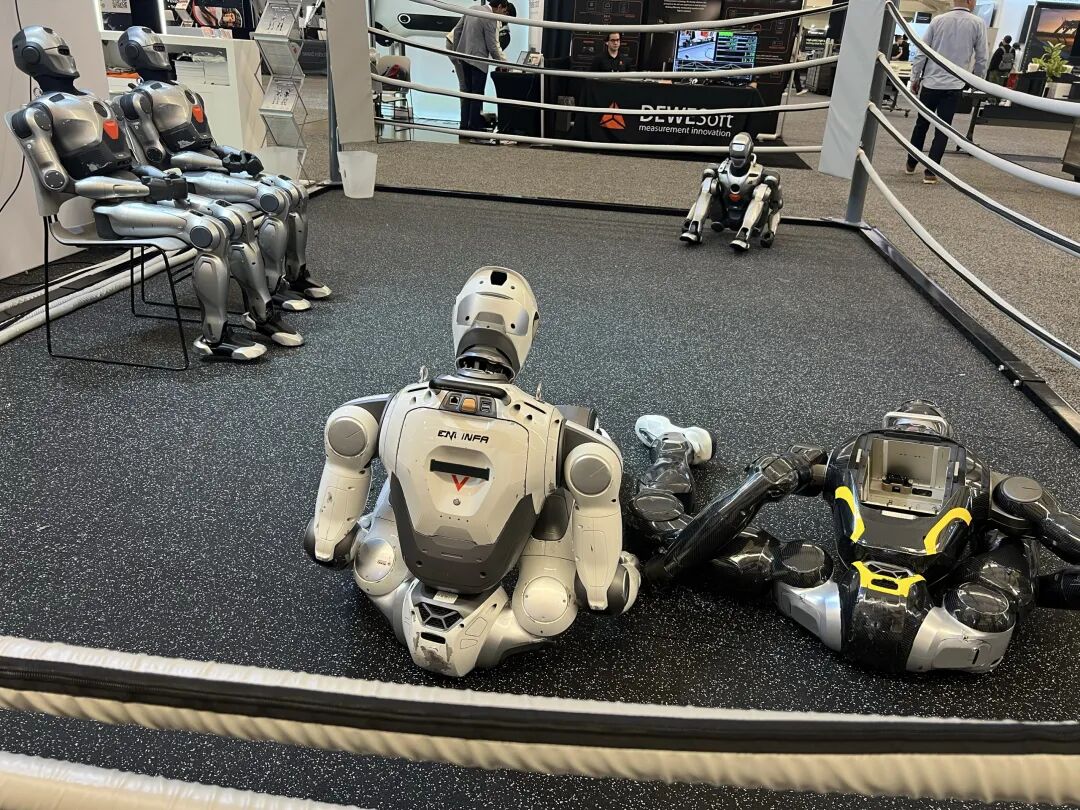
Industry survey data is clearly presented before us: the persistent problems in the commercial implementation of embodied intelligence have never been fundamentally reversed. Ultra-long cycle R&D, invalid demo iteration, and overflowing exhibition hall prototypes have become normalized phenomena.
Turning lab achievements into products, turning prototypes into commercial offerings, and packaging humanoid robots with sci-fi gimmicks, every step is overly advanced and brings increasing pressure to practitioners.
For an ordinary embodied intelligence project, from the very beginning of project approval, years of R&D cycles are filled with parameter tuning, demonstration modification, and promotional video polishing. There is no time to deeply cultivate industry scenarios, no opportunity to polish stable engineering solutions, no space to iterate reliability in the long term, and even insufficient computing power and budget to collect massive amounts of real scenario data.
They are completely disciplined by unified demonstration scripts, unified standard answers, and unified display indicators. Like exhibits on the booth, they are polished to look bright and eye-catching, but are all identical and have no unique features.
The cruelest part of this system is: it does not incubate products, but has already become a "weighing machine" for projects. The weighing machine is only responsible for screening stories, not for supporting practical implementation.
It is not designed to empower industries and solve real scenario pain points, let alone explore the intelligent boundary of the physical world and cultivate diverse engineering capabilities. Instead, it builds an accurate, stable and controllable capital narrative screening system.
This system can efficiently produce winners in the PPT track, but it is difficult to cultivate products that can run stably in factories, warehouses and homes, dare to cope with uncertain environments, and continuously create value.
High parameters, high simulation and high demonstration effects have become common problems of current humanoid robot projects. Persistently high failure rates, high maintenance costs and poor robustness in extreme environments are all bad outcomes of this high-pressure demonstration system.
What is more absurd is that this round of involution is completely worthless. All people are locked in high-intensity competition, overdraw R&D resources, consume funds, and repeatedly polish demonstration videos, only to crowd out their peers for a limited amount of financing.
Although the capabilities of large models are iterating rapidly, truly mature and replicable embodied solutions are still scarce. The number of commercially viable projects that can operate stably for commercial use accounts for less than 5% of all humanoid robot projects.
Under unequal resource allocation, computing power, supply chain, and high-quality scenario resources are scarce, and zero-sum games in the track are inevitable. No new industrial value is created, no efficiency of the real industry is improved, leaving only industry exhaustion and internal friction for all participants.
All fine-tuning iterations are superficial remedies that fail to address root causes
In the past few years, the wave of embodied intelligence has never stopped. End-to-end solutions, world models, dexterous manipulation, and foundation models have been hyped loudly, but the actual implementation has completely deviated from expectations.
Everyone has seen the shortcomings of demonstration robots, and everyone knows the harm of bubbles, but all iterations only modify superficial parts without touching the root, and never touch the underlying logic of "demonstration first, financing first".
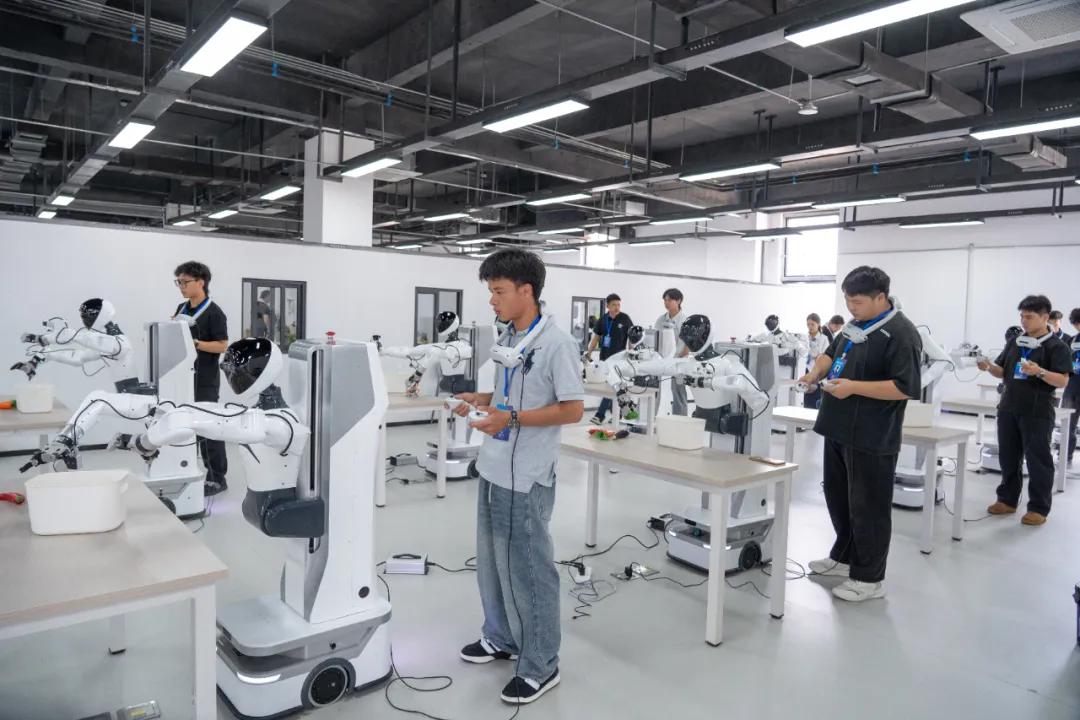
The once vigorous wave of general-purpose robots has long been a shadow of its former self. On the surface, new humanoid robot products emerge in endlessly, but in private, prototype rework, stalled pilots, project delays, layoffs and business contraction are rebounding across the board. Capital has blocked the obvious public hype, and the primary market immediately opened up hidden tracks, which eventually turned into large head manufacturers and wealthy startup companies continuing to burn money, while small and medium teams barely hold on. This not only does not lower the industrialization threshold, but exacerbates resource inequality, multiplying the survival pressure on ordinary teams.
The so-called scenario implementation has even been reduced to complete formalism.
Factory inspection, warehouse handling, and domestic services are only superficial, and pilot projects exist in name only. Enterprises shout the slogan of full-scenario general-purpose capabilities, while frantically compressing the engineering verification cycle and squeezing the time for reliability testing. All assessments of implementation pilots eventually return to single demonstrations and standardized scoring, completely deviating from the original intention of engineering.
Technical solutions are iterated repeatedly, old modules are deleted and new capabilities are added. It seems to be optimized and upgraded, but in fact the difficulty of scenario adaptation only rises, and the pressure of involution only increases. It is just making superficial changes without changing the core, which is still screening, eliminating, and stratifying, and never truly faces the uncertainty of the real world.
The most ironic thing is that the industry admits the difficulty of implementation every year, releases new prototypes every year, and emphasizes the acceleration of industrialization every year, but the evaluation system, assessment logic, and capital screening system remain completely unchanged.
Without breaking the narrative logic of "demonstration first", all engineering optimizations, all scenario pilots, and all technical iterations are self-deceiving empty talks.
Technology is completely disconnected from the industrial needs of the era
The second fatal flaw of the current embodied intelligence track is the extremely unbalanced resource allocation and serious disconnection of product cultivation, which completely loses the most basic fairness attribute and era value of technology.
Industry data does not shy away from the fact that the gap between head manufacturers and startup teams is still huge. Leading large enterprises monopolize top computing power, high-quality supply chains, high R&D funds, and benchmark customer resources; ordinary startup companies and component manufacturers lack resources and lag behind in development.
The so-called inclusive embodied intelligence is only the balance on paper, and the real stratification of the track has long been solidified.
Head projects easily stand out by relying on resources and circle advantages, while ordinary teams can only break through by desperate involution, and the channel for overtaking on curves is getting narrower and narrower. This set of rules seems fair, where everyone competes by demos, but in fact, huge unfairness is buried from the starting point of the project, and the outcome has long been locked in advance by the computing power gap, capital volume, and circle barriers.
What is more fatal than capital unfairness is the complete disconnection between technical routes and industrial needs.
The world today has undergone fundamental changes:
Artificial intelligence is reconstructing the global real industry. Memory recitation, programmed repetition, and standardized execution are exactly the work that traditional automation is best at completing. In the future real industry market, value no longer comes from replicating fixed actions, but from dynamic perception, cross-domain association, fault-tolerant thinking, self-adaptation to complex environments, and human-machine collaboration capabilities.
Many traditional automation enterprises have long been deeply rooted in production lines and working conditions, and steadily polish stable equipment, which is precisely aimed at the real needs of the real industry, and this is the key factor that determines the competitiveness of the future industry.
The core of major country technology competition has shifted to the competition for real intelligent equipment. Today's international competition is a contest of industrial stability, long-term reliability, and low-cost mass production capabilities. Many breakthroughs in hard-core equipment mostly come from R&D teams who dare to settle down to do long-term engineering and accept slow iteration.
In simulation tests, various indicators of humanoid robots have long been at the forefront of the world, but the stable commercial results that have been actually implemented do not fully match the advantages of paper parameters. Many high-score solutions are only good at dealing with standardized and preset environments, and lack sufficient training when facing unpremeditated real working conditions full of disturbances.
Global industrial standards are no longer measured by a single demonstration effect, and diversified implementation has become the mainstream. Downstream factories and service providers are paying more and more attention to long-term stability, operation and maintenance costs, and mass production and delivery capabilities, rather than just press conference videos. Many domestic projects have amazing demonstration effects, but in real production lines and complex scenarios, they often expose the shortcomings of poor fault tolerance, difficult maintenance, and high cost.
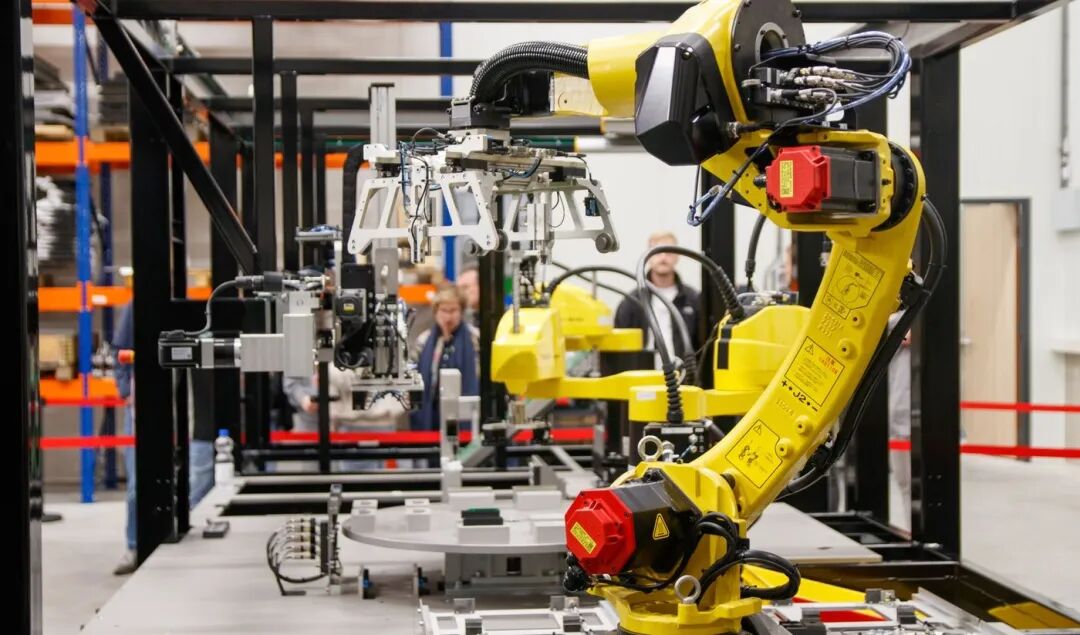
At the same time, the global supply chain is being reconstructed, and the era of humanoid prototypes that simply rely on expensive hardware and high computing power support has come to an end. To break through the high-end equipment chain, it is necessary to have engineering capabilities with controllable costs and courage to try errors and iterate.
The trend of the times is very clear: the evaluation scale of embodied intelligence is shifting from "assessing how many preset actions can be completed" to "assessing how to continuously create value in unknown environments".
However, a large number of teams have lagging hardware solutions, outdated control stacks, and weak engineering accumulation. R&D personnel have spent years immersed in parameter tuning, only to find out after stepping out of the press conference that their solutions are expensive, have high failure rates, and are difficult to be accepted by customers.
On the one hand, the manufacturing industry is in urgent need of low-cost, highly reliable intelligent equipment, and there is a serious shortage of hard-core robot talents; on the other hand, a large number of humanoid projects have run out of financing, stalled, faced difficulties in product implementation, and the commercialization window is narrowing. There is not much time left for the transformation of embodied intelligence.
Demonstration-style narrative consumes the vitality of a generation
If involution and disconnection are the hard injuries of the track, then the strangling of engineering talents and innovation vitality is the most fatal internal injury.
The current narrative of embodied intelligence is essentially a demonstration-style technical competition.
It does not encourage questioning established routes, only requires obedience; it does not tolerate slow iteration, only pursues eye-catching results. It does not promote robust engineering, only promotes cool videos. Engineers' questioning, thinking about cost, and polishing of long-term reliability are completely worn away in the day after day of demo rush.
Our track is not afraid of mediocre projects, but most afraid of special projects; not afraid of conservative technology, but most afraid of rebellious routes.
As a result, generations of engineers have become docile, convergent, numb, and lacking in edge. They are good at complying with parameter indicators and catering to investor preferences, but dare not make breakthroughs, are unwilling to dig deep, and are not good at long and boring engineering verification. The edge and creativity that young people should have have been worn away by press conferences and rankings.
What is more cruel is that this system has created a universal closed loop of industry anxiety.
R&D personnel are wrapped up by KPIs and are exhausted physically and mentally, project leads are oppressed by financing indicators and overdraw their energy, and founders are kidnapped by capital and give everything. Generations of people are trapped in the cage of demonstration narrative, involuting layer by layer. Embodied intelligence is no longer the hope of technical ideals, no longer the ladder of industrial upgrading, but the yoke and burden of the whole team.
Low implementation rate, high layoff rate, financing rupture, and project liquidation have become normalized. Countless down-to-earth engineers are consumed by this rigid, involution, and narrative-focused track.
In the past, automation equipment adapted to the era of material scarcity and manpower shortage, helping us popularize industrial equipment rapidly and accumulate basic production capacity. But today, when innovation is king, diversified development and industrial breakthrough are the themes, this old route that emphasizes demonstration and neglects implementation has long been completely unsuitable, but it still traps countless teams tightly.
Extreme involution consumes R&D energy, solidified stratification undermines technical fairness, fancy narrative kills down-to-earth engineering talents, and capital orientation distorts the original intention of technology.
What is more desperate is that the current track predicament has fallen into an unsolvable infinite loop.
The first step for the industry to get out of the bubble is to take the initiative to tear off the narrative filter, and switch the evaluation standard from "demonstration effect" to "stable and usable". Do not continue to regard grasping, walking and obstacle avoidance in a single scenario as product milestones, the indicators must fall on continuous operation duration, fault recurrence rate, environmental generalization ability, and unit operation and maintenance cost. The scientific research side, enterprise side, and investor side form a consensus: one success in the laboratory does not equal engineering feasibility; the highlight actions at the press conference cannot be directly converted into commercial value. Technical iteration prioritizes solving underlying hard constraints such as robustness, energy consumption, and hardware cost, rather than continuously stacking large models and rendering grand stories of general-purpose robots.
Capital also needs to adjust its expectation logic and abandon the illusion of short-cycle explosive returns. Embodied intelligence is not pure software AI, it is bound to precision hardware, supply chain, and on-site operation and maintenance, and is naturally a long-cycle, heavy-investment track. Resources should be tilted to implementable vertical scenarios, priority should be given to polishing closed loops in scenarios with clear boundaries and clear needs such as factories, warehouses, and inspections, and use real business cash flow to feed back technology, rather than continuously supporting teams that only make demos and have no customers. The scale of financing should shift from model parameters and video effects to customer repurchase, work order data, and cost reduction verification.
The industry needs to establish a rhythm of layered implementation, and refuse to pursue general-purpose humanoid robots in one step. First, make special embodied equipment, make a single task stable and affordable, accumulate massive real-world interaction data, and then gradually improve general capabilities.
The tide will always squeeze out the bubbles, but the track itself is not a false proposition. The value of embodied intelligence does not lie in creating an almighty humanoid machine, but in continuously solidifying the environmental adaptability of machines, and undertaking human labor with high repetition and high risk.
The real test is never how to make amazing demonstrations, but whether you can settle down in the noisy capital narrative and deliver a piece of equipment that can work stably and customers are willing to pay for continuously. Whoever breaks away from the story-telling competition first and dives into the uncertainty of the real world to polish the closed loop will have the opportunity to stay in the next round of industrial cycle.