Unveiled: This is how Chinese batteries once lost out in Europe
Rimac beat Chinese battery players once, but only for one-third of the game. This is not arrogance, but a real recognition of how difficult it is to build an industrial chain.
Recently, foreign media outlet Autonews published a report with a rather sensational headline: How Rimac beat Chinese and larger suppliers to become BMW's battery partner.
At first glance, it looks like European suppliers have avenged their previous defeats and completely outperformed the world's top Chinese battery manufacturers.
Let's start from this report to see how this little-known Croatian company in the power battery sector snatched the battery contract for the BMW i7 from Chinese players.
But digging deeper, the situation is not that exciting: Rimac only won one section of the long power battery industrial chain. BMW has taken back the right to define battery cells, Rimac has won the right to integrate battery packs, while the party that actually manufactures the cells and installs them in European vehicles is still most likely Chinese enterprises.
After Northvolt's high-profile failure, the European power battery industry has actually lost all possibility of competing head-on with Chinese batteries. Rimac's victory in this battle is impressive, but it cannot change this underlying reality.
In fact, more important than figuring out who will win the battle between Chinese and European enterprises is to see through the essence of industrial development — the importance and difficulty of the supply chain system.
Defeated Chinese Battery Players?
Let's first follow Autonews's narrative.
In 2021, BMW executives visited Rimac Technology's future headquarters near Zagreb. Founder Mate Rimac stood among dirt and pillars, pointed to the empty plot and promised that regardless of whether BMW signed the contract or not, he would build a high-volume battery production line for BMW right here.
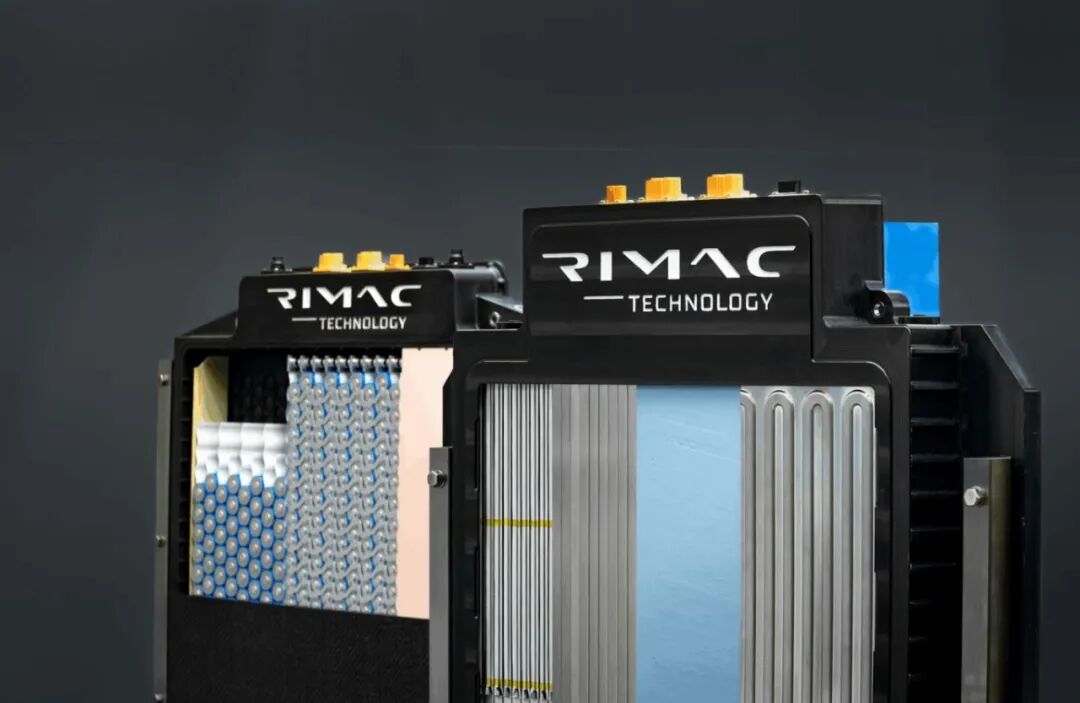
At that time, the mass production contract was not even on the horizon, but Rimac had already drawn the preliminary layout of the BMW production line into the design drawing of the new factory.
For Rimac Technology, this achievement goes far beyond developing batteries themselves. The company had to build a brand-new supply chain and industrialize two production lines in the Rimac Group's campus near Zagreb to meet BMW's stringent quality, cost and output requirements.
The BMW project occupies 15,000 square meters of production space in the 90,000-square-meter facility. About 70% of the facility's production capacity is dedicated to battery system projects for multiple automakers.
Rimac later told Automotive News Europe that there was certainly financial risk in this, "but they saw our commitment, the timing matched, and the factory would be ready by the start of production (SOP)".
To put it bluntly, it means staking all your own resources first to convince BMW that you will not back out.
This bet finally paid off. Rimac produces 48,000 sets of battery systems for the BMW i7 every year, combining BMW's sixth-generation cylindrical cells with its own fifth-generation module technology to make ready-to-install high-voltage battery packs in Croatia, which are then transported to BMW's Dingolfing plant for vehicle assembly.
Rimac's exact words were: "To win this business, we had to be better than everyone else in the market, especially for batteries. Competing with China is no easy task."
Autonews also specifically noted that Chinese battery manufacturers hold a combined share of over 70% in the global automotive market, and Rimac won by crossing this "impossible line".
It now has 5 billion euros in contracted business, with clients including not only BMW, but also Porsche, Bugatti and Saudi Arabian electric vehicle startup Ceer, and there are reportedly two more vehicle models in the pipeline for BMW.
Porsche uses a custom 1.9 kWh, 400 V battery pack developed by Rimac Technology in the 911 GTS T-Hybrid, while Saudi Arabia's Ceer relies on the supplier for a fully integrated electric drive system.
In addition to these external clients, Rimac Technology also provides components and systems for the Rimac Nevera electric hypercar and the Bugatti Tourbillon.
For a young supplier that started with electric hypercars and has an industrial scale far smaller than CATL, this is indeed an impressive entry case.
Only Won One-Third of the Game
But how much of the total power battery value pie does the "battery system" that Rimac won actually account for? More than half of the later content of Autonews is redundant content similar to press releases, praising Rimac's courage and other traits.
However, we need to truly analyze the real value of Rimac's achievement and the deep-seated industry rules behind it.
The breakdown of the accounts makes it clear: battery cells are the most expensive part of the battery pack, accounting for 75% to 80% of the total PACK cost; BMS, thermal management, housing, wiring harness and other parts combined only account for 20% to 25%. Going one level up, battery cells account for about 60% of the total battery system cost, and power batteries themselves account for about 40% of the total vehicle cost.
In other words, battery cells are the heaviest, most valuable, and hardest-to-replace link in this industry. Then battery cells can be divided into design and manufacturing. Just like TSMC's chip manufacturing has stronger moat than the design of various Fabless companies, Rimac winning the battery system business does not mean that Chinese battery suppliers have really lost.
Guess, BMW uses Rimac's battery system and independently develops the design of Gen6 cells at the same time, then who completes the battery cell manufacturing?
Autonews did not mention this, but Auto-Community found that German automotive media InsideEVs clearly pointed out in its report on BMW i3's Gen6 batteries: "The NMC cells come from CATL and Eve", and these cells are produced in Hungary.
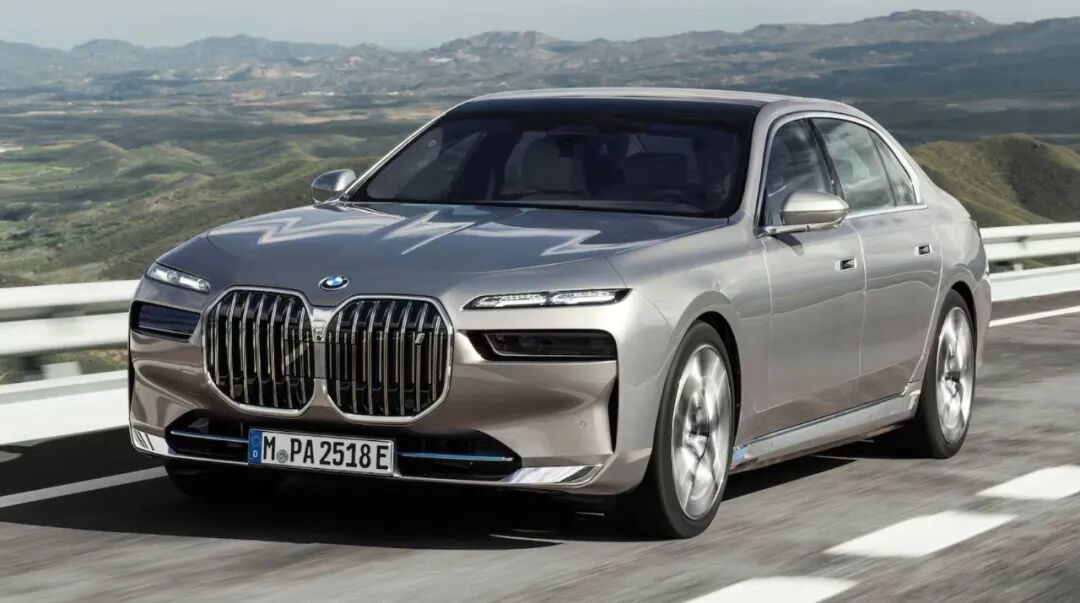
Domestic financial media also confirmed that BMW's publicly disclosed core suppliers for the 46-series large cylindrical batteries include CATL and EVE Energy.
Therefore, we can conclude that BMW's division of labor in this project clearly draws this value line.
① The design and specifications of the cells are determined by BMW itself, and the technical route of the sixth-generation cylindrical cells is in BMW's hands;
② The physical manufacturing of the cells is handed over to CATL and EVE Energy, both of which have built local factories in Hungary, produce according to BMW's specifications, and supply European vehicle manufacturers nearby;
③ What Rimac does is integration between the cells and the whole vehicle: wrap the pre-manufactured cells with its own module technology to make a battery system that BMW can directly install on vehicles.
Battery pack integration certainly has technical content. The performance of thermal management and the compactness of structural design directly affect vehicle performance and safety, but its value weight is not at the same level as cell manufacturing. As for cell design, this part is more intangible, it is not priced separately, and is usually integrated into the technical premium and procurement specifications of cells. Whoever defines the standards holds the bargaining power.
What CATL and EVE Energy have secured is exactly the cell production line that accounts for the majority of the cost and relies most on large-scale manufacturing capabilities.
Rimac won a round at the battery system level, but on the scoreboard of this competition, the column of cell manufacturing is still marked with the names of Chinese enterprises. Saying it "only won one-third of the game" is not harsh, it is rather polite.
The Hope of the Whole Region Does Not Lie in Northvolt, But in Labor Division
Pull the camera back a little further, Rimac's story in the broader picture of the European power battery industry is more like a delicate footnote, not a signal of a comeback.
Europe has placed big bets before. Northvolt was once the hope of the whole region, Volkswagen and Goldman Sachs poured more than 15 billion US dollars into it, and the order contracts from BMW and Renault stacked up to more than 50 billion US dollars.
But what was the result? Nearly two years after production launch, its output remained low, with a yield rate of only about 70%, while CATL's German plant started production in 18 months and raised the yield rate to 95% within two years.
In March 2025, Northvolt filed for bankruptcy in Sweden with debts exceeding 8 billion US dollars. BMW transferred its 2 billion US dollar cell contract to Samsung SDI as early as 2024. Europe's share in global battery production capacity is only about 7% so far.
In China, it is no longer a stage where only one or two leading players support the market. CATL and BYD FinDreams are on the stage, but there are already a large number of players standing in the second row: CALB's global installed capacity reached 62.8 GWh in 2025, with a market share of 5.3%, ranking fourth; EVE Energy ranks eighth, and Hithium Energy enters the top ten.
On the upstream material side, BTR and Shenzhen Shanshan are firmly the top two in the world in anode materials, and the two together take nearly 50% of the global share, with BTR ranking first in shipment volume for more than ten consecutive years; on the cathode material side, Hunan Yuneng's global market share in the LFP route reaches 28.2%, and its share in high-end products exceeds 55%.
As for the downstream vehicle sector, it goes without saying that China's new energy vehicles have driven down battery costs continuously with their large scale and fast iteration speed, which in turn feeds back to battery manufacturers. Design, materials, manufacturing, whole vehicles, this chain is developed link by link, not piled up by a single point technology or a certain amount of subsidies.
What Europe lacks if it wants to replicate this success is never a single Rimac, but the density and thickness of the entire industrial chain.
So back to the sentence in the title. Chinese batteries "lost once" in Europe, losing the specific contract of BMW i7 battery pack integration to a Croatian who was willing to draw lines and place bets on an empty plot first.
But this competition is not a one-sprint race that determines the outcome in one round. The cells are still manufactured in Hungary, the materials are still produced in China, and the vehicles are still iterated in the Chinese market. The one-third that Rimac won is worth celebrating for Europeans for a while. The other two-thirds are still in the hands of Chinese people.
The fragmented Europe has long lost the ability to compete with China at the industrial dimension. The most suitable way out for it is to find the most suitable division of labor link in the industrial chain like Southeast Asia, and become a solid part of the whole chain with peace of mind.
This is not arrogant out of nationalist considerations, but a reminder to us — a complete industrial chain is as hard to build as climbing a mountain, but as easy to collapse as breaking a dyke. We must pay more attention to and maintain the existing completeness of the industrial chain, and always stay alert that the so-called "overtaking on a different track" is the fruit irrigated by the sweat of millions of industrial chain practitioners.
This article is from the WeChat official account "Auto Community" (ID: iAUTO2010), written by Shi Jie, and published by 36Kr with authorization.