Behind the crack of iPhoneDuo, the "last millimeter" of the supply chain has been ripped open.
Apple is five full years late to the foldable screen game, and what is cracking is far more than just the display panel.
From a premium of over 10,000 yuan on launch day to dropping below the official retail price in less than three days, the iPhone Duo's rollercoaster first week has elevated the issue from isolated quality complaints to a full-fledged industry signal.
iFixit's teardown points to a counterintuitive conclusion: the blueprints are fully qualified, and the failure occurs at the "last millimeter" on the assembly end. Li Nan, former vice president of Meizu, hit the nail on the head with his comment that "Apple has grown out of touch with its supply chain."
Starting from this teardown, this article reviews the old-to-new transition of Apple's two supply chain models, explains why the most difficult-to-manufacture foldable screen happened to run up against the system that lacks the most "tactile familiarity" — as well as the part of the cost that cannot be calculated on Cook's accounting books.
Apple's first foldable phone staged a tale of ice and fire on its launch day. On one hand, scalpers were marking up prices by 10,000 yuan yet units were still nearly impossible to get; on the other hand, early users posted complaints about cracks along the fold line. It took less than three days for the device to swing from premium pricing to trading below its official launch price. Behind the crack on a single phone lies the supply chain empire Tim Cook has built over 15 years, which is quietly starting to come loose.
Apple is five full years late to the foldable screen track.
When Samsung had iterated the Galaxy Fold to its 8th generation of foldable devices and Huawei's Mate X series was close to becoming a standalone IP, Apple unhurriedly pulled out the iPhone Duo at its September 2026 autumn launch event: a 7.6-inch inner display, a 5.4-inch outer display, and an inward-folding design. Judging from the specs alone, it looked like Apple had turned in a late but neat assignment.

But the market quickly voted with its feet. According to reports from The Paper, on the official launch day of October 23, the channel premium plummeted sharply from its peak of over 10,000 yuan, with multiple versions of the device rapidly falling below the official retail price across third-party channels and the recycling market. At the same time, complaints on social platforms about "bright lines appearing on the inner screen after fewer than 20 opening and closing cycles" and "spontaneous cracks at the fold position" started to emerge in concentrated batches.
Apple's official response was restrained: it acknowledged that a small number of devices had issues and offered replacement services. But what truly pushed the incident from "isolated quality complaints" to the level of an "industry signal" were two sets of materials: one was iFixit's full teardown report, and the other was the public statement posted by former Meizu vice president Li Nan.
The Truth of the Teardown: Qualified Blueprints, Distorted Craftsmanship

iFixit's teardown this time was extremely rigorous. Instead of just laying out the parts for photos, it used CT scans, disassembly footage, and Apple's public patents to reverse-engineer a 3D model of the hinge, then overlaid the fault locations reported by users for comparison.
The results showed that the vast majority of screen bright lines did not appear at the conventional stress point where the flexible cable passes through the hinge, but were slightly offset, falling in the transition zone between the cross cable gap and the central hinge support. Multiple edges meet at this position, the support method switches here when the screen is folded, and stress accumulates most easily.
iFixit put forward two speculations: first, the middle support bar failed to retract fully in the closed state, which meant a sharp edge was pressing against the thin screen when the device was shut; second, the curved guide rail got stuck, and the raised part scraped against the inner side of the screen during the folding process.

In plain terms: a single part inside the hinge is off by a tiny margin, and after repeated opening and closing cycles, the screen gets pushed and cracked.
But the strange part is that this exact hinge withstood more than 10,000 folds in durability testing without any cracks, yet it cracked on mass-produced units after just dozens of folds. Passing testing but being doomed to crack in mass production — this precisely proves that the problem is not in the blueprints, but at the "last millimeter" on the assembly end.
Addressing the iPhone Duo cracking issue, Li Nan's comment hit the nail on the head: "The essence of Apple's foldable screen cracking problem is that Apple has grown out of touch with its supply chain."
Those two words — "out of touch" — are the crux of the entire problem.
The Old Apple Model: On-site Presence on Production Lines, Polishing Details Meticulously

To understand the weight of the phrase "out of touch", we first need to look at how Apple used to interact with its supply chain.
Weeks before the first-generation iPhone launched, Steve Jobs suddenly decided to replace the scratch-prone plastic screen with hard glass. At any other supply chain base, this last-minute change would have shut down the entire production line for at least half a year; but the Chinese factory directly woke up 8,000 workers in the middle of the night, gave each of them a biscuit and a cup of tea, and the new production line was up and running within half an hour.
Back in 2018, when Pegatron's iPhone 8 production line went into operation, Apple dispatched more than 100 engineers to be stationed at the factory, working side by side with supplier engineers on the same machines to gradually work out the parts that "could be drawn on blueprints but could not be manufactured on the production line".
Touching with hands, staring with eyes, repeated trial and error, adjusting "almost right" to "perfectly right" — this was the real craftsmanship of Apple's old supply chain. Its core asset was never production capacity figures, but the physical on-site presence of its engineers.
The essence of this model is internalizing the supplier's process capabilities into Apple's own product capabilities. When a designer draws a curve, the supplier's engineer can tell him the same day whether that angle is manufacturable, what the yield rate is, and what the cost will be. At this stage, the supply chain is no longer just a procurement list, but an ecosystem that requires shared operation.
The New Apple Model: Only Focus on Financial Statements, Distant from Frontline Operations

After Tim Cook took over, he opened up a new supply chain model, which we might as well call "Apple Bank".
Apple does not invest money to build factories, and suppliers are all independent companies under the law; but Apple pays for equipment, locks production lines, and controls the operation rhythm. Suppliers are independent in terms of assets, but economically tied to Apple. This model delivered the highest turnover efficiency in the history of consumer hardware, and also pushed Apple to a market capitalization of 4 trillion US dollars.
But the logic of a bank is to do accounting, not to polish craftsmanship. To cut labor costs, Apple decided to relocate production lines: according to estimates from research institution SAG, China's share in global iPhone manufacturing dropped from 83% in 2024 to 74% in 2025, while India's share rose from 14% to 23% over the same period. In August 2025, Apple further raised its local investment commitment in the United States to 600 billion US dollars.
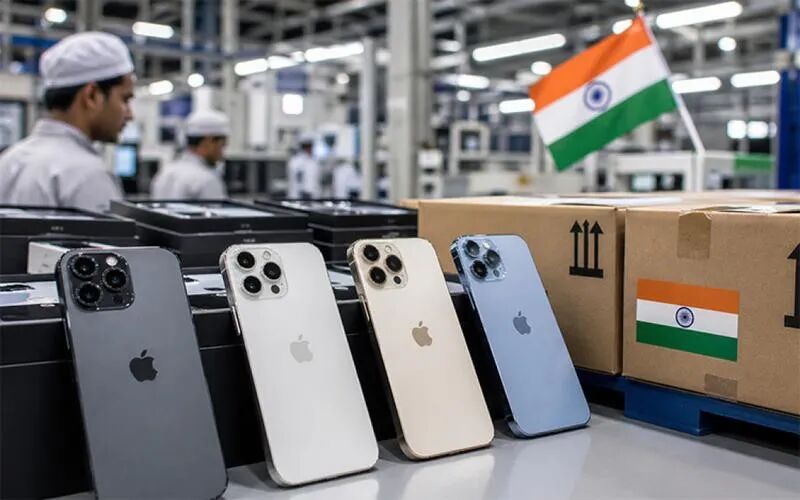
From the perspective of risk diversification, every step makes sense; but from the perspective of "tactile familiarity", every move pulls engineers a little further away from the production lines.
A more hidden crack lies in the supplier structure. The tier-1 suppliers for the iPhone Duo's hinge assembly are Amphenol and Sinri, the screen is exclusively supplied by Samsung Display, and most domestic Chinese companies are tier-2 component suppliers. The hinges come from US and Taiwanese manufacturers, the screens are controlled by Korean companies, and Chinese companies are mainly involved at the component level.
The more a product requires multiple components to fit together with precise coordination, the more it needs the friction generated by "people working in the same place"; but what Apple has done in recent years is to systematically dismantle this kind of friction. The cross-supplier, cross-region cooperation chain makes it harder to control the tolerances between the hinge, screen, UTG glass, and the overall device stress.
Apple Has Reached a Crossroads

This is not the first time Apple has paid the price for new form-factor products — the early Antennagate incident and the first-generation butterfly keyboard once caused an uproar in the market. But back then, Apple relied on its deep ties with the supply chain to fix the issues within a few iterations. This time it is different: what needs to be fixed is not a single part, but the entire system that supported Apple to make high-quality parts in the first place.
And this system is being gradually pulled apart by three forces: production relocation, supplier diversification, and geopolitics.
Apple's situation is therefore particularly awkward. If it takes a step back and admits that the foldable screen is not ready yet, it is equivalent to admitting that it is more than five years behind Samsung and Huawei on this track. If it takes a step forward and forcibly rolls out production lines with unpolished craftsmanship across the world, every Duo sold to users may become the next bright line complaint on social platforms.
To restore the "tactile familiarity" of "engineers living at the factory", Apple would have to move production capacity back to China, back to Dongguan, back to the veteran technicians who have spent 20 years polishing their skills on the production line — but this path is politically unfeasible. The 600 billion US dollar investment in the US has already been signed, and production relocation is a done deal that cannot be reversed. Wait for India and the US to polish their craftsmanship to the level China reached in the 2010s? That would take 10 to 15 years, and generations of engineers to pay tuition fees on production lines. And foldable screen products that require micron-level tolerances for every unit cannot afford to wait that long.
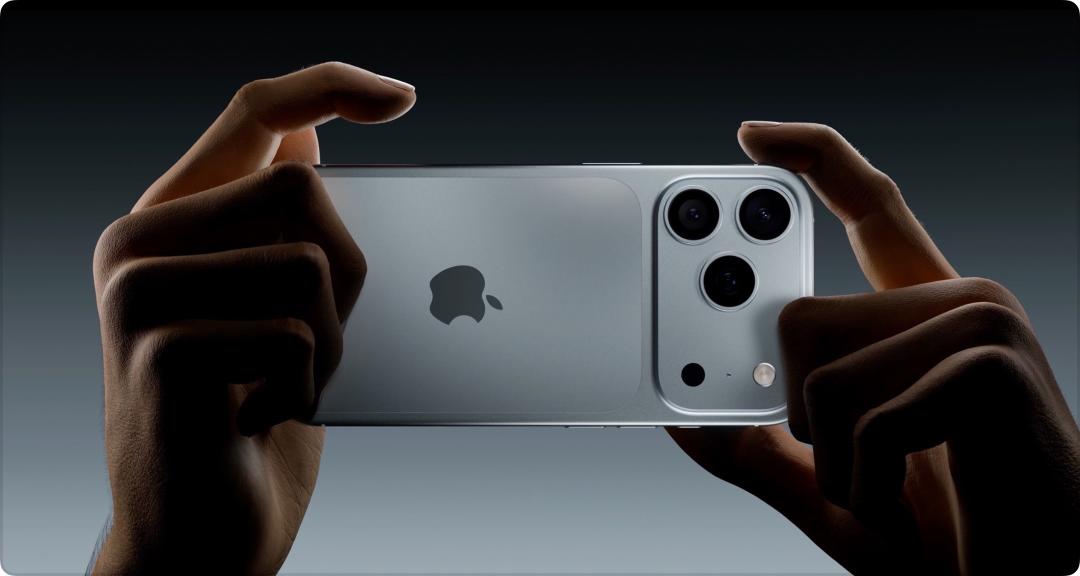
A 10,000-yuan premium turning to a price drop below official retail in three days — the market has already cast its vote for Apple. Financial statements can calculate production capacity and yield rates, but they cannot calculate the craftsmanship of veteran workers, the tacit understanding of engineers woken up at 3 a.m. to adjust parameters, or the unspoken rapport between people. These things have been gradually optimized away in the name of efficiency over the past 15 years; now, a single crack has laid all of them bare.
What Apple really needs to fix may not be that hinge support bar, but the invisible line that connects it to its supply chain.
Information Sources:
The Paper, 2026-10-26: Total Failure! Folding iPhone, Cracks Everywhere After Price Drop?
CLS, 2026-10-26: iPhone Duo Screen Fault May Be Related to Hinge
Guancha, 2026-08-08: Apple Steps Up India Manufacturing: Expected to Produce 26% of Global iPhones This Year
The Paper, 2018-03-08: Visiting Apple's Chinese Phone OEM: Automated Film Lamination, Apple Engineers Stationed On-site
This article is from the WeChat Official Account "Tech New Insights" (ID: kejixinzhi), Author: Pang Hu, Editor: Jiu Li, Published with authorization from 36Kr.