Starting from 23,000 yuan, the first touchscreen MacBook is here, and the Apple logo lights up again.
Touchscreen Mac is finally here!
Zhidx reports on October 29: At 1 a.m. today, Apple launched the first touchscreen Mac in its history — the MacBook Pro equipped with a PROLED XDR display.
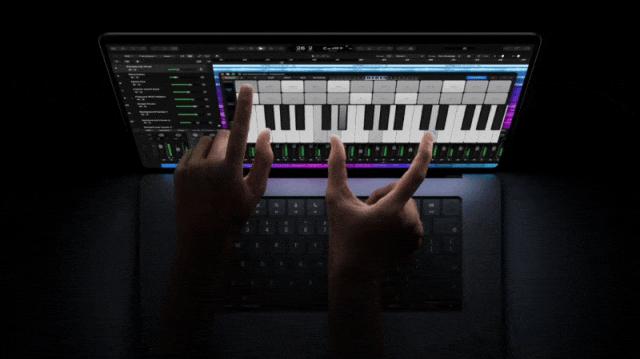
Apart from supporting touch control for the first time, this new flagship product brings a number of "firsts" for the Mac product line: it introduces the Dynamic Island first seen on iPhone to carry functions including Spotlight, Live Activities and Siri AI; it is the first to carry the PROLED XDR screen with dual-layer tandem OLED, with a peak brightness of 2000 nits.
PROLED XDR screen with dual-layer tandem OLED
The touchscreen MacBook Pro is equipped with M5 Pro and M5 Max chips, with a maximum optional 128GB unified memory and 16TB storage, and 3 Thunderbolt 5 ports. The device is lighter and thinner than the previous generation: the 14-inch version is reduced to 3 pounds (about 1.36kg), the 16-inch version is reduced to 4 pounds (about 1.81kg), and the maximum battery life still reaches 24 hours.
Just two days ago on October 27, Apple also released the new iMac and 14-inch MacBook Pro. The M6 chip is the biggest upgrade of these two devices. Both of them follow the existing design molds, and the upgrade of other configurations is not obvious.
The brand-new MacBook Pro (equipped with PROLED XDR display) will open pre-orders in the Chinese mainland market starting at 9 a.m. on October 30. The 14-inch M5 Pro version starts at 22,999 yuan, the 16-inch M5 Pro version starts at 27,999 yuan; the 14-inch M5 Max version starts at 36,999 yuan, and the 16-inch M5 Max version starts at 38,999 yuan.
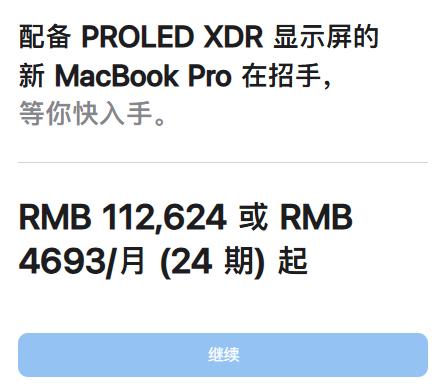
With all configurations maxed out, the price of the 16-inch M5 Max version reaches a staggering 112,600 yuan, of which the price for the 16TB storage option is 52,500 yuan, and the price for the 128GB unified memory option is 15,000 yuan.
The new iMac and 14-inch MacBook Pro (M6) are now available for pre-order. The starting price of the iMac is 12,499 yuan; the starting price of the 14-inch MacBook Pro (M6) is 15,999 yuan.
With three new releases in two days, Apple has completed a concentrated update of the Mac product line covering all-in-one desktops, mainstream professional laptops and flagship professional laptops.
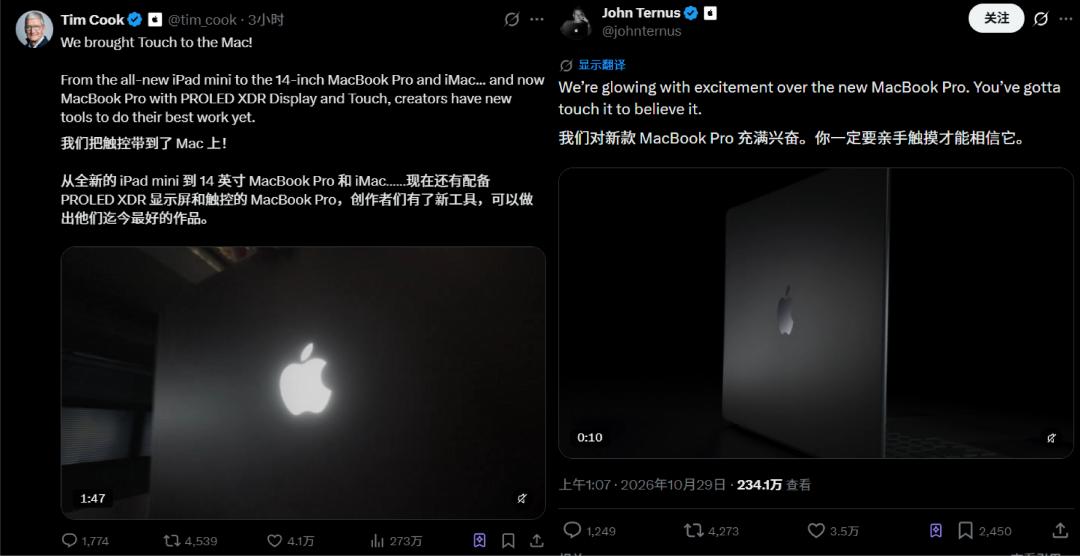
Apple CEO John Ternus and Apple Chairman Tim Cook both posted special announcements to mark the arrival of the touchscreen Mac. For long-time Apple fans, this new product also brings an easter egg: after a 10-year gap, the glowing Apple Logo on the back of the MacBook has returned on the touchscreen MacBook Pro.
01. Mac supports touch for the first time, Steve Jobs' "old rule" is broken
Behind the touchscreen MacBook Pro is a series of innovations from Apple in software and hardware engineering.

The touch sensor of this device is directly integrated into the display panel, which is consistent with the technical solution of most flagship OLED phones.
In the category of touchscreen laptops, due to the larger screen size, higher cost of integrated panels, and fewer available suppliers, the touch layer is still the mainstream technical solution up to now.
In contrast, Apple's in-panel integration solution removes one layer of structure, which not only helps reduce latency, but also leaves room for the device to become even thinner. In Apple's words, this allows users to feel that "they are touching the content itself".
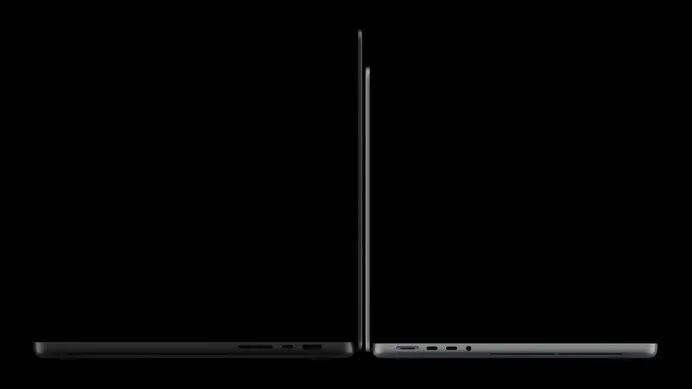
Thanks to the more space-saving OLED display stack, the thickness of the 16-inch model is nearly 1mm lower than that of the previous generation, the bezels are narrowed, and the actual screen size increases from 16.2 inches to 16.3 inches. The thickness of the 14-inch model is reduced by 0.5mm, while the actual screen size remains 14.2 inches.
Touch operation brings extra vibration to the screen. Therefore, the touchscreen MacBook Pro adopts a newly designed hinge to make the device more stable during touch operation, and it also supports real-time image anti-shake compensation during video calls.
macOS is also optimized for touch, it can automatically convert touches to clicks, a large number of existing applications and tools work out of the box on the touchscreen MacBook Pro, and software including Adobe Lightroom, DaVinci Resolve, Blender and Office have also been adapted.

In Apple's own creative software, users can play a multi-touch polyphonic keyboard in Logic Pro, or use touch to mark points and drag for editing in Final Cut Pro.
Along with touch control, Dynamic Island also lands on Mac, with Spotlight, Live Activities and Siri AI all integrated into this floating entry. Now, it is possible to tap to accept AirDrop requests or play songs with your fingers.
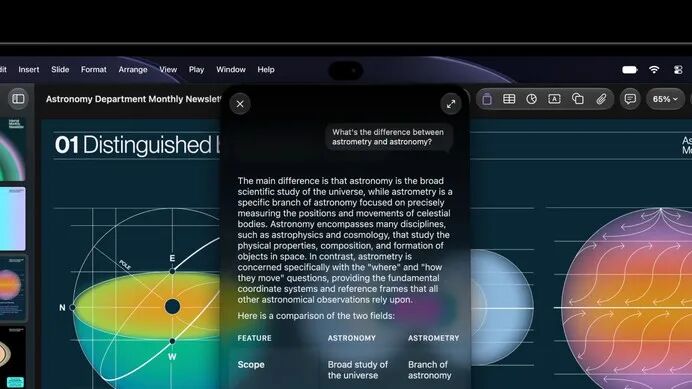
Dynamic Island can be used for Siri AI conversations
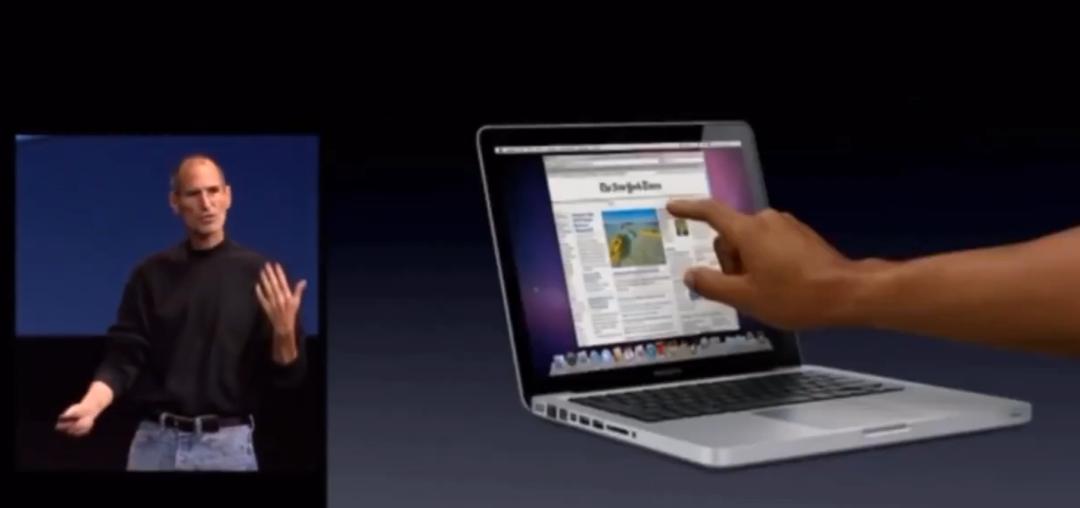
It is interesting to note that the touchscreen Mac was a direction that Steve Jobs explicitly rejected in the past. In 2010, he publicly stated that touch on a vertical surface "works great in demos, but your arm gets tired after a short while, and after a longer time, your arm almost feels like falling off", and asserted that this form factor "is terrible in ergonomics". This "old rule" made Apple refuse to release a touchscreen Mac for more than a decade afterwards, and it only tested the waters with the Touch Bar before.
Now, Apple has officially changed its stance. From an engineering perspective, designs such as in-panel embedded touch and reinforced hinges have improved the latency and stability of touchscreens, clearing the technical barriers for this change.
However, Apple's official wording also leaves room: touch is described as a new interaction method that "works in synergy" with keyboard shortcuts and trackpad gestures, rather than a replacement for mouse and keyboard.
02. Equipped with dual-layer tandem OLED screen, chips remain M5 Pro and M5 Max
As important as touch control is the screen that carries it. The PROLED XDR display adopts dual-layer tandem OLED technology, combining two self-luminous pixel layers to maintain uniform brightness and grayscale.
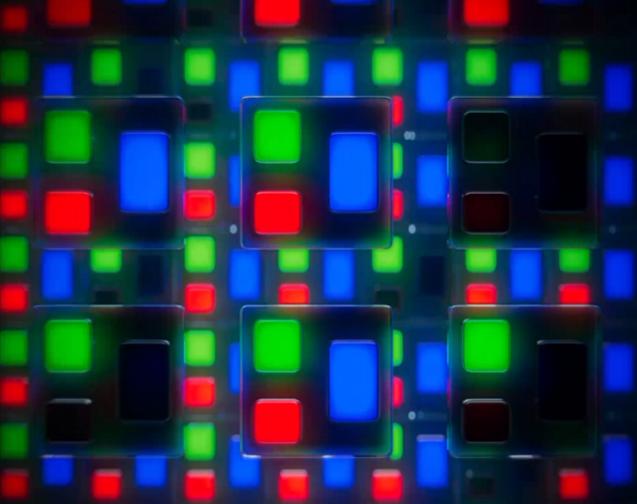
PROLED XDR display combines two self-luminous pixel layers
This design minimizes the internal reflection common in traditional OLED designs, does not produce glare or halo, and can present higher contrast and brighter highlights.
The display engine behind PROLED XDR can control the color and brightness of each pixel at the sub-millisecond level, and make real-time adjustments according to display content, pixel usage, temperature and environmental factors to achieve uniform brightness and accurate grayscale. The display engine will also monitor and adjust the usage rate of each pixel for a long time to ensure the stability of image quality.
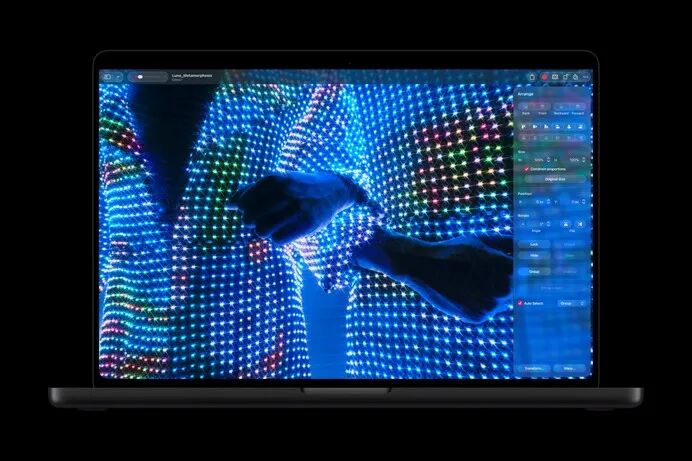
Display effect of the PROLED XDR display
The ProMotion adaptive refresh rate technology it adopts can automatically adjust the refresh rate, which can be as low as 10Hz to improve energy efficiency, and up to 120Hz to provide a smoother experience.
The PROLED XDR display also achieves a peak brightness of up to 2000 nits for both HDR and SDR, and a contrast ratio of 10,000,000:1. In addition to the P3 color gamut, it adds Adobe RGB, and covers more than 80% of Rec. 2020. Work that used to rely on external monitors such as photo retouching, print design and HDR color grading can now be completed on the laptop screen.
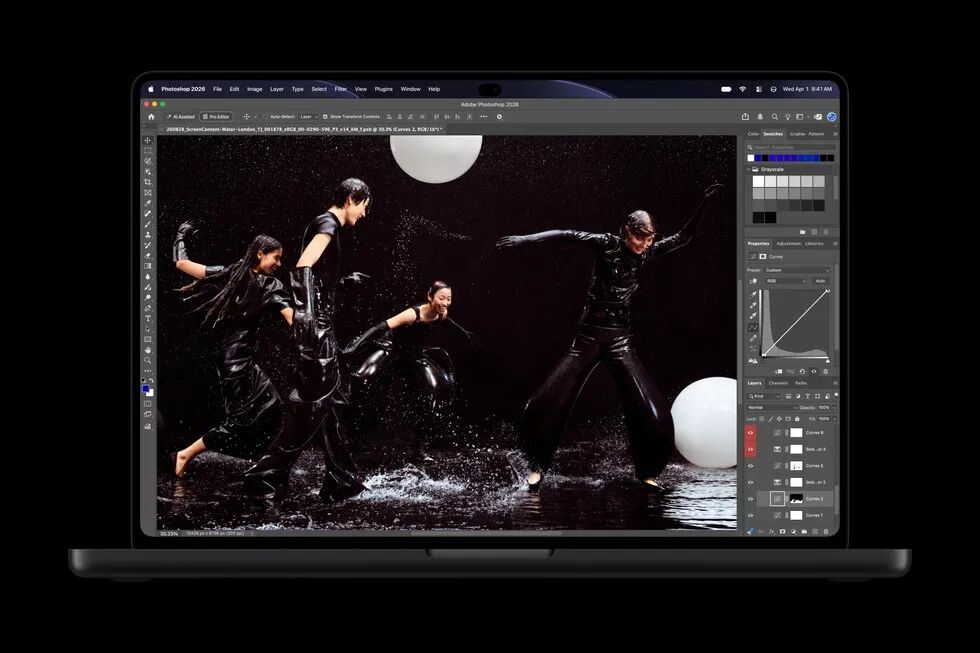
Apple has also equipped the touchscreen MacBook Pro with the Pro Display Calibrator display calibration system, industry reference modes including the DICOM medical imaging reference mode (for non-diagnostic use only), and the Genlock synchronization function to provide a better viewing and usage experience.
In terms of chips, the touchscreen MacBook Pro does not use a new generation of chips, but continues to use the M5 Pro and M5 Max that were updated with the MacBook Pro in March this year.
In terms of specific specifications, the M5 Pro provides two versions: 15-core CPU + 16-core GPU and 18-core CPU + 20-core GPU. The unified memory starts at 24GB and can be up to 64GB, with a memory bandwidth of 307GB/s.
The M5 Max comes standard with an 18-core CPU, the GPU can be 32-core or 40-core, the maximum memory is 128GB, and the memory bandwidth corresponding to the two GPU levels is 460GB/s and 614GB/s respectively.
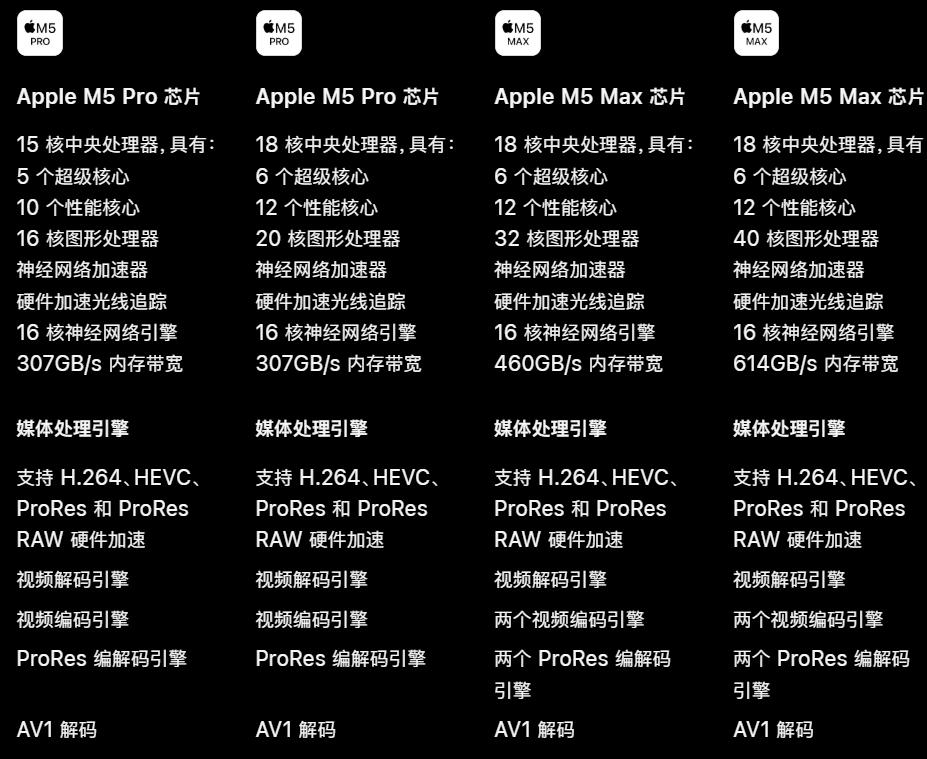
Both chips adopt the Fusion architecture, which encapsulates two 3nm dies into a single SoC. The CPU cancels the efficiency cores and uses a combination of super cores and performance cores; each GPU core has a built-in neural network accelerator, and is equipped with a third-generation ray tracing engine and dynamic cache technology.
In addition, the maximum storage capacity of the new device is doubled from the previous generation's 8TB to 16TB.
In terms of connectivity, the touchscreen MacBook Pro provides 3 Thunderbolt 5 ports, plus HDMI, SDXC card slot, MagSafe and headphone jack. The M5 Pro and M5 Max support connecting up to 3 and 4 external monitors respectively. The wireless connectivity of the touchscreen MacBook Pro is upgraded to Wi-Fi 7 and Bluetooth 6.
In terms of charging and battery life, the 14-inch model and 16-inch model