The top-spec model is priced at 112,600 yuan, the touchscreen MacBook Pro is finally here, and Steve Jobs would likely have something to say about it.
The hype around the foldable iPhone has not faded away, and the touchscreen MacBook is here.
At the just-concluded special Apple event in October, new CEO John Ternus took the stage again to unveil the biggest update to the Mac product line this year — the MacBook Pro.
Yes, that's exactly its name, not the rumored new product line MacBook Ultra or anything else.
Compared with the iPad, iMac and MacBook that were directly launched on the official website a couple of days ago, this new MacBook Pro, apart from the newly added touch control function, has most of its updates focused on the screen form and some small surrounding details.
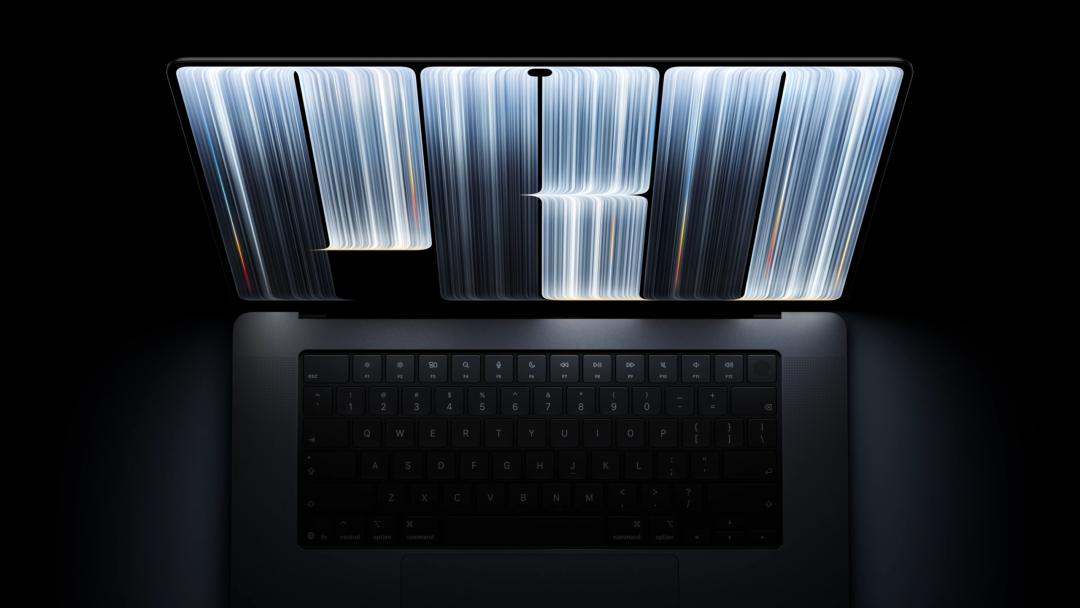
But for many people, the best news is actually that the Apple logo on the lid lights up again.
Let Me Tap On Your Screen
First of all, this is the very first MacBook in history that supports touch control:
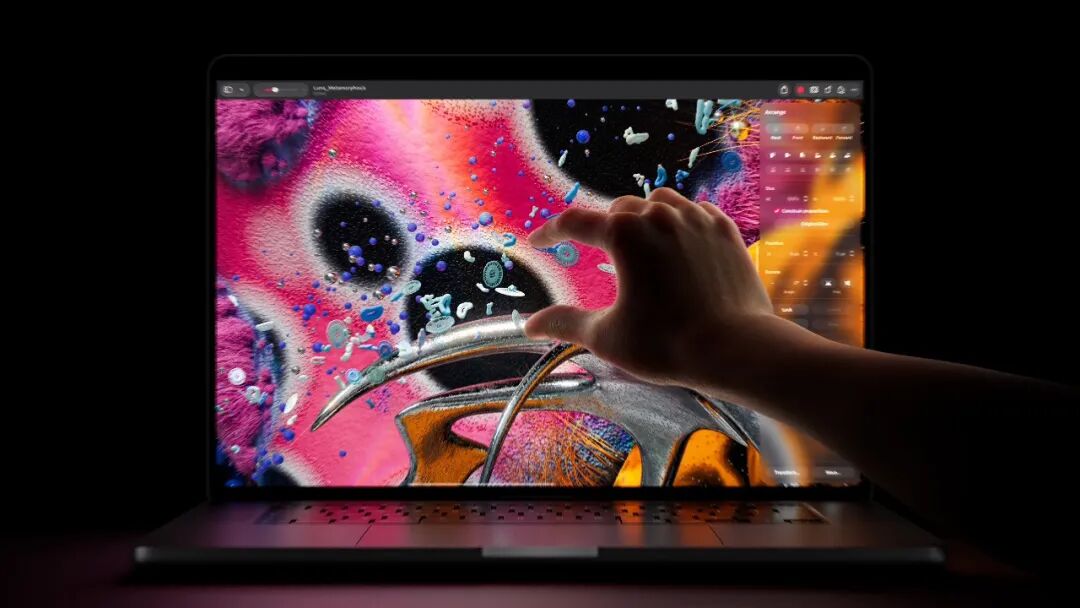
According to Apple, the screen of the new MacBook Pro has been upgraded from the "Liquid Retina XDR display" to the "PROLED XDR display", the display substrate has been upgraded from mini-LED to OLED, and the contrast ratio has jumped from 1,000,000:1 to 10,000,000:1.
Even better news is that the MacBook Pro does not just use an ordinary OLED screen, but the Tandem OLED screen that shares the same origin with the iPad Pro.
Brighter pixels and a thinner screen push both the HDR peak brightness and SDR brightness of the new MacBook Pro to 2000 nits — which is an extremely impressive parameter for SDR content:
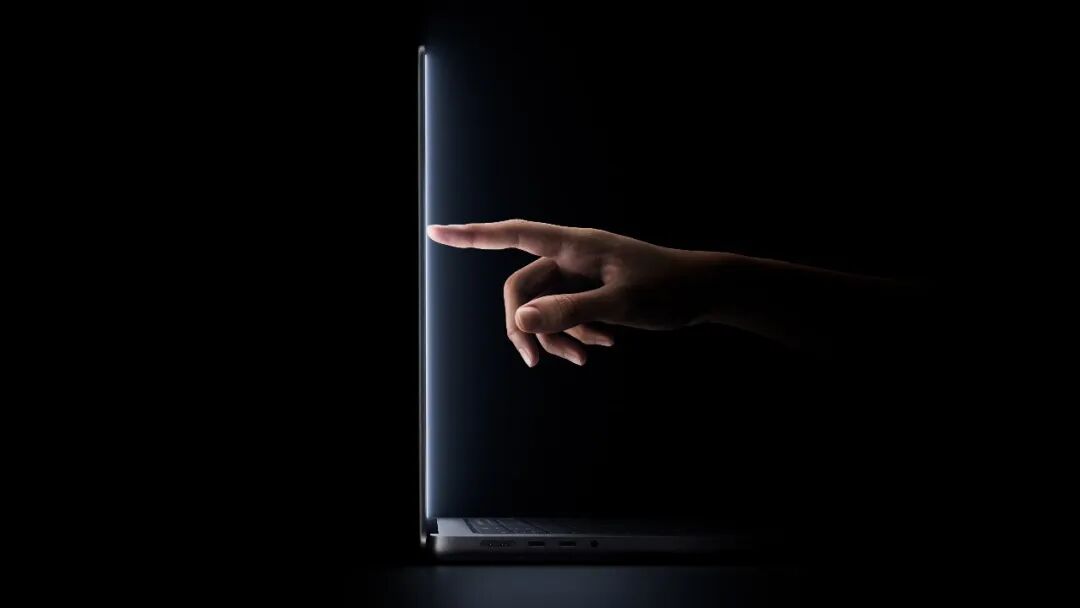
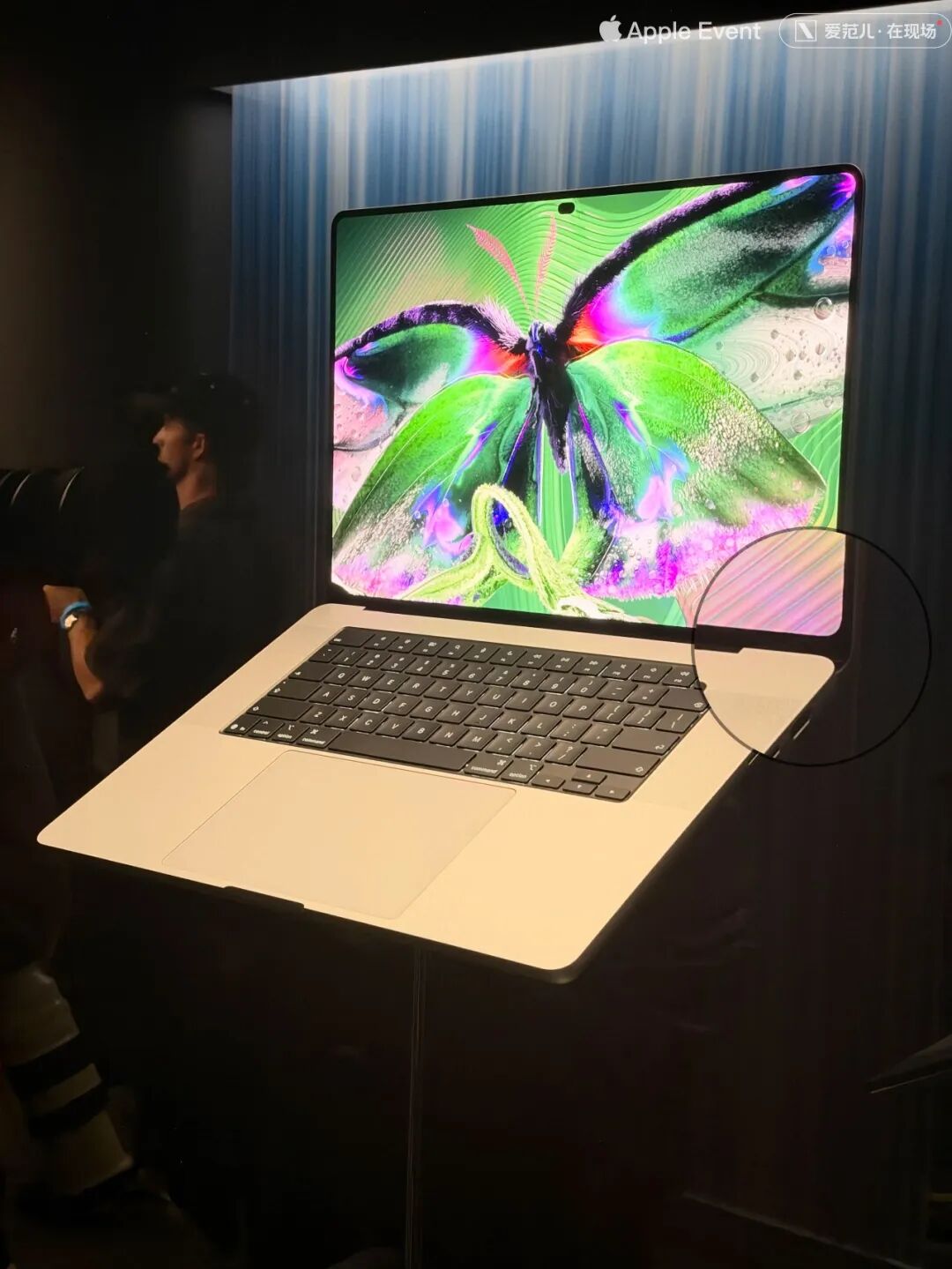
For users who are obsessed with neat details, riding the wave of OLED technology, the new MacBook Pro has unified the four corners of the screen that have used the "square edges with rounded corners" design since 2021 into fully rounded corners, which can be called an epic-level update:
It is a bit of a pity that although the MacBook Pro is equipped with an OLED screen, its ProMotion refresh rate range is 10~120Hz, which proves that it does not use LTPO OLED and does not support any form of always-on display function.
Based on this, it is speculated that Apple may upgrade to LTPO OLED and add other display features that match the iPhone on models from 2027 onwards.
Another important change is that the MacBook Pro has got rid of the 5-year-old "notch screen" design and officially adopted the Dynamic Island layout:
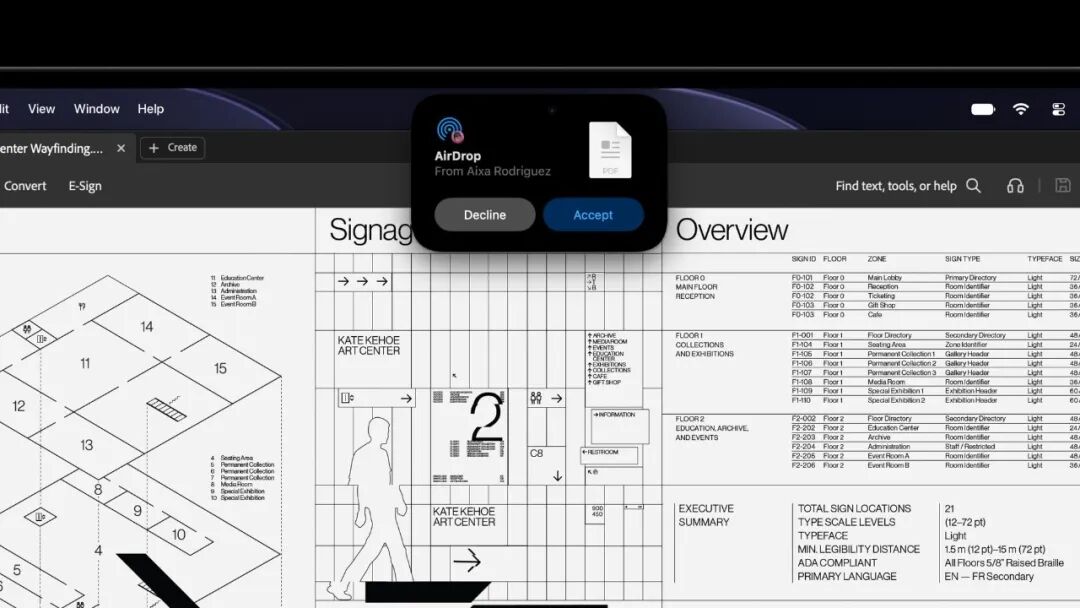
Consistent with the scoop from Mark Gurman of Bloomberg, the MacBook Pro has fully switched to the layout of a punch-hole front camera plus Dynamic Island, while the width of the screen bezels has been narrowed, making the visual look much cleaner:
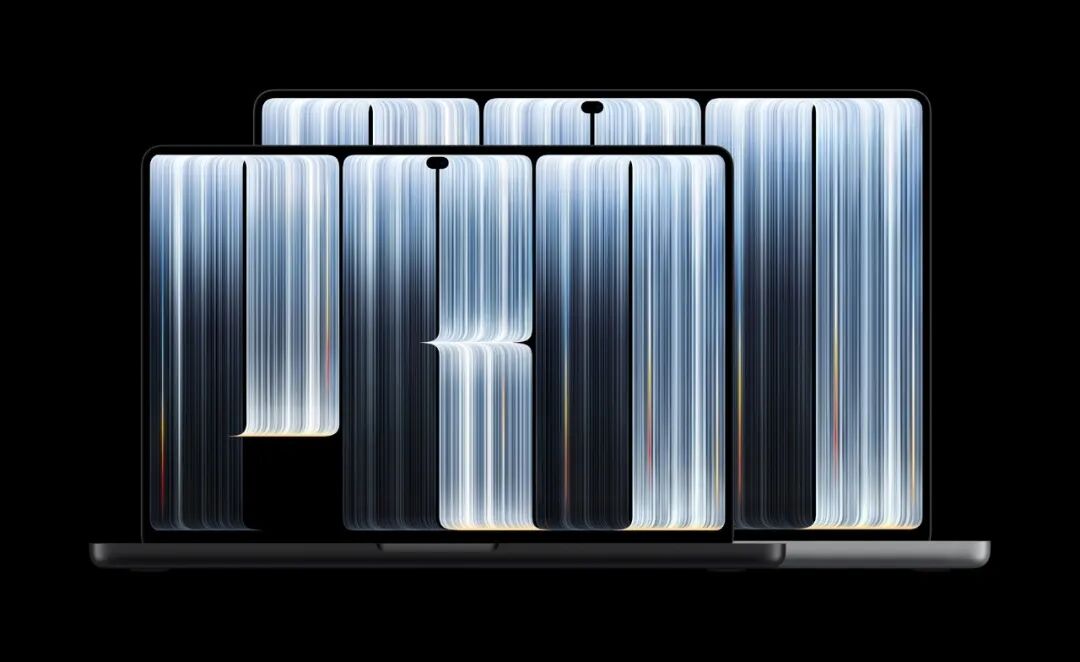
This new Dynamic Island is not exactly the same as the one we saw on the iPhone 18 Pro. It actually only contains the front camera and the light sensor inside, which is very close to a "single punch-hole screen".
In fact, this combination of narrow bezels and front camera punch-hole can, to some extent, be regarded as a preview of the possible future "single punch-hole" iPhone. It is very likely that the iPhone 21 will follow this design style.
As for the touch function, the implementation method of the new MacBook Pro is not much different from other touchscreen laptops on the market. The underlying logic is still "keyboard and mouse interaction as the main, touch as the auxiliary".

In other words, although the MacBook now supports touch, it does not have a "pure touch" usage mode like the Surface Pro or Lenovo Yoga. Your MacBook will not turn into a super-sized iPad any time soon.
Apple also specially mentioned that in order to reduce screen shake caused by tapping, the MacBook Pro uses a brand new set of screen hinges, which can provide more stable support at all angles than the old MBP models.
Combined with the weight reduction of the OLED screen, the situation of "the screen shaking for a long time after one tap" will basically not happen:
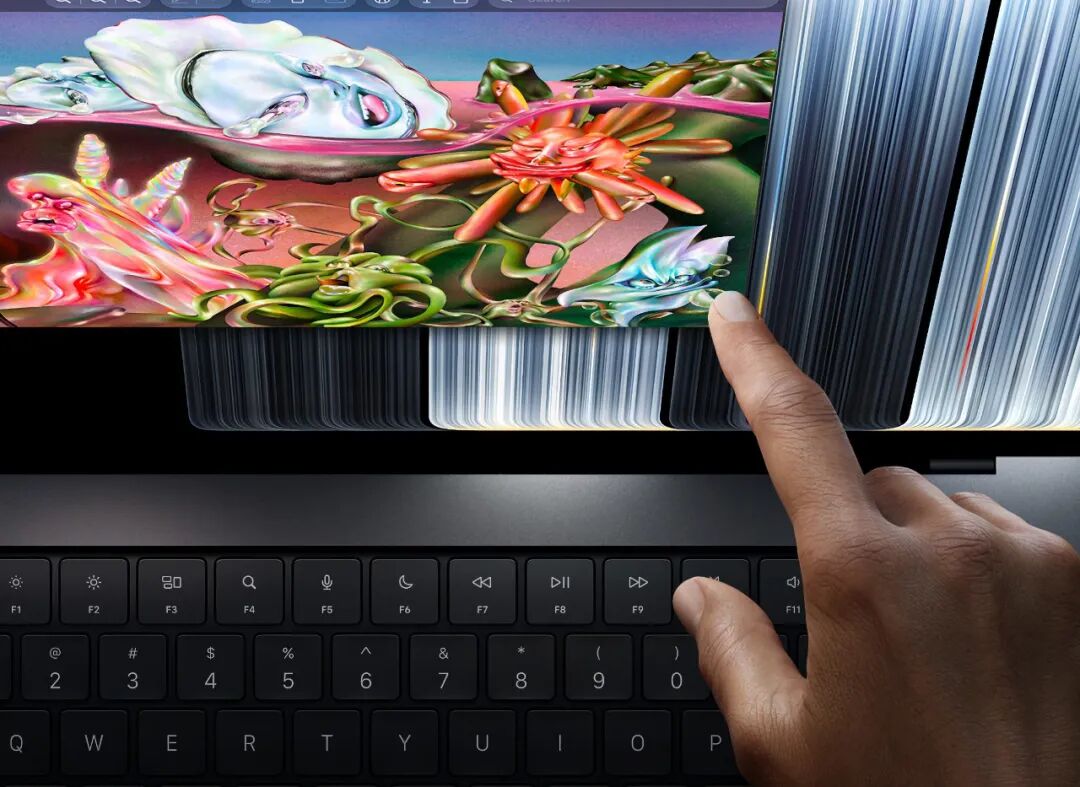
Interestingly, Apple still provides two options of standard glass and nano-texture glass for the touch-enabled MacBook Pro, and the price markup for both options is 1125 yuan.
Is A Touchscreen Computer Really Useful
Although touchscreen function has basically become a standard feature for non-MacBook laptops, to be honest, the optimization Windows has done for touch interaction is really far from satisfactory.
Against this backdrop, the new designs that the MacBook Pro and macOS 27 Golden Gate have made specifically for touch this time make people have some expectations —
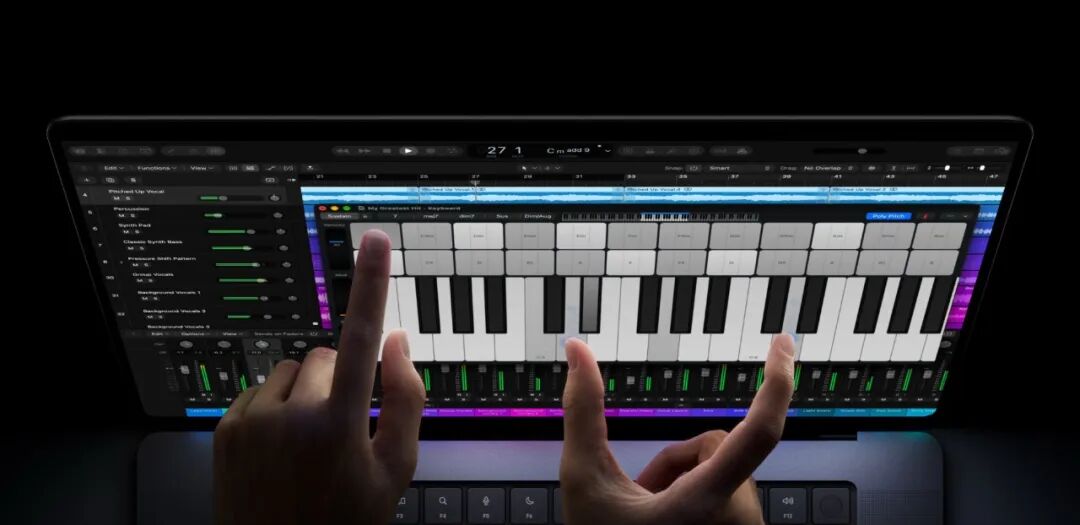
However, the fact is that from the introduction on Apple's official website, we have not seen any "Apple-style optimization" for finger touch in macOS, such as enlarging menus when touch input is detected, or changing click operations to touch operations, etc.
The touch function brings brand new working methods for professional users. Graphic designers can now use the entire screen as a canvas to draw without being limited by the area of the trackpad; musicians can directly play software instruments on the screen; application developers can directly test the performance of touch functions in iOS and iPadOS apps on the MacBook Pro screen.
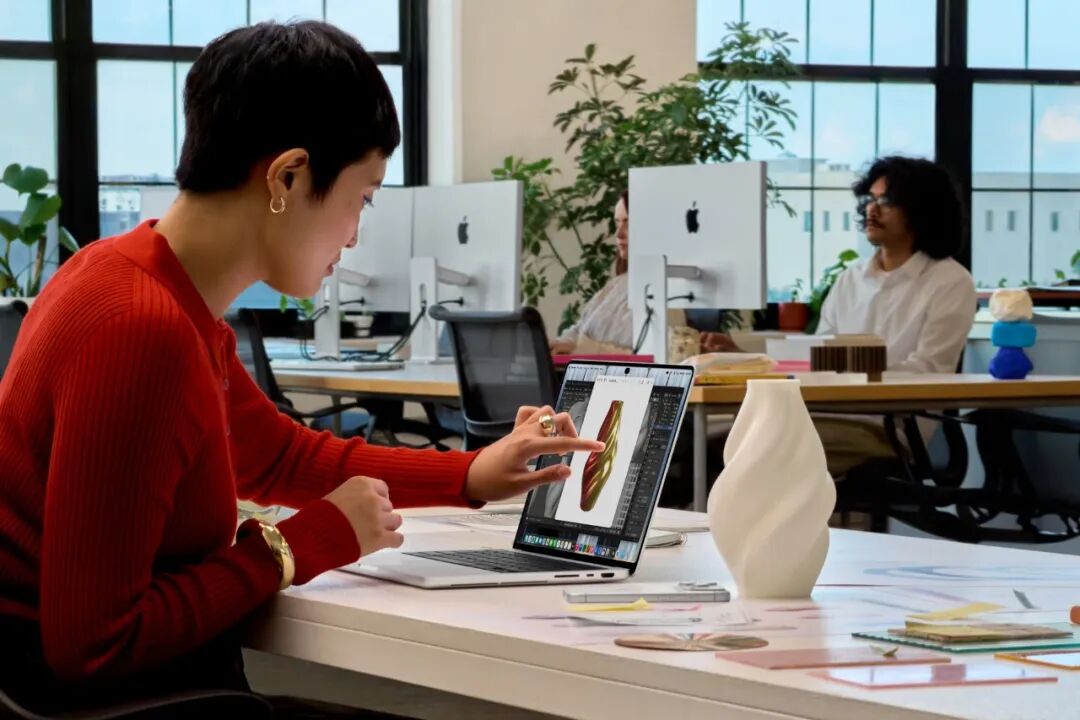
The only slightly reasonable scenario among all these is that developers can directly test the touch operations of iPhone and iPad apps on the MacBook Pro.
Apart from that, it is really hard to figure out why graphic designers would not use a drawing display, or why musicians would not directly use MIDI peripherals...
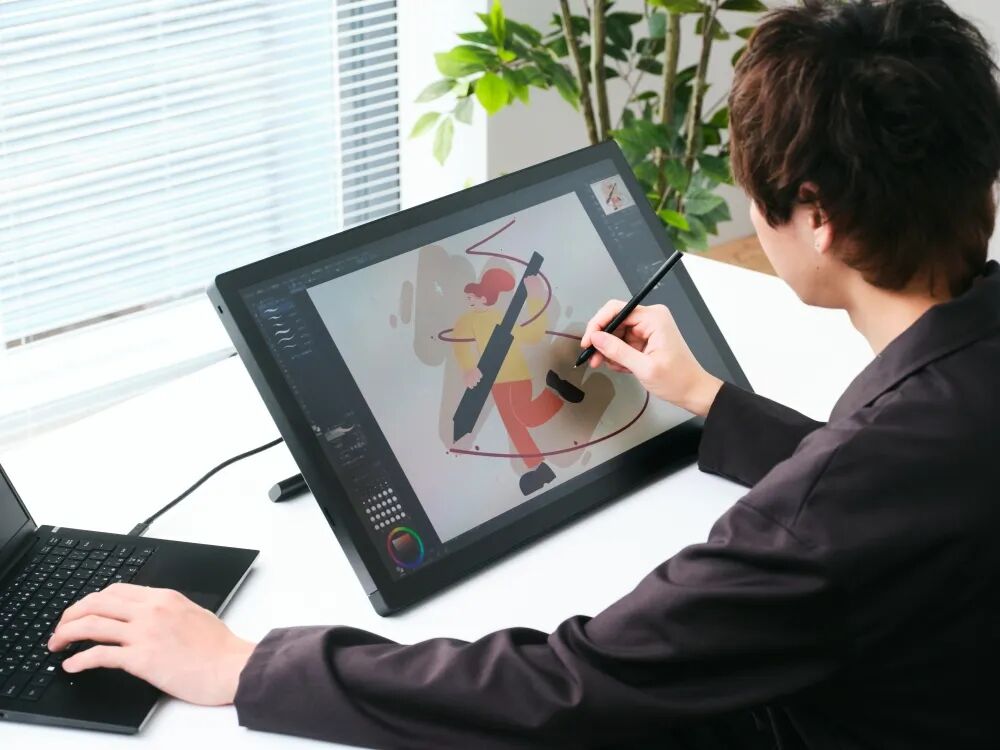
Wacom Drawing Display | Animation Magazine
In addition, Apple also mentioned that third-party applications such as Notion, the Office suite, Lightroom, DaVinci Resolve, Blender, ZBrush and many more will also provide touch support on the new MacBook Pro. However, the coverage of these use cases still overlaps with the practical examples mentioned earlier, and there are no "unexpected" new usages.

In other words, what Apple wants to achieve through the MacBook Pro is essentially a "touch-friendly" interaction system, not a "touch-first" interaction system like that of phones and tablets.
On the hardware side, the MacBook Pro does not come with the rumored enhanced versions of M6 Pro and M6 Max processors. Instead, it continues to use the M5 Pro and M5 Max, with no M6-equipped versions released:
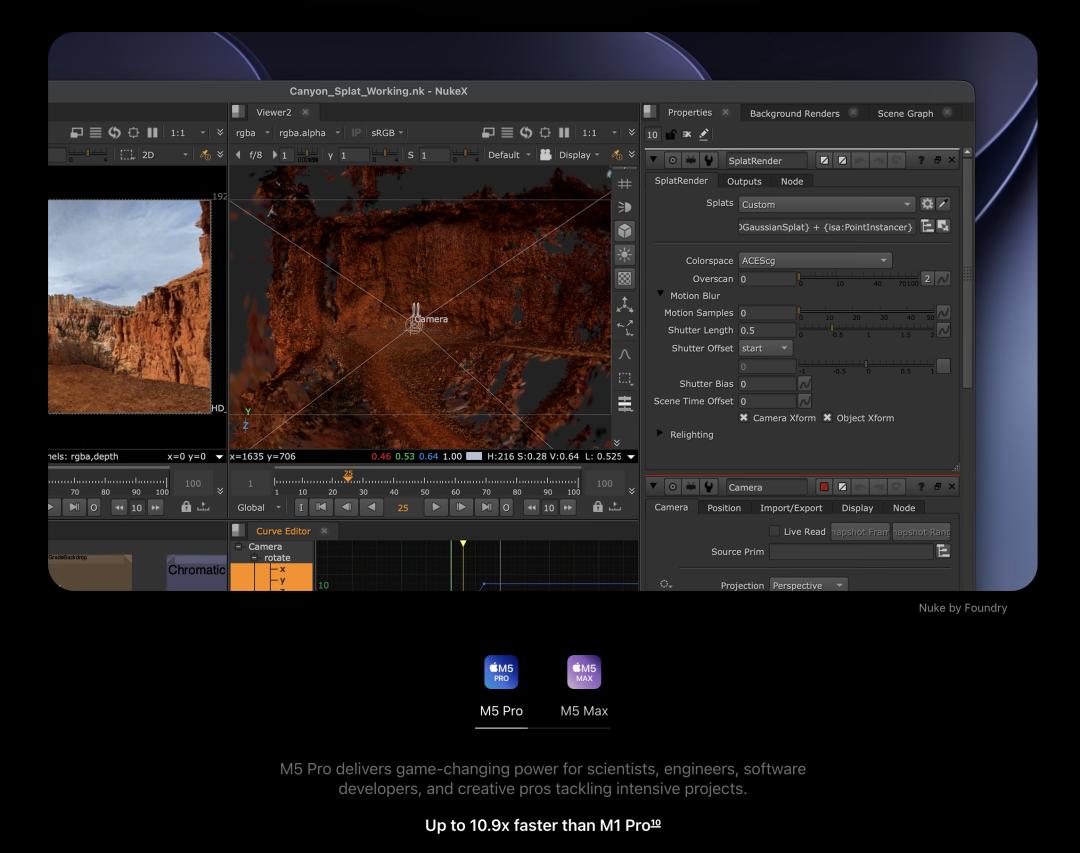
The body weight of the new MacBook Pro is reduced by about 14% and 15% respectively compared with the previous generation models of the same size. Correspondingly, the thickness of the 14-inch model is reduced by about 0.5mm, and the 16-inch model is thinned by nearly 1mm.
For this change, we guess it is the additional improvement brought by the thinner OLED screen assembly compared to the mini-LED one. The number of speakers, battery life and other parameters of the MBP remain the same as the previous generation.
And Apple chose to go against the tide when storage prices are soaring, and upgraded the top configuration storage of the touch-enabled MacBook Pro to an astonishing 128GB + 16TB.
Putting the touch function aside, the "Pro performance" of the new MacBook Pro is still very solid.
In this way, as a generation with a major screen upgrade, minor mold upgrade, and preparation for new form interaction, Apple set the price of the 14.2-inch M5 Pro entry model (24GB RAM + 1TB SSD) at 22,900 yuan, which is 2000 yuan higher than the non-touch model.
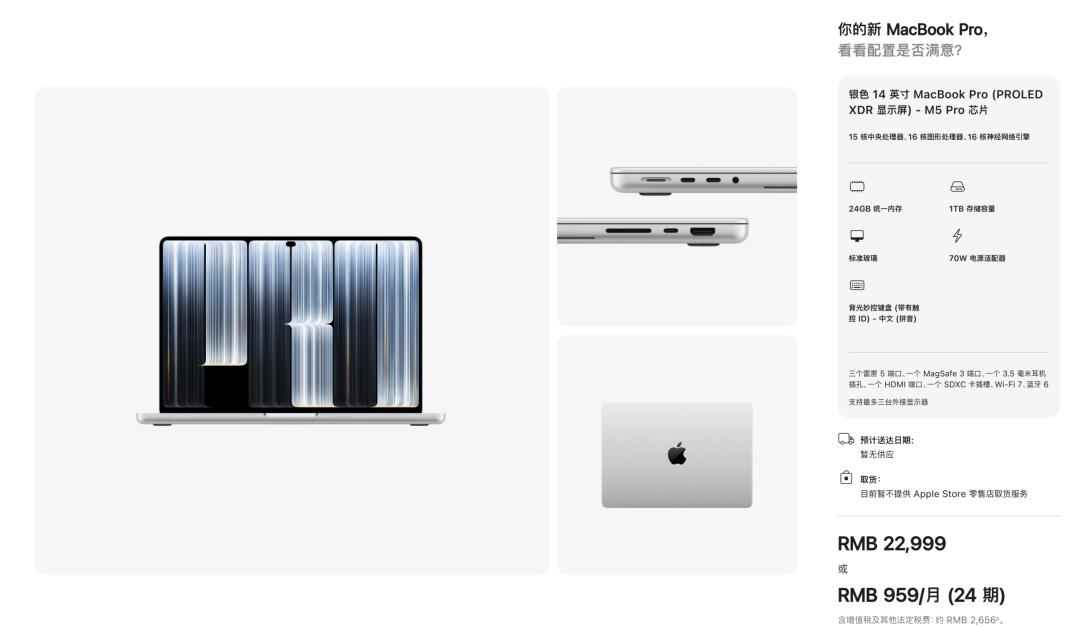
This time, the high-end configuration has pushed the price of the "Apple laptop" category into the 100,000-yuan tier for the first time.
The 16.3-inch touch-enabled MacBook Pro equipped with M5 Max processor, 128GB unified memory and 16TB SSD has a staggering official price tag of 112,600 yuan, and the AppleCare+ price also reaches 4099 yuan.
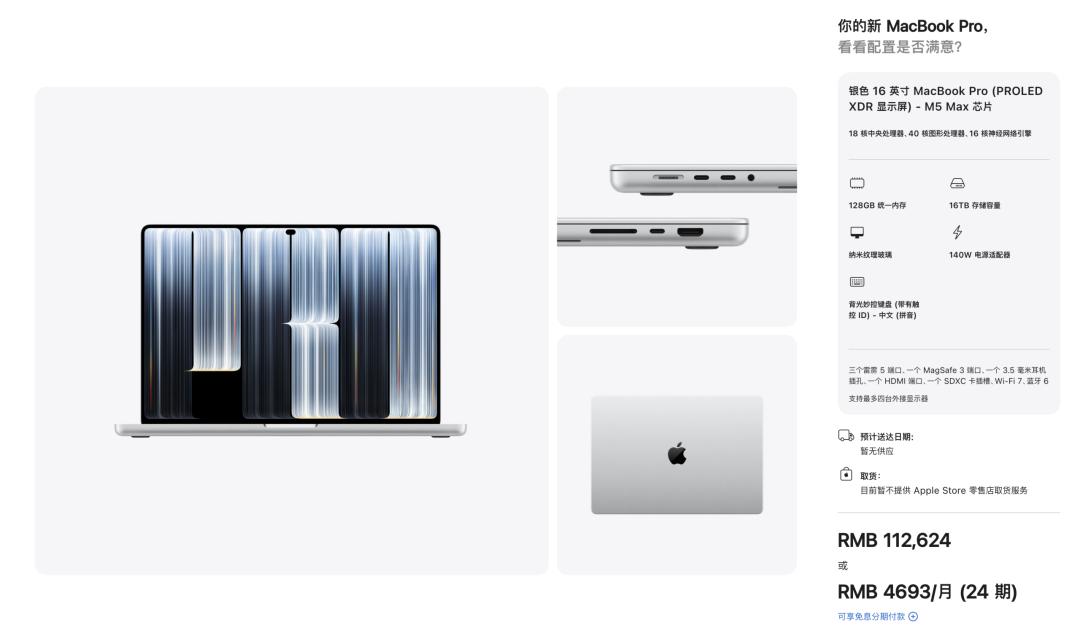
Even for the vast majority of super professional users, this price is so high that they may need to take out an installment plan to afford it.
All in all, in an era where everyone is talking about AI, the powerful performance and high price of the MacBook are both fully justified.
For professional users in need, an "Apple laptop" still has clear irreplaceable value.
But on the other hand, in the context of surging prices for electronic products, it is also a reality of our era that a laptop with a few optional upgrades can cost as much as three cars.
