Has Zhang Xue's remark "That's a bit ridiculous" torn off the fig leaf of the intelligent driving for two-wheelers?
Some time ago, Hu Mei reviewed the "vehicle infotainment systems" of various two-wheeler manufacturers. Unexpectedly, this article immediately sparked heated discussions in the comment section.
Some people think that adding these functions to electric scooters is nothing but a marketing gimmick; others believe that technology must move forward, and we should not deny the possibility of future development just because it is not mature enough at present.
Coincidentally, Zhang Xue, founder of Zhang Xue Motorcycle, was also asked this question at the 140th Canton Fair on October 15.
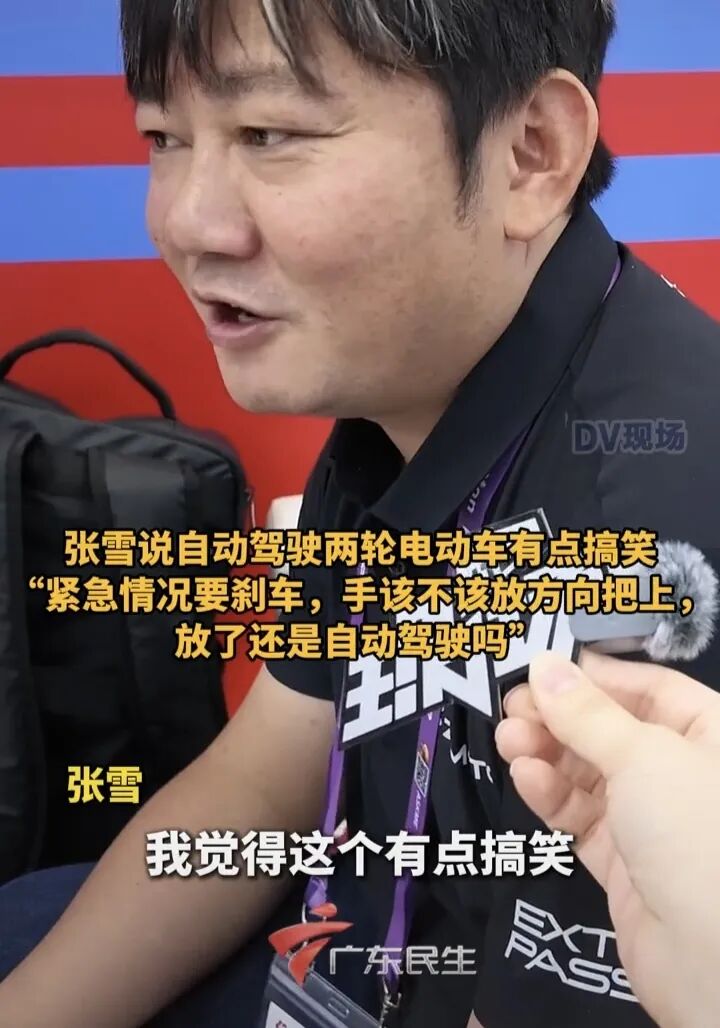
Facing the much-discussed "autonomous driving" in the current two-wheeler industry, his answer was far more straightforward than the comments in the comment section:
"It's kind of ridiculous."
As soon as this remark came out, a new round of discussion on the intelligentization of two-wheelers was triggered.
Why is autonomous driving for two-wheelers "ridiculous"?
Zhang Xue's reasoning is very straightforward: two-wheelers and four-wheelers do not follow the same logic at all.
He gave an example: if a two-wheeler is driving on its own and suddenly encounters an emergency that requires braking ahead, what should the rider do?
"If the rider's hands are not on the handlebar to cooperate, he will fall off immediately once the vehicle brakes."
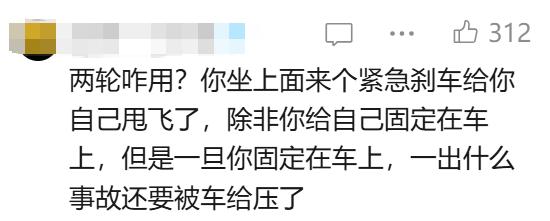
This sentence points out an unavoidable problem for two-wheeler autonomous driving: The fact that the vehicle can maintain balance on its own does not mean that the rider can complete braking and steering in accordance with the system.
Cars have four wheels, their bodies are relatively stable, and seat belts can be used to restrain the occupants' postures.
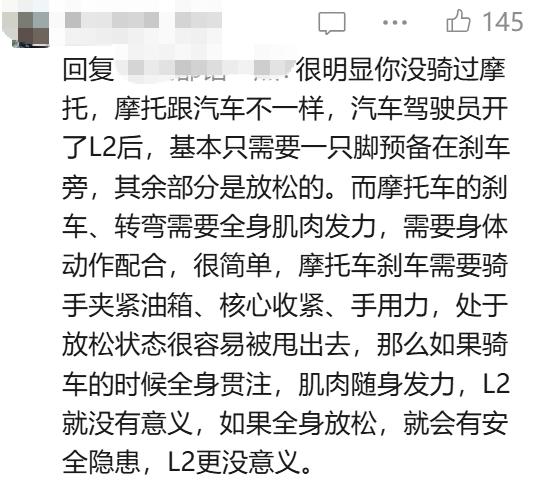
Two-wheelers, on the other hand, rely on the rider to jointly control the vehicle through steering, throttle, braking and body posture.
In emergency situations, the rider and the vehicle must cooperate, so the autonomous driving logic for cars cannot be directly copied.
In addition to safety issues, Zhang Xue also mentioned space, weight and battery life.
Two-wheelers have limited space in themselves, and adding a self-balancing device may bring extra burden.
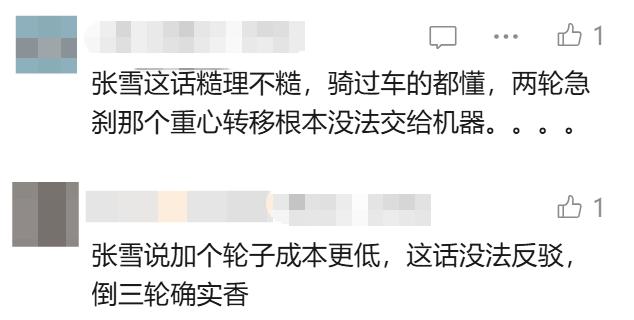
He even believes that if the only goal is to let the vehicle maintain balance on its own, it may be simpler to directly add one or two extra wheels.
As for market demand, he also raised a question: People who spend tens of thousands of yuan on motorcycles usually value performance, handling and riding experience.
If they don't want to ride by themselves anymore, why would they buy a two-wheeler?
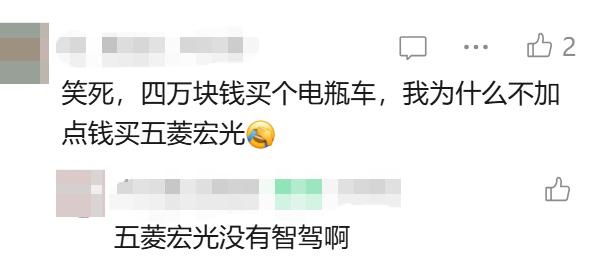
At the end of the day, what Zhang Xue questions is whether this technology is really necessary and whether it can truly solve users' problems.
Autonomous driving for two-wheelers is gaining popularity
The reason why Zhang Xue's remarks sparked discussions is also related to the recent boom of two-wheeler autonomous driving.
On the evening of October 11, during the CBA match at Changzhou's home court, Ninebot demonstrated a formation consisting of 10 self-balancing two-wheeled electric vehicles, 2 of which were controlled by remote controllers with no riders on them.
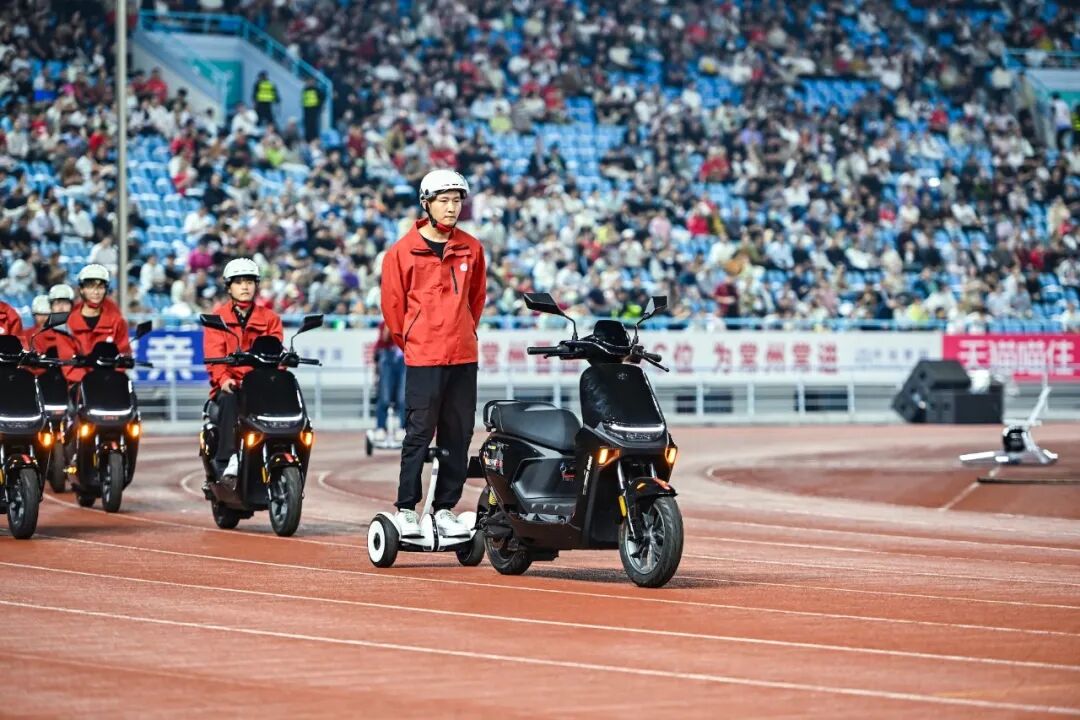
The scene of "electric scooters can also drive autonomously" spread rapidly, and related topics also became popular.
At the Zhejiang International Bicycle & New Energy Electric Vehicle Exhibition in China, a two-wheeled electric vehicle labeled with "L2-level intelligent assisted driving" also attracted widespread attention.
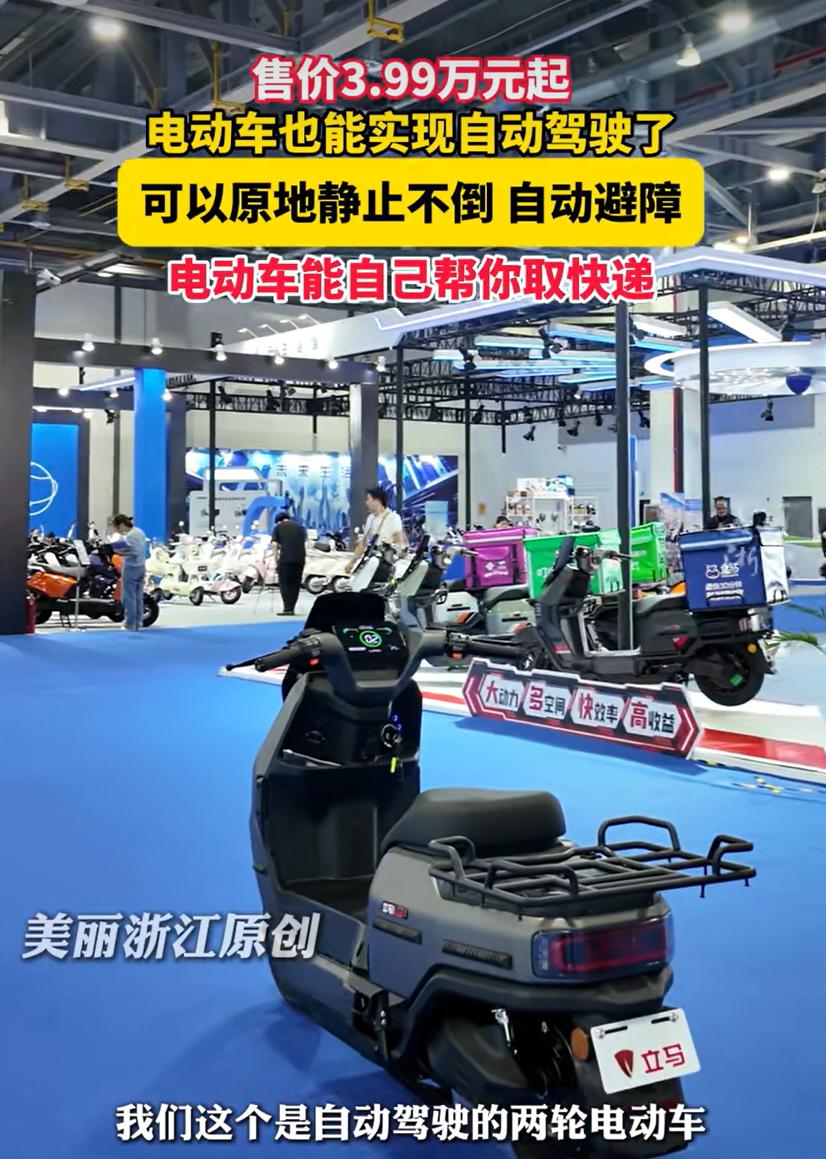
According to reports from relevant media, this vehicle is equipped with functions such as self-balancing, automatic obstacle avoidance and emergency stop, with a price range from 39,900 yuan to 59,900 yuan, and it is still in the prototype stage at present.
It is not difficult to understand why such products are easy to become viral hits.
One of the biggest pain points in using two-wheeled electric vehicles is the balance problem when driving at low speed and parking.
If the vehicle can maintain balance on its own, and even identify obstacles and stop in time under certain conditions, it does have the potential to solve some actual demands.
In addition, the scenario of "riding without a driver" is eye-catching enough, so it can easily become a hot topic for communication.
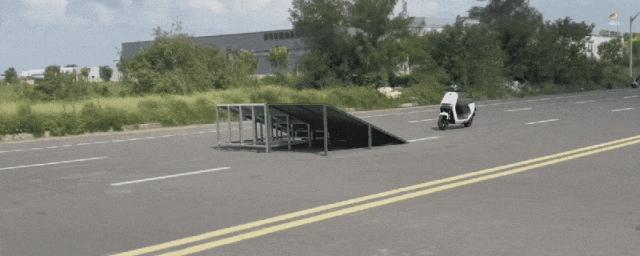
However, a good demonstration effect does not mean that the product is mature.
Take Ninebot's "Mole Self-Balancing 2.0" as an example. From June to September this year, investors asked about its mass production progress many times on the SSE E-Interaction platform.
The company replied that the specific arrangement needs to be comprehensively determined based on factors such as R&D progress, testing and verification, product planning and market strategy, and no clear timetable has been given yet.
Zhang Xue says "ridiculous" about autonomous driving, but his own vehicles are also equipped with intelligent functions
Zhang Xue says it is "kind of ridiculous" for two-wheelers to develop autonomous driving, but interestingly, his own vehicles have already been installed with intelligent configurations.
At the Chongqing Motorcycle Expo this September, Zhang Xue Motorcycle demonstrated the intelligent configurations of the 820X travel version.
The high-end model is equipped with millimeter-wave radar, supports full-speed ACC adaptive cruise, forward collision warning and blind spot monitoring, and is also equipped with functions such as electronically adjustable suspension, hill start assist and intelligent seat height adjustment.
Chuhang Technology, the supplier that provides this set of radars, clearly mentioned that Zhang Xue Motorcycle is the first domestic Chinese motorcycle brand to equip mass-produced models with ACC systems.
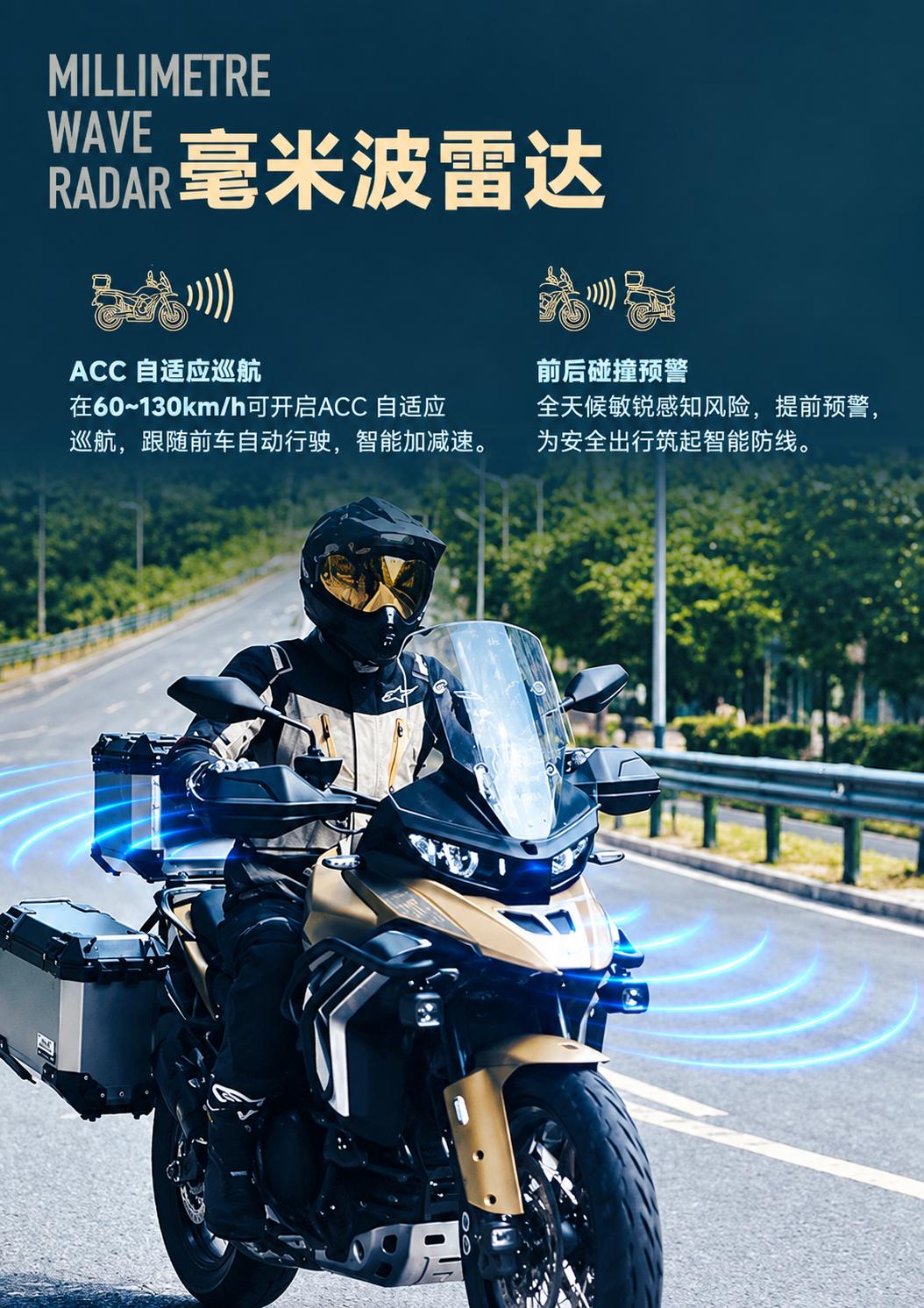
R&D investment is also increasing: Zhang Xue Motorcycle's 2026 R&D budget has been raised to 135 million yuan, the R&D-to-sales ratio is more than four times the industry average, and a large part of the investment is allocated to electrification and intelligentization.
Both the products and the investment show that Zhang Xue is not opposed to intelligentization, but values more whether the technology can truly help riders.
Then what on earth is he opposing?
The current two-wheeler industry is keen to demonstrate scenarios such as self-balancing and hands-free driving: are they demonstrating technological breakthroughs, or amplifying marketing gimmicks?
The fact that a vehicle can complete specific actions in the demonstration site does not mean that it can safely deal with unexpected situations on open roads.
If the promotion only emphasizes that "the vehicle can run on its own" without clarifying the applicable conditions and technical boundaries, it may lead users to overestimate the actual capability of the product.
For two-wheelers, this is not just a problem of marketing scale, but also related to the safety of riders.
Of course, technology can continue to be explored, but rather than rushing to prove whether the vehicle can ride on its own, the industry may need to answer this question first: How can we make people ride safer and more comfortably?
This article is from the WeChat Official Account "Tech Fox" (ID: kejihutv), written by Hu Mei, and published with authorization from 36Kr.