The "men's paradise" that has raked in an astonishing 500 billion yuan has infuriated its own people.
If we were to name the industry hardest hit by AI in recent years, the online web fiction circle would be second to none.
Ten years ago, all kinds of online stories featuring underdog protagonists rising to power and humiliated sons-in-law turning the tables were the go-to entertainment for many middle-aged men.
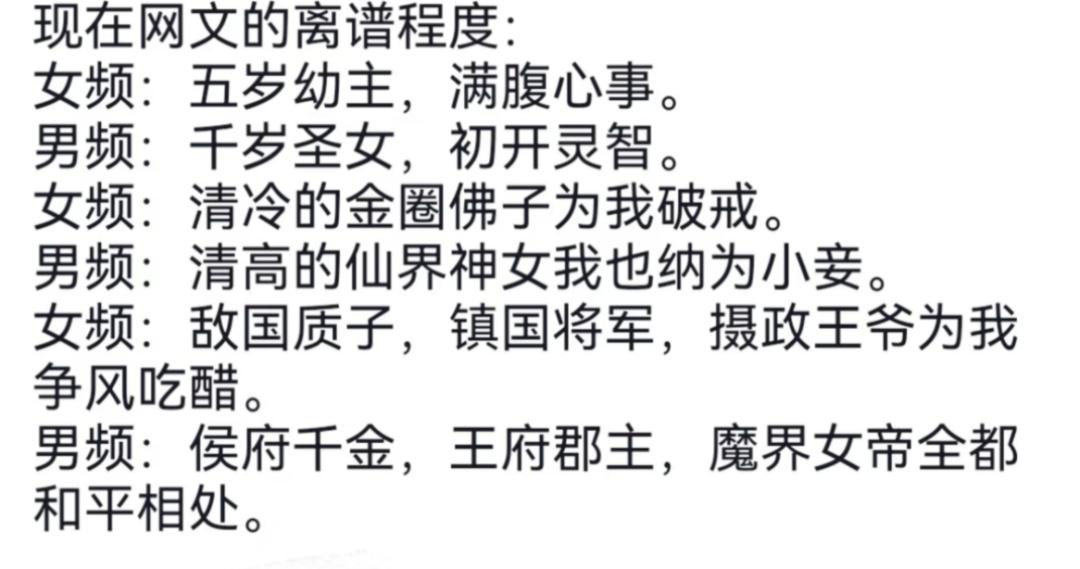
Nowadays, trending topics such as "How absurd the plots of online fictions are" and "Someone needs to rein in the current novels" keep hitting the hot search lists, and internet users have been posting the most ridiculous plots they have read, each more absurd than the last.
For example, a gangster stabs the male lead in the chest with a knife, but he is completely unhurt just because his heart has already been "in his throat"; when a noble consort tries to assassinate the emperor and the plot is exposed, the furious emperor immediately orders on the spot to "grant her a red-crowned crane".
Novels targeted at male readers and those targeted at female readers have their own uniquely bizarre plots: the former has stories like "Qin Shi Huang is willing to abandon his vast empire for the female lead", while the latter includes plots where "Wu Zetian, the only female emperor in Chinese history, would also go mad for love because of the male lead".
Apart from the bizarre plots, a flood of soulless AI-generated filler content is making readers sick of reading.
Since the launch of DeepSeek and Doubao, the barrier to using AI has been reduced to almost negligible. The formulaic sentence pattern of "Not... but..." has swept across the entire internet, and every paragraph is written in a bland, formulaic way that lulls readers into passivity. Some AI-generated articles even fail to delete the asterisks and original prompt words.
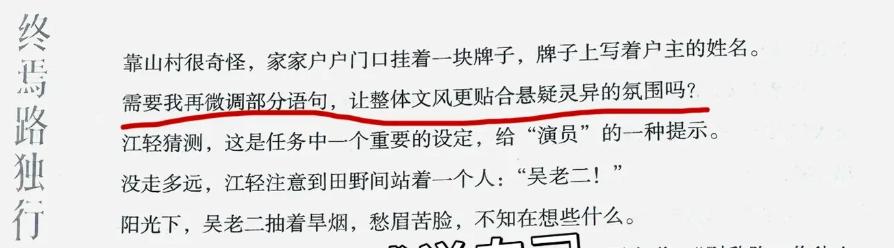
The rampant AI-generated filler content on major platforms puts hard-writing authors in a constant state of anxiety. Some web fiction authors even have to live stream their entire writing process to prove they are not using AI to generate content.
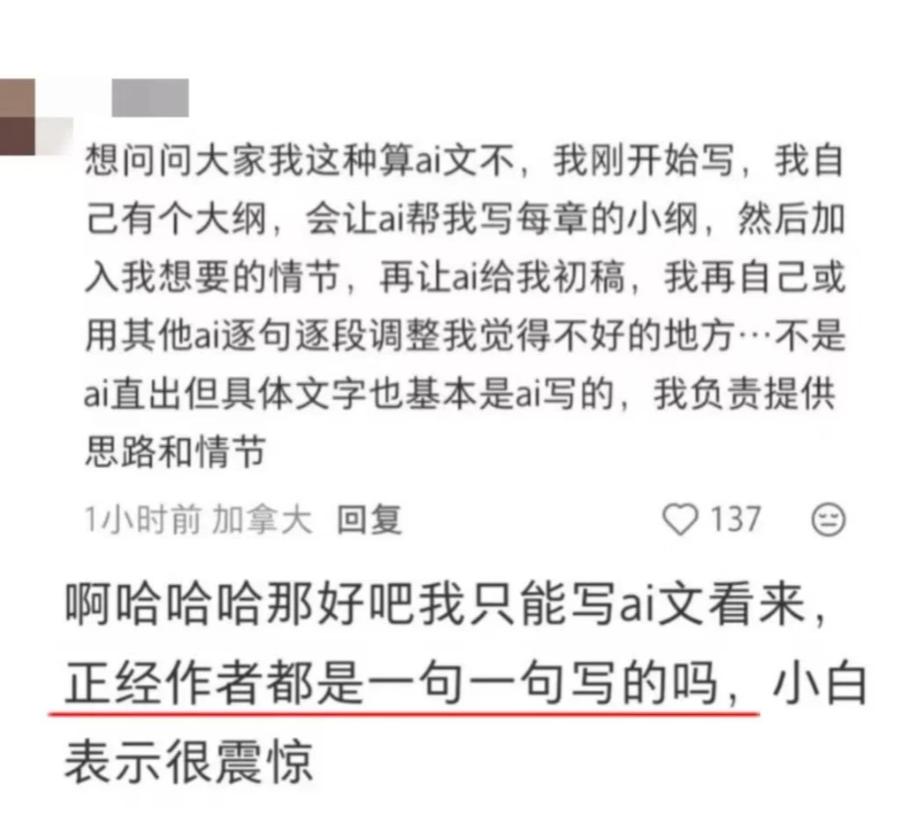
There are also new authors who have got used to AI writing, and even posted questions on social platforms in an inverted logic:
"Do regular authors really write every single sentence by themselves? As a new starter, I'm totally shocked".
From the data perspective, online literature is still booming, with the 2025 market revenue reaching as high as 57.472 billion yuan, representing a year-on-year increase of 15.99%.
The online fiction industry that has been expanding its business scale rapidly, how could it be thrown into total chaos by AI?
Web fiction authors who write every word manually are hit hard by AI
In the past, the relationship between web fiction platforms and authors was very harmonious, which could be described as a mutually beneficial partnership.
For ordinary people, writing web fiction is almost one of the entrepreneurial projects with the lowest threshold.
As long as you have a computer, you can start serializing novels. If you get good performance, you can even sign a contract with the platform to get more payment and income, and even get huge copyright fees for film and television adaptation.
Legends in the web fiction circle such as Tiancan Tudou and Tangjia Sanshao all earn tens of millions of yuan a year by writing novels, reaching the peak of their lives.

What about the platforms? New authors and new works are their continuous cash cows.
Especially after the rise of the free reading model, the more novels there are, the more readers with different preferences can be attracted, and the platforms can also sell advertisements at higher prices relying on huge member subscriptions.
Therefore, all major platforms have racked their brains to attract new authors.
For example, Tomato Novels, which was launched in 2019, launched its unique "First Show" mechanism, under which new authors' first works can get test traffic and compete for more recommendations based on reading performance. It soon became the "newbie village" for web fiction beginners.

However, it is easy to enter the industry but hard to make money. If you want to make a living by writing web fiction, you can never avoid an invisible threshold: typing speed competition.
Some people say that web fictions are full of filler content, often reaching millions of words, which is actually a helpless move. An editor from a top web fiction platform once wrote that a web fiction author must update more than 6000 words per day to ensure that his income remains at around 5000 yuan per month.
Authors must maintain stable updates to get the full attendance award from the platform, and have a greater chance of getting recommendations.
Under huge pressure, some writers even said, "The moment I open my eyes every day, I feel I owe readers 8000 words".
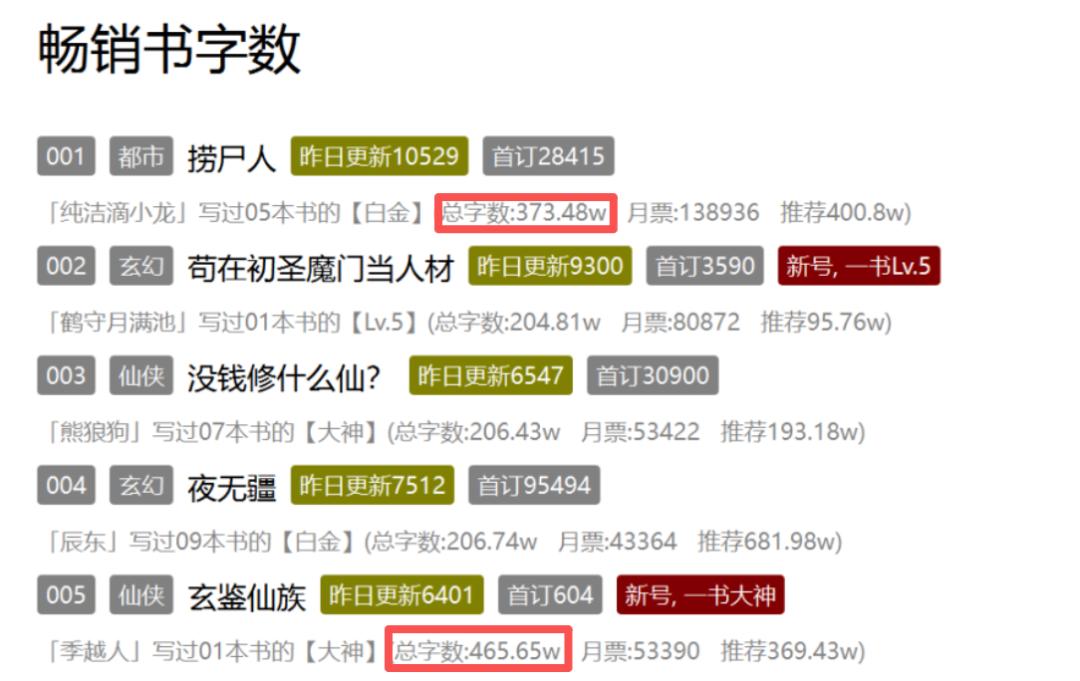
The top author of Qidian, "Laoying Chi Xiao Ji" (Eagle Eats Chickens), is known as the human typing machine in this industry.
In 2020, he spent 6 to 8 hours typing in front of the computer every day. His work "The Unification of Ten Thousand Races" accumulated 7.57 million updated words throughout the year, with an average daily update of more than 20,000 words.
He even summed up his "unique secret skill" in an interview: as long as you write enough every day, readers will have no time to read other people's novels after finishing yours.
In that era, "Among all martial arts skills, only speed cannot be defeated" was the survival rule of the web fiction circle.
However, after AI emerged, writers who competed for typing speed met their lifelong rival.

Although AI writing is currently full of clichés, it is a dimensionality reduction attack when it comes to generating filler content.
The AI writing tool launched by East China Normal University team can even generate a 300,000-word novel in one hour.
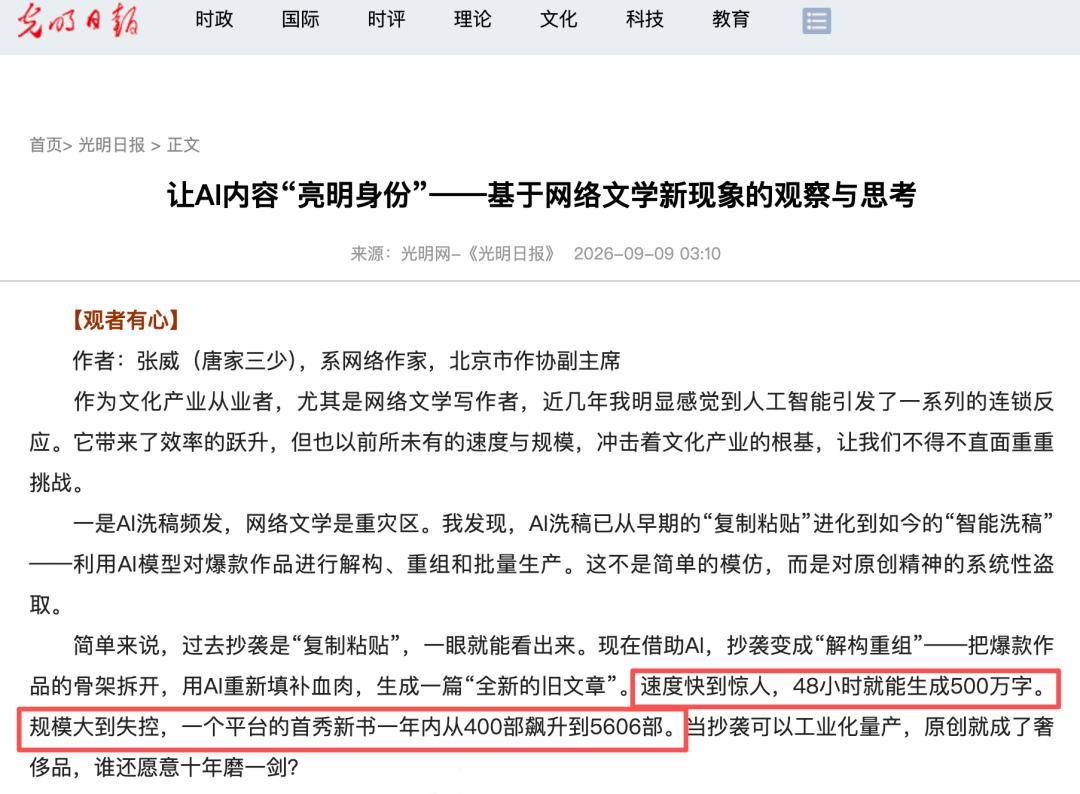
Tangjia Sanshao accused AI-generated web fictions of being "AI swill", saying that "their generation speed is surprisingly fast, and 5 million words can be generated in 48 hours. The scale is out of control. The number of new books for first show on one platform has soared from 400 to 5606 within one year".
Some web fiction editors also said that AI-generated web fictions are so rampant now that manual screening is required. For every ten submissions received by the backstage, two or three are obviously AI-generated at first glance.
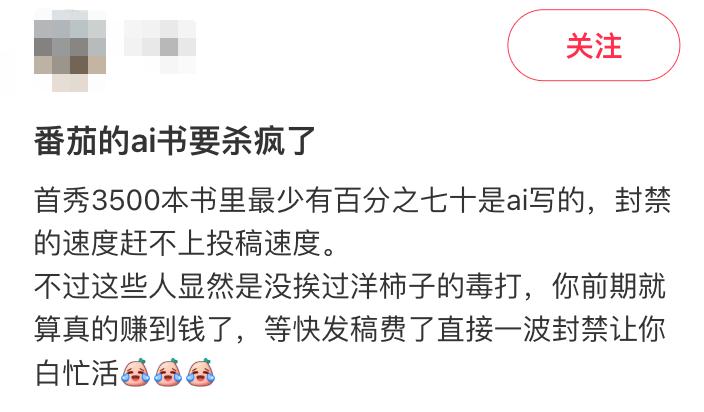
AI-generated web fictions not only surpass human works in word count, but also grasp the platform recommendation algorithm more precisely than human authors. On some platforms, even 80% of the works on the recommendation list are AI-generated novels.
The influx of these massive contents directly takes away the traffic of many new authors.
Those web fiction masters who already have a stable group of readers have not lost their jobs to AI. But for small and medium authors and new authors, the situation is completely different, and many people's income has plummeted off a cliff immediately.
According to a report from 36Kr, the web fiction author "Cangshu" had written on Qidian for many years and could basically earn a stable monthly income of 5000 yuan.
Later, he switched to Tomato Novels which has larger traffic, but found that it was very difficult for his works to get recommendations. He wrote more than 100,000 words, but his income was almost zero, so he finally chose to quit the industry.
Another author Xiao Zhang also felt that the recommendation traffic was instantly taken away by a large number of AI contents, making works written by real human authors harder and harder to be seen by readers.
Before authors could catch their breath, the platforms that used to value talents so much even turned against them.
Why are the giants that are cleaning up their content system slamming on the brakes?
The times have changed. The platforms that used to scramble to recruit talents now have a completely different attitude and start to clean up their content system.
The most shocking one is Tomato Novels.
In October this year, Tomato announced to revise the contract signing rules, stipulating that new authors' new works must be completed and reach 150,000 or 300,000 words before they can apply for signing.
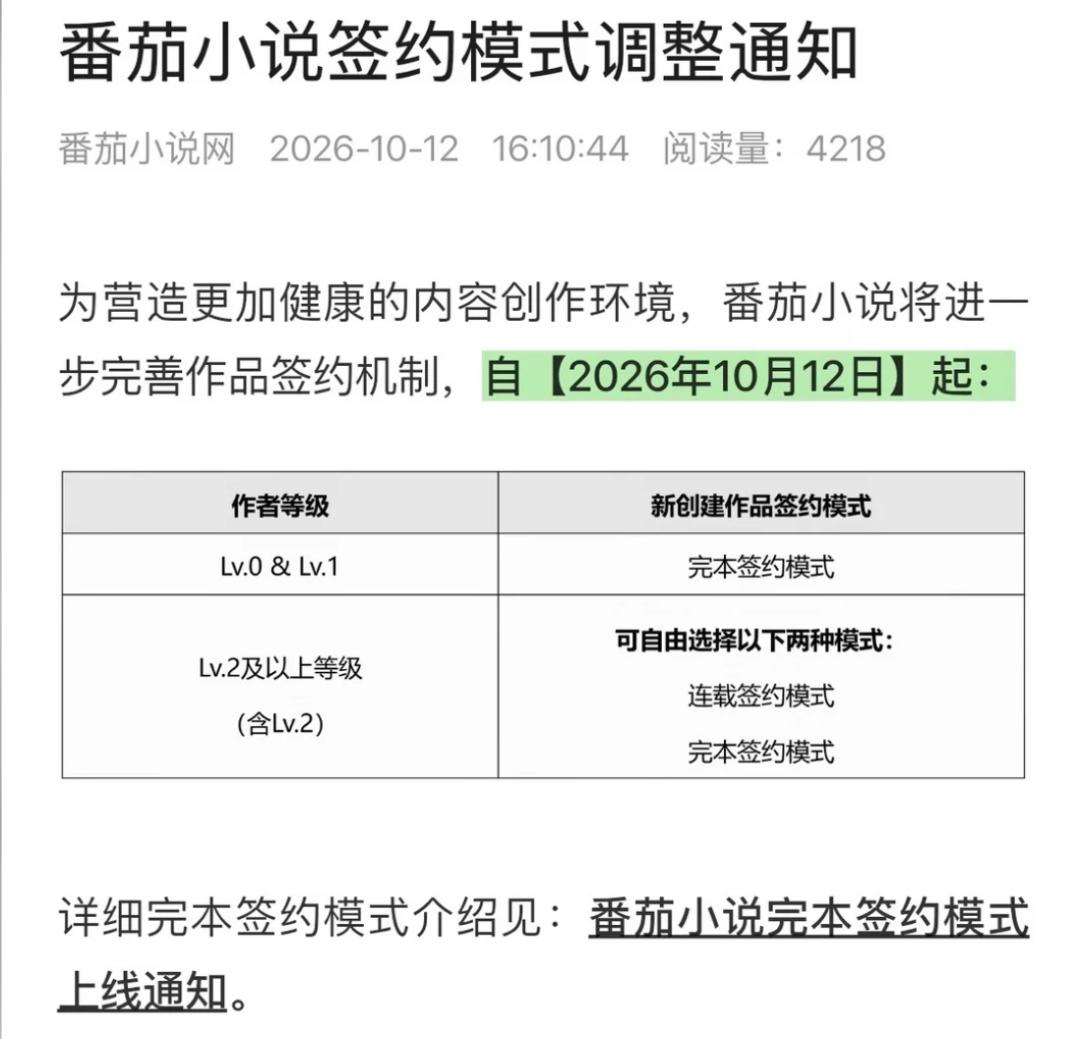
What does this mean? The trial and error space left for new authors is getting smaller and smaller.
In the past, you could start serializing with only 20,000 words of draft in stock. Now you have to finish a completed work of 300,000 words to get the admission ticket for signing. This is equivalent to the platform completely shifting the risks of unfinished works and traffic decline to the authors.
In addition to Tomato, Zongheng Novels also adjusted the "minimum guaranteed welfare" for new authors, cutting the basic full attendance guarantee period from 6 months to 3 months.
This is not entirely because the platforms turn their backs on their old friends, but because the rampant low-quality content has reached a point where it has to be rectified.
A few years ago, major platforms were the biggest advocates of AI, and even regarded it as a magic tool to improve efficiency.
In 2023, China Literature launched "Yuewen Miaobi" and the Miaobi version of Writer Assistant. In 2024, Tomato also began internal testing of the AI-assisted writing function. By 2025, China Literature even integrated DeepSeek into its Writer Assistant.

However, the result is that AI content proliferates infinitely like noodles, messing up the platform ecosystem completely.
In 2025, 16 leading web fiction platforms including China Literature, Tomato and Jinjiang had to jointly issue a self-discipline convention to draw a red line for AI abuse.
Why did the platforms that used to have an ambiguous attitude towards AI content suddenly slam on the brakes? There are two main reasons.
1. The rampant AI-generated filler content is almost too much for the platforms themselves to handle.
Many web fiction readers have posted complaints on social media, saying that most of the web fictions on the hot lists of many platforms are soulless, with titles and covers all generated by AI.
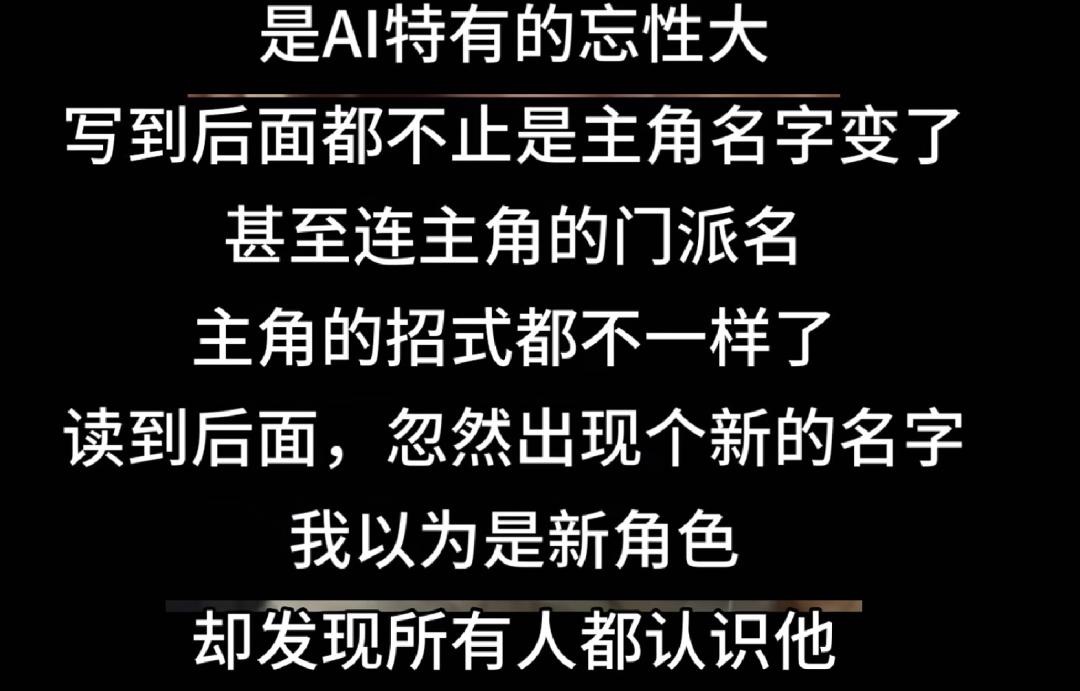
These novels not only have extremely formulaic wording, but also suddenly make up nonsense when you read them: characters who have already died suddenly come back to life, or there are inexplicable new characters and new settings popping up out of nowhere.
What's more serious is that some people are using AI to harvest the platforms' profits wantonly, and a gray industrial chain has even taken shape.
According to a report from China Newsweek, some people use the traffic push mechanism to open more than a dozen accounts and publish hundreds of novels every month. They only need to write a simple outline of a few hundred words in the early stage, and then leave everything to AI for updates, earning 10